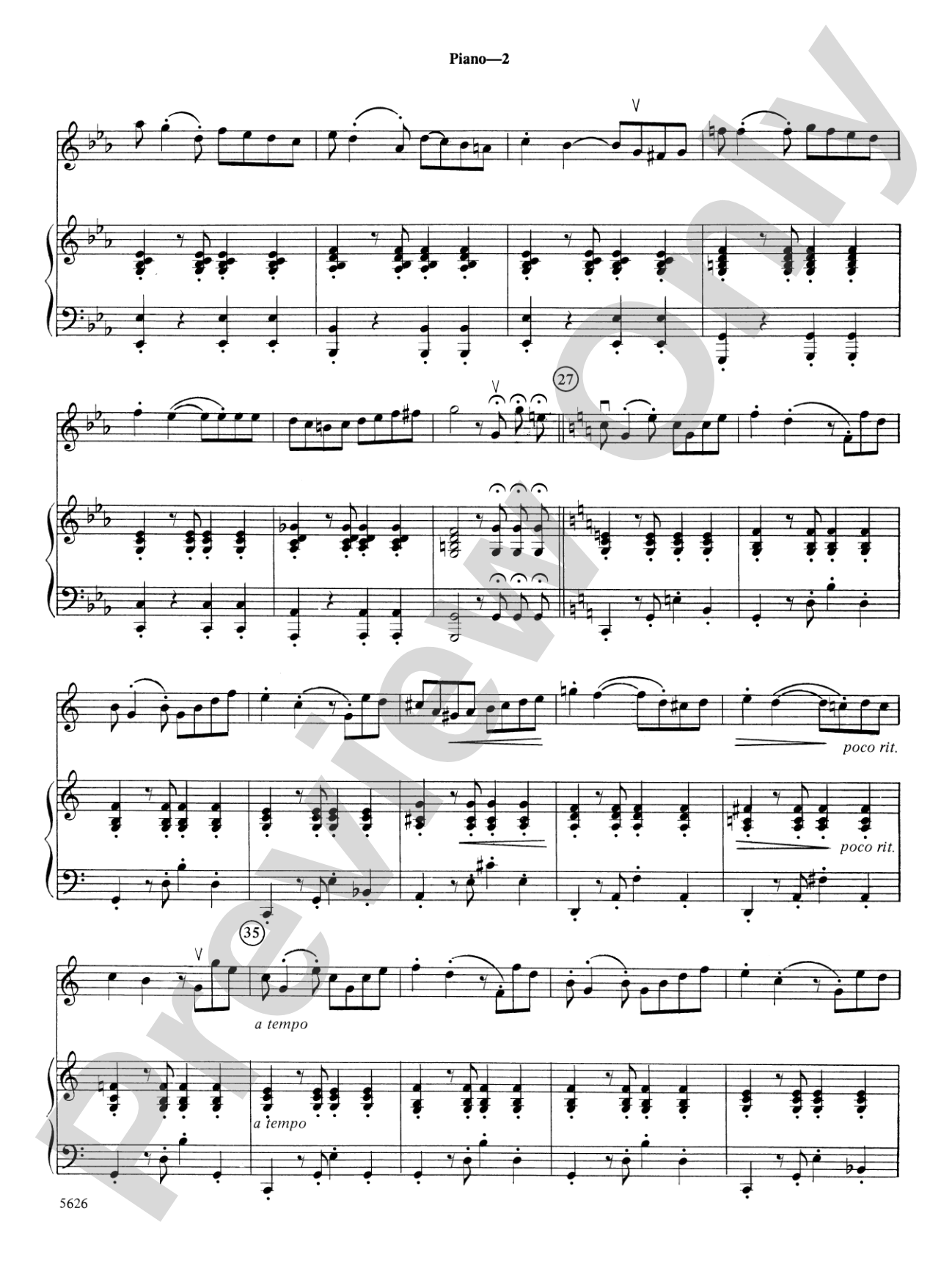
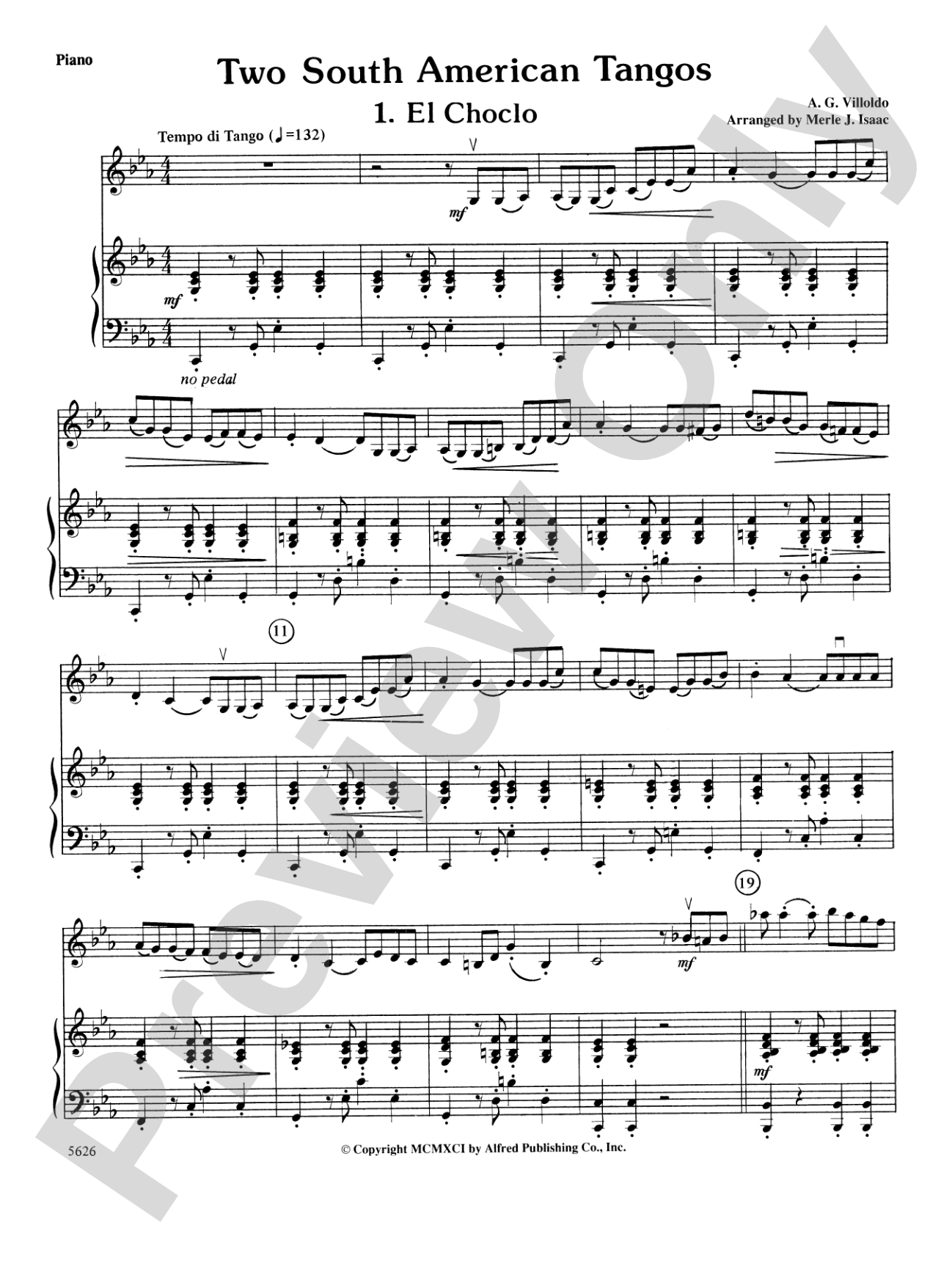
Two South American Tangos: Piano Accompaniment Sheet Music Preview

Two South American Tangos: Piano Accompaniment

Arr. Merle J. Isaac

Grade: 3

Item: 00-PC-0001899_K

Digital Download
$5.99
Description
These two famous South American melodies come to life in a string orchestra arrangement taken from Isaac's popular full orchestra version. Flat key signatures are advanced, yet bowings and rhythms are accessible.

Don't just read it, hear it, play along with it, and watch your students grow with it. In MakeMusic Cloud, Two South American Tangos: Piano Accompaniment comes alive with professional accompaniment, adjustable tempo, and built-in practice tools that turn solo practice into real progress.

Sample Audio
0:00
0:00
Sample Video
Additional Details
Series: Highland/Etling String Orchestra
Publisher: Alfred Music
Page Count: 82
SKU: 00-PC-0001899_K

More about this title

About the Arranger: Merle Isaac

Merle Isaac has established himself as a trusted voice in string orchestra arranging, with a particular gift for making folk and popular melodies accessible to developing ensembles. His arrangements prioritize pedagogical clarity without sacrificing musical integrity, allowing students to engage with culturally significant material while building technical skills.

Why we love this

Isaac's arrangement captures the rhythmic vitality and melodic warmth of these South American standards while respecting the technical reality of Grade 3 players. The flat key signatures present a genuine harmonic challenge that stretches students beyond their comfort zone, yet the bowings and rhythmic writing remain straightforward enough that musicians can focus on intonation and style rather than struggling with technique.

What to expect

These tangos pulse with understated elegance and rhythmic confidence. The melodies unfold with a natural lilt that invites dancers even as the harmonic language deepens beyond what most students encounter at this level, creating a piece that feels both approachable and sophisticated.

Who it's for

This arrangement is ideal for Grade 3 string orchestras seeking repertoire that expands harmonic vocabulary while remaining performable within a realistic rehearsal timeline. It works equally well for ensembles preparing contest literature or building a culturally diverse concert program.

How to get the most out of it

  • Shape the phrasing around the natural contours of these folk melodies; resist the urge to conduct mechanically through the syncopated rhythms, which need breathing room to feel authentic.
  • Balance the melody between first violins and violas or cellos depending on which voice carries it; these arrangements often distribute thematic material across the section, so ensure every player understands when they're the primary voice.
  • Tune the flat keys with particular care. A Grade 3 ensemble may struggle with intonation in multiple flats, so isolate problematic chords in sectional rehearsals and use reference notes from the conductor to establish pitch consistency.
  • Let the rhythmic lift come from the lower strings; if cellos and basses play behind the beat slightly, the entire ensemble will swing rather than march.

How to use it

Pair this with other Latin or world music literature to build a thematic concert section, or program it as a lighter contrast to a more substantial work like a symphony or concerto arrangement. The contest/festival designation makes it a strong choice for spring competitions when ensembles are seeking pieces that balance accessibility with artistic substance.

Skills your students will build

  • Reading and intonating in flat key signatures (up to four flats and beyond)
  • Playing syncopated rhythms with stylistic accuracy
  • Balancing melody distribution across multiple voices
  • Responding to cultural context through phrasing and articulation

You May Also Like