
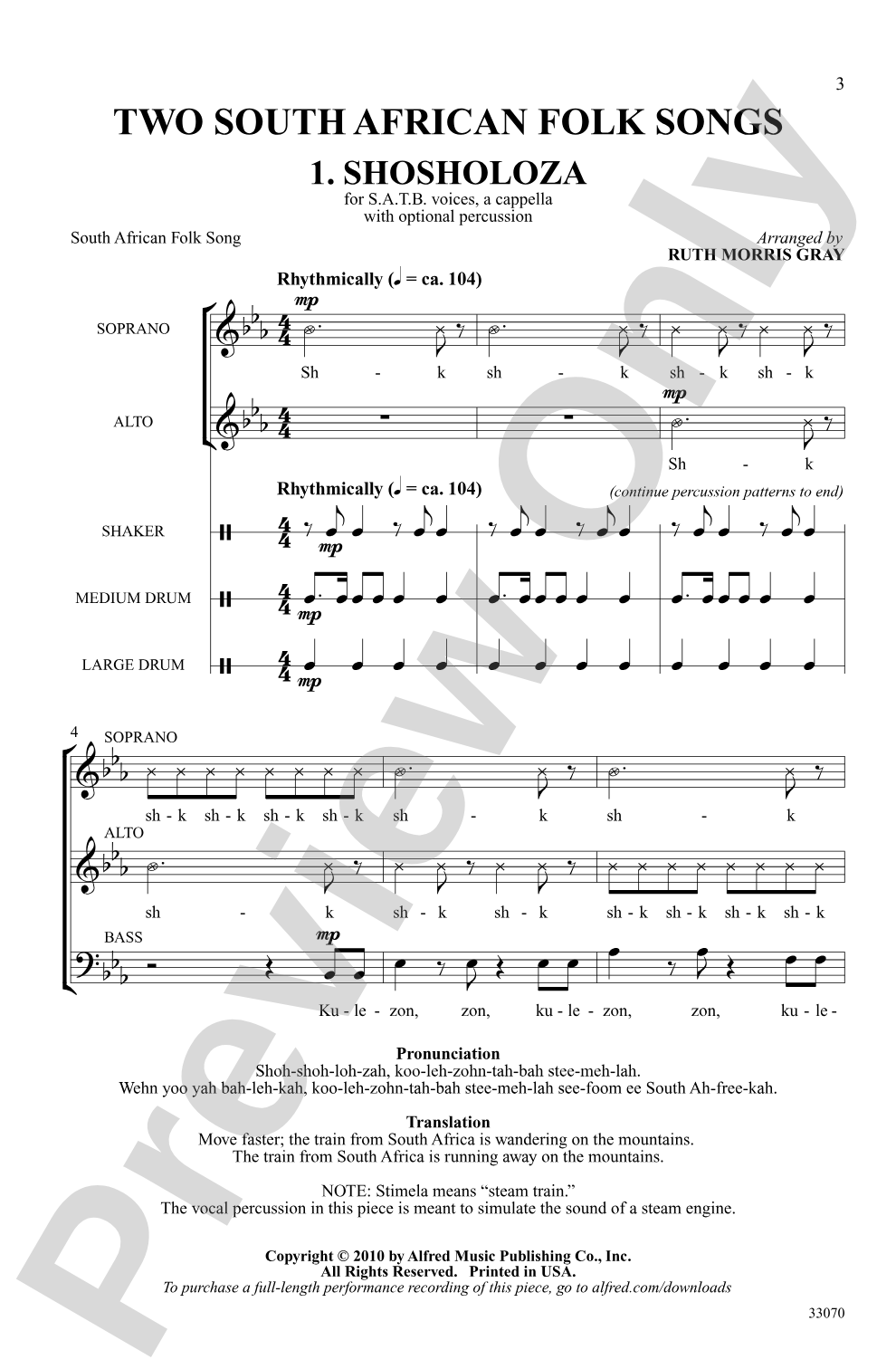
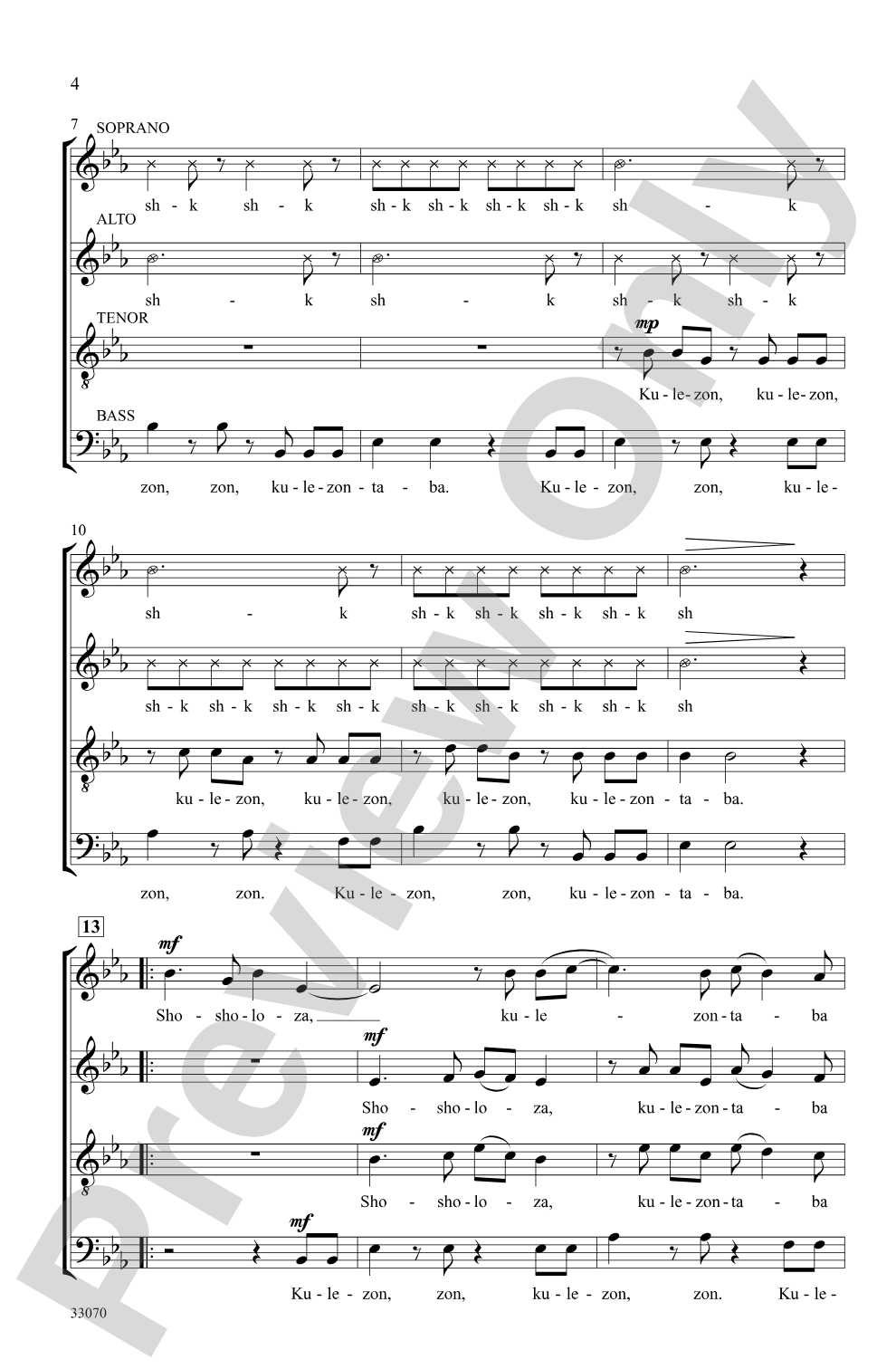

Two South African Folk Songs: SATB a cappella Choral Octavo
1. Asika Thali / 2. Shosholoza
Arr. Ruth Morris Gray
Item: 00-PO-0002338
$2.25
Minimum order quantity: 20 copies
Pickup currently not available
Related Items
Two South African Folk Songs: SATB a cappella Choral Octavo |
$2.25
|
View |
Description
Vocal and auxiliary percussion instruments add yet another layer to these traditional African folk songs. Authentic and artistic repertoire.


Two South African Folk Songs: SATB a cappella Choral Octavo isn't in MakeMusic Cloud just yet...but it could be. Let us know you'd like to see it, and you'll help shape what comes next. In the meantime, start a free trial and dive into thousands of interactive titles your students can play along with today.
Request This Title
Tell us you want it.
Start Your Free Trial
Explore everything that's ready to play right now.
Sample Audio
1
Audio File
--:--
0:00
0:00
Sample Video
No sample videos found.
Additional Details
Series:
Alfred Choral Designs
Publisher:
Alfred Music
Page Count:
12
SKU:
00-PO-0002338
More about this title
About the Arranger: Ruth Morris Gray

Ruth Morris Gray brings decades of classroom experience to her work as both a composer and arranger. Since 2004, she has directed choirs at Rosemead High School in California while maintaining an active publishing career that includes over 100 original choral works. Her training spans multiple disciplines: she holds a Bachelor of Music in Piano Performance and Composition from Biola University and a Master of Arts in Music Composition from UC Santa Barbara, complemented by her California Single Subject Music Credential from California State University, Northridge.
Gray's approach to arranging draws on her deep understanding of what works in the rehearsal room and on the concert stage. Beyond her musical practice, she remains an engaged learner and adventurer, finding inspiration through travel and outdoor pursuits with her husband, Douglas.
Why we love this
Gray respects the integrity of these traditional songs while opening them up for a cappella performance in ways that honor their cultural roots. The inclusion of vocal and auxiliary percussion creates textural possibilities that feel organic rather than imposed, giving your singers genuine musical stakes in every section. This is the kind of arrangement that sounds effortless to listen to but demands real musicianship from your ensemble.
What to expect
These arrangements pulse with the rhythmic energy and melodic warmth of South African traditions. The interplay between voices and percussion creates an immersive soundscape that feels both grounded and celebratory, drawing listeners into the emotional world of the original songs. A cappella singing in this context becomes a vehicle for cultural connection rather than technical display.
Who it's for
This octavo works well for SATB choirs at the intermediate to advanced level who are ready to explore multicultural repertoire with substance. Competitive festival singers and concert choirs seeking authentic world music literature will find real value here. It's also an excellent choice for programs that prioritize diverse musical voices in their season.
How to get the most out of it
- Treat the auxiliary percussion parts as integral to the texture, not as optional flourish. Even if you're performing without live percussionists, understanding how the rhythm section functions will deepen your singers' sense of ensemble.
- Listen closely to recordings of the original folk songs before rehearsal. Familiarize yourself with the melodic contours and cultural context so your singers understand what they're interpreting rather than simply reading notes.
- Balance the vocal lines carefully during passages where multiple parts carry melodic material. These arrangements often weave traditional lines through different voice parts, so transparent, even tone production helps the listener follow the narrative.
- Give yourself time in rehearsal to address any unfamiliar vowels, rhythmic patterns, or linguistic elements that appear in the original folk material. This preparation pays dividends in authenticity and confidence.
How to use it
Feature this piece in a concert that explores world music traditions or create a thematic program around African and diaspora cultures. The 12-page length and a cappella format make it suitable as a standalone set or as part of a longer choral suite. Consider pairing it with other culturally significant repertoire to build a meaningful concert narrative.
Skills your students will build
- Singing with stylistically appropriate rhythmic freedom and swing
- Balancing complex harmonic textures typical of folk song arrangements
- Responding to auxiliary percussion cues and maintaining ensemble cohesion across rhythm changes
- Interpreting cultural context and authenticity in world music literature
- Blending unfamiliar vowels and articulations drawn from African language traditions