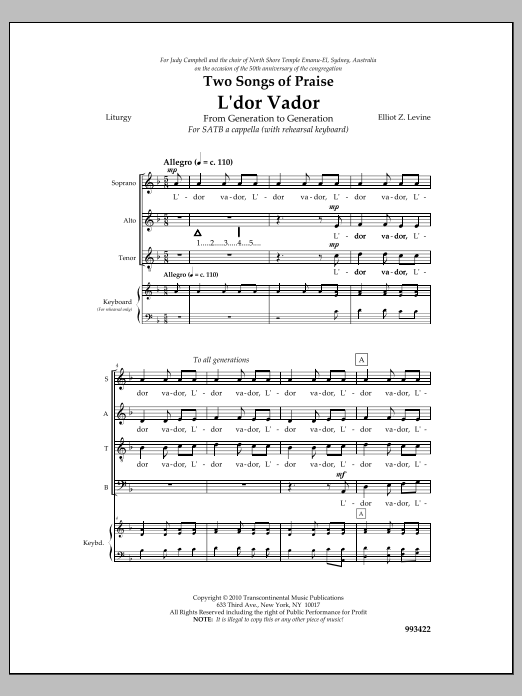
Elliot Z. Levine is a composer and arranger with deep roots in Jewish liturgical music and choral writing. His arrangements balance textual clarity with harmonic sophistication, creating pieces that honor traditional melodies while offering fresh interpretive possibilities for contemporary ensembles.
Why we love this
Levine pairs two thematically linked texts that speak to continuity and praise, creating a program unit that feels intentional rather than arbitrary. The a cappella writing demands precision from your singers while remaining accessible, and the 20-page score suggests substantial musical development without overwhelming rehearsal time.
What to expect
These pieces carry a quality of spiritual reverence paired with confident affirmation. The harmonic language is accessible yet thoughtfully constructed, inviting singers into moments of quiet reflection as well as fuller, more resonant passages of collective praise.
Who it's for
Choirs with strong sight-reading skills and a commitment to a cappella repertoire will find this rewarding. It suits both community choirs seeking meaningful sacred repertoire and school programs looking to deepen their connection to Jewish musical traditions.
How to get the most out of it
Build the harmonic foundation from the bass and alto lines first; these voices often carry the structural weight in Levine's writing and will steady the sopranos and tenors.
Treat the two pieces as a connected statement rather than separate items. Find a moment of silence or breath between them that allows the thematic link to land with listeners.
Since these are a cappella arrangements, establish a secure home key with a full ensemble hum before the first entrance; this prevents intonation drift across all 20 pages.
Let the text shape your phrasing and dynamics. Sacred texts benefit from singers who understand the meaning they're conveying, not just the notes they're singing.
How to use it
Consider this pairing for interfaith concert programming, where it can represent Jewish liturgical tradition authentically. It also works as a strong closing statement for concerts themed around resilience or continuity, since both L'dor Vador (generation to generation) and Psalm 146 speak to enduring faith.
Skills your students will build
Sustaining intonation across extended a cappella passages
Blend and balance in close harmonic writing
Hebrew language pronunciation and text expression
Following structural development across longer works
Independence of voice parts while maintaining ensemble unity
You May Also Like
Scan to Complete Your Purchase
Use your phone's camera to scan the code below
You'll log in on your phone and the order will be added to your account