
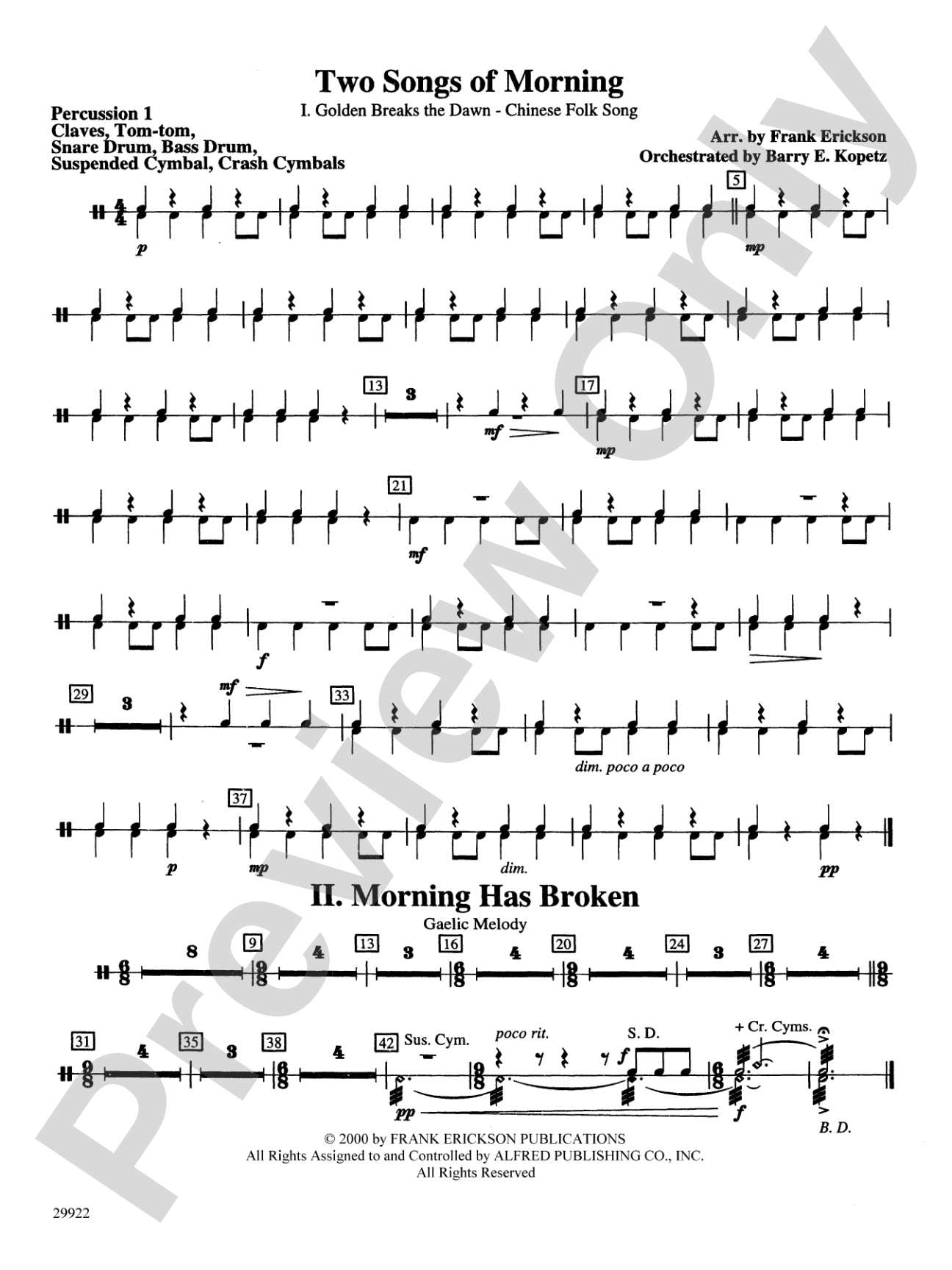

Two Songs of Morning: 1st Percussion
Arr. Frank Erickson, orch. Barry E. Kopetz
Grade: 2 (Easy)
Item: 00-PC-0001643_PC1
$3.00
Pickup currently not available
Description
Two Songs of Morning contains two beautifully contrasting melodies, scored to demonstrate the lush tonal capabilities of the concert band. The Gaelic Melody used in movement tow is the well-known "Morning has Broken". Upon conclusion of the eight-bar introduction, the first presentation of the theme appears in the first trumpet accompanied by the expressive style throughout the movement, and students will enjoy the challenge of having to play the extended phrases needed to bring this music to life.


Don't just read it, hear it, play along with it, and watch your students grow with it. In MakeMusic Cloud, Two Songs of Morning: 1st Percussion comes alive with professional accompaniment, adjustable tempo, and built-in practice tools that turn solo practice into real progress.
Open in the Player
Jump straight in and assign it today.
Start Your Free Trial
Open this title and explore the full library in minutes.
Sample Audio
No sample audio found.
Sample Video
No sample videos found.
Additional Details
Series:
Frank Erickson Publications
Publisher:
Alfred Music
Page Count:
110
SKU:
00-PC-0001643_PC1
More about this title
About the Arranger: Frank Erickson
Frank Erickson (1923-1996) was a prolific arranger and composer whose output shaped the concert band repertoire for generations of student musicians. His arrangements prioritize accessibility without sacrificing musical substance, making standard orchestral and folk literature singable and playable for developing ensembles. Erickson understood the concert band's tonal palette intimately and wrote specifically for what young players could accomplish, earning his work a permanent place in school band libraries across North America.
Why we love this
Two Songs of Morning demonstrates why Erickson's arrangements remain teaching staples: the piece gives each section meaningful musical material while keeping technical demands reasonable for Grade 2 players. The contrasting character between the two movements provides natural variety, and featuring the Gaelic melody "Morning has Broken" in the second movement adds resonance for audiences who recognize the tune. Students graduate from this piece with genuine experience sustaining long phrases and balancing solo lines against harmonic support.
What to expect
Two Songs of Morning unfolds with quiet dignity and warmth. The opening invitation of the introduction draws listeners in, and when the trumpet line enters, there is a sense of morning light breaking through. The second movement's use of the beloved Gaelic tune brings a gentle familiarity alongside gentle urgency in its phrasing, reminding players and audiences alike that these melodies have travelled across generations.
Who it's for
Grade 2 concert bands seeking accessible concert literature that still demands musicianship and breath control. Directors programming a concert that includes familiar melodies alongside standard band repertoire will find this especially valuable. The piece works well for bands transitioning from shorter, rhythmically driven pieces into more sustained, lyrical writing.
How to get the most out of it
- Establish the eight-bar introduction as atmospheric and spacious rather than rushed; this sets the listener up to hear the trumpet theme as a true arrival.
- Balance the first trumpet's opening statement carefully against the accompanying voices so the melody sings without the rest of the band fading into the background.
- Attend to the quality of sustained tones throughout both movements; Erickson's scoring relies on rich harmonic blocks, which need even tone production from all players to achieve his intended lush sound.
- Rehearse the extended phrase work section by section first, then gradually build the full passage so students develop the breath support and legato phrasing needed to sustain the longer lines without breaking musical continuity.
How to use it
Program this early in a concert to establish a reflective mood, or use it as a palate-cleansing piece between heavier works. The familiar tune in the second movement makes it especially effective for audiences with mixed musical backgrounds. It pairs naturally with other lyrical or folk-inspired band arrangements, creating a thematic arc around melody and storytelling.
Skills your students will build
- Sustaining long, expressive phrases without breathing breaks
- Balancing solo melodic lines against harmonic accompaniment
- Shaping dynamics and phrasing across extended passages
- Responding to lush harmonic textures and full-band sonority
- Building tone quality and intonation across full ensemble voicings