Two Short Pieces for Bassoon and Piano Cover Image

Two Short Pieces for Bassoon and Piano: Bassoon Solo Book

$4.95 USD
Sale price  $4.95 USD Regular price 
Skip to product information
Two Short Pieces for Bassoon and Piano Cover Image

Two Short Pieces for Bassoon and Piano: Bassoon Solo Book

By Edmund J. Siennicki

Grade: 2

Item: 36-10430404

$4.95
Shipped

One moment…

Description
These two pieces written for the young musicians include VOCALISE, a singing andante in 4/4, and DANCE, an allegro with opportunities to transition between some easy meter changes. Versions for bass clarinet, bassoon, baritone saxophone, trombone, baritone, mallet percussion (no accompaniment), and cello are available from the publisher.

Two Short Pieces for Bassoon and Piano: Bassoon Solo Book isn't in MakeMusic Cloud just yet...but it could be. Let us know you'd like to see it, and you'll help shape what comes next. In the meantime, start a free trial and dive into thousands of interactive titles your students can play along with today.

Sample Pages

No sample pages found.

Sample Audio
No sample audio found.
Sample Video
Additional Details
Series: LudwigMasters Woodwind Series
Publisher: Keiser Productions, Inc.
ISBN10: 1-63-887122-1
ISBN13: 978-1-63-887122-4
UPC: 735816017989
SKU: 36-10430404
Instrumentation: Bassoon and Piano

More about this title

About the Composer: Edmund J. Siennicki
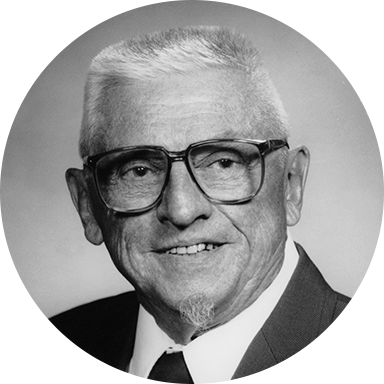
Edmund J. Siennicki

Edmund J. Siennicki (1920-present) grew up in Cleveland, Ohio, where at age twelve he met the legendary pianist Ignacy Jan Paderewski. That encounter shaped his artistic direction profoundly. He earned his Bachelor's degree from Kent State University, where he composed Fight On for KSU, a piece that remains part of the university's football game traditions. In 1994, Kent State recognized him with the Distinguished Alumnus Award from the School of Music.

Siennicki holds a Master's degree from Teachers College, Columbia University, where he studied composition with Herbert Elwell and electronic music with Sergio Barroso, while also consulting with Vincent Persichetti. As a performer, he mastered both bassoon and piano. His compositional output numbers approximately 200 published works, many of which have earned recognition in the National School Orchestra composition contests. He served as composer in residence at the MacDowell Colony twice and has been honored with special awards from ASCAP for two decades. His teaching career centered in Cleveland's junior high schools, though he also held faculty positions at Michigan and Kent State University. He continues to compose, visit schools, and lead clinics.

Why we love this

Siennicki writes with young bassoonists in mind, pairing genuine musical substance with accessible technique. The two contrasting pieces offer immediate performance satisfaction: Vocalise teaches singing tone and phrasing in a straightforward andante, while Dance introduces meter flexibility without overwhelming the player. His decades spent in junior high school classrooms show in every bar.

What to expect

Vocalise unfolds like a quiet conversation, inviting the player to discover the warmth and expressiveness that draws people to the bassoon. Dance flips the mood to something lighter and more playful, bouncing between meters in a way that feels more like discovery than difficulty.

Who it's for

Young bassoonists in their first or second year who need repertoire beyond exercises but aren't yet ready for longer forms or fast technical passagework. These pieces also work well for students preparing for solo festival or recital, since each piece is brief and self-contained.

How to get the most out of it

  • Shape the phrases in Vocalise as you would a vocal line, letting the melody breathe at natural musical moments rather than stopping at every rest.
  • In Dance, mark the meter changes clearly in your part before the first rehearsal; the transition points are the piece's primary technical challenge and deserve isolated practice.
  • Work with your pianist to balance the accompaniment so the bassoon melody always sits comfortably on top without forcing your tone.
  • Take the allegro tempo in Dance at a speed that lets you navigate the rhythmic figures cleanly; rushing creates unnecessary tension in the meter changes.

How to use it

Pair these as a gavotte-and-minuet style duo on a recital or wind solo concert, programming them back-to-back for contrast. Vocalise also works nicely as an opener for a chamber music set or as a graceful interlude in a longer program.

Skills your students will build

  • Sustained singing tone in a lyrical context
  • Phrasing and breath control across 4/4 andante passages
  • Reading and executing meter changes (transitions between 4/4 and other meters)
  • Dynamic control and expression without relying on technical display
  • Ensemble listening and balance with piano accompaniment

You May Also Like