Two Shaker Songs: 1st Percussion Sheet Music Preview

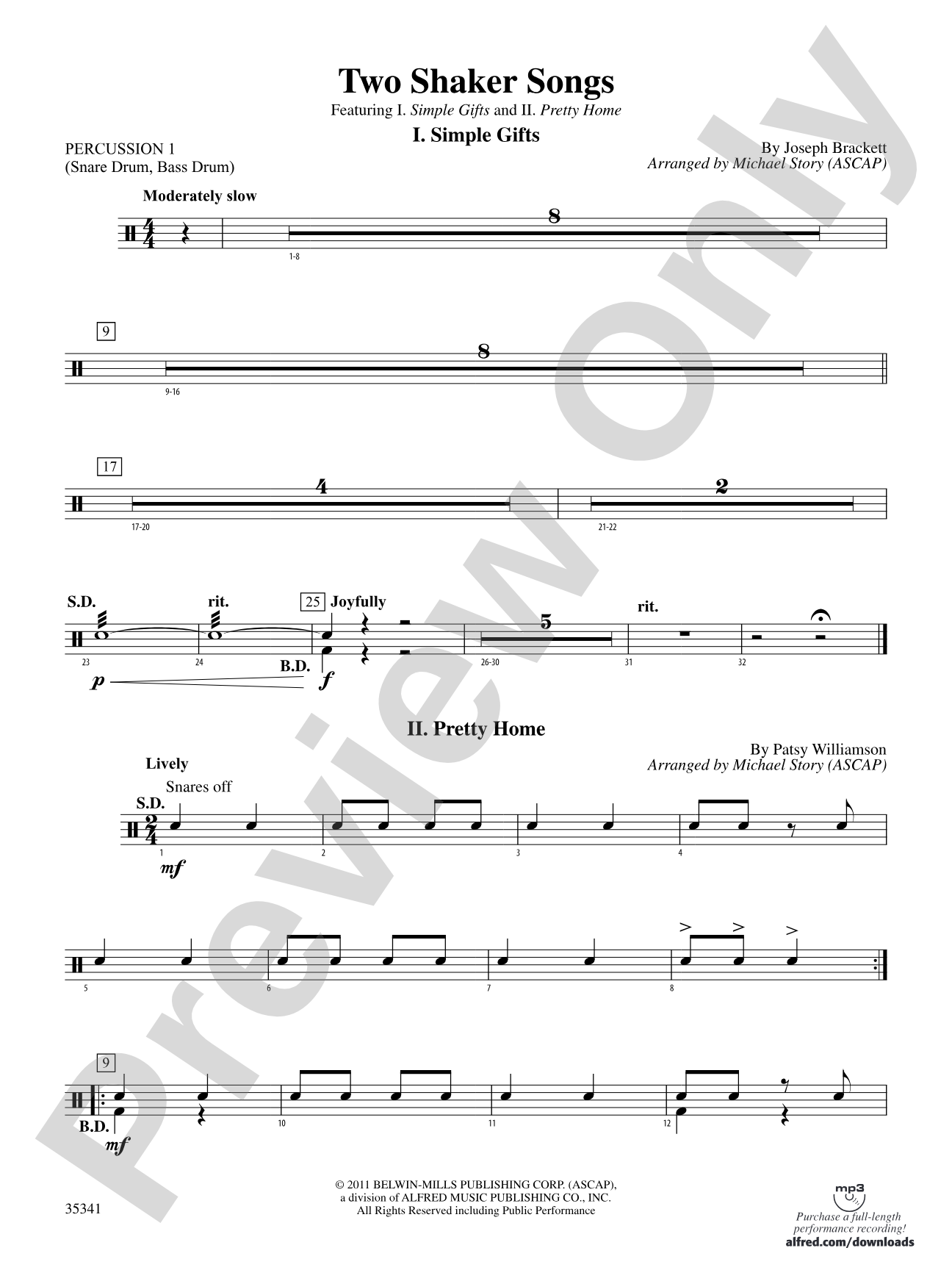
Two Shaker Songs: 1st Percussion

Featuring: Simple Gifts / Pretty Home

Mvt. I by Joseph Brackett, Mvt. II by Patsy Williamson / arr. Michael Story

Grade: 1 (Very Easy)

Item: 00-PC-0014896_PC1

Digital Download
$3.00
Description
Music and dance were an integral part of Shaker worship services. Michael Story has crafted this two-movement mini-suite paying homage to these historical charismatic tunes, including "Simple Gifts" and "Pretty Home." With a variety of teaching opportunities, dramatic dynamic contrasts bring these tunes to life. A melodic choice to develop musicality! This title is available in MakeMusic Cloud.

Don't just read it, hear it, play along with it, and watch your students grow with it. In MakeMusic Cloud, Two Shaker Songs: 1st Percussion comes alive with professional accompaniment, adjustable tempo, and built-in practice tools that turn solo practice into real progress.

Sample Audio
0:00
0:00
Sample Video
Additional Details
Series: Belwin Beginning Band
Publisher: Alfred Music
Page Count: 274
SKU: 00-PC-0014896_PC1

More about this title

About the Composer: Joseph Brackett

Joseph Brackett composed "Simple Gifts" in 1848 while a member of the Shakers, a religious community known for their ecstatic worship practices and innovative folk melodies. His tune became one of the most recognizable American spiritual songs, later adapted by Aaron Copland in the 20th century and woven into the fabric of American concert music.

Brackett's work reflects the Shaker conviction that music and movement were pathways to spiritual experience. His melodies are marked by simplicity, directness, and a profound sense of communal purpose—qualities that have allowed his compositions to endure across generations and genres.

Why we love this

Michael Story's arrangement respects the hymn-like integrity of these Shaker melodies while giving beginning bands genuine expressive work to do. The dynamic contrasts and sectional writing create real opportunities for musicians to shape phrases and develop musical intent—a rarity at this level. You get historically grounded content and pedagogical substance in one package.

What to expect

These melodies carry an earnest, almost luminous quality—the kind of music born from conviction rather than sophistication. There's joy in the simplicity and power in the directness; the band will feel the difference between playing notes and conveying genuine spiritual warmth.

Who it's for

This is ideal for beginning concert bands building foundational musicianship through historically meaningful repertoire. The Grade 1 difficulty makes it accessible to younger or newer ensembles while the two-movement structure and expressive demands prevent it from feeling overly simple.

How to get the most out of it

  • Treat the dynamic shifts as story points, not just volume changes. Coach students to think about what each crescendo or diminuendo communicates about the Shaker spiritual experience.
  • Balance the melody across sections carefully. With Grade 1 instrumentation, the lead voice can easily muddy; isolate your primary melodic carriers in rehearsal to ensure clarity.
  • Keep the tempo steady but never rigid. These tunes have a dance quality—allow for gentle breathing and natural phrasing that comes from singing through the lines.
  • Let the second movement breathe differently from the first. A change in ensemble color or slightly softer overall dynamic between movements enhances the mini-suite structure.

How to use it

Pair this with other American folk or spiritual arrangements to build a concert around American musical heritage. The Grade 1 level makes it an excellent opener or closer on a mixed-difficulty program, and its Thanksgiving affiliation gives it natural seasonal relevance for fall concerts.

Skills your students will build

  • Phrasing and breath control in modal melodies
  • Ensemble balance and section independence
  • Expressive use of dynamics to shape musical narrative
  • Intonation in simple harmonic structures
  • Understanding historical context and spiritual content in music

You May Also Like