
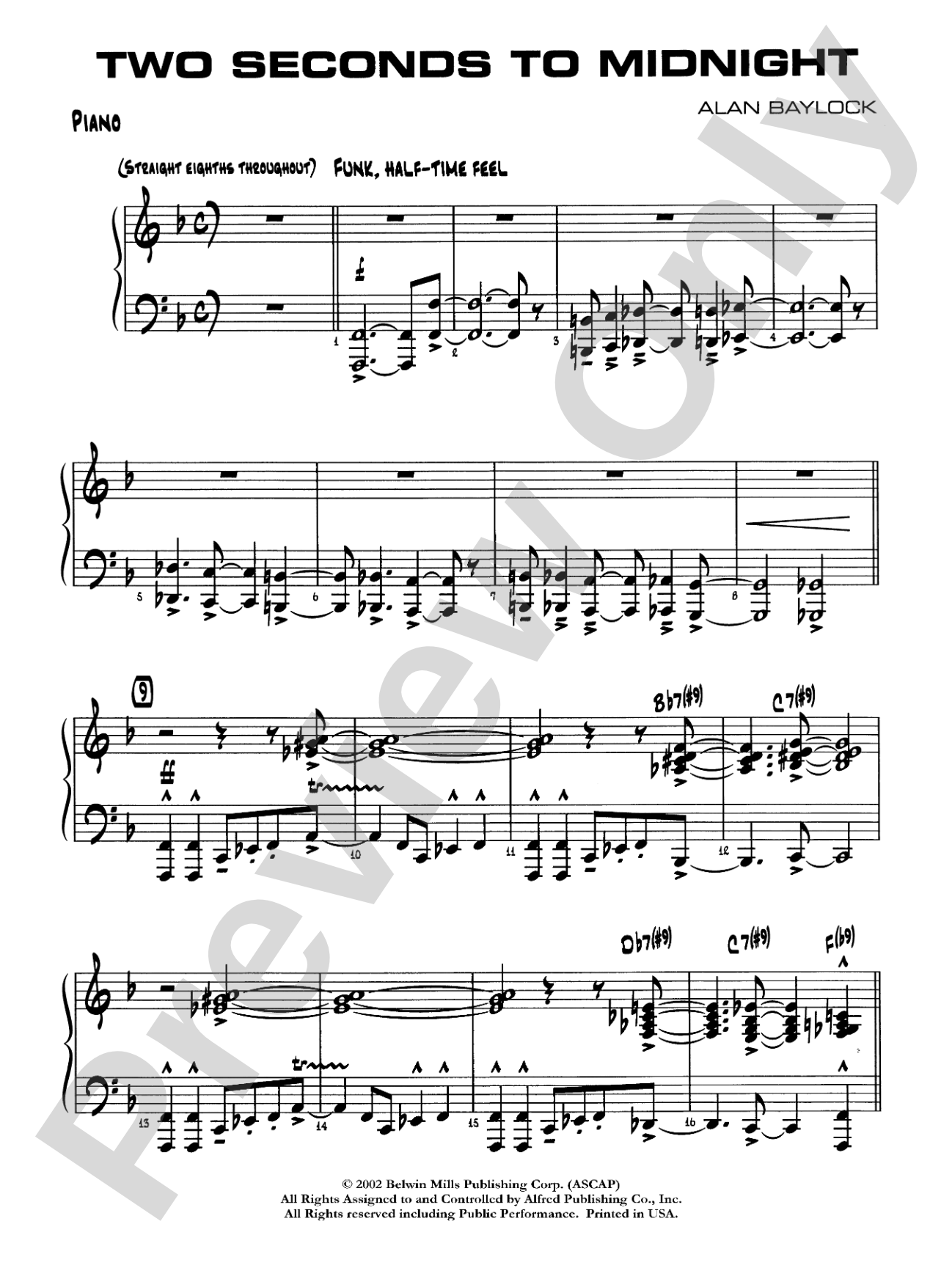
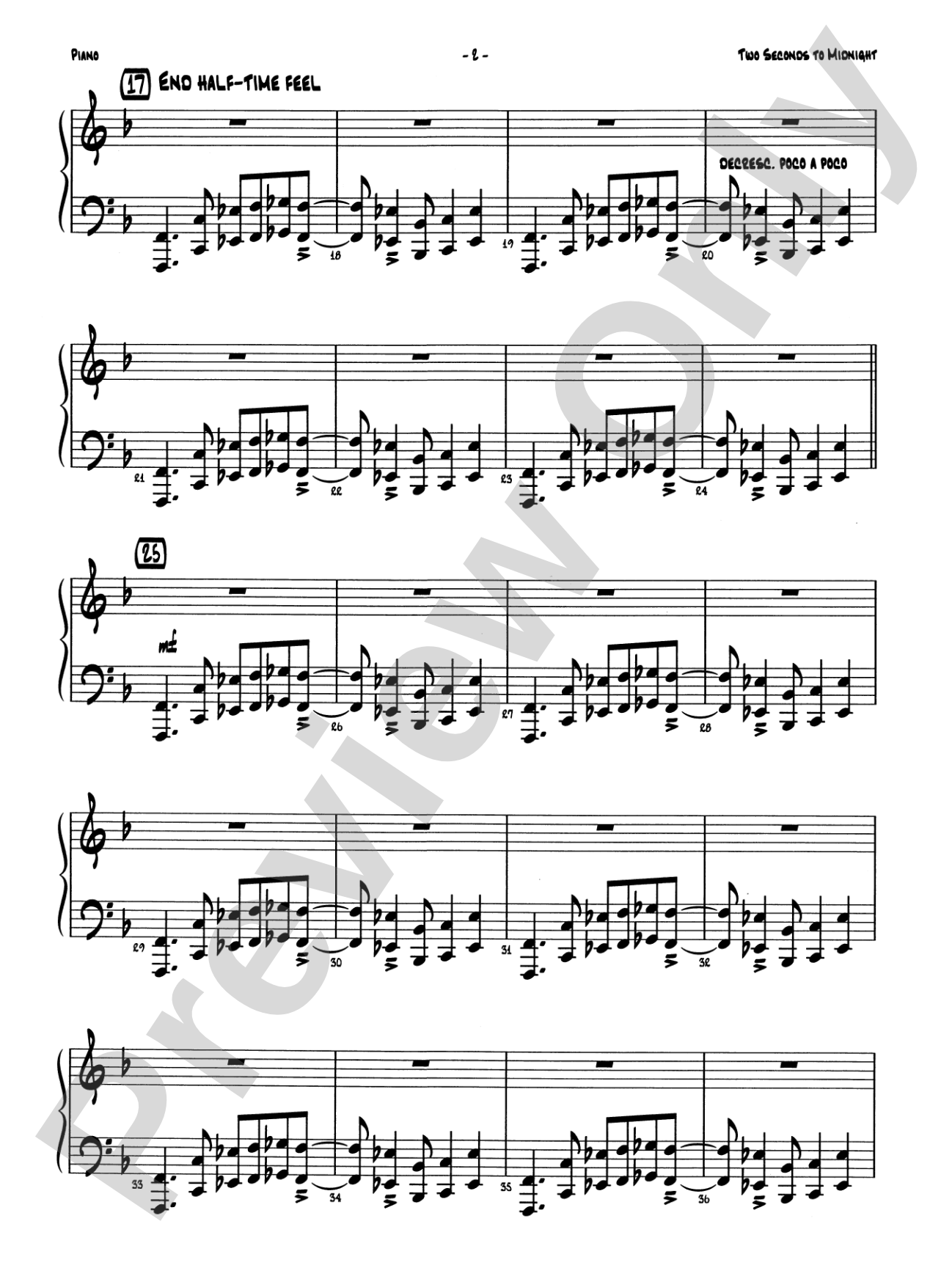

Two Seconds to Midnight: Piano Accompaniment
By Alan Baylock
Grade: 4.5 (Medium Advanced / Difficult)
Item: 00-PC-0002453_K
$3.00
Pickup currently not available
Description
Treat your band to some of the best contemporary big band writing ever! Featuring trombone and guitar soloists, this chart is perfect for festivals or concerts. Composer Alan Baylock is one of the finest writers on the jazz scene today and with Two Seconds to Midnight he delivers the following: energy, style, a modern rock-fusion groove, an intimate small group sound, the power of the full ensemble...you get the picture. It's all there and it's HOT! (5:54)


Don't just read it, hear it, play along with it, and watch your students grow with it. In MakeMusic Cloud, Two Seconds to Midnight: Piano Accompaniment comes alive with professional accompaniment, adjustable tempo, and built-in practice tools that turn solo practice into real progress.
Open in the Player
Jump straight in and assign it today.
Start Your Free Trial
Open this title and explore the full library in minutes.
Sample Audio
1
Audio File
--:--
0:00
0:00
Sample Video
No sample videos found.
Additional Details
Series:
Premier Jazz Series
Publisher:
Alfred Music
Page Count:
73
SKU:
00-PC-0002453_K
More about this title
About the Composer: Alan Baylock

Alan Baylock has shaped the landscape of contemporary big band writing through decades of leadership and collaboration. His tenure as Chief Arranger for the United States Air Force Band's Airmen of Note spanned 20 years, during which he composed and arranged works performed by international jazz luminaries ranging from Maynard Ferguson to Joshua Redman. He has guest-conducted over 100 jazz ensembles at professional, collegiate, and high school levels, bringing his compositional voice directly into rehearsal rooms across North America.
Currently the director of the Grammy-nominated One O'Clock Lab Band at the University of North Texas, Baylock continues to advocate for equity in jazz composition. In 2022, he co-founded Brava Jazz Publishing with composer and arranger Annie Booth, establishing a publishing platform dedicated to amplifying women composers and arrangers in big band jazz. His own works are published through Alfred Music and other major jazz publishers, securing his position as both a prolific creator and a mentor committed to expanding whose voices shape the jazz canon.
Why we love this
Baylock's writing here balances virtuosity with ensemble cohesion in a way that energizes both your soloists and the section players. The architecture moves seamlessly from intimate small group textures to full-ensemble power, giving your musicians a genuine arc to play through rather than a static chart. For festival season, this delivers the combination of fresh contemporary language and immediate crowd appeal that judges and audiences remember.
What to expect
Two Seconds to Midnight pulses with modern energy and controlled intensity. The piece breathes between intimate small group moments and explosive ensemble sections, creating a sense of cinematic drama and forward motion that never settles into easy grooves. It feels urgent and alive without sacrificing musicality.
Who it's for
Jazz ensemble directors programming medium-advanced to difficult repertoire who want contemporary big band writing that lives up to its reputation. Your soloists need secure chops and confidence in a rock-fusion idiom; your section players benefit from having tackled modern voicings and rhythmic flexibility before tackling this chart.
How to get the most out of it
- Build the rock-fusion groove from the rhythm section outward; lock the kick drum and hi-hat pocket before layering bass and piano voicings so the trombone and guitar soloists have a stable platform.
- Balance the trombone and guitar solos by rehearsing them separately first, then together. The two voices occupy different frequency ranges but compete for clarity in the mix, so careful monitor levels and dynamic control prevent one from disappearing.
- Use the transitions between small group and full ensemble passages as rehearsal focal points. Mark these shifts clearly in your parts and drill them repeatedly, since they define the piece's narrative trajectory.
- Shape the final ensemble statement with controlled intensity. The hot finish demands precision and unity without sacrificing the groove, so articulation and section blend deserve specific rehearsal time in the final week before performance.
How to use it
Program this as a festival or concert centerpiece where your ensemble's technical preparation and soloist depth can shine. The 5:54 duration and contemporary idiom pair well alongside classic big band standards, offering audiences a clear sense of jazz's living present alongside its canon. Consider featuring it mid-program after your ensemble has warmed up but while attention is cresting.
Skills your students will build
- Reading and executing modern big band voicings and harmonic language
- Playing rock-fusion grooves with precision and pocket awareness
- Accompanying soloists while maintaining ensemble cohesion
- Navigating rapid dynamic and textural shifts between small group and full ensemble sections
- Balancing articulation and blend in contemporary jazz idioms