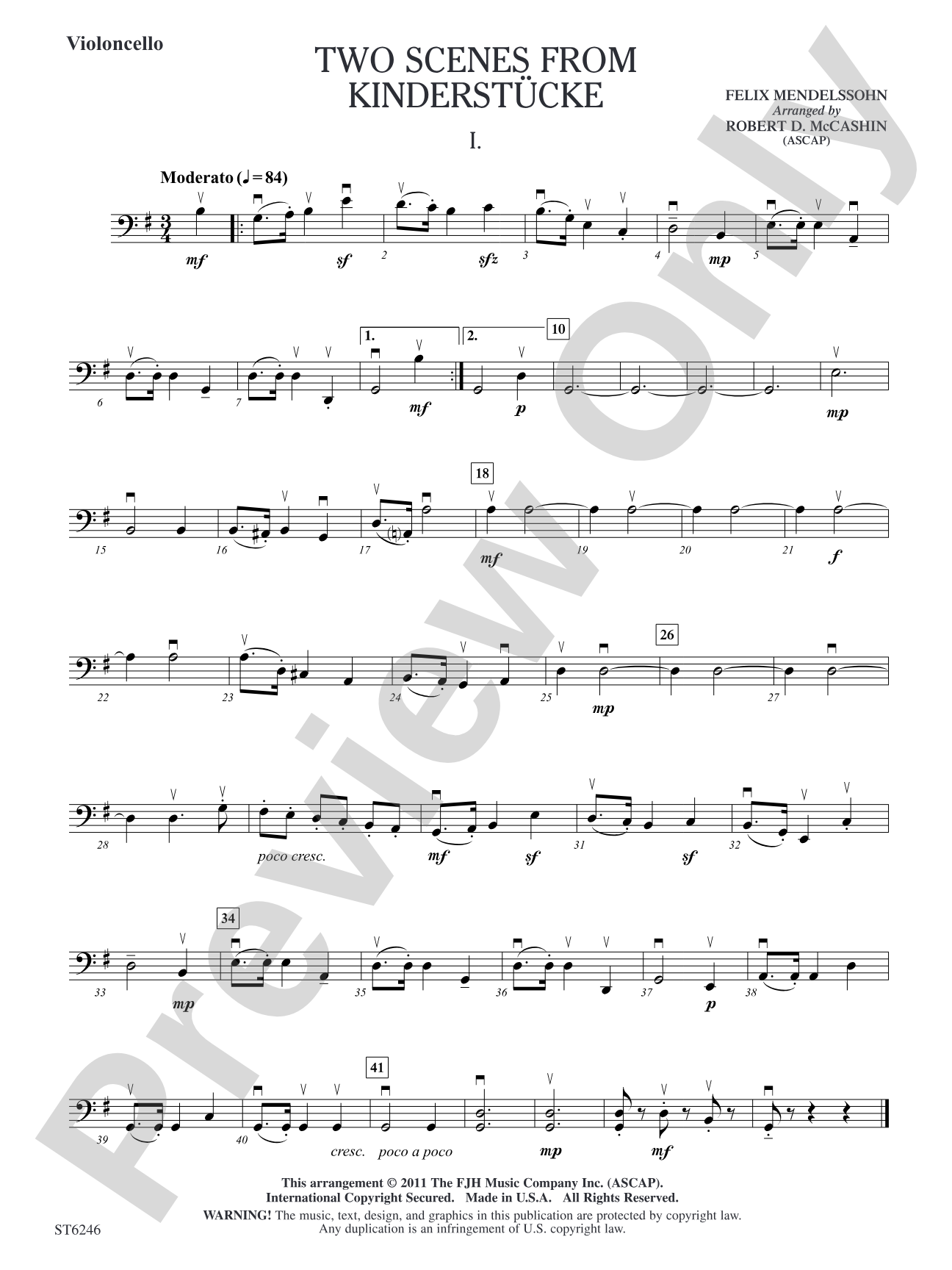
Two Scenes from Kinderstucke: Violoncello Sheet Music Preview

Two Scenes from Kinderstucke: Violoncello

Arranged by Robert D. McCashin

Grade: 2.5

Item: 98-PC-DST6246_VC1

Digital Download
$7.00
Description
This delightful two-movement arrangement is drawn from the longer work Sechs Kinderstücke (Six Pieces for Children), by Felix Mendelssohn. McCashin's arrangement of the first and third movements exemplify Mendelssohn's preference for short "character pieces" toward the end of his life. A wonderful way to infuse your program with some lighter selections while exposing your students to the work of a master composer.

Don't just read it, hear it, play along with it, and watch your students grow with it. In MakeMusic Cloud, Two Scenes from Kinderstucke: Violoncello comes alive with professional accompaniment, adjustable tempo, and built-in practice tools that turn solo practice into real progress.

Sample Audio
0:00
0:00
Sample Video
Additional Details
Series: FJH Developing Strings
Publisher: The FJH Music Company, Inc.
SKU: 98-PC-DST6246_VC1

More about this title

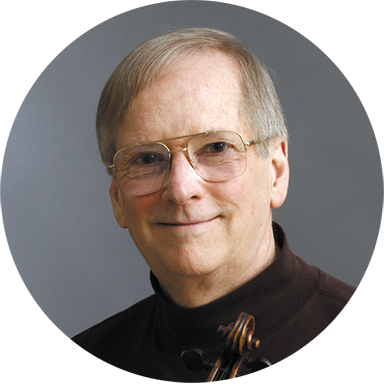
About the Arranger: Robert D. McCashin

Robert D. McCashin

Robert D. McCashin holds a DMA in conducting from the University of Arizona and spent 43 years as a string educator and conductor at the university level, including 24 years as Music Director of orchestras at James Madison University. He earned his Bachelor and Master degrees in violin performance from Louisiana State University and received JMU's Distinguished Teacher Award in 2015.

Beyond his teaching career, McCashin has established himself as a prolific arranger, publishing nearly 80 educational works across grade levels I through V. His arrangements have earned bestseller status and multiple Editors' Choice recognitions in music education circles. He is also co-author of the influential string class methods New Directions for Strings and A Scale in Time.

Why we love this

McCashin demonstrates real restraint here, selecting just two of Mendelssohn's character pieces rather than overloading your students with material. The Grade 2.5 level means younger ensembles can authentically engage with a canonical composer without the technical barriers that often keep masterworks out of reach. These movements work equally well as intermission palate-cleansers or as the core of a lighter, more accessible concert program.

What to expect

Intimate and reflective. Mendelssohn's Kinderstücke capture a composer writing with economy and elegance, every gesture purposeful. These two movements carry a quiet sophistication that feels sophisticated without pretension, inviting players and audiences into a more refined musical space.

Who it's for

String orchestras at the intermediate level looking to program authentic masterwork excerpts without the technical or physical demands of full-length works. This arrangement also serves teachers introducing students to Mendelssohn's compositional voice and his late preference for concise, character-driven forms.

How to get the most out of it

  • Lean into the character contrasts between the two movements. The first reads as more songlike and gentle; let that shape your tempi and dynamic range before moving to the second.
  • Check intonation carefully in sustained passages where middle voices carry harmonic weight. Mendelssohn's language is elegant precisely because every note serves the phrase.
  • Balance your first violins against the inner voices. McCashin's arrangement honors the original's contrapuntal texture, so resist the urge to let the melody dominate.

How to use it

Use these movements to anchor a concert devoted to 19th-century string music, pairing them with other character pieces or lighter works to show stylistic range. They also serve beautifully as a bridge repertoire option, offering younger orchestras a stepping stone from pedagogical works toward the larger classical and romantic canon.

Skills your students will build

  • Phrasing within shorter formal structures and character pieces
  • Balancing sustained harmonic textures among inner voices
  • Expressive control across a narrower dynamic range
  • Familiarity with Mendelssohn's compositional language and aesthetic

You May Also Like