
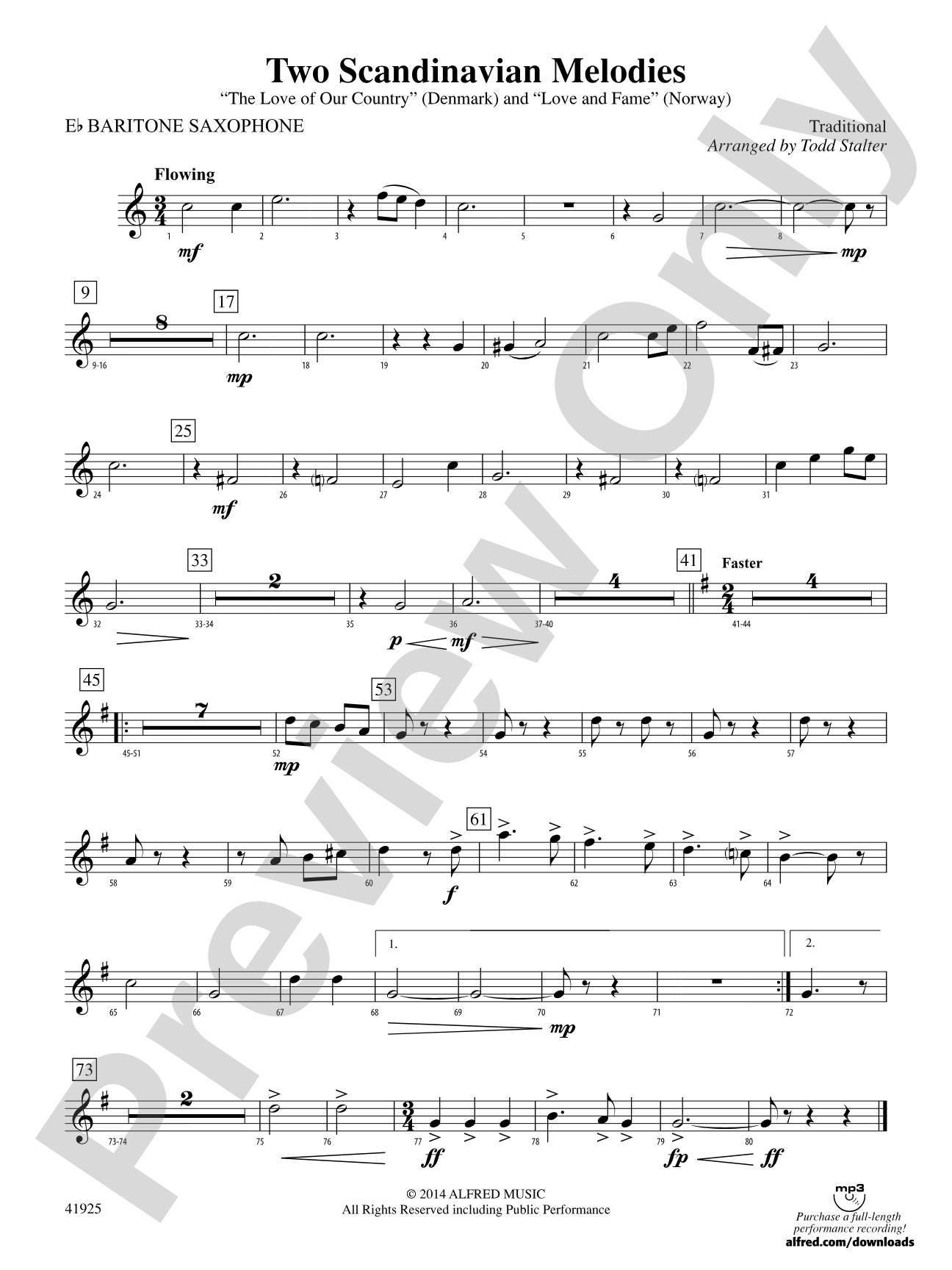

Two Scandinavian Melodies: E-flat Baritone Saxophone
The Love of Our Country / Love and Fame
By Todd Stalter
Grade: 1.5 (Easy)
Item: 00-PC-0016407_BTX
$3.00
Pickup currently not available
Description
These two delightful Scandinavian melodies offer a glimpse into the folk music of a region that is not prominently featured in band literature. Teaching opportunities abound for sensitive musicianship and stylistic nuance, and the romantic color harmonies provide a rich texture that enhances the depth of the sound of the concert band. (2:40)


Don't just read it, hear it, play along with it, and watch your students grow with it. In MakeMusic Cloud, Two Scandinavian Melodies: E-flat Baritone Saxophone comes alive with professional accompaniment, adjustable tempo, and built-in practice tools that turn solo practice into real progress.
Open in the Player
Jump straight in and assign it today.
Start Your Free Trial
Open this title and explore the full library in minutes.
Sample Audio
1
Audio File
--:--
0:00
0:00
Sample Video
Additional Details
Series:
Challenger Band Series
Publisher:
Alfred Music
Page Count:
122
SKU:
00-PC-0016407_BTX
More about this title
About the Composer: Todd Stalter

Todd Stalter directed the Eureka High School band program in Illinois for 34 years, building it into a powerhouse ensemble recognized statewide. His concert and marching bands earned consistent superior ratings at state competitions, with the marching band claiming 16 Class 1A state championships. The program performed in prestigious venues including Orchestra Hall in Chicago and Walt Disney World, and his ensembles won festival championships at the Cotton and Liberty Bowls.
Beyond the high school podium, Stalter has conducted All-State bands in Georgia and Delaware, led numerous regional honor bands, and maintained an active schedule as an adjudicator and clinician. He holds membership in the Illinois State Marching Band Championships Hall of Fame. His compositions for band and string orchestra are performed in schools across the country and appear on state contest lists; several works are featured in the GIA publication "Teaching Music Through Performance in Band." Stalter earned his bachelor's degree in music education and master's degree in trumpet performance from Illinois State University.
Why we love this
Stalter writes with genuine sensitivity to the folk tradition, capturing authentic Scandinavian character without oversimplification. The harmonic language is sophisticated enough to sustain interest for both player and listener, yet the Grade 1.5 level keeps these pieces accessible for developing ensembles. Few band directors program music from this region; adding these melodies expands repertoire horizons while delivering the musicianship challenges that justify rehearsal time.
What to expect
These melodies evoke the clear, cool light of northern landscapes. The harmonic fabric wraps around simple, memorable lines with a romantic warmth that feels unhurried and contemplative. There's an understated elegance here, the kind that comes from trusting melody and letting harmony serve it rather than dominate it.
Who it's for
Bands at the Grade 1.5 level ready to move beyond generic Americana into repertoire with regional identity and harmonic sophistication. Directors seeking concert or festival music that teaches cultural awareness alongside musical fundamentals will find genuine teaching value here.
How to get the most out of it
- Shape each melody with the gentle contours of vocal folk singing; these are songs that people sang, not instrumental virtuosity pieces. Encourage phrasing that breathes naturally rather than mechanically.
- Let the romantic harmonies bloom without over-balancing. Stalter's color comes from voicing clarity, not dynamic heaviness. Transparency in the middle voices unlocks the harmonic richness.
- Balance the solo lines carefully when they appear in the second section. These moments invite spotlight but require restraint; the folk character collapses under too much vibrato or expressive weight.
- Pay close attention to the recorded accompaniment for stylistic reference. Scandinavian folk music has particular rhythmic and tonal qualities that a model recording makes immediately clear.
How to use it
These pair naturally on a concert program with other folk or world music selections, offering a thematic thread that broadens your audience's geographical awareness. The 2:40 duration and accessible difficulty make them ideal for festival competition or a lighter concert slot that still demands musical integrity.
Skills your students will build
- Phrasing lyrical lines with vocal sensitivity and natural breathing
- Balancing transparent voicing while maintaining harmonic color
- Reading and performing music from non-standard repertoire traditions
- Stylistic interpretation of folk music idiom
- Ensemble blend across middle voices in romantic harmonic contexts