
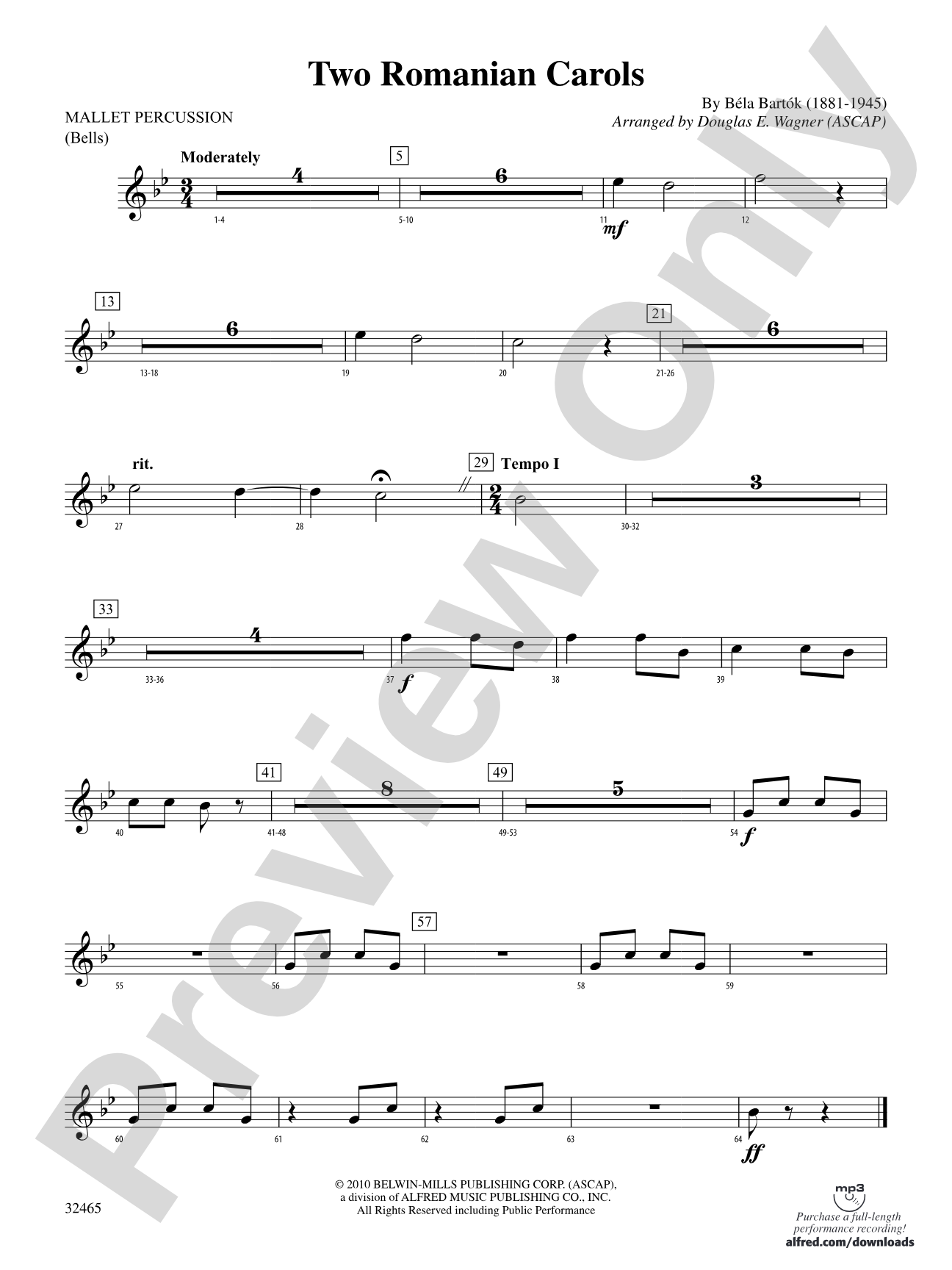

Two Romanian Carols: Mallets
By Béla Bartók / arr. Douglas E. Wagner
Grade: 1 (Very Easy)
Item: 00-PC-0014351_M1
$3.00
Pickup currently not available
Description
Hungarian-born composer Béla Bartók assembled two sets of Romanian Christmas Carols for piano solo in 1915. Two of these contrasting settings fit the musical and technical parameters for less experienced concert band players perfectly, and are presented in this arrangement with slight alteration. A fresh new holiday arrangement with a multicultural flavor! This title is available in MakeMusic Cloud.


Don't just read it, hear it, play along with it, and watch your students grow with it. In MakeMusic Cloud, Two Romanian Carols: Mallets comes alive with professional accompaniment, adjustable tempo, and built-in practice tools that turn solo practice into real progress.
Open in the Player
Jump straight in and assign it today.
Start Your Free Trial
Open this title and explore the full library in minutes.
Sample Audio
1
Audio File
--:--
0:00
0:00
Sample Video
No sample videos found.
Additional Details
Series:
Belwin Beginning Band
Publisher:
Alfred Music
Page Count:
132
SKU:
00-PC-0014351_M1
More about this title
About the Composer: Béla Bartók
Béla Bartók (1881-1945) was a Hungarian composer and pianist whose curiosity about folk music shaped his entire creative life. He traveled throughout Eastern Europe collecting and analyzing thousands of traditional songs, and this ethnographic work became the foundation of his compositional voice. His arrangements of Romanian Christmas Carols, assembled in 1915, reflect his commitment to preserving and reimagining folk material for concert settings.
Bartók's legacy in music education remains significant. His pieces for young players and his systematic approach to building technique through musical substance influenced generations of pedagogy. These Romanian Carols exemplify his ability to honor authentic folk sources while creating works that are accessible without sacrificing artistic integrity.
Why we love this
This arrangement brings Grade 1 students into contact with genuine folk melody and a major twentieth-century voice without requiring advanced technical facility. The contrast between the two carols gives your band exposure to contrasting character and mood, and the multicultural context enriches holiday programming beyond the expected. Douglas E. Wagner's adaptation preserves Bartók's harmonic flavor while respecting what beginning players can execute.
What to expect
These carols possess the quiet dignity of authentic folk melody. The harmonic language is modern but never harsh, with an underlying warmth that feels both contemplative and genuinely celebratory. There is restraint in the orchestration and honesty in the voice writing that invites players to listen closely to one another and to the musical line itself.
Who it's for
Grade 1 concert bands looking to program music with cultural depth and historical substance. Directors who want their developing musicians to engage with a major twentieth-century composer and explore folk material from outside the Western European tradition. Beginning ensembles that benefit from material pitched at their technical level but not their intellectual one.
How to get the most out of it
- Balance the melodic voices across your wind sections so the folk tune emerges clearly; these melodies carry the emotional weight, and students need to hear them as primary.
- Approach the harmonic language with clarity in articulation rather than aggressive dynamics; Bartók's voice parts are lean and deliberate, so crisp tonguing and clean releases let the harmony speak.
- Find the tempo that allows your players to shape phrases naturally; beginning bands often rush carols, but these arrangements reward a slightly patient pace that lets students breathe between ideas.
How to use it
Pair these carols with other Grade 1 holiday selections to create a concert set that demonstrates range and cultural variety. The brevity and accessibility make them ideal for a winter concert centerpiece that introduces audiences to Bartók's arranging craft. Consider programming them alongside folk-inspired works by other twentieth-century composers to build thematic coherence.
Skills your students will build
- Balancing independent melodic lines within ensemble texture
- Identifying and performing authentic folk melodic shapes
- Interpreting harmonic language from the early twentieth century
- Sustaining lyrical phrasing at Grade 1 technical demands
- Reading and executing score parts in concert band instrumentation