
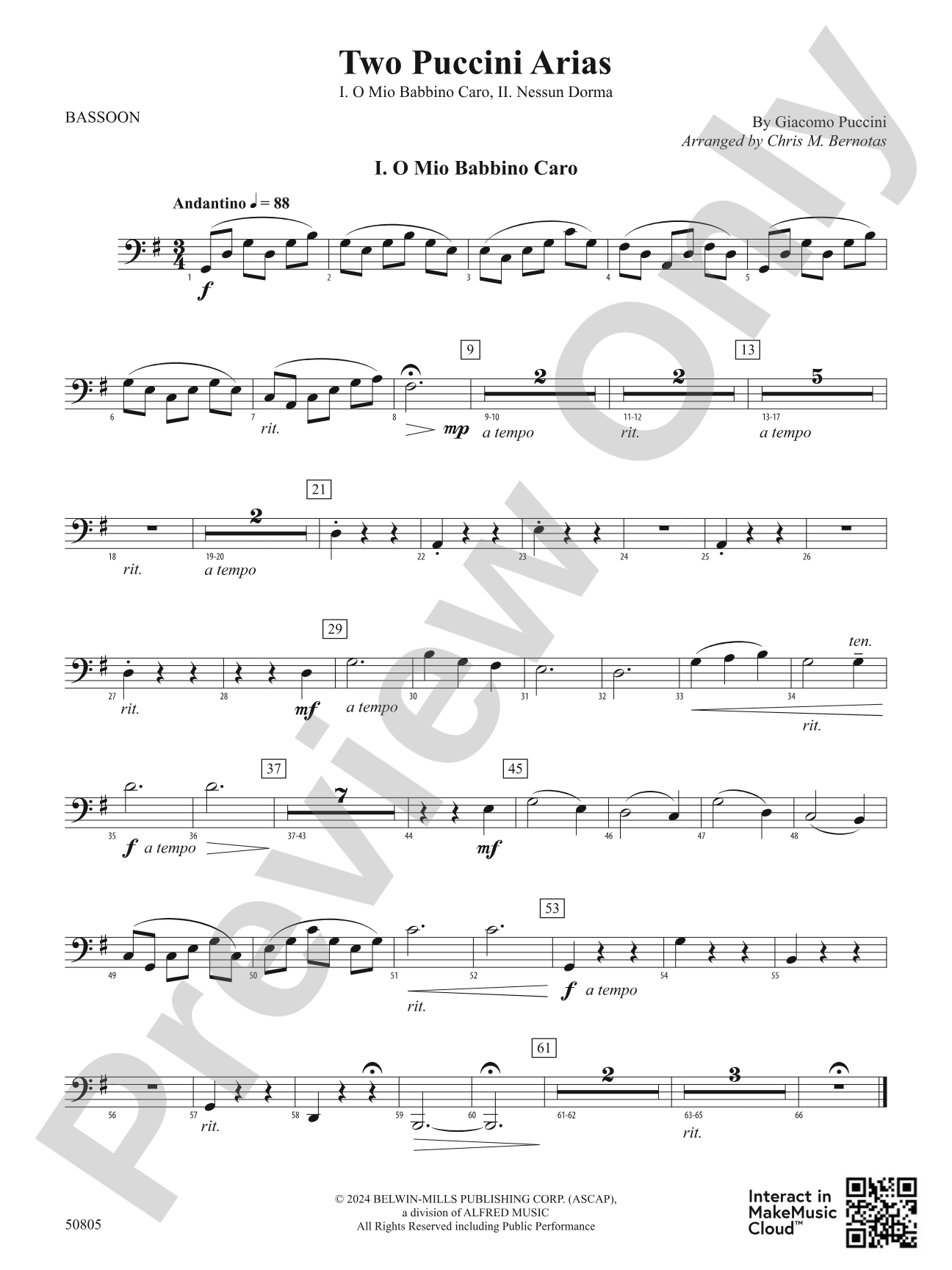

Two Puccini Arias: Bassoon
I. O Mio Babbino Caro, II. Nessun Dorma
By Giacomo Puccini / arr. Chris M. Bernotas
Grade: 3.5
Item: 00-PC-0019268_B1
$3.00
Pickup currently not available
Description
Two Puccini Arias, arranged by Chris M. Bernotas, includes "O Mio Babbino Caro" and "Nessun Dorma," two of the composer's most beloved arias. This breathtaking full orchestra arrangement is equally effective for string orchestra alone or with added winds and percussion. There is a brief violin solo in "O Mio Babbino Caro" and an expressive cello solo in "Nessun Dorma." Experience captivating melodies and Puccini's operatic brilliance. (4:25)


Don't just read it, hear it, play along with it, and watch your students grow with it. In MakeMusic Cloud, Two Puccini Arias: Bassoon comes alive with professional accompaniment, adjustable tempo, and built-in practice tools that turn solo practice into real progress.
Open in the Player
Jump straight in and assign it today.
Start Your Free Trial
Open this title and explore the full library in minutes.
Sample Audio
1
Audio File
--:--
0:00
0:00
Sample Video
Additional Details
Series:
Belwin Concert Full Orchestra
Publisher:
Alfred Music
SKU:
00-PC-0019268_B1
More about this title
About the Composer: Giacomo Puccini
Giacomo Puccini (1858-1924) stands as one of opera's most direct melodists. His gift for writing soaring, instantly memorable lines shaped early 20th-century lyric theater and continues to dominate operatic repertoire worldwide. For conductors and orchestra students, his work offers a masterclass in orchestration that balances transparency with lush color.
Puccini's operas remain staples of professional and educational concert programming because his melodies translate across ensembles and skill levels. Whether performed by a professional orchestra or a high school ensemble, his music communicates emotional depth through elegance rather than technical complexity. This accessibility, paired with his sophisticated harmonic language, makes him ideal for building musicianship at multiple levels.
Why we love this
Bernotas's orchestration captures Puccini's vocal writing without requiring singers, letting your orchestra claim these beloved arias as their own. The arrangement respects the original melodies while creating flexible scoring options (strings alone or full orchestra) that adapt to your ensemble's size and instrumentation. Most conductors program either aria solo; having both in one download gives you two concert-ready pieces without hunting through separate catalogs.
What to expect
These arrangements shimmer with the warmth and yearning of their operatic origins. 'O Mio Babbino Caro' floats on transparent textures punctuated by that intimate violin conversation, while 'Nessun Dorma' unfolds with quiet intensity, building toward moments of genuine climax. Together, they remind audiences why Puccini's melodies have endured for over a century.
Who it's for
Orchestras at the Grade 3.5 level looking to program operatic masterworks without commissioning singers. Conductors who want their students to experience Puccini's gift for lyric melody and orchestral color in an accessible, concert-ready format. Festival and contest participants seeking repertoire that combines cultural substance with performance success.
How to get the most out of it
- Balance the prominent violin solo in 'O Mio Babbino Caro' so it emerges as a featured line, not a buried countermelody. The solo should sing with the warmth you'd hear from a soprano soloist.
- In 'Nessun Dorma,' shape the cello solo with long, sustained phrasing rather than pushing into the passage rhythmically. This aria's power lies in its stillness and patience.
- Conduct these arrangements with the weight and continuity of lyric music, not concert band idiom. Puccini's phrases breathe across bar lines; let your orchestra follow the melodic contour rather than emphasizing beats.
- Bring out inner string lines that support the main melody. Puccini's orchestration is transparent, and your musicians will hear how each part contributes to the whole.
How to use it
Program these arias as a two-movement suite mid-concert to provide lyrical contrast to heavier contemporary or classical works. Each aria stands alone for contest or festival performance; the pairing also works as a complete concert closer for pops or gala settings. Consider placing them where your audience expects emotional substance but appreciates a break from symphonic complexity.
Skills your students will build
- Conducting lyric phrases across bar lines and managing long-lined melodic phrasing
- Balancing transparent orchestration and voicing inner harmonic lines
- Featuring and supporting solo instruments (violin and cello) within ensemble context
- Interpreting operatic expression and vocal character through orchestral sound
- Managing flexible instrumentation (strings alone or with winds and percussion)