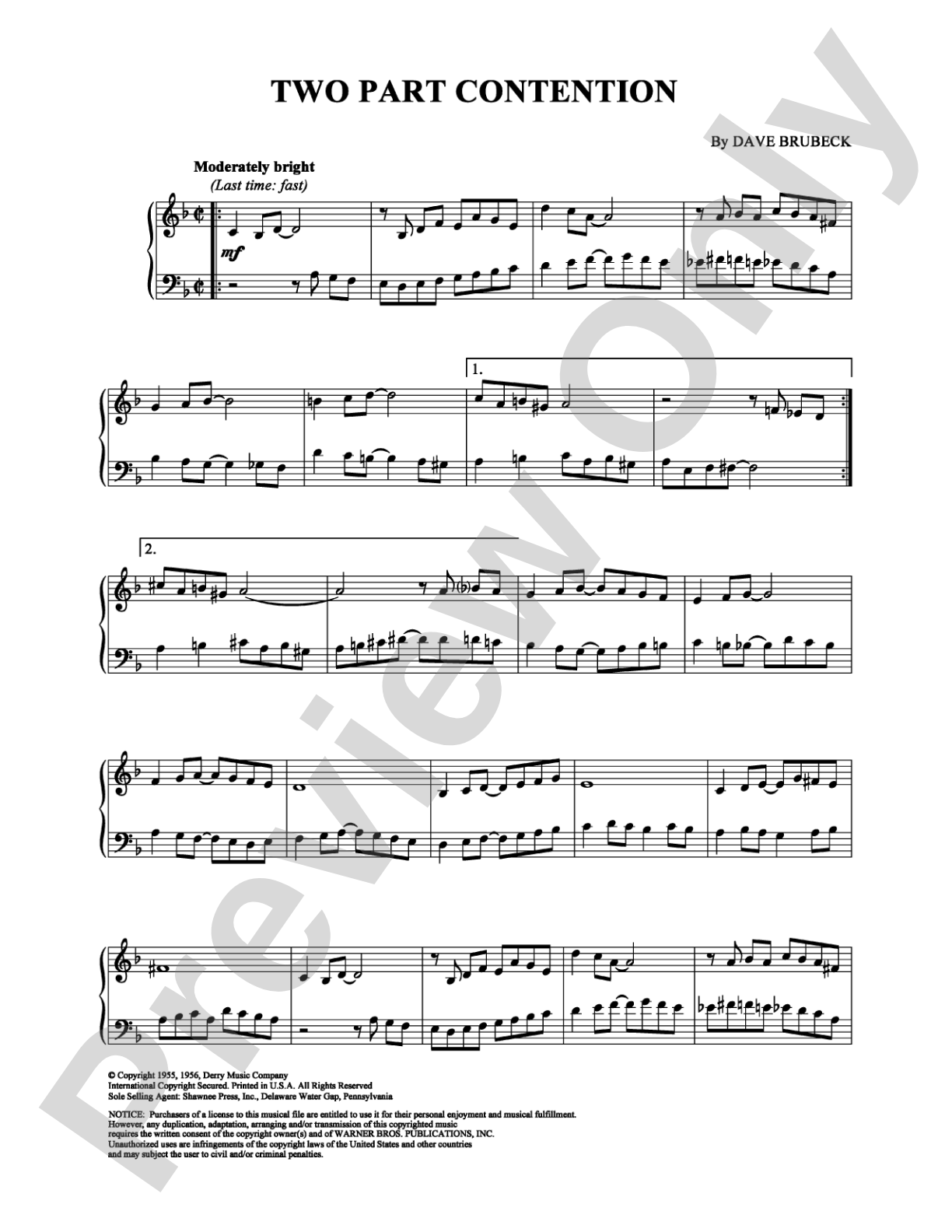
Two Part Contention: Piano Digital Sheet Music

Two Part Contention: Piano Digital Sheet Music

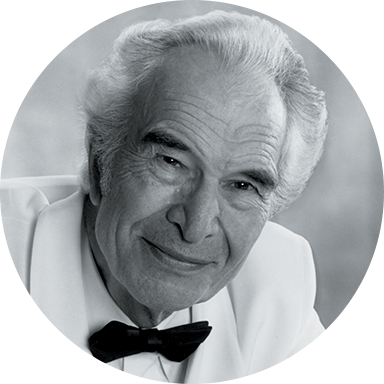
Dave Brubeck

Item: 00-PS-0001592

Digital Download
$3.99
Description

Two Part Contention: Piano Digital Sheet Music isn't in MakeMusic Cloud just yet...but it could be. Let us know you'd like to see it, and you'll help shape what comes next. In the meantime, start a free trial and dive into thousands of interactive titles your students can play along with today.

Sample Audio
No sample audio found.
Sample Video
Additional Details
SKU: 00-PS-0001592

More about this title

About the Artist: Dave Brubeck

Dave Brubeck

Dave Brubeck shaped modern jazz through his distinctive piano voice and compositional ambition. Beyond his improvisational mastery, he created an expansive body of notated works spanning choral pieces, orchestral suites, chamber music, and large-scale choral-orchestral compositions. His album Time Out became the first jazz record to sell over a million copies, and compositions like To Hope! have been performed across Europe and North America by major orchestras and choral societies.

Breaking racial barriers in mid-20th-century American music was central to Brubeck's legacy. He studied with Darius Milhaud at Mills College following World War II service, absorbing the French composer's philosophy of blending jazz language with classical structures. His honors include the Presidential Medal of the Arts, a Grammy Lifetime Achievement Award, and recognition from the American Classical Music Hall of Fame.

Why we love this

Brubeck's Two Part Contention brings the intellectual rigor of his compositional voice to a piece designed for solo piano exploration. This work reflects his ability to create melodic material that is both pianistically engaging and musically substantial, allowing pianists to access his harmonic thinking without requiring a full ensemble.

What to expect

Two Part Contention captures the essence of Brubeck's conversational approach to jazz, where two distinct musical voices negotiate, challenge, and complement each other. The piece has intellectual clarity paired with an underlying lyricism, creating a dialogue that feels both composed and spontaneous.

Who it's for

Pianists with solid technique who want to explore jazz composition through notated material will find this piece rewarding. It works well for intermediate-advanced students ready to engage with Brubeck's harmonic vocabulary and for performers interested in repertoire that bridges classical and jazz traditions.

How to get the most out of it

  • Approach the contention between the two parts as a musical argument rather than a duet; each hand must voice its line with independence and character
  • Pay attention to Brubeck's harmonic language; his jazz-informed sonorities may sit differently under the fingers than traditional classical progressions, so let your ear guide voicing and balance
  • Shape the phrases across both parts simultaneously rather than treating them as separate voices, creating continuity even when the hands move in opposite directions

How to use it

Feature this piece in a concert exploring composers who blended classical and jazz vocabularies, or program it as a bridge between a classical sonata and a more overtly improvisational jazz standard. It also serves as compelling recital material for pianists specializing in twentieth-century American repertoire.

Skills your students will build

  • Playing independent, idiomatic lines in each hand with distinct character
  • Navigating jazz-informed harmony and sonorities at the piano
  • Interpreting notated jazz composition with both technical precision and musical flexibility
  • Balancing two contrapuntal voices while maintaining coherent phrasing

You May Also Like