
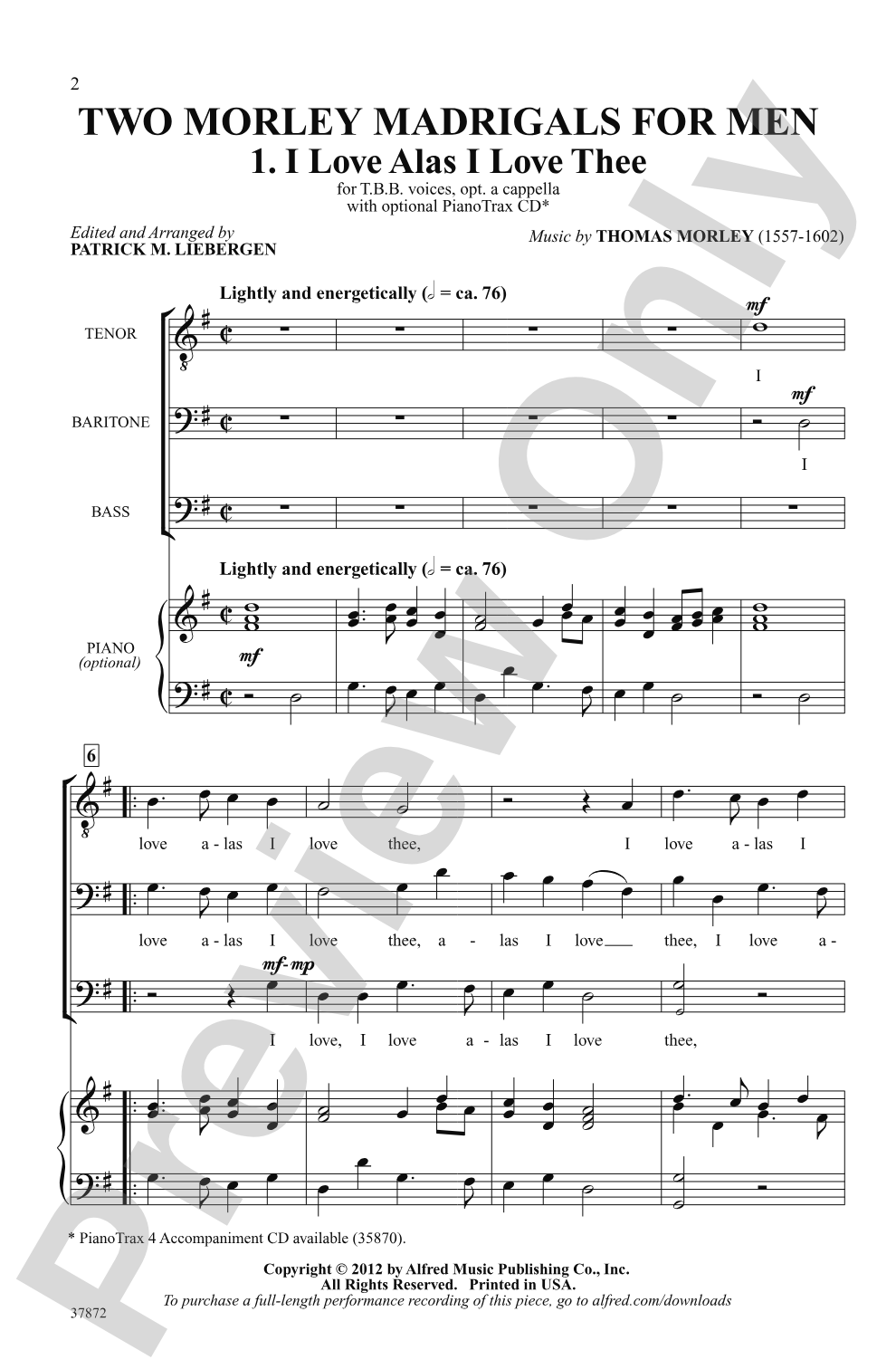
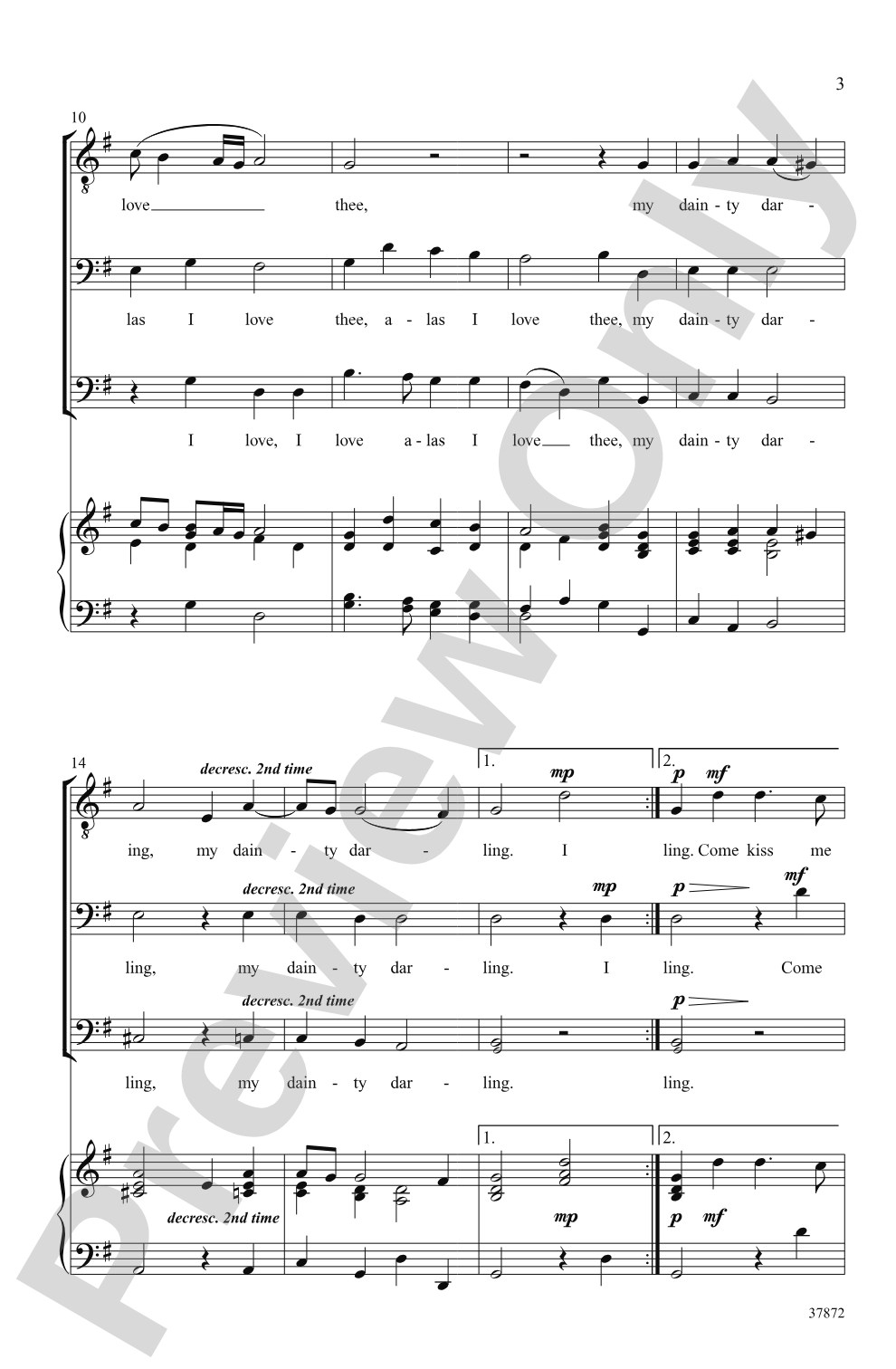
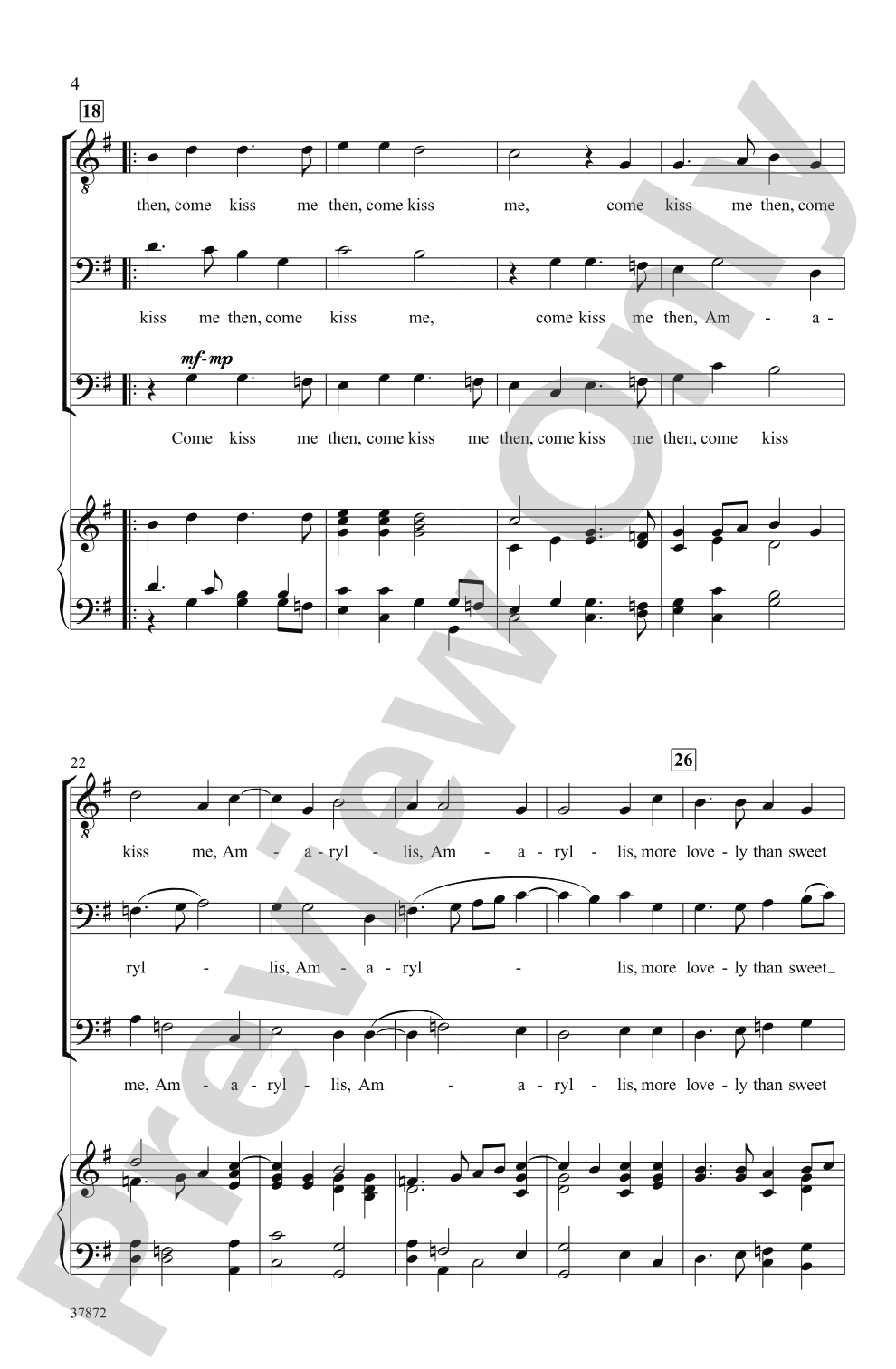

Two Morley Madrigals for Men: TBB, Opt. a cappella Choral Octavo
By Thomas Morley / ed. and arr. Patrick M. Liebergen
Item: 00-PO-0001238
$1.80
Minimum order quantity: 20 copies
Pickup currently not available
Description
What a unique love-song set for the guys! These two English madrigals may be sung a cappella or with the piano, or you may choose to add the optional cello on the second piece. A gentleman's touch of class. Accompaniment available on PianoTrax 4 CD (00-35870).


Two Morley Madrigals for Men: TBB, Opt. a cappella Choral Octavo isn't in MakeMusic Cloud just yet...but it could be. Let us know you'd like to see it, and you'll help shape what comes next. In the meantime, start a free trial and dive into thousands of interactive titles your students can play along with today.
Request This Title
Tell us you want it.
Start Your Free Trial
Explore everything that's ready to play right now.
Sample Audio
1
Audio File
--:--
0:00
0:00
Sample Video
No sample videos found.
Additional Details
Series:
Alfred Choral Designs
Publisher:
Alfred Music
Page Count:
12
SKU:
00-PO-0001238
Instrumentation:
Opt. Cello
More about this title
About the Composer: Thomas Morley
Thomas Morley (1557 or 1558–1602) was among the most prolific and celebrated composers of the English Renaissance. He served as a musician at St. Paul's Cathedral in London, held the position of organist at Christ Church, and eventually became a Gentleman of the Chapel Royal. His output spanned sacred music, instrumental works, and secular vocal forms, but he earned lasting fame for his madrigals and lighter vocal pieces that captured the wit, elegance, and emotional range of late Renaissance secular song.
Moreover, Morley was a theorist and pedagogue whose treatise "A Plaine and Easie Introduction to Practicall Musicke" remains a vital window into Renaissance musical practice. His madrigals in particular reveal a composer attuned to text expression, harmonic color, and the pleasures of ensemble singing among skilled amateurs. These works have endured as cornerstones of the madrigal repertoire and continue to define what singers learn about phrasing, blend, and the marriage of poetry and music.
Why we love this
Patrick Liebergen's arrangement preserves the authentic Renaissance character of these Morley madrigals while making them accessible to men's choirs that may or may not include readers fluent in period notation or practice. The flexibility to perform a cappella, with piano support, or with optional cello opens the door to varied programming and rehearsal contexts. Singers discover the jeweled simplicity of Renaissance counterpoint without the historical-performance barriers that sometimes intimidate modern ensembles.
What to expect
These madrigals shimmer with the courtly grace and emotional sophistication of the Elizabethan era. The writing is clear and singable yet intricate; voices interweave in ways that feel both inevitable and surprising, creating moments of harmonic luminosity that reward close listening. The text-painting typical of the madrigal form invites singers to discover how Morley's music echoes the sentiment and imagery of the words.
Who it's for
Men's choirs seeking authentic Renaissance repertoire that demands musicality and ensemble discipline without overwhelming singers new to the period. Directors who want to program madrigals in festival settings or concert programs will find these two pieces manageable in scope yet substantial in artistic reward. Solo ensemble competitions and chamber choral festivals particularly value carefully edited madrigal sets at this level.
How to get the most out of it
- Approach the text with the clarity and intentionality of speech. Madrigals thrive on word-painting and expressive phrasing; let the poetry drive the musical line rather than treating phrases as purely musical shapes.
- If performing a cappella, establish the intonation center and harmonic foundation before each section begins. The optional cello part in the second madrigal can anchor ensemble pitch even if you reserve it for select rehearsals or performances.
- Balance the three voices so that no single line dominates. Renaissance counterpoint requires all voices to remain audible; adjust dynamic shape to support the text and harmonic movement rather than defaulting to uniform volume.
- Work the rhythmic interplay between voices as carefully as you would in a fugue. Morley's counterpoint creates elegant cross-rhythms that emerge only when each part lands with precision and independence.
How to use it
Program these madrigals as a contrasting pair within a concert that also includes modern or contemporary works; their Renaissance authenticity and vocal intimacy offer a striking complement to larger-scale choral works. They fit naturally into a madrigal group or secular-music set and work equally well as a cappella selections or with instrumental support depending on your rehearsal resources and performance context. Consider them for early-music festivals, competitive choral events, or chamber concert series where singers can engage both ensemble members and audience in the particulars of Renaissance style.
Skills your students will build
- Reading and singing Renaissance counterpoint in open score or modern notation
- Text expression and word-painting techniques typical of the madrigal form
- Independent voice leading and intonation within a contrapuntal texture
- Ensemble blend and balance in three-part writing without reliance on instrumental reinforcement
- Historical awareness of English secular vocal music and Renaissance choral practice