Two Modal Episodes: Viola Sheet Music Preview

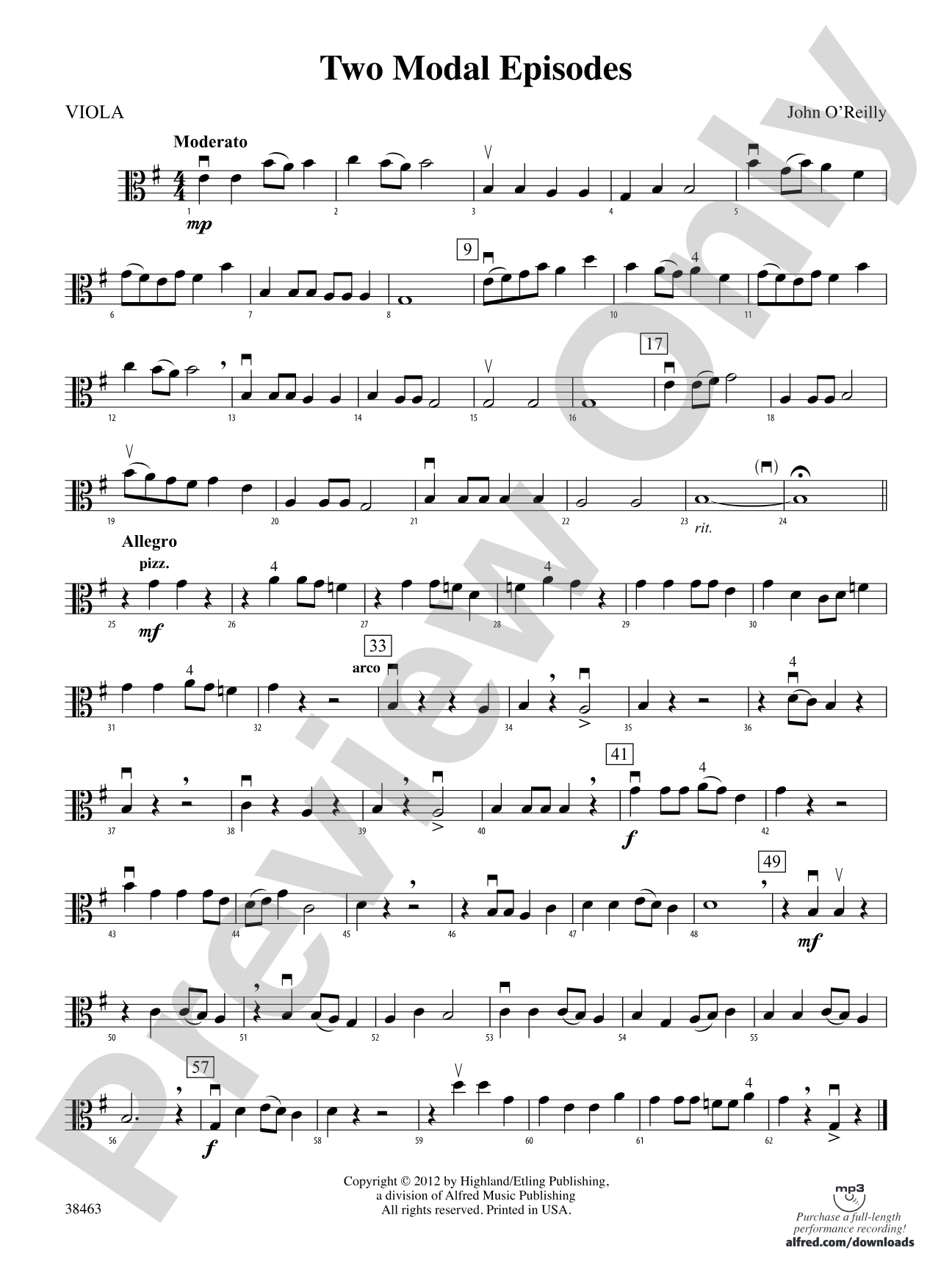
Two Modal Episodes: Viola

By John O'Reilly

Grade: 2

Item: 00-PC-0015511_VA1

Digital Download
$5.99
Description
Explore two modes, first in a chant-like E Aeolian section reminiscent of early Medieval music, followed by a dance-like G Mixolydian section. What a great change of pace that includes dialogues between parts of the orchestra as they move through less familiar modes! Correlates to Sound Innovations for String Orchestra, Book 1 Level 5.

Don't just read it, hear it, play along with it, and watch your students grow with it. In MakeMusic Cloud, Two Modal Episodes: Viola comes alive with professional accompaniment, adjustable tempo, and built-in practice tools that turn solo practice into real progress.

Sample Audio
0:00
0:00
Sample Video
Additional Details
Series: Sound Innovations for String Orchestra
Publisher: Alfred Music
Page Count: 72
SKU: 00-PC-0015511_VA1

More about this title

About the Composer: John O'Reilly

John O'Reilly is a prolific composer and educator whose work for young musicians balances accessibility with genuine musical substance. His catalog spans all levels of school ensembles, and he has a gift for creating pieces that expand students' harmonic vocabulary while staying grounded in achievable technique.

O'Reilly's educational approach shines in his deliberate progression through musical concepts. Rather than treating modal writing as an abstract theory exercise, he builds pieces that let students hear and feel how modes differ from major and minor tonality, making the conceptual leap concrete and musical.

Why we love this

O'Reilly gives young orchestras a genuine introduction to modal writing without abstract theory. The piece moves through two contrasting modes with clear textural support, letting students hear and feel the difference between Aeolian and Mixolydian rather than simply learning their names. The orchestral dialogue keeps energy high while reinforcing part independence.

What to expect

The opening unfolds like a prayer set in stone and shadow, spare and contemplative in its Aeolian minor mode. Then the ground shifts beneath your feet as the orchestra awakens into a spirited dance, the Mixolydian mode bringing brightness and lift through its raised seventh degree.

Who it's for

Young string orchestras (grades 5-6) ready to explore beyond major and minor tonality, particularly those using Sound Innovations for String Orchestra. Conductors seeking concert or festival repertoire that teaches modal thinking without overwhelming less experienced ensembles.

How to get the most out of it

  • Shape the E Aeolian opening with long lines and minimal vibrato to capture the chant-like quality; ask sustained voices to think of cathedral acoustics rather than concert hall resonance.
  • Mark the shift to G Mixolydian deliberately in rehearsal. The rhythmic energy increases, so clarify where the dance character begins and let that drive tempo choices in the second section.
  • Balance the sectional dialogues by identifying which parts carry melody and which provide harmonic support in each exchange. This prevents the conversations from becoming muddy.
  • Use the mode change as a natural break point in rehearsal. Work each section thoroughly before combining them, so students understand the compositional contrast.

How to use it

Position this as a standalone concert piece that demonstrates stylistic range, pairing it with one contrasting major-key work to highlight the modal darkness and light. Its festival-ready length and clear sectional structure make it a natural choice for early-season contest preparation or an educational concert exploring medieval and modal influences on contemporary composition.

Skills your students will build

  • Reading and performing in modes other than major and minor (Aeolian and Mixolydian specifically)
  • Responding to tonal centers that lack traditional harmonic function
  • Executing part-to-part dialogues with clarity and independence
  • Adjusting tone color and vibrato to match the character of contrasting sections
  • Recognizing structural shifts and coordinating ensemble entries across mode changes

You May Also Like