
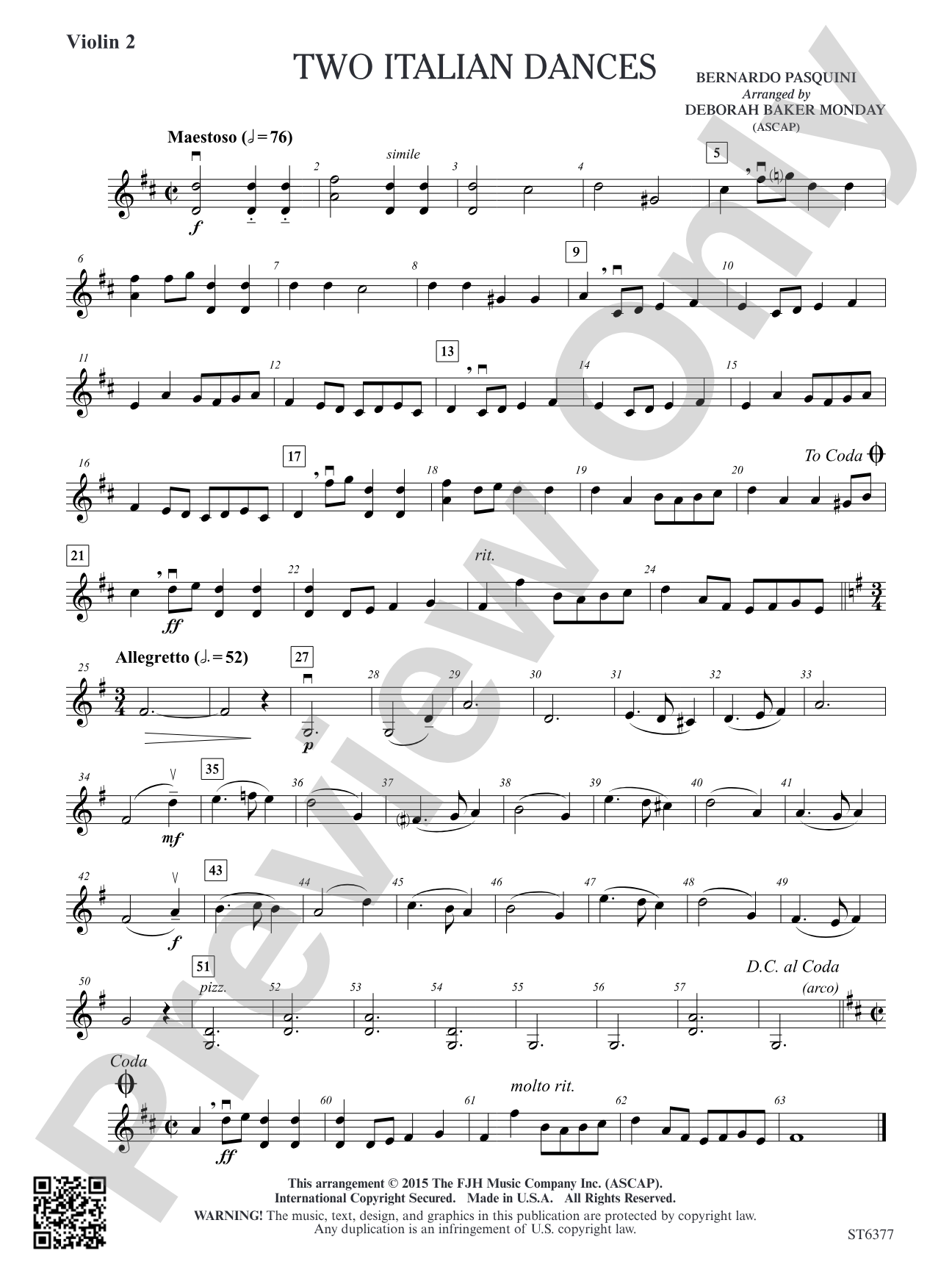

Two Italian Dances: Violin 2
By Bernardo Pasquini / arr. Deborah Baker Monday
Grade: 2
Item: 98-PC-DST6377_VN2
$7.00
Pickup currently not available
Description
These two lively dances come from a collection of keyboard pieces by Italian composer Pasquini. The music is very rich and all instruments have melodically interesting roles. An excellent choice for concert or festival, and also ideal as a change of pace in your program.


Don't just read it, hear it, play along with it, and watch your students grow with it. In MakeMusic Cloud, Two Italian Dances: Violin 2 comes alive with professional accompaniment, adjustable tempo, and built-in practice tools that turn solo practice into real progress.
Open in the Player
Jump straight in and assign it today.
Start Your Free Trial
Open this title and explore the full library in minutes.
Sample Audio
1
Audio File
--:--
0:00
0:00
Sample Video
No sample videos found.
Additional Details
Series:
FJH Developing Strings
Publisher:
The FJH Music Company, Inc.
SKU:
98-PC-DST6377_VN2
More about this title
About the Composer: Bernardo Pasquini
Bernardo Pasquini (1637-1710) was one of the most accomplished keyboard composers of the Italian Baroque, serving as organist and composer at the court of Prince Colonna in Rome. His keyboard works are characterized by inventive counterpoint, graceful melodic lines, and a keen understanding of harmonic color—qualities that translate beautifully when arranged for ensemble.
Pasquini's music bridges the gap between strict polyphonic writing and the emerging galant style of the 18th century. His dances and lighter instrumental pieces reveal a composer deeply interested in how melody can engage the listener while maintaining musical substance, making his work ideal for young orchestras developing their musicianship.
Why we love this
Deborah Baker Monday's arrangement preserves the melodic charm of Pasquini's originals while distributing material across the entire string section, ensuring every player stays engaged. At Grade 2, the writing avoids thick textures without sacrificing musical interest—strings get real parts to sink their teeth into rather than accompanimental padding. The dances fit perfectly as a refreshing interlude in concert programming, offering something substantive yet accessible.
What to expect
Graceful and buoyant, these dances have the energy of a court celebration without pretense. The writing sparkles with Baroque elegance yet feels warm and accessible, inviting listeners into a world of clean lines and thoughtful counterpoint. There's genuine joy in the melodic exchange between instruments.
Who it's for
String orchestras at the Grade 2 level looking for concert or festival repertoire that challenges students without overwhelming them. Directors seeking Baroque music that sounds genuinely musical—not didactic—will find these dances reward careful preparation. The arrangement works equally well for students encountering keyboard transcriptions and those ready to explore period style.
How to get the most out of it
- Balance the dialogue between sections carefully. Since all instruments carry melodic material, resist the urge to let any one voice dominate; these dances work best when the ensemble discovers the conversation happening across the parts.
- Shape phrases using natural bow weight and vibrato placement rather than relying on sudden dynamic shifts. The music's elegance comes from gentle musical shaping, not stark contrasts.
- Establish a steady dance tempo early in rehearsal and maintain it throughout. These pieces depend on rhythmic precision and a sense of forward momentum to feel alive.
- Pay attention to articulation consistency across sections. Pasquini's style benefits from matched tonguing or bowing choices that create a unified sound despite the distributed melodic material.
How to use it
Program these dances as a contrast piece in a concert that might otherwise lean toward contemporary or full-voiced arrangements. They work especially well in the middle section of a program where an audience needs a moment of lightness and refinement. Consider pairing them with another Baroque arrangement or a modern piece that shares their harmonic clarity.
Skills your students will build
- Reading shared melodic material across different string sections
- Maintaining ensemble balance when every part carries thematic content
- Baroque articulation and phrasing conventions
- Understanding dance forms and their rhythmic characteristics
- Sustaining tone quality while managing technical passages at moderate tempo