

Two Irish Blessings: SATB, a cappella Choral Octavo
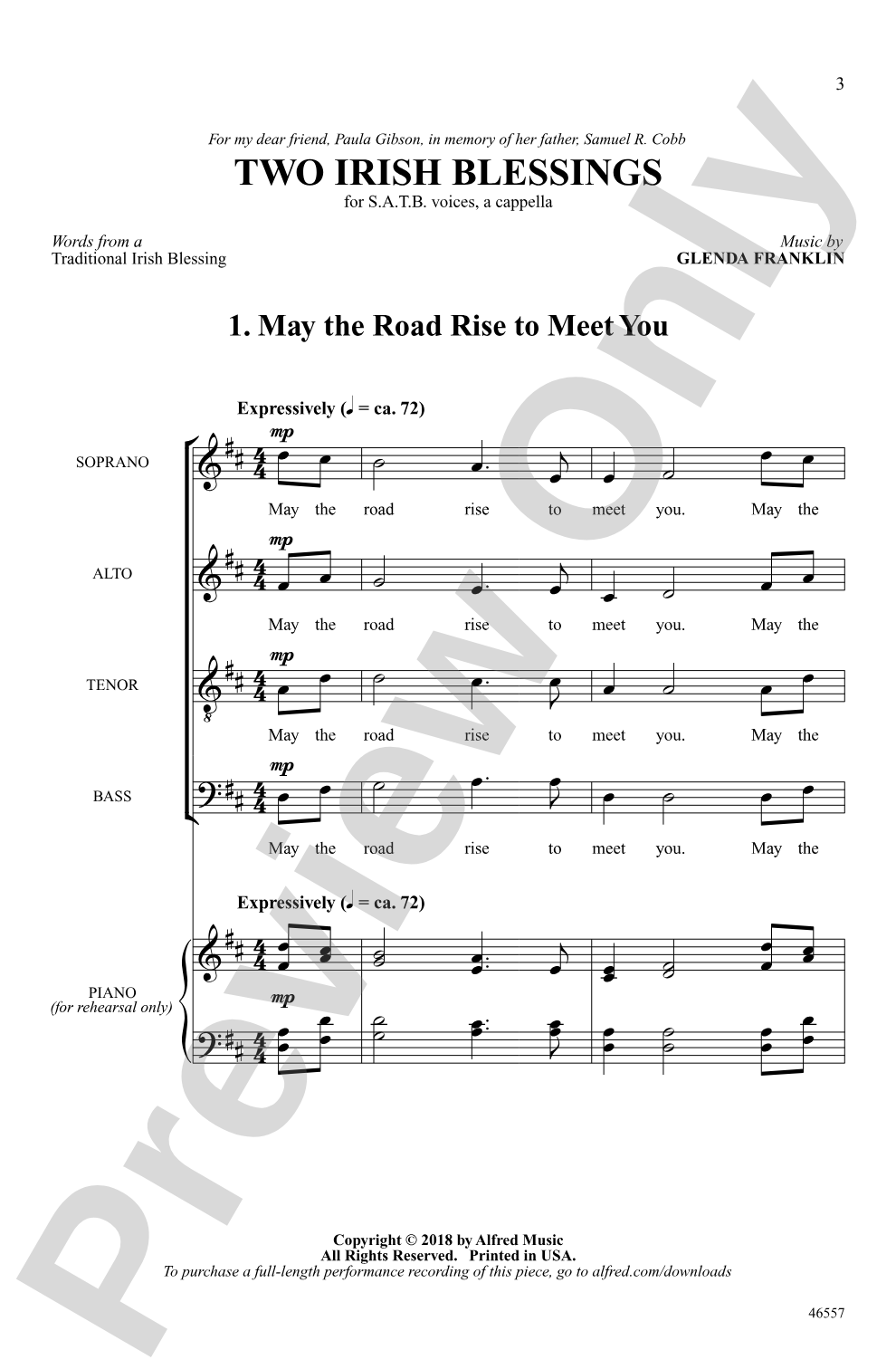
1. May the Road Rise to Meet You 2. May Love and Laughter Light Your Days
Words from Traditional Irish, music by Glenda Franklin
Item: 00-PO-0005728
$2.05
Minimum order quantity: 20 copies
Pickup currently not available
Related Items
Two Irish Blessings: SATB, a cappella Choral Octavo |
$2.05
|
View |
Description
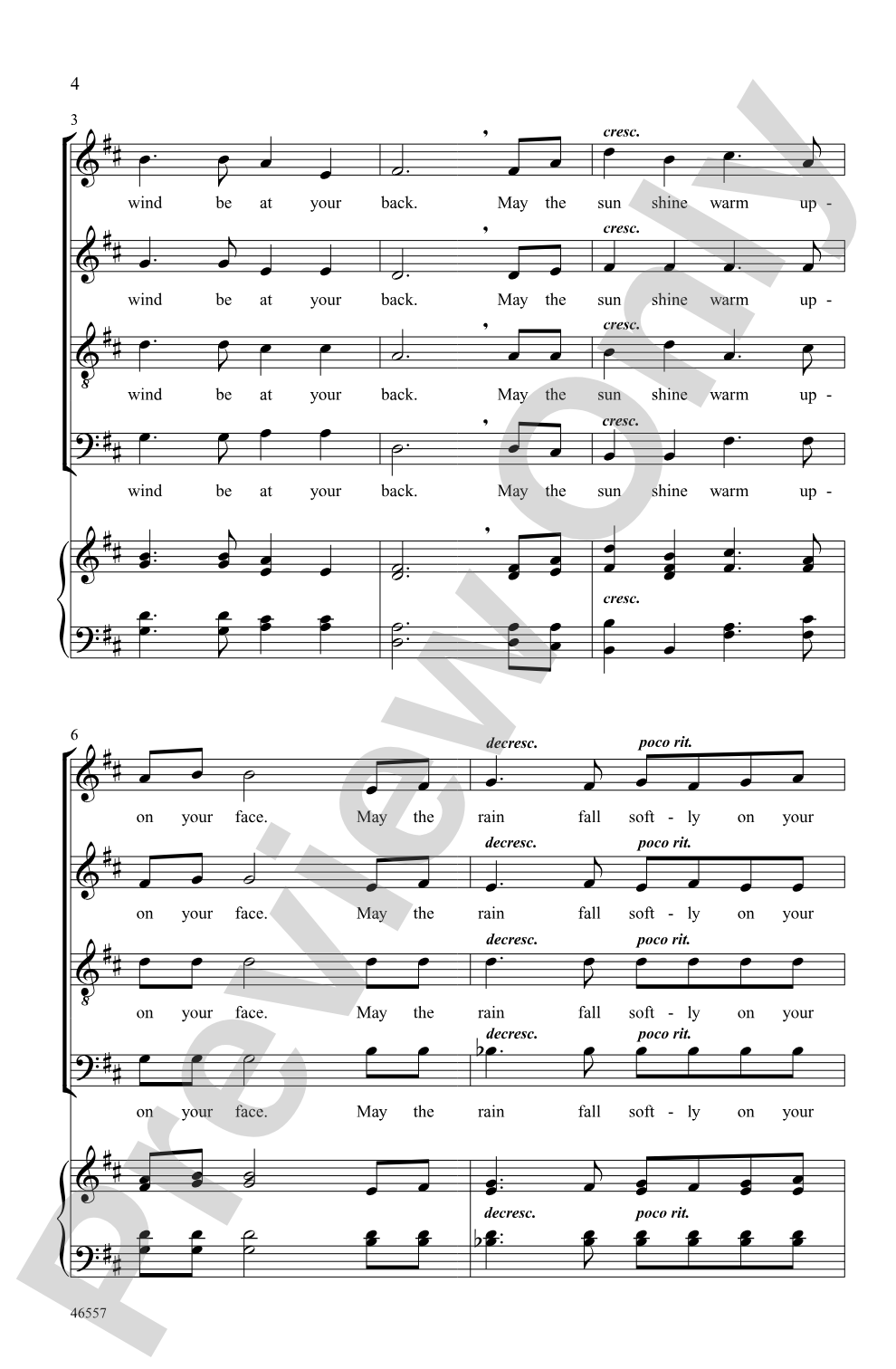
These two a cappella settings of blessings from Ireland will warm your heart. The straightforward chorale-style rendering puts the focus clearly on the text, while allowing for artistic liberty with tempo and dynamics. Sung separately or as a set, what a fitting finale or encore to any performance.


Two Irish Blessings: SATB, a cappella Choral Octavo isn't in MakeMusic Cloud just yet...but it could be. Let us know you'd like to see it, and you'll help shape what comes next. In the meantime, start a free trial and dive into thousands of interactive titles your students can play along with today.
Request This Title
Tell us you want it.
Start Your Free Trial
Explore everything that's ready to play right now.
Sample Audio
1
Audio File
--:--
0:00
0:00
Sample Video
Additional Details
Series:
Alfred Choral Designs
Publisher:
Alfred Music
Page Count:
12
SKU:
00-PO-0005728
More about this title
About the Composer: Glenda Franklin

Glenda Franklin brings four decades of choral experience to her compositions, having shaped generations of singers across Georgia's middle and high schools. Her work as a conductor, adjudicator, and accompanist for state honor choruses and All-State selections has given her deep insight into what singers need and what audiences want to hear. She holds degrees from Brenau University and Piedmont College, and her compositions appear on Georgia's Large Group Performance Evaluation lists and festival programs throughout multiple states.
Franklin's music is published by Alfred Music, Carl Fischer, Shawnee Press, and other major houses. She is an ASCAP member and has been recognized as a Who's Who nominee among America's teachers three times. Her work reflects a career-long commitment to practical, singable writing that serves both the choir and the text.
Why we love this
Franklin's chorale-style approach strips away unnecessary complexity and lets the beautiful text speak. The straightforward harmonic language means your singers can master the music quickly and focus energy on interpretation, phrasing, and emotional delivery rather than wrestling with technical demands. These blessings work equally well as a profound closing to a concert or as individual encore pieces that leave audiences moved.
What to expect
These pieces carry a quiet reverence without pretense. The straightforward harmonic language feels honest and grounded, allowing the Irish blessing text to become the focal point. There is warmth in the writing, a sense of care and hope that suits both intimate settings and larger concert stages.
Who it's for
Directors seeking accessible, meaningful repertoire for SATB choirs of any level will find these settings immediately singable. Voices need not be advanced to render the text with grace and dignity. This works for community choirs, church choirs, school ensembles preparing for graduation or concert programs, and groups looking for festival or contest material that combines artistic substance with practical achievability.
How to get the most out of it
- Treat the text as the emotional center. Once singers know the notes securely, shift rehearsal focus to how each phrase of the blessing unfolds dramatically and vocally.
- Resist locking into a single tempo. The chorale style invites flexibility; let your singers breathe with the text and shape phrases naturally rather than mechanically.
- Balance clarity with warmth in vowel production. A cappella writing demands that every voice remain distinct, but these blessings need a unified, heartfelt sound.
- Consider how silence frames these pieces. Pause intentionally before beginning and after concluding; let the blessing linger rather than rushing into applause.
How to use it
Program both blessings as a set for a meaningful concert closer, or split them across different occasions. The a cappella format and blessing themes make either piece an ideal finale for a graduation ceremony or a fitting encore following a full concert. Their brevity and emotional weight also serve contests and festivals where repertoire impact matters more than duration.
Skills your students will build
- Singing a cappella with rhythmic security and intonation independent of instrumental support
- Shaping phrases expressively while maintaining chorale-style homophonic balance
- Interpreting text with emotional intention through dynamic and tempo variation
- Blending vowels and consonants across four-part writing for unified choral sound