
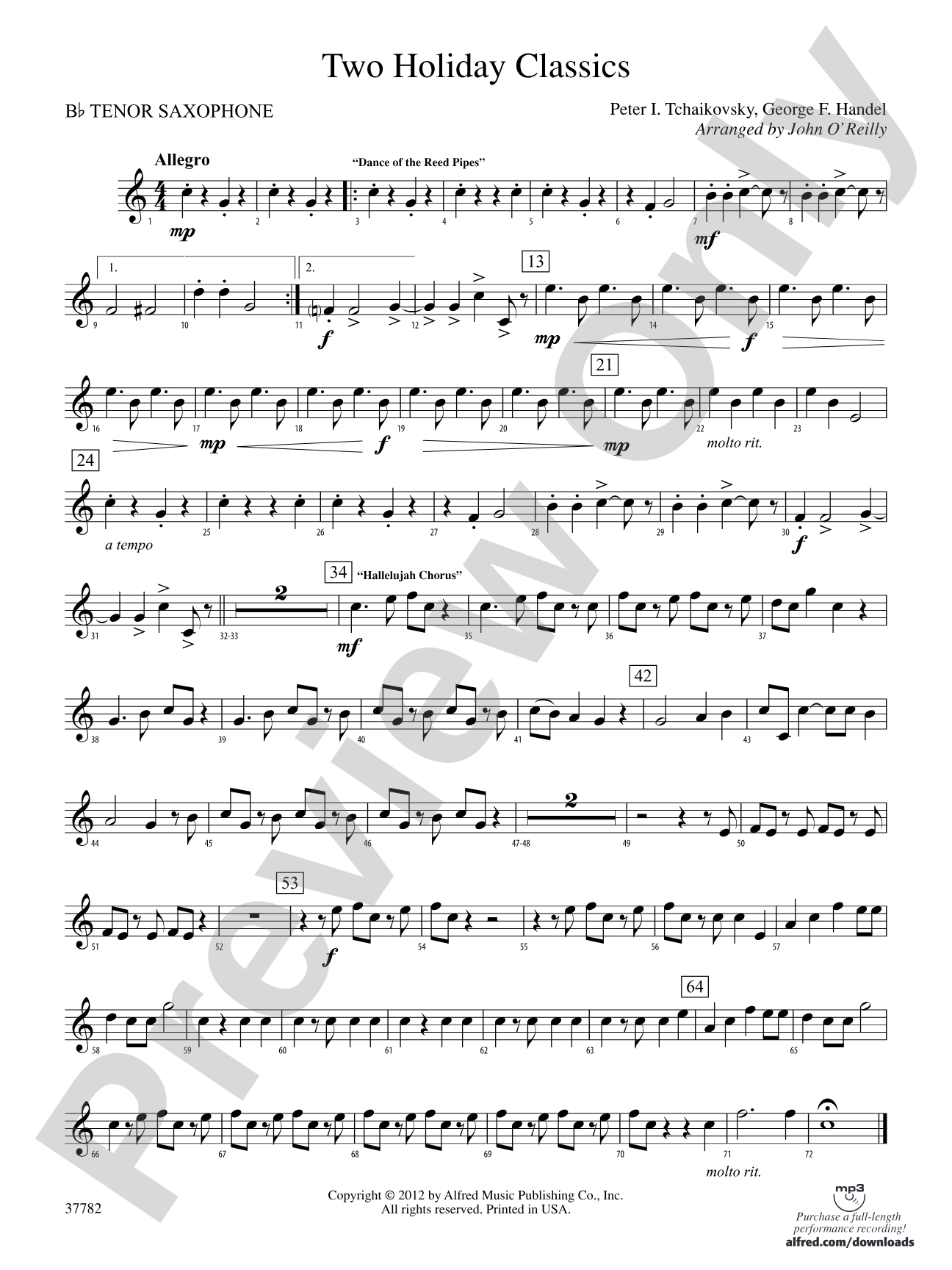

Two Holiday Classics: B-flat Tenor Saxophone
Flute Section Feature
Music by Peter Ilyich Tchaikovsky and George Frideric Handel / arr. John O'Reilly
Grade: 1 (Very Easy)
Item: 00-PC-0015313_TX1
$5.99
Pickup currently not available
Description
Two all-time favorite Holiday "hits" are combined to create a delightful arrangement for your next holiday concert. Tchaikovsky's "Dance of the Reed Pipes" from the Nutcracker Ballet features the flute section with a light accompaniment provided by the rest of the ensemble. A brief snare drum solo ushers in a rousing rendition of Handel's "Hallelujah Chorus" from Messiah, his famous Christmas oratorio. (2:45)


Don't just read it, hear it, play along with it, and watch your students grow with it. In MakeMusic Cloud, Two Holiday Classics: B-flat Tenor Saxophone comes alive with professional accompaniment, adjustable tempo, and built-in practice tools that turn solo practice into real progress.
Open in the Player
Jump straight in and assign it today.
Start Your Free Trial
Open this title and explore the full library in minutes.
Sample Audio
1
Audio File
--:--
0:00
0:00
Sample Video
No sample videos found.
Additional Details
Series:
Accent on Achievement
Publisher:
Alfred Music
Page Count:
120
SKU:
00-PC-0015313_TX1
More about this title
About the Composer: Peter Ilyich Tchaikovsky
Peter Ilyich Tchaikovsky (1840-1893) stands as one of the most performed composers in the concert world, and his gift for melody remains instantly recognizable across centuries. His ballet scores, particularly The Nutcracker, have become cultural touchstones for the winter season; the "Dance of the Reed Pipes" exemplifies his talent for orchestral color and straightforward musical storytelling that speaks to audiences of all ages.
George Frideric Handel (1685-1759) was a master of large-scale vocal and instrumental works who spent much of his career in England. The "Hallelujah" chorus from his oratorio Messiah remains one of the most celebrated pieces in Western music, famed for its joyful proclamation and the tradition of audiences standing during its performance.
Why we love this
This pairing gives you two iconic moments in one package, both instantly recognizable to audiences yet musically engaging enough to hold musicians' attention through rehearsal. The Grade 1 level means your students won't struggle with technical demands, so everyone can focus on phrasing, balance, and the joy of playing two of music's most beloved themes. John O'Reilly's arrangement respects both masterworks while creating a performance that feels fresh and concert-ready.
What to expect
The first movement floats with crystalline lightness as flutes dance over shimmering accompaniment, evoking the magical toybox of the Nutcracker. When the snare drum cuts through, expectation builds; then the full ensemble erupts into the triumphant proclamation of Handel's immortal chorus, filling the room with festive confidence and joy.
Who it's for
Directors programming a holiday concert for middle or high school concert band who want reliable, audience-pleasing repertoire that doesn't overshadow other works on the program. Any band looking for Grade 1 material that respects the integrity of the original compositions while remaining accessible to younger or less experienced ensembles.
How to get the most out of it
- Balance the flute feature in "Dance of the Reed Pipes" by keeping the accompaniment light and transparent; this section belongs to the woodwind choir, so brass and lower reeds should sit well behind them.
- Use the brief snare drum solo as a clear rehearsal transition point between the two movements; let that moment breathe so the "Hallelujah" entrance lands with full impact.
- Build energy gradually through the "Hallelujah" section rather than starting at maximum volume; the chorus gains its power through architectural structure, not just loudness from measure one.
- Conduct the "Dance of the Reed Pipes" with a light touch that mirrors its character; heavy articulation or aggressive phrasing works against the delicate nature of the original ballet music.
How to use it
Open or close a holiday concert with this combination, placing it where you want a moment of pure, unironic celebration. The two contrasting tempos and textures also work well as a palate-cleansing piece between heavier contemporary works or more complex arrangements.
Skills your students will build
- Balance and blend between featured and accompanying sections
- Contrast in articulation and phrasing between lyrical and rhythmic material
- Precision in ensemble entrances and transitions
- Dynamics shaping across longer phrases in tonal music
- Sight-reading familiarity with Grade 1 concert band scoring conventions