
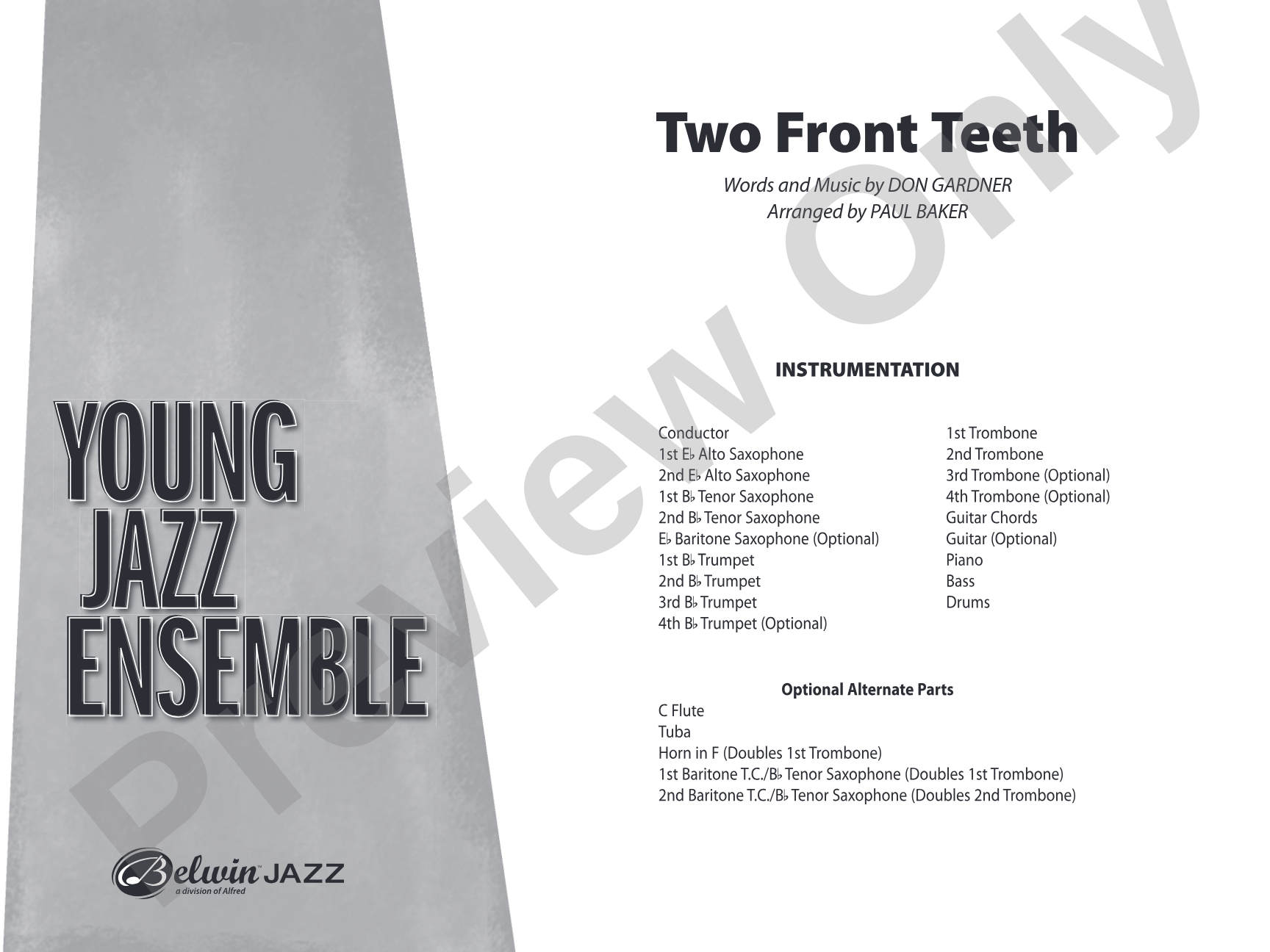
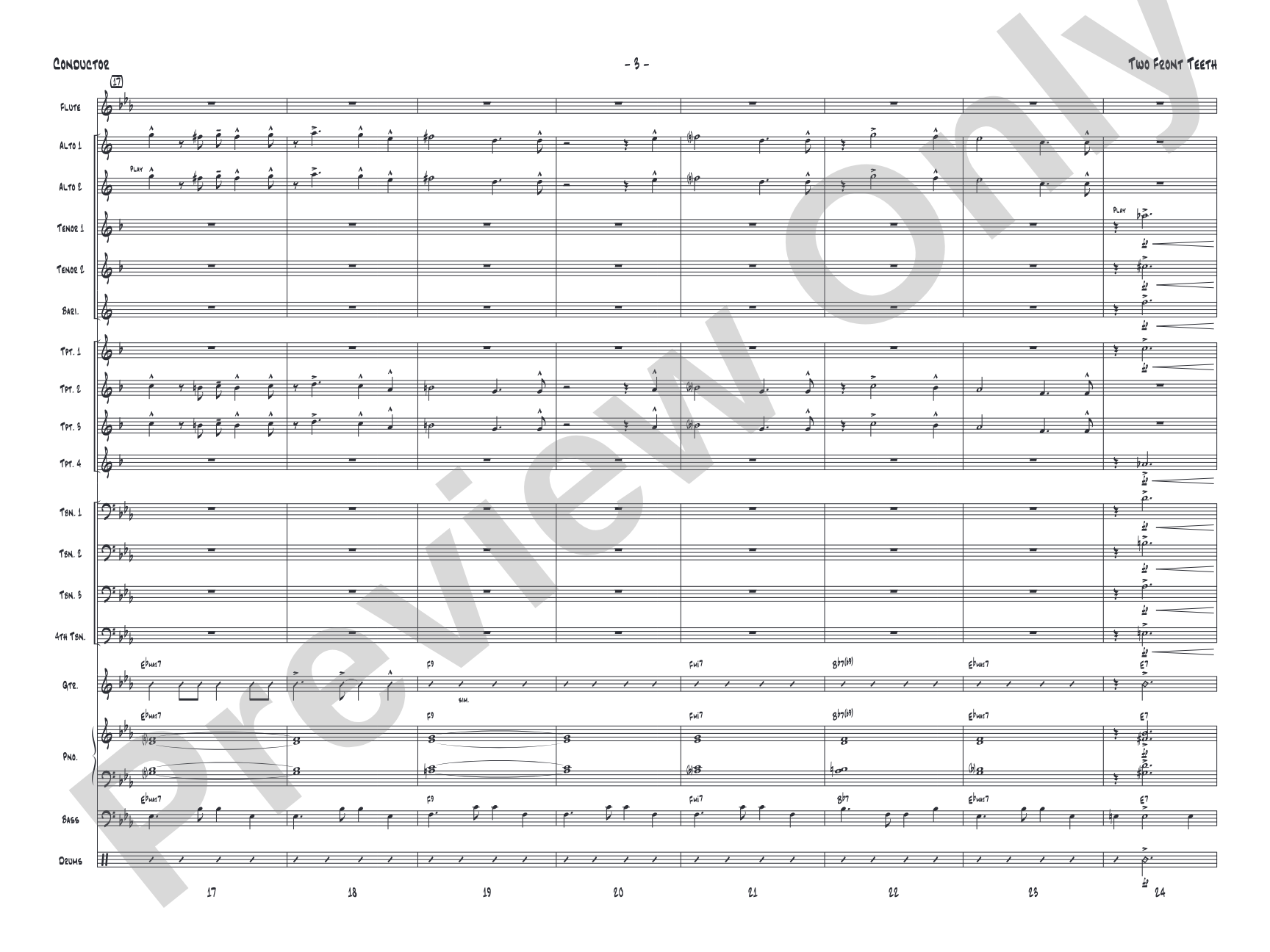
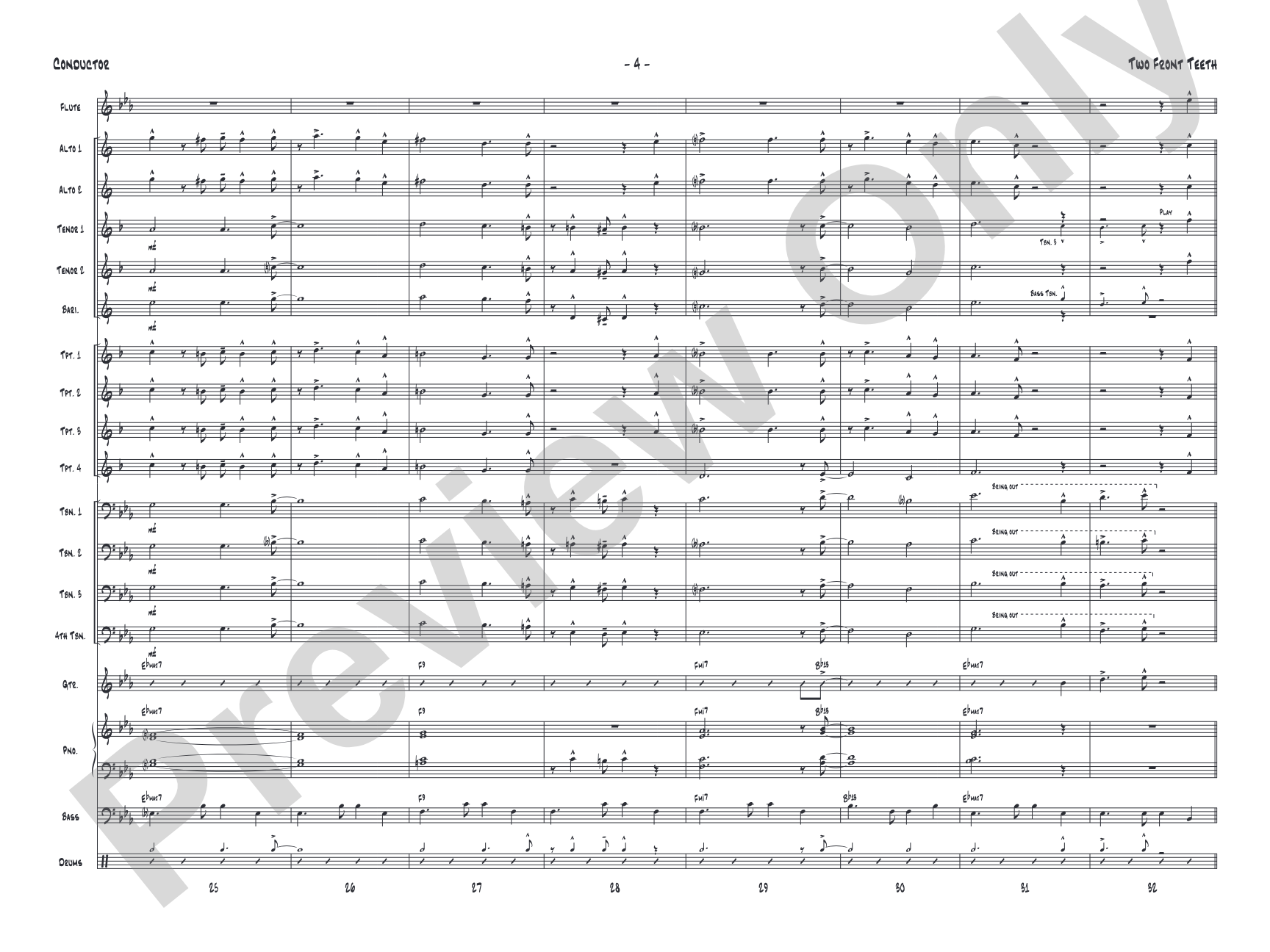
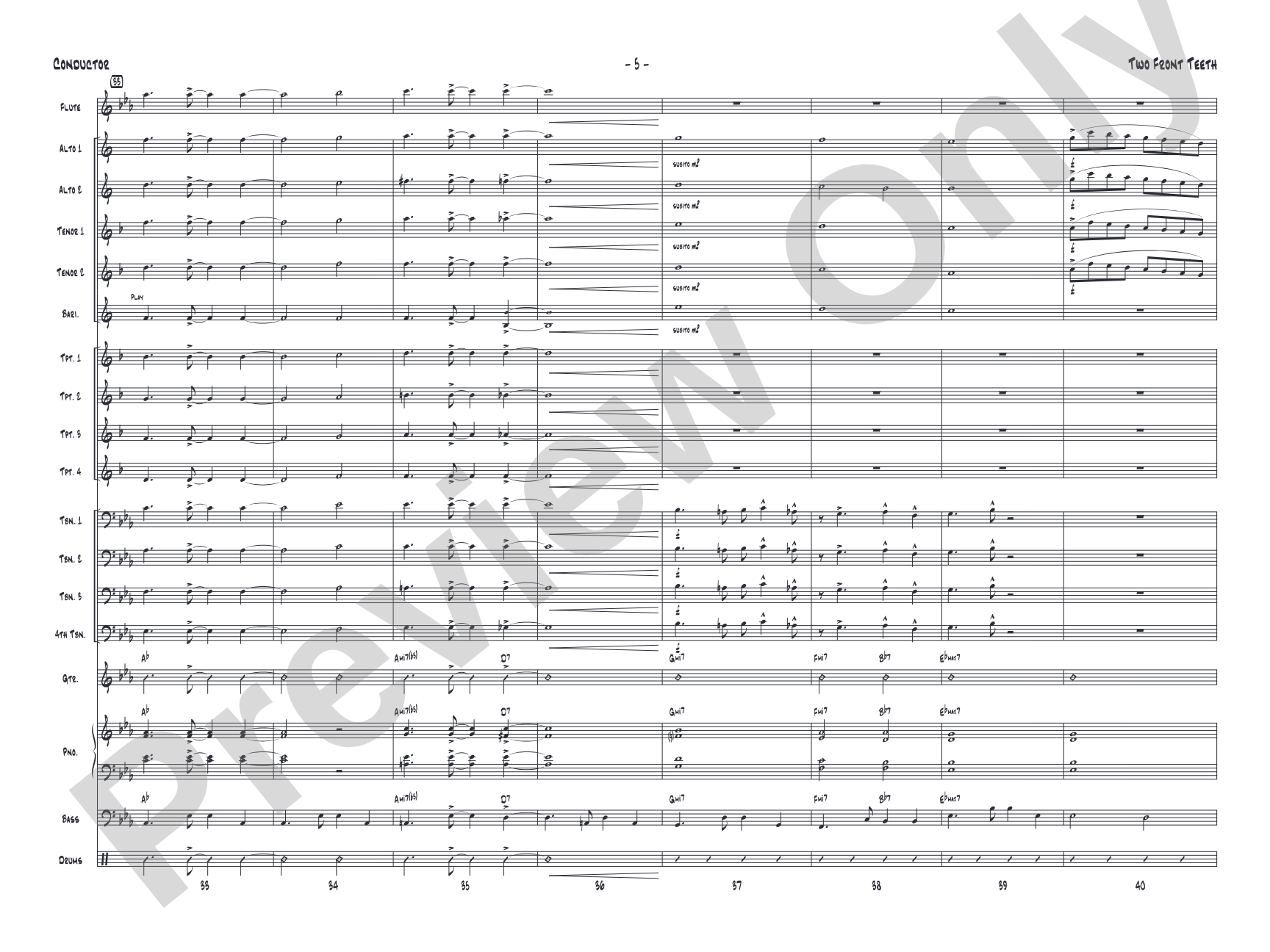
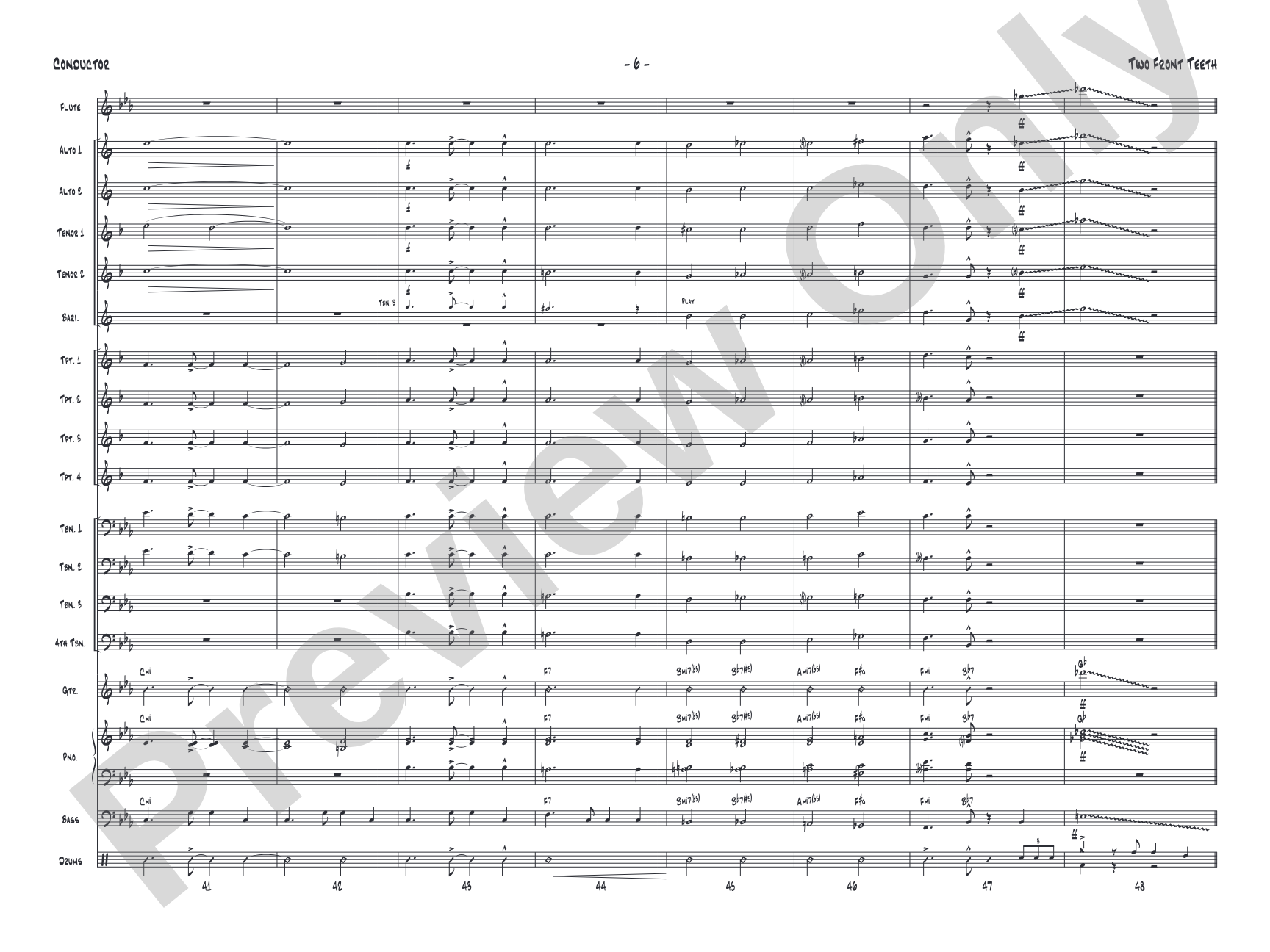
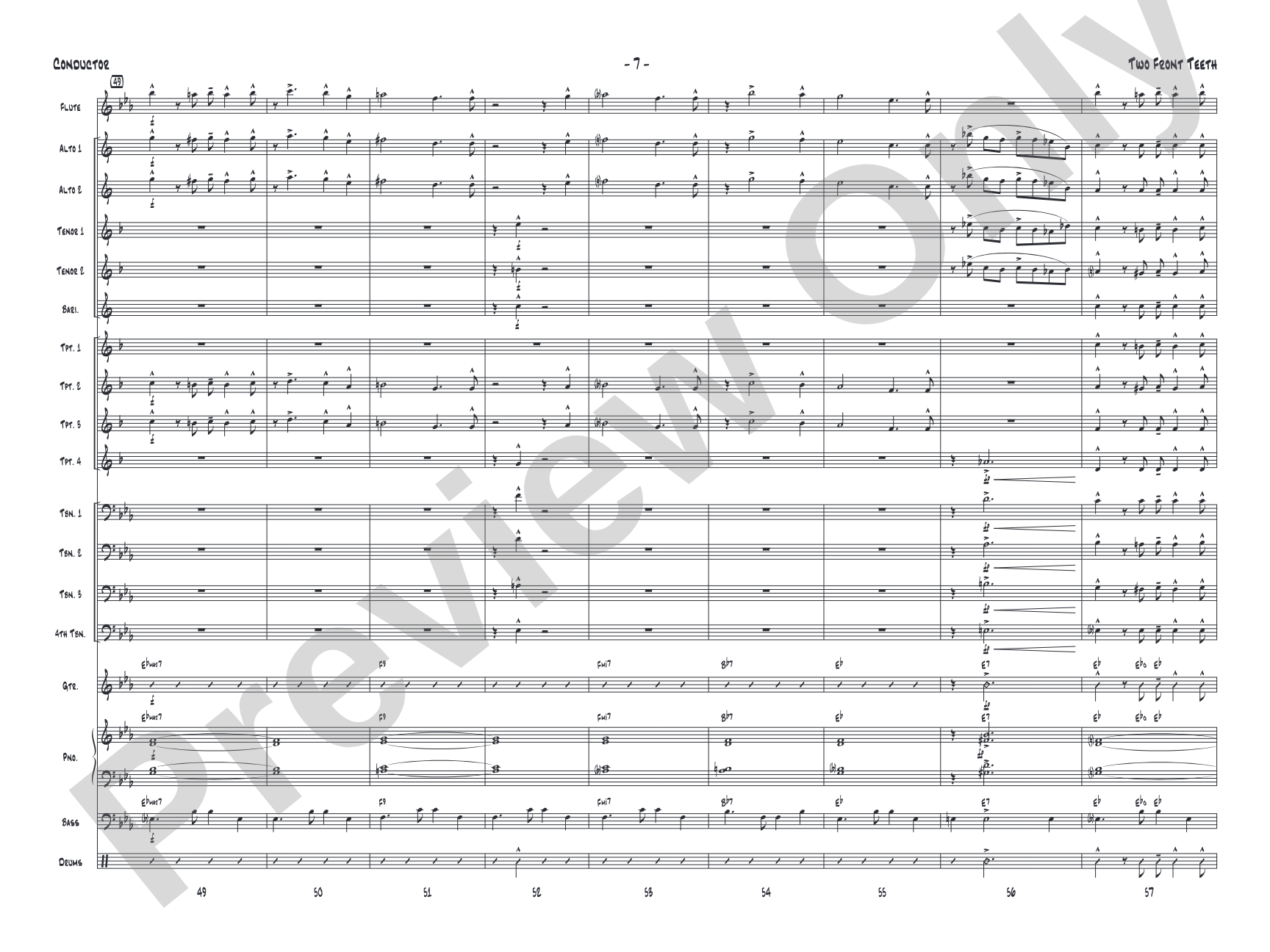
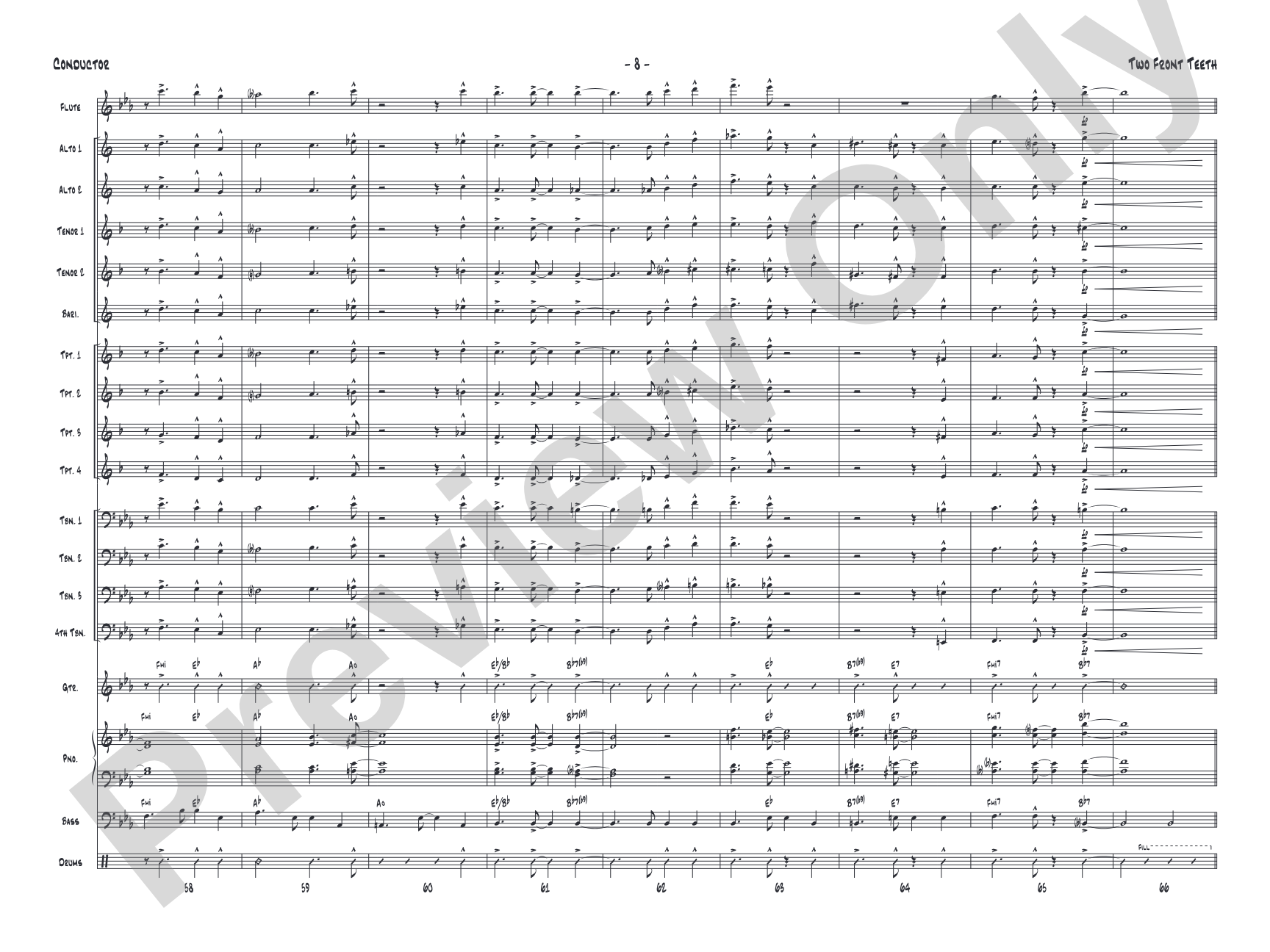
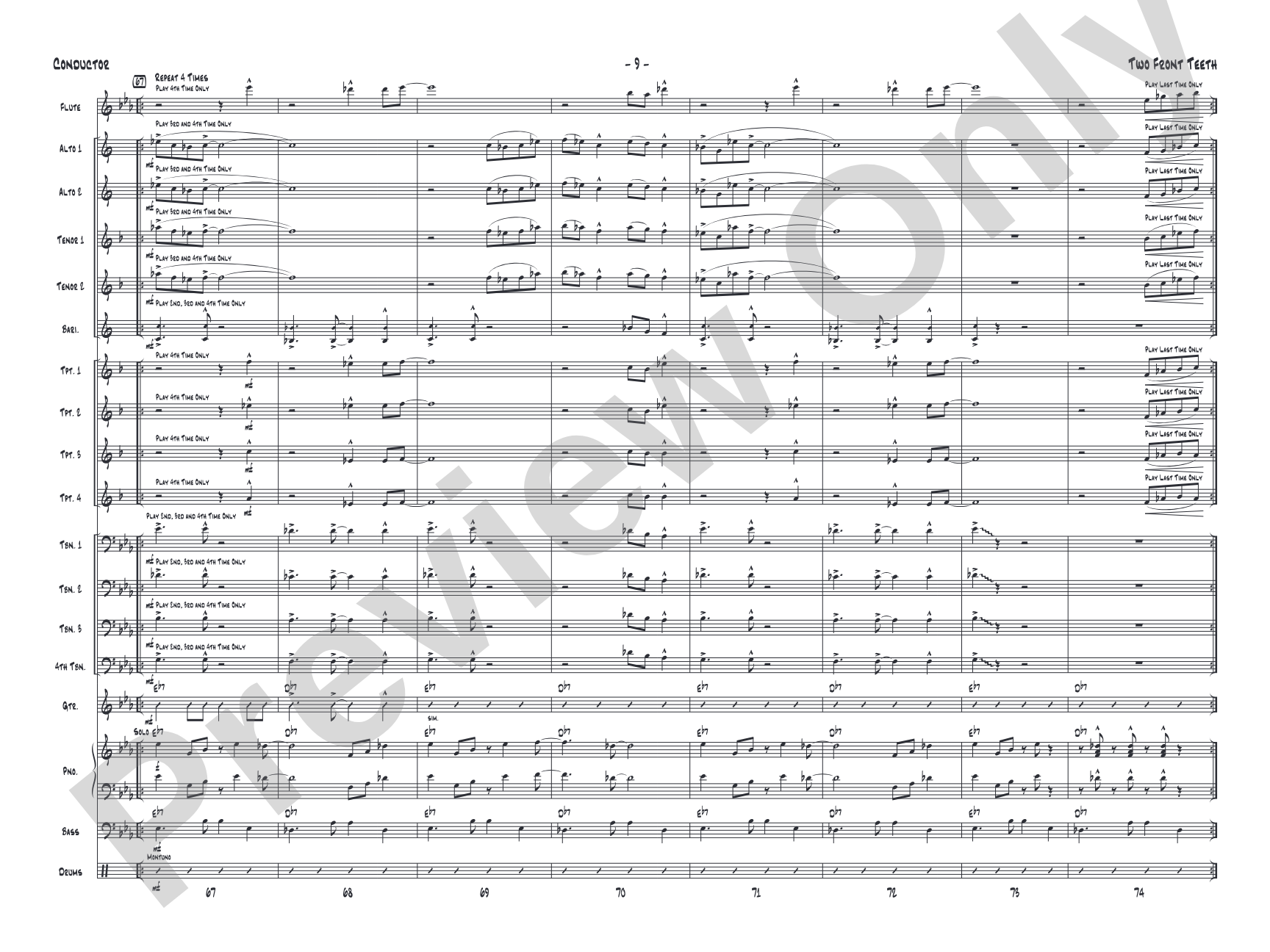
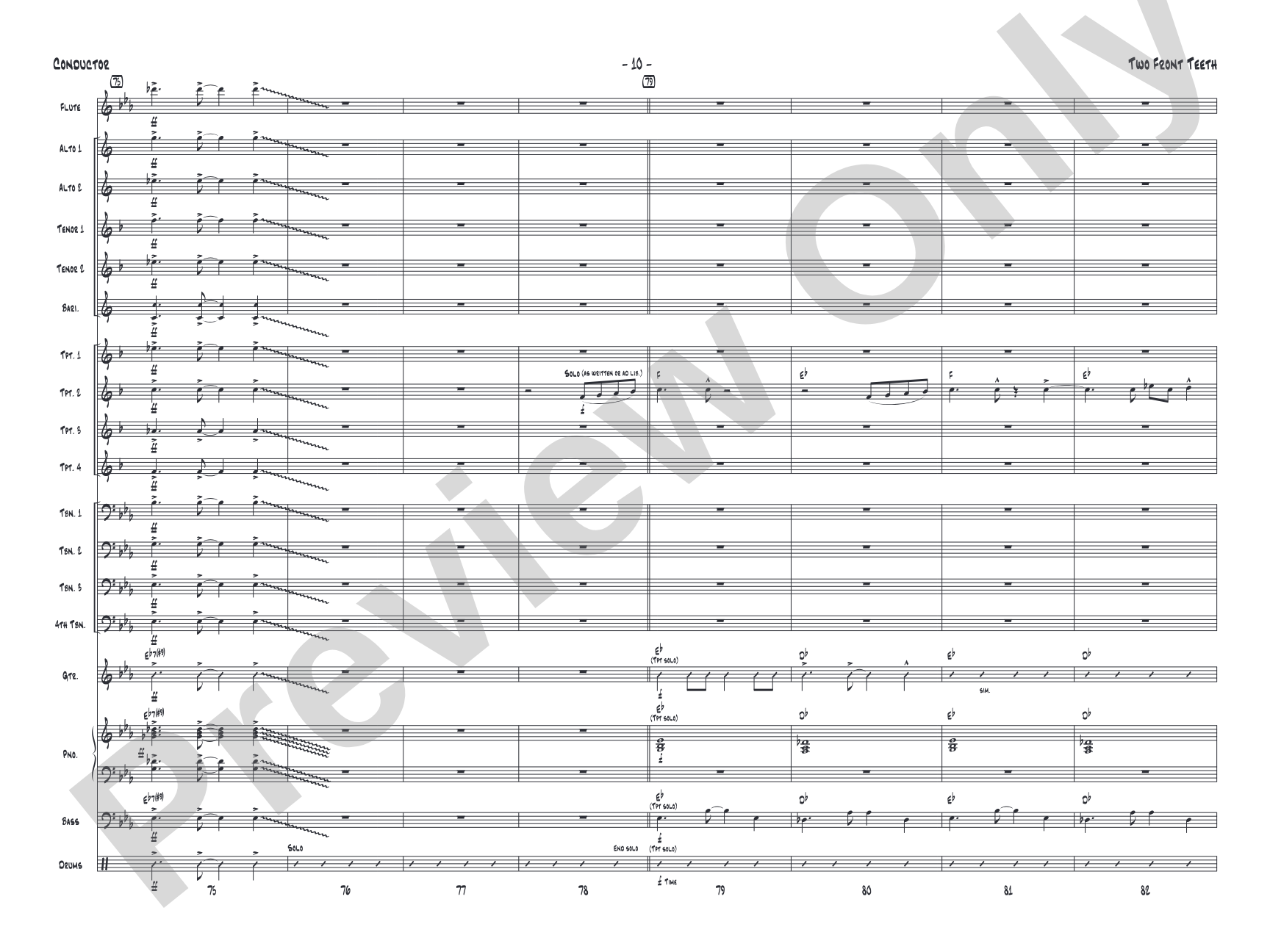
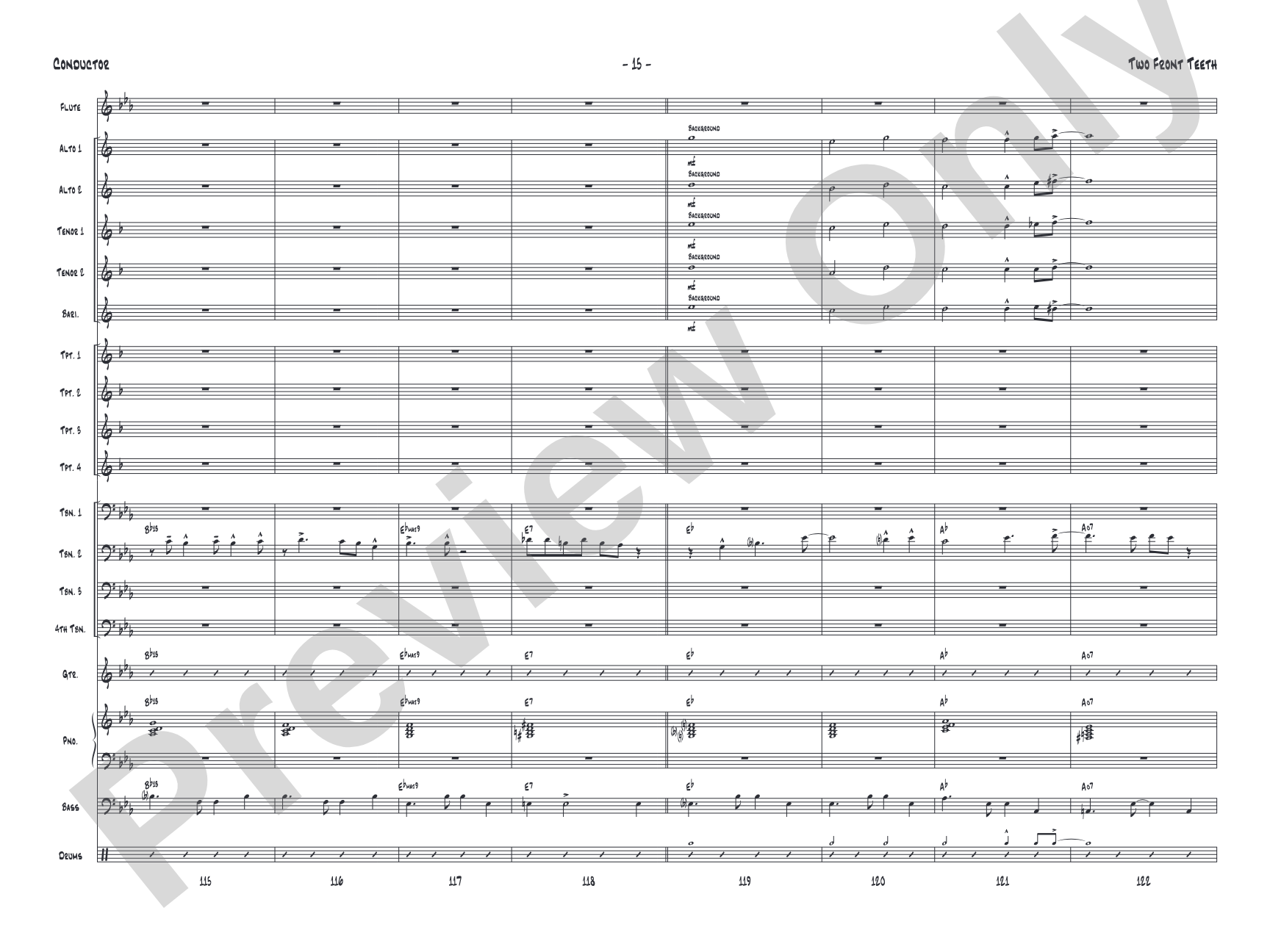
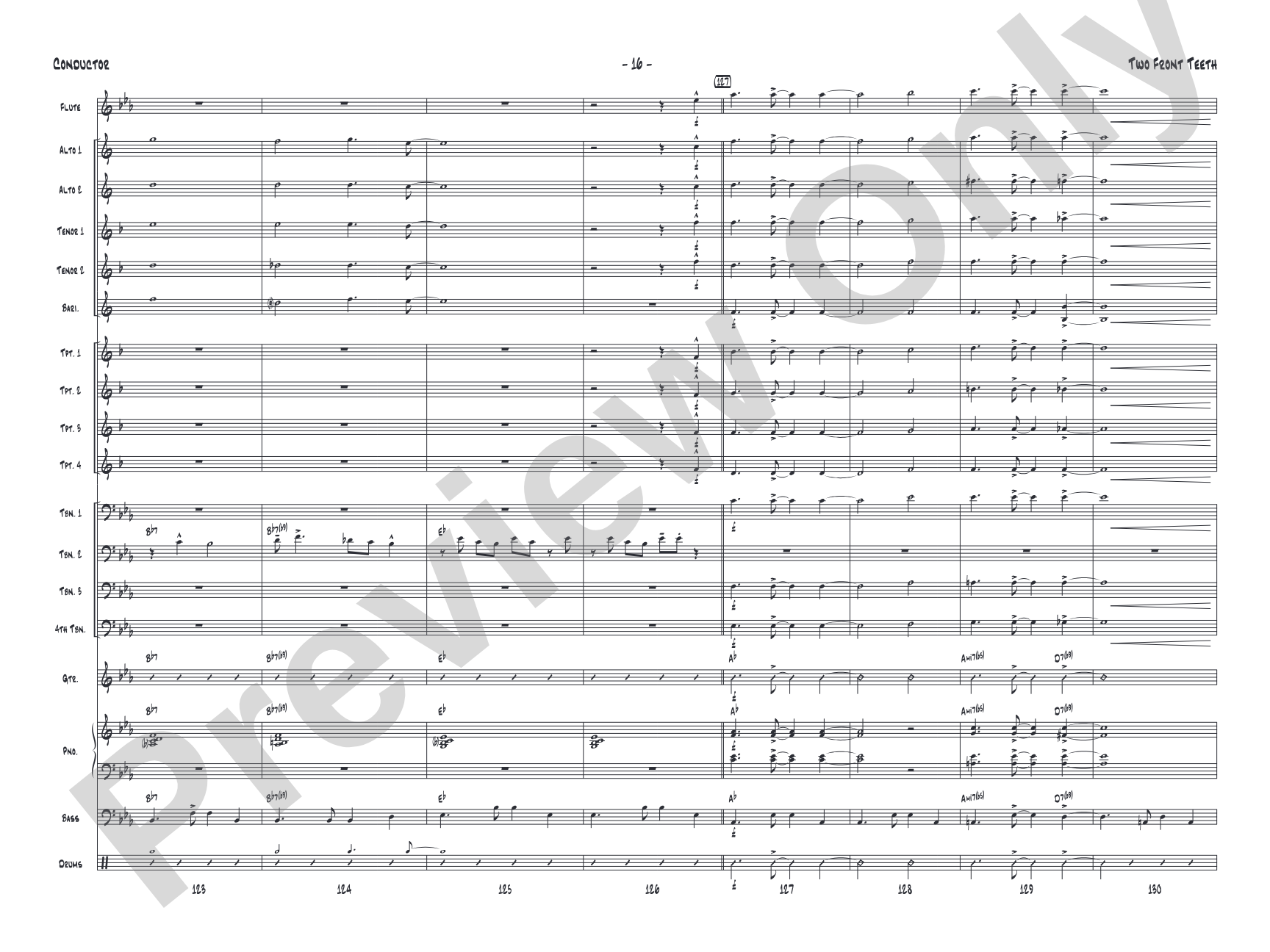
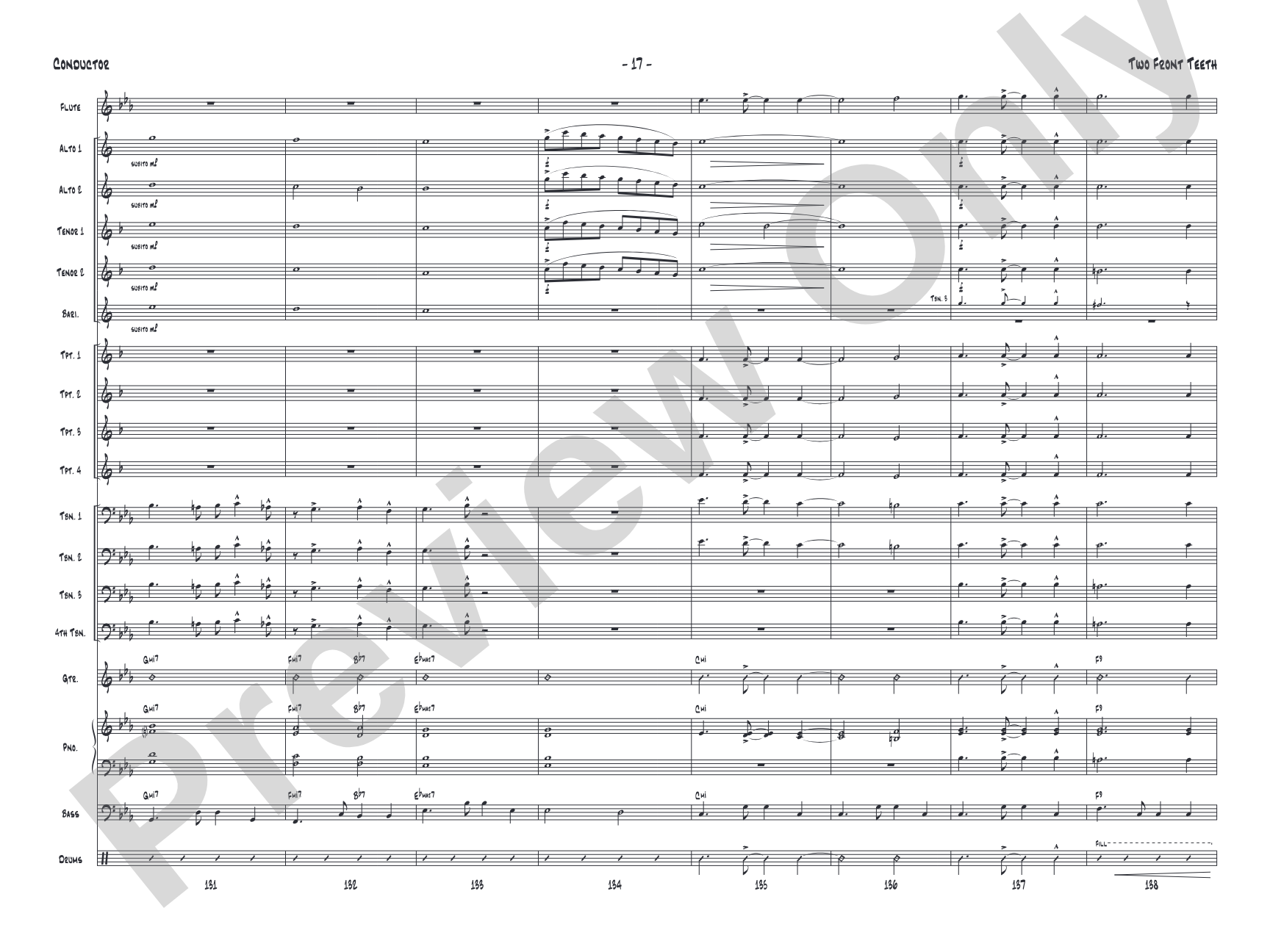
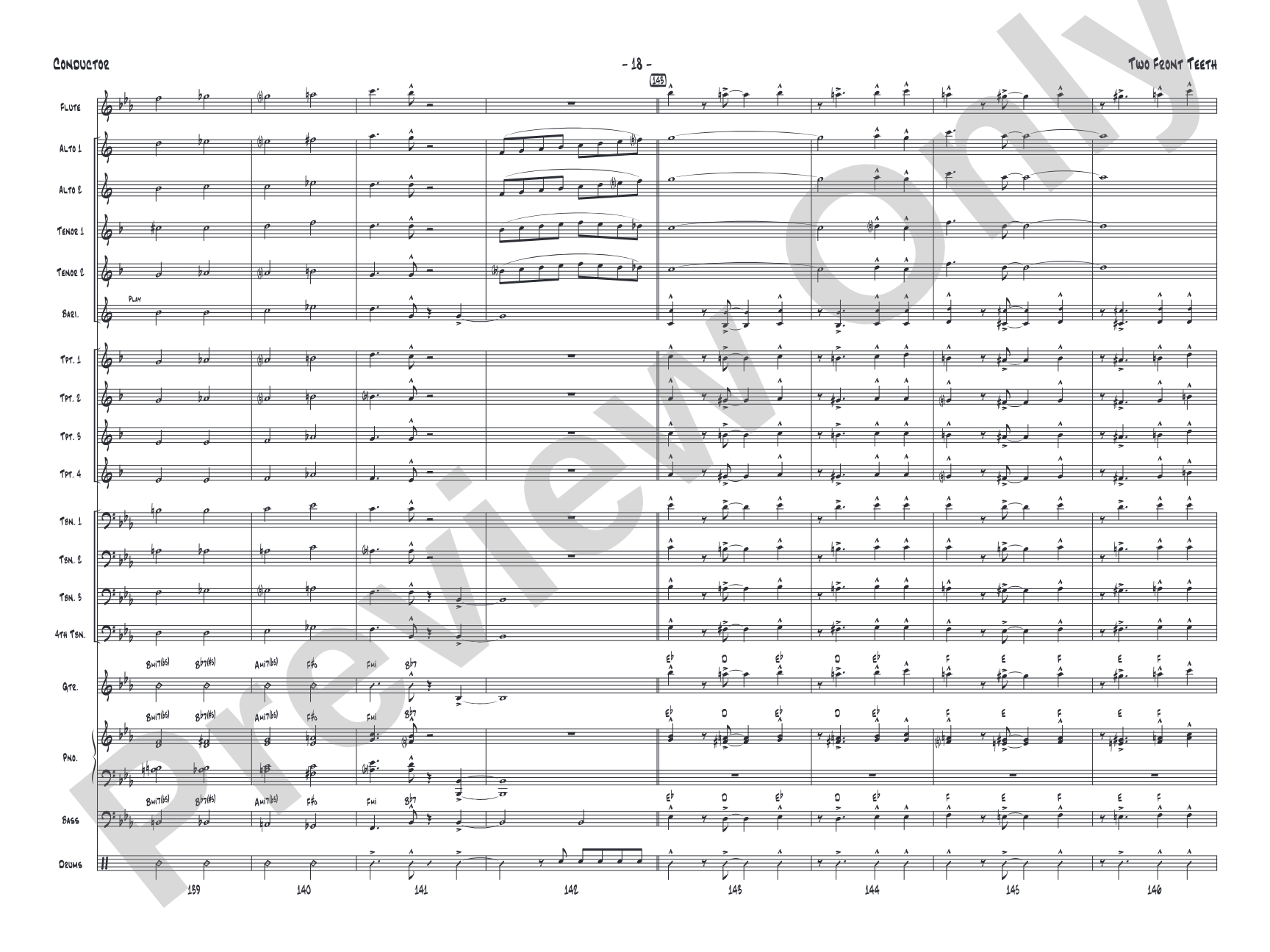

Two Front Teeth: Jazz Ensemble Conductor Score & Parts
Words and music by Don Gardner / arr. Paul Baker
Grade: 2 (Medium Easy)
Item: 00-PK-0006974

$48.00
Pickup currently not available
Buy Extra Parts (Digital PDF Download)
| Product | Price | Quantity |
|---|---|---|
| Two Front Teeth: Score | $8.00 | |
| Two Front Teeth: E-flat Alto Saxophone | $3.00 | |
| Two Front Teeth: 2nd E-flat Alto Saxophone | $3.00 | |
| Two Front Teeth: B-flat Tenor Saxophone | $3.00 | |
| Two Front Teeth: 2nd B-flat Tenor Saxophone | $3.00 | |
| Two Front Teeth: E-flat Baritone Saxophone | $3.00 | |
| Two Front Teeth: 1st B-flat Trumpet | $3.00 | |
| Two Front Teeth: 2nd B-flat Trumpet | $3.00 | |
| Two Front Teeth: 3rd B-flat Trumpet | $3.00 | |
| Two Front Teeth: 4th B-flat Trumpet | $3.00 | |
| Two Front Teeth: 1st Trombone | $3.00 | |
| Two Front Teeth: 2nd Trombone | $3.00 | |
| Two Front Teeth: 3rd Trombone | $3.00 | |
| Two Front Teeth: 4th Trombone | $3.00 | |
| Two Front Teeth: Guitar Chords | $3.00 | |
| Two Front Teeth: Guitar | $3.00 | |
| Two Front Teeth: Piano Accompaniment | $3.00 | |
| Two Front Teeth: String Bass | $3.00 | |
| Two Front Teeth: Drums | $3.00 | |
| Two Front Teeth: Flute | $3.00 | |
| Two Front Teeth: Tuba | $3.00 | |
| Two Front Teeth: 1st F Horn | $3.00 | |
| Two Front Teeth: Baritone T.C. | $3.00 | |
| Two Front Teeth: 2nd Baritone T.C. | $3.00 |
Parts Added to Cart!
Description
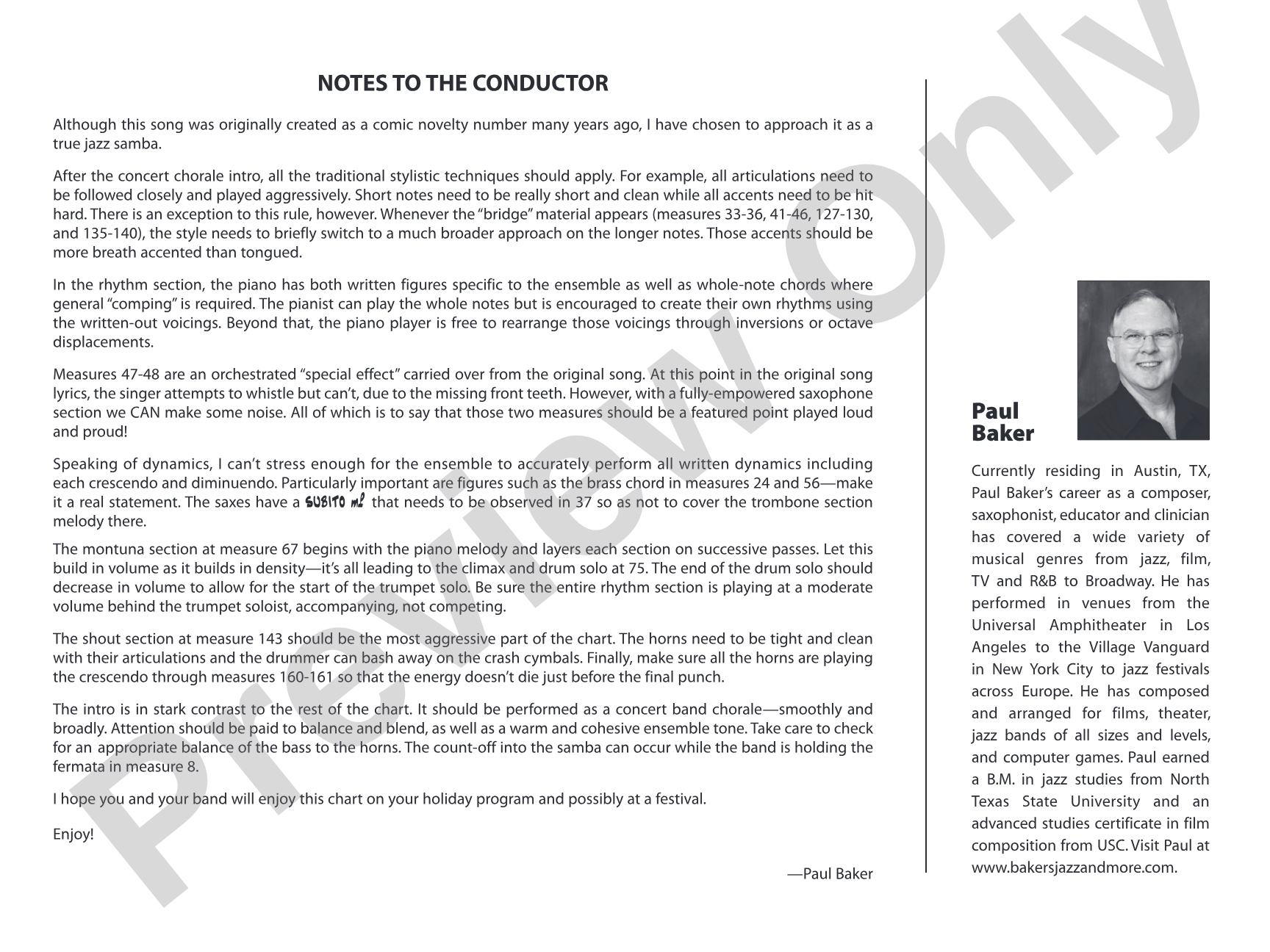
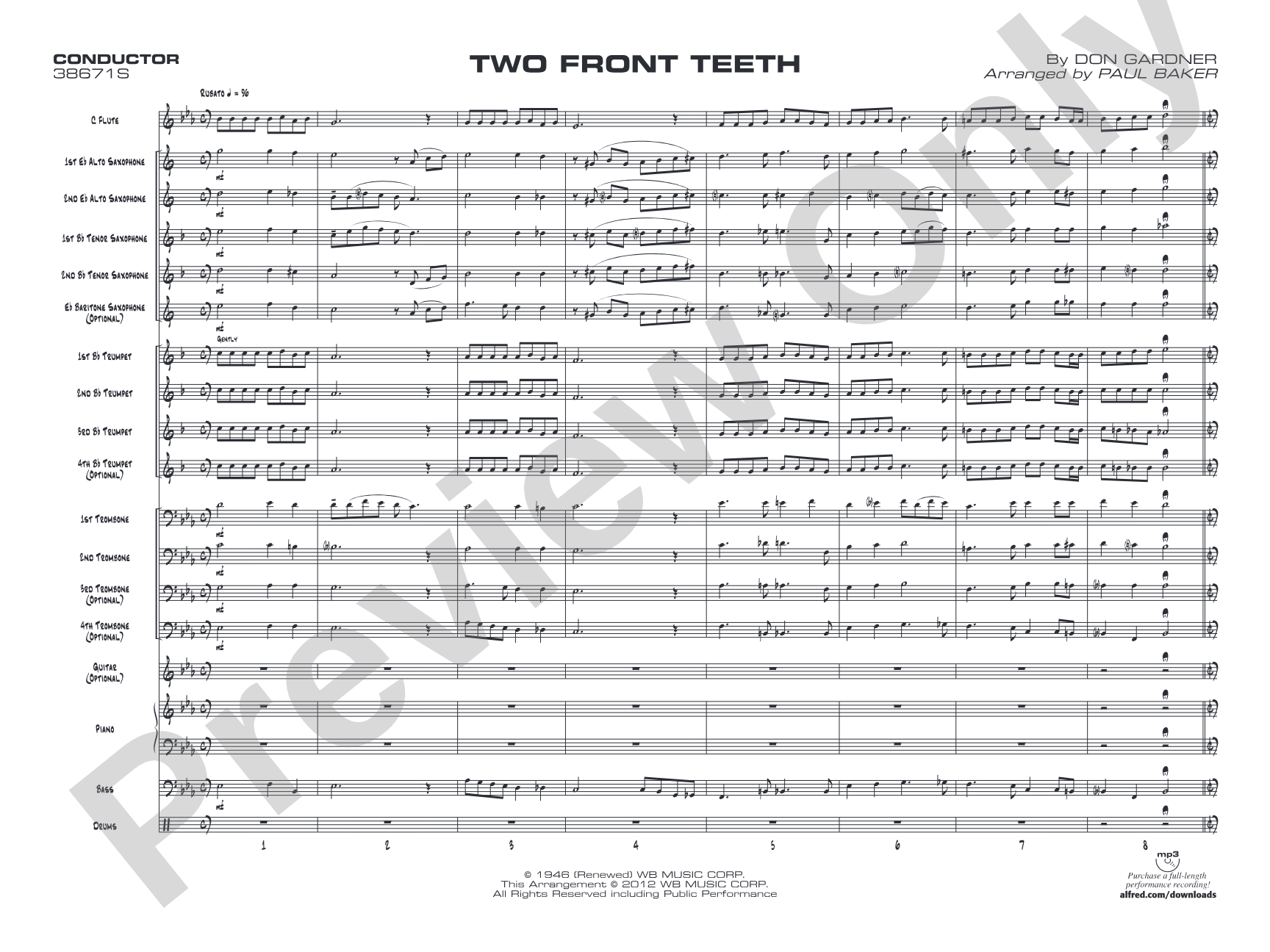
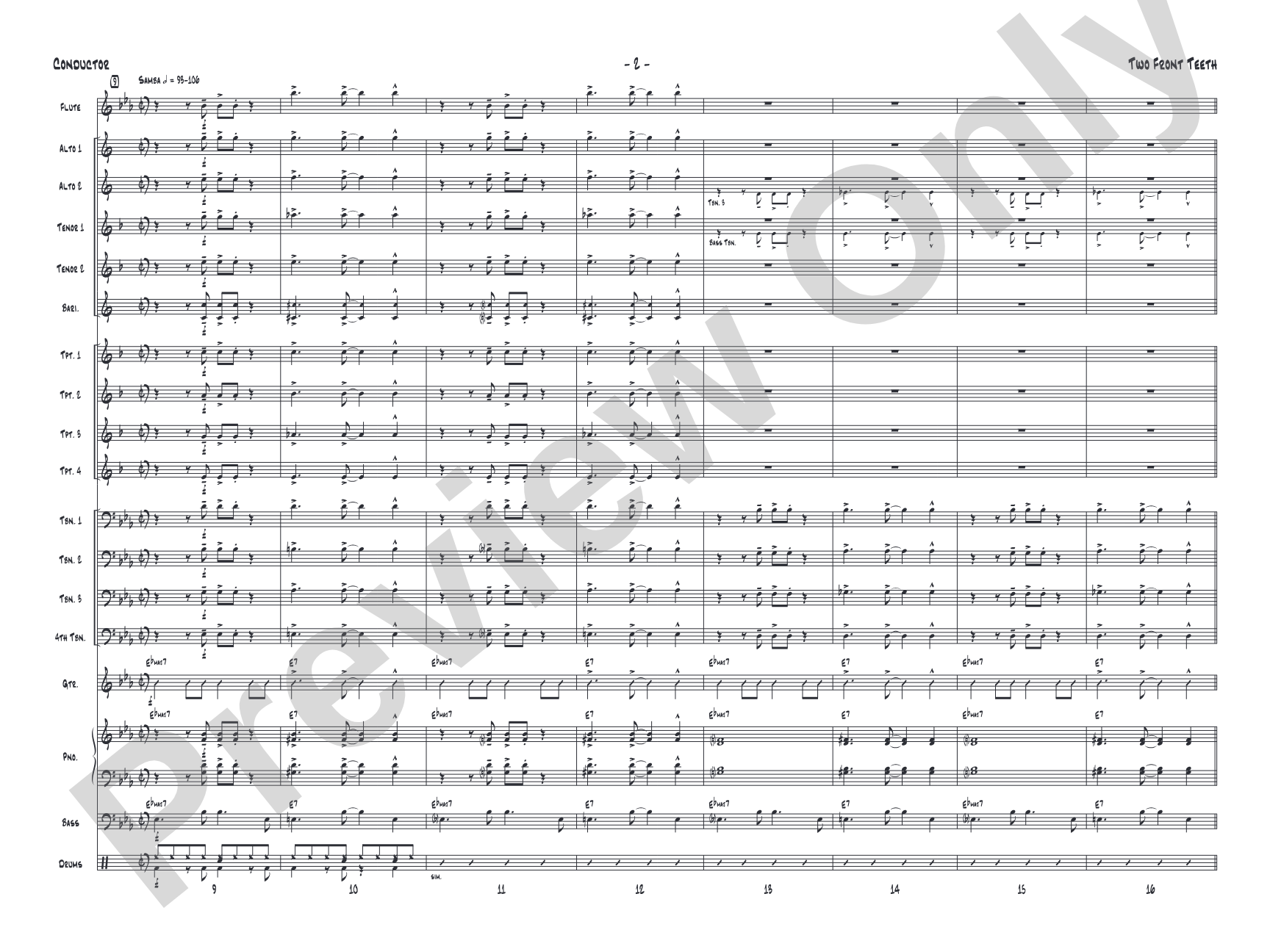
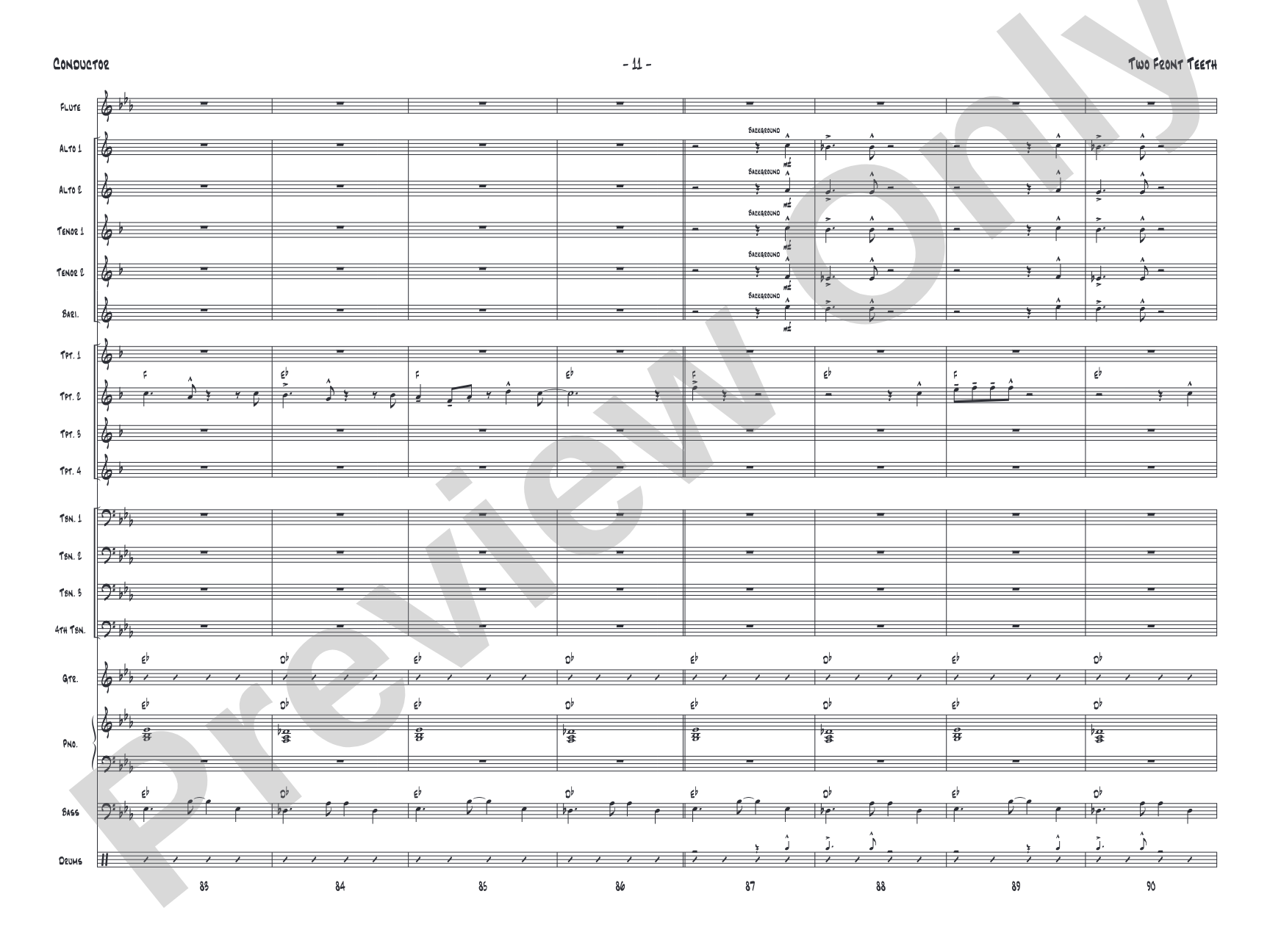
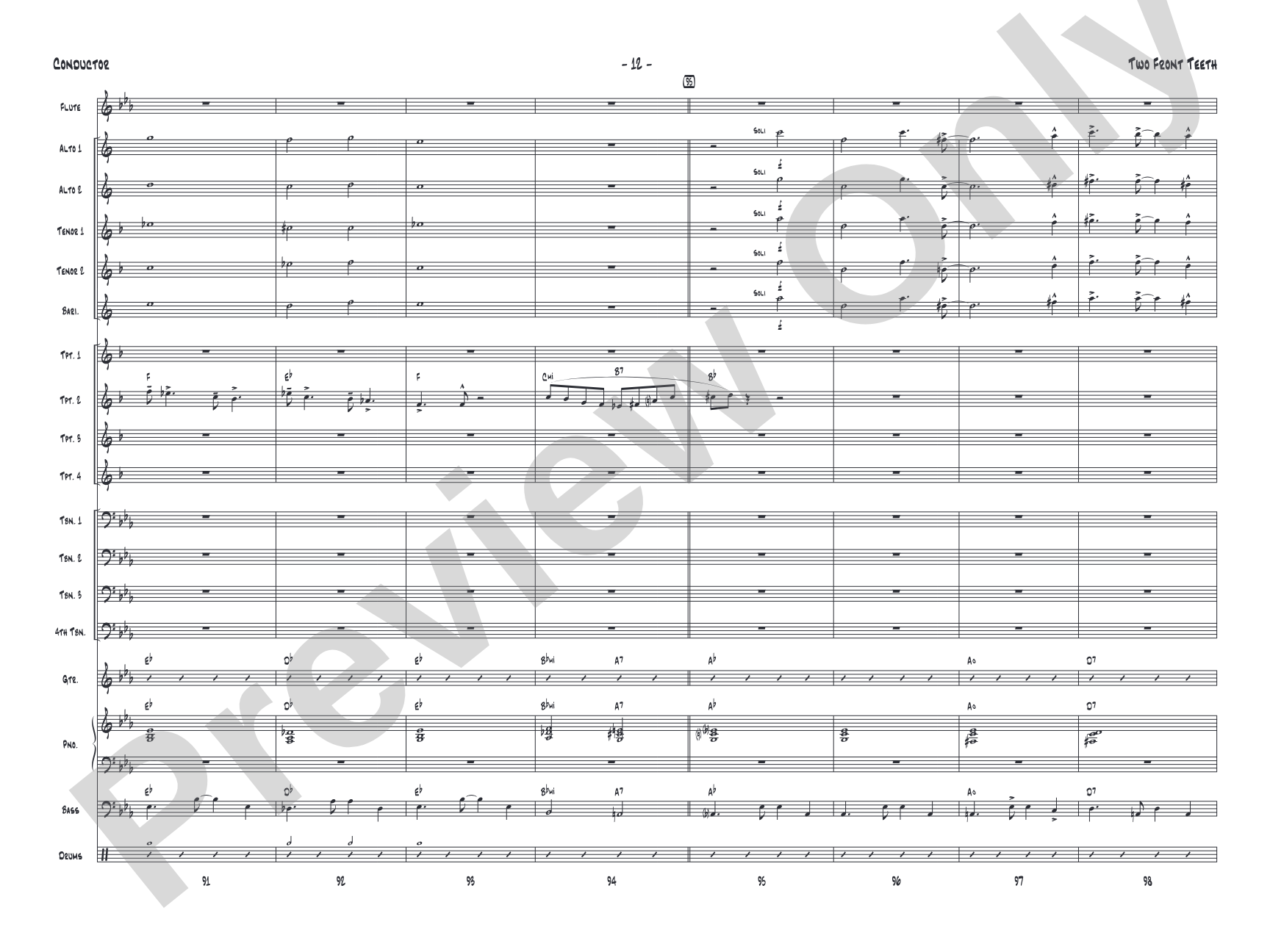
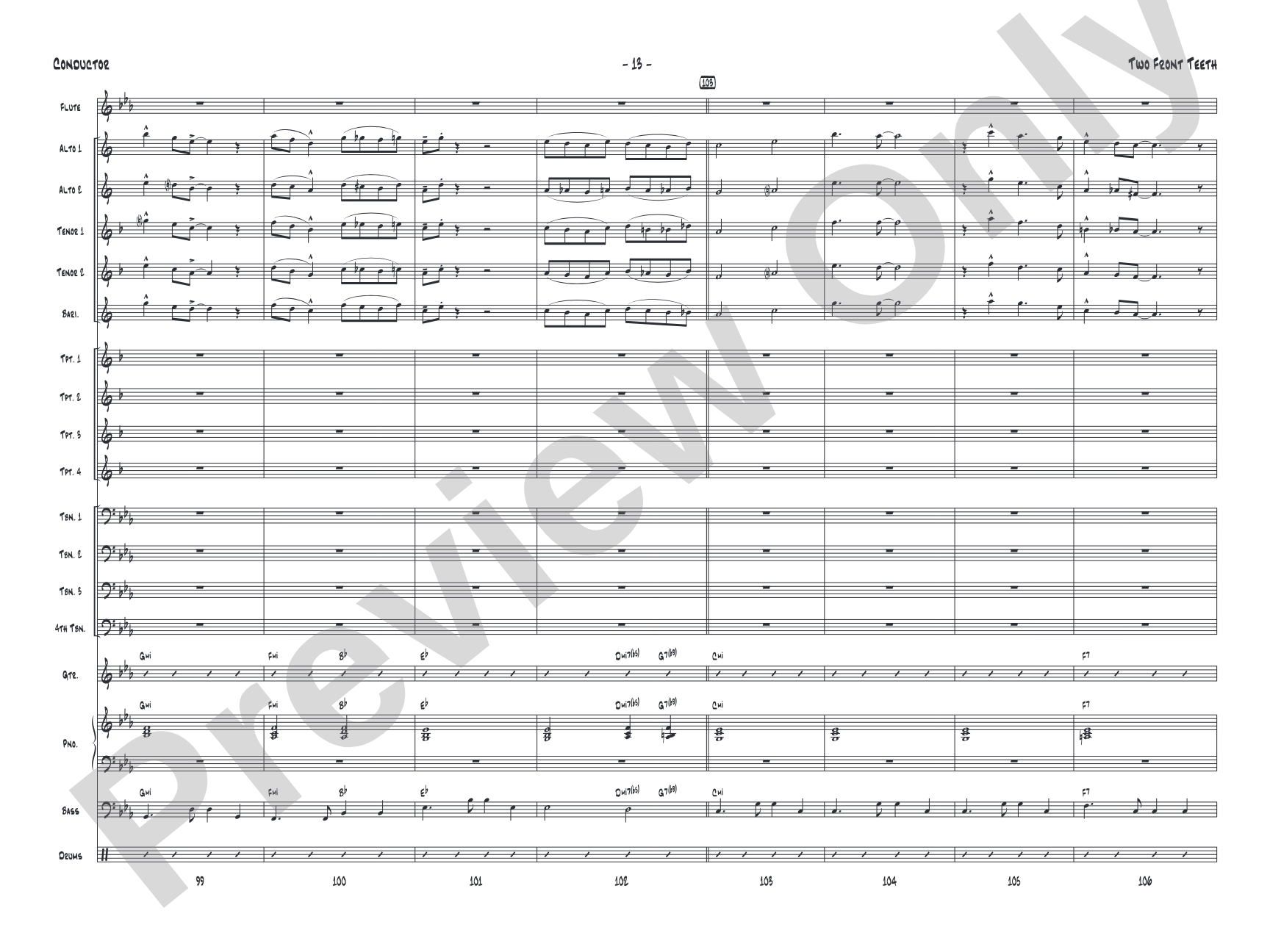
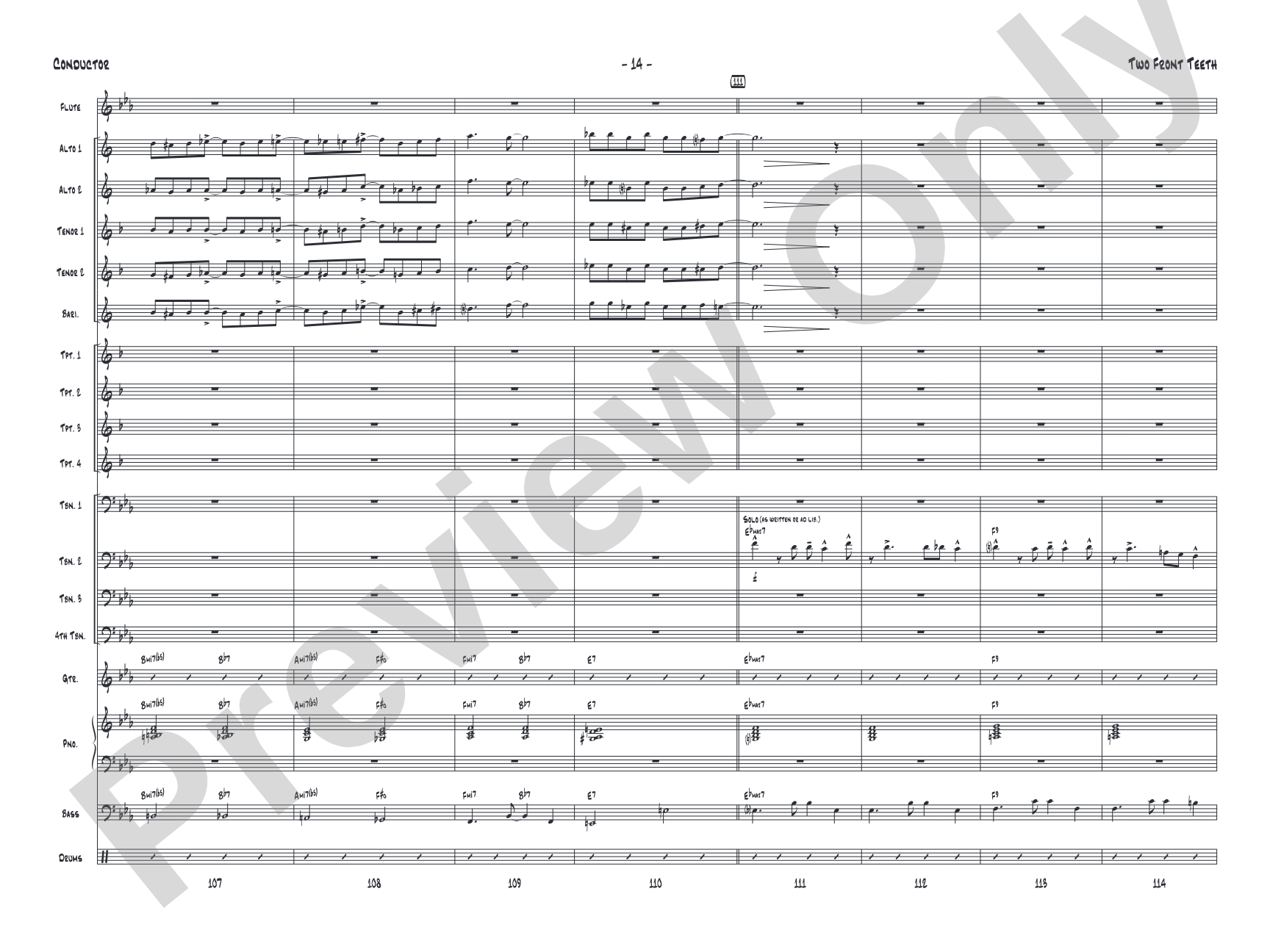
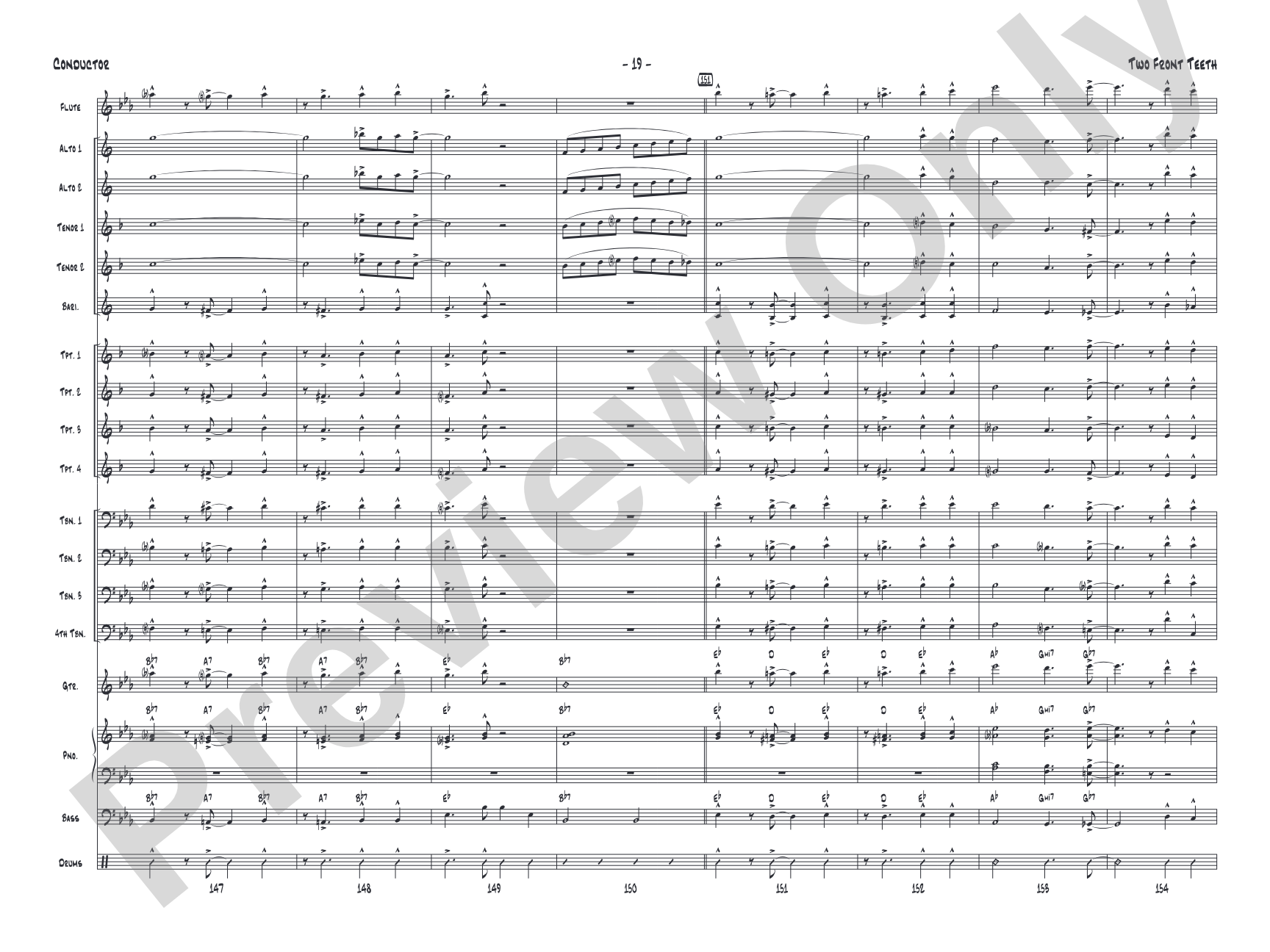
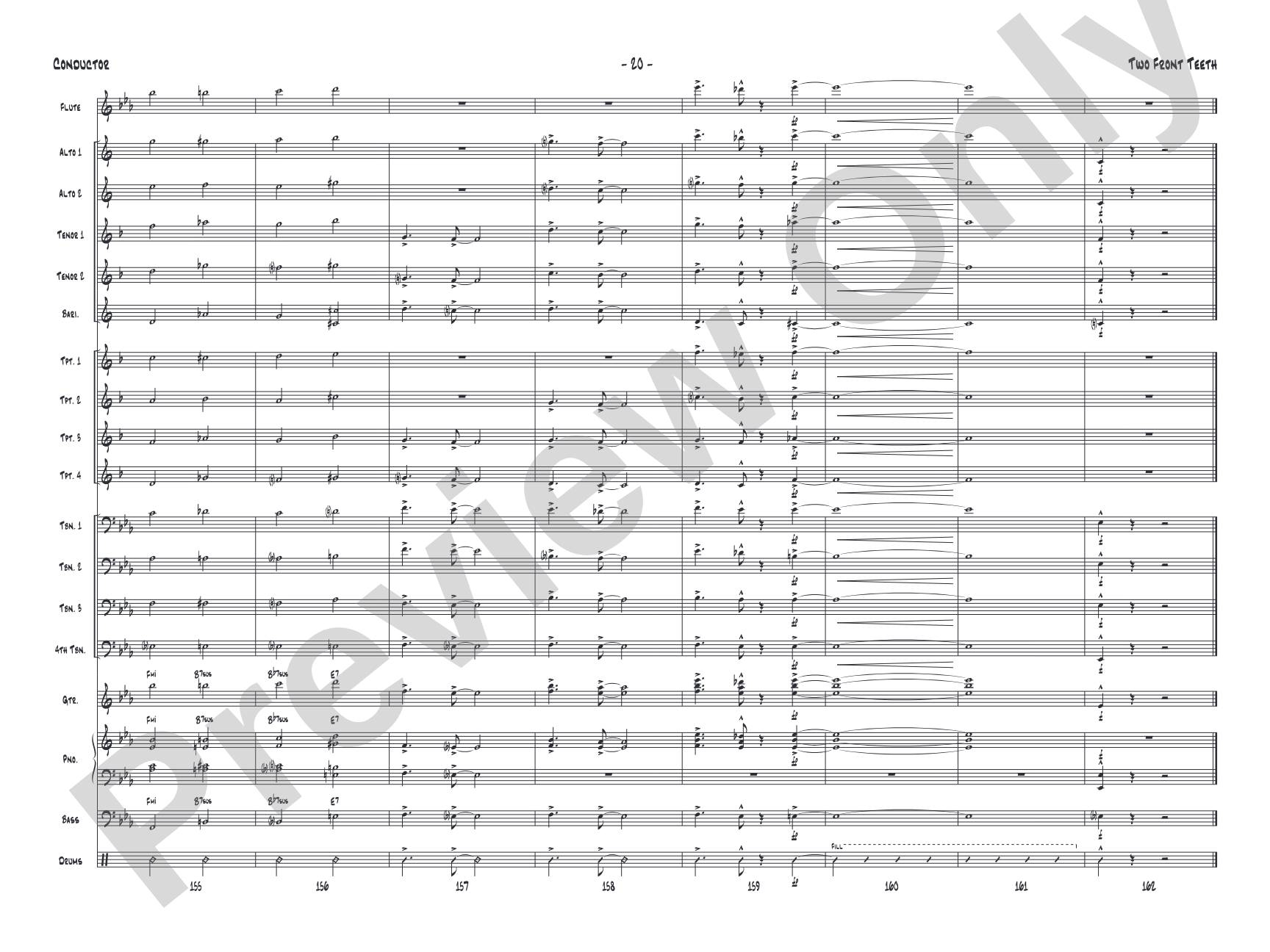
Something different---a clever samba based on this novelty song, you'll love it! After the medium rubato intro, the medium tempo samba kicks in with altos and trumpets then the melody is bounced around to all sections. After the montuna interlude, 2nd trumpet solos (written) with only two chords to keep it accessible for young players, a sax soli, a 2nd trombone solo (written), then the big shout chorus and out. (4:14)


Don't just read it, hear it, play along with it, and watch your students grow with it. In MakeMusic Cloud, Two Front Teeth: Jazz Ensemble Conductor Score & Parts comes alive with professional accompaniment, adjustable tempo, and built-in practice tools that turn solo practice into real progress.
Open in the Player
Jump straight in and assign it today.
Start Your Free Trial
Open this title and explore the full library in minutes.
Sample Audio
1
Audio File
--:--
0:00
0:00
Sample Video
Additional Details
Series:
Young Jazz Ensemble
Publisher:
Alfred Music
Page Count:
94
SKU:
00-PK-0006974
More about this title
Why we love this
Paul Baker's arrangement transforms a novelty tune into genuine jazz repertoire that feels fresh at Grade 2. The solo sections are genuinely playable for young musicians (written solos, simple harmonic frameworks), yet the piece never talks down to the ensemble. The samba setting and distributed melody writing keep energy high while building real musicianship.
What to expect
Festive and playful, with the lifted energy of samba rhythm underneath familiar melodic material. The piece has a conversational quality as the melody travels between sections, creating moments of surprise and delight while the rhythm section propels everything forward with infectious groove.
Who it's for
Jazz ensembles at the high school or advanced middle school level who want accessible, fun repertoire without sacrificing musicality. Directors seeking Grade 2 literature that actually engages students with melody, solo opportunities, and modern jazz vocabulary will find this immediately useful.
How to get the most out of it
- Shape the rubato intro with space and intentionality. Even though it's marked medium, allow the ensemble to breathe and settle into the groove before the samba tempo locks in.
- Balance the altos and trumpets carefully in the opening samba statement. These sections carry the primary melody, so their intonation and blend set the foundation for everything that follows.
- Keep the written solos (2nd trumpet and 2nd trombone) grounded in the rhythm section's pocket. Young soloists often rush; anchor them by having the drums and bass lock in tight during those passages.
- Let the montuna interlude breathe as a transition. This moment gives the ensemble a chance to reset before the solo section and builds anticipation for the shout chorus.
How to use it
Ideal for winter and holiday concerts where you want something that feels celebratory without being heavy-handed. This works equally well as a closer (the big shout chorus sends audiences out smiling) or as an opener that sets a lighter, more energetic tone for the rest of your set.
Skills your students will build
- Samba rhythm and feel, including clave-based phrasing
- Jazz articulation and phrasing across ensemble sections
- Reading and executing written jazz solos within simplified harmonic changes
- Section balance and transparency when passing melody between trumpet, alto, and trombone voices
- Listening to and locking into a rhythm section's pocket