
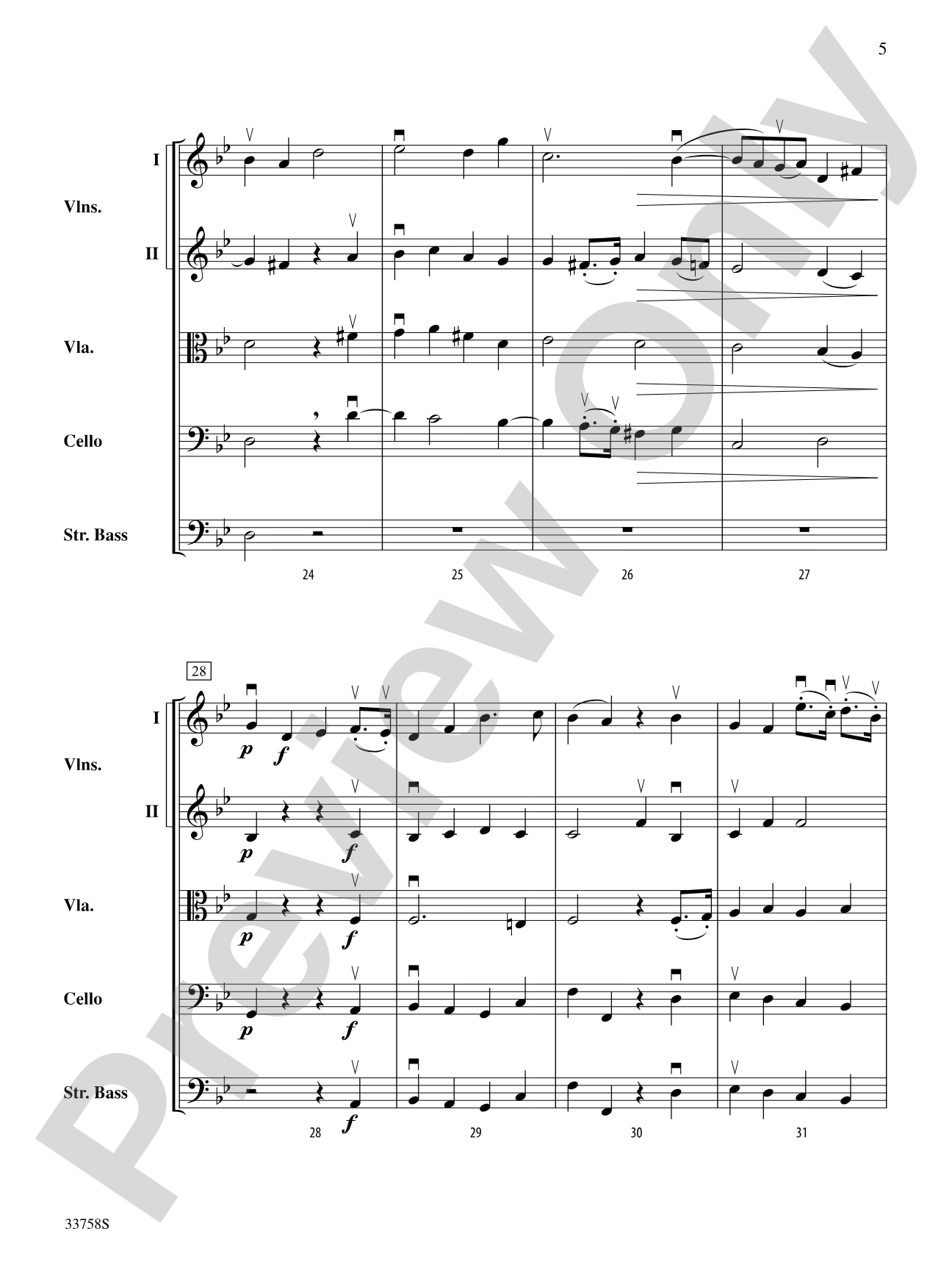
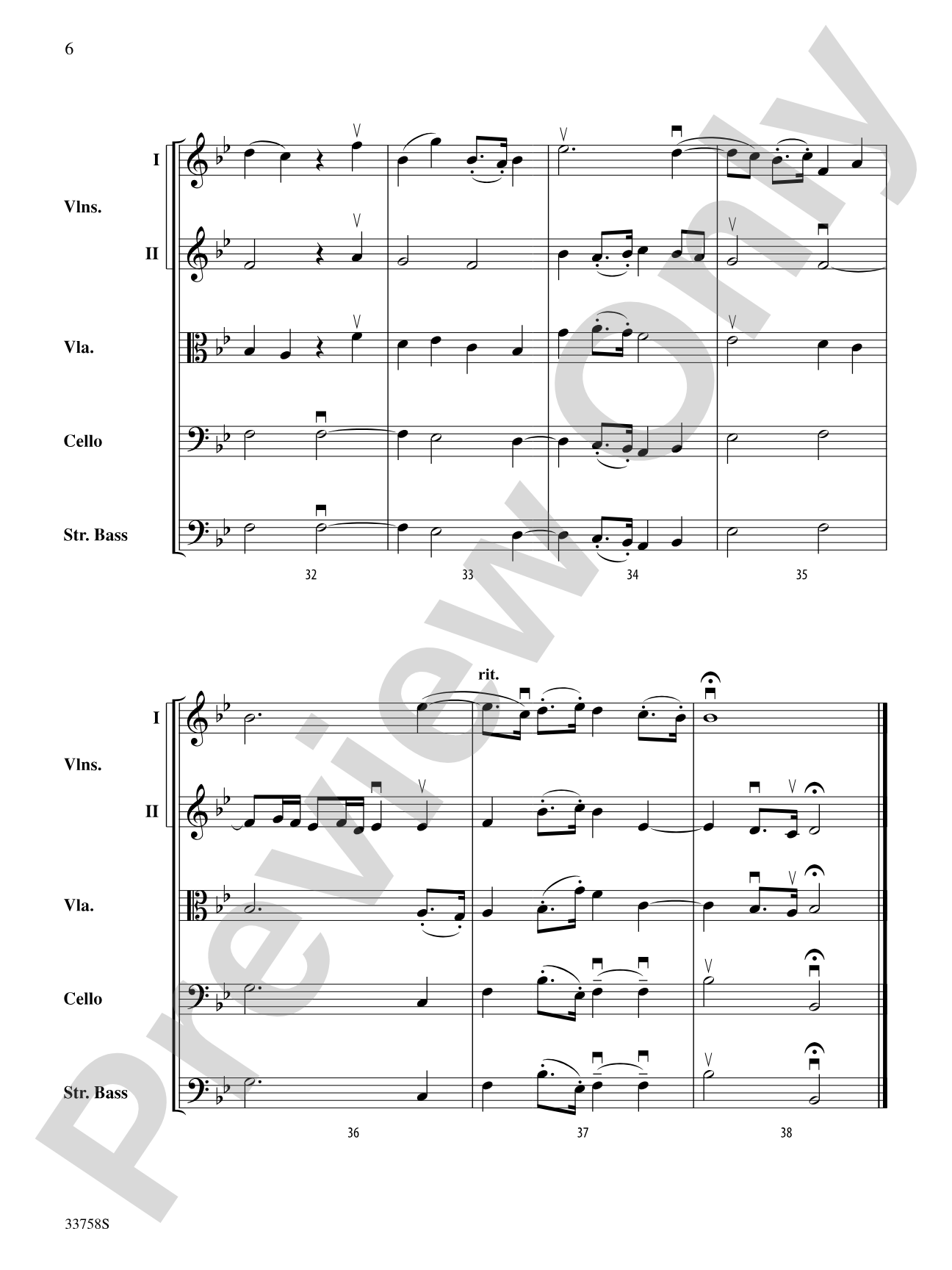
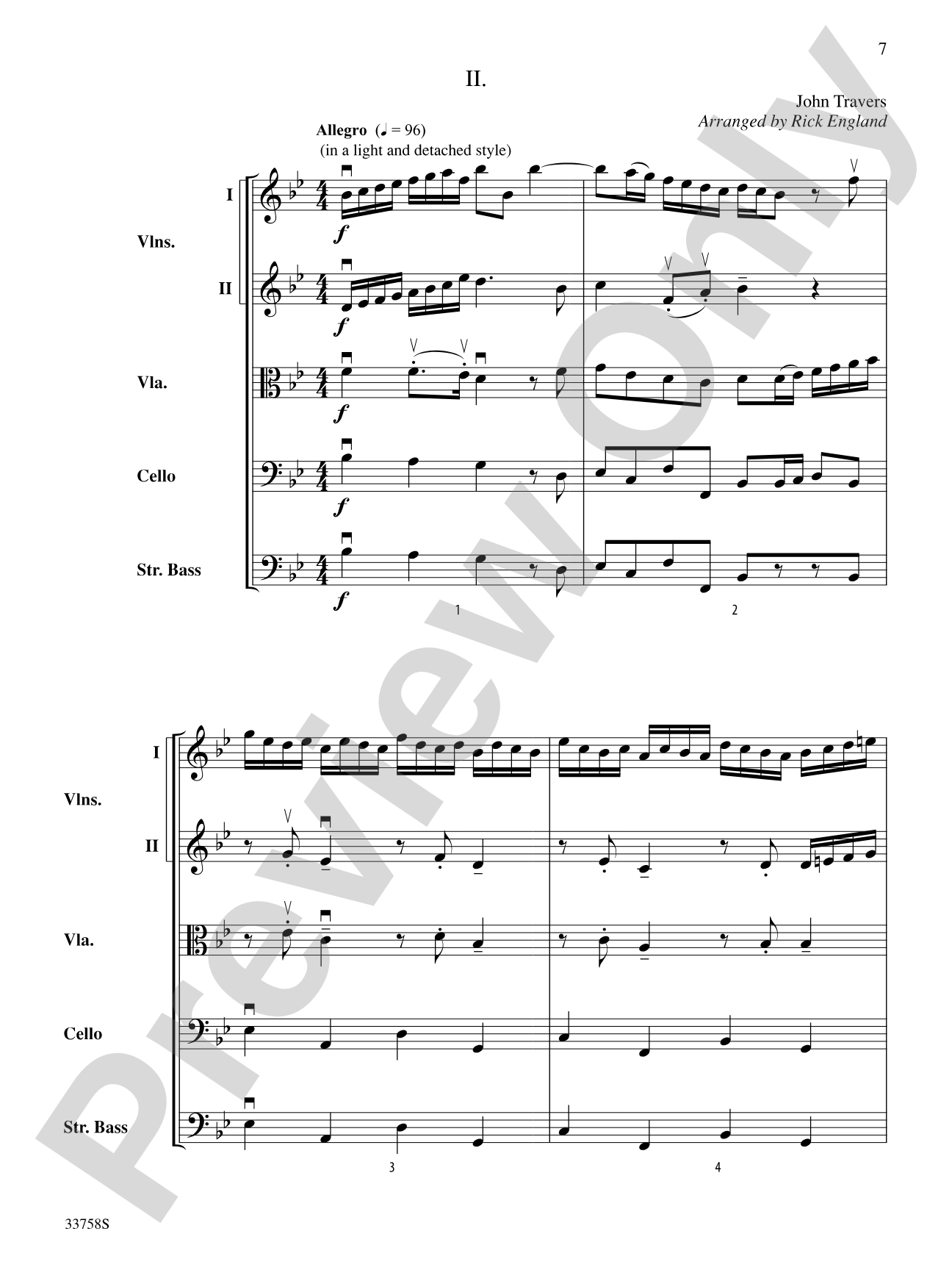
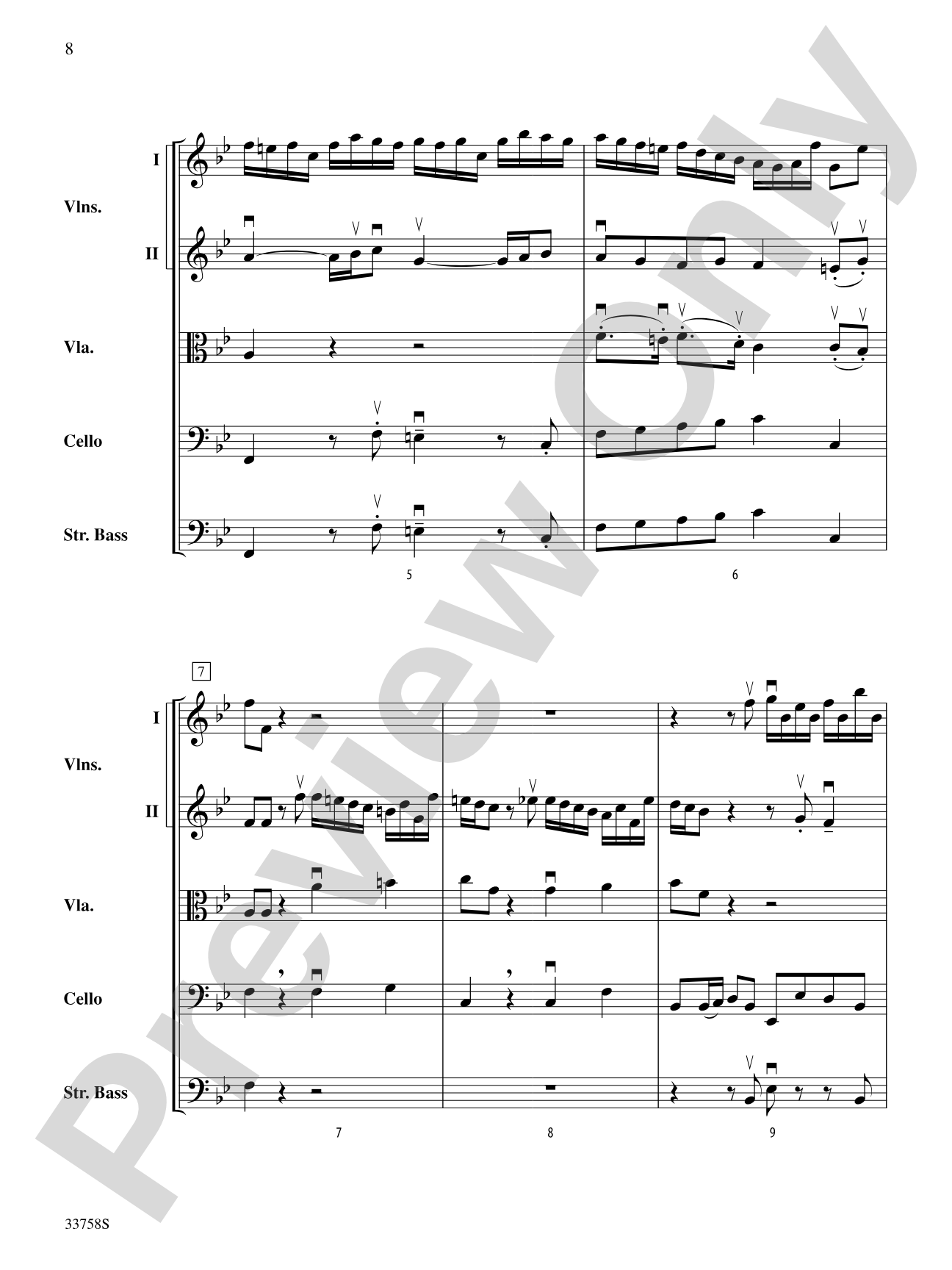

Two English Voluntaries: String Orchestra Conductor Score & Parts
By Jonathan Battishill and John Travers / arr. Rick England
Grade: 3
Item: 00-PK-0004246

$47.00
Pickup currently not available
Buy Extra Parts (Digital PDF Download)
| Product | Price | Quantity |
|---|---|---|
| Two English Voluntaries: Score | $7.00 | |
| Two English Voluntaries: 1st Violin | $5.99 | |
| Two English Voluntaries: 2nd Violin | $5.99 | |
| Two English Voluntaries: Viola | $5.99 | |
| Two English Voluntaries: Cello | $5.99 | |
| Two English Voluntaries: String Bass | $5.99 |
Parts Added to Cart!
Related Items
Two English Voluntaries: String Orchestra Conductor Score & Parts |
$47.00
|
View |
Description
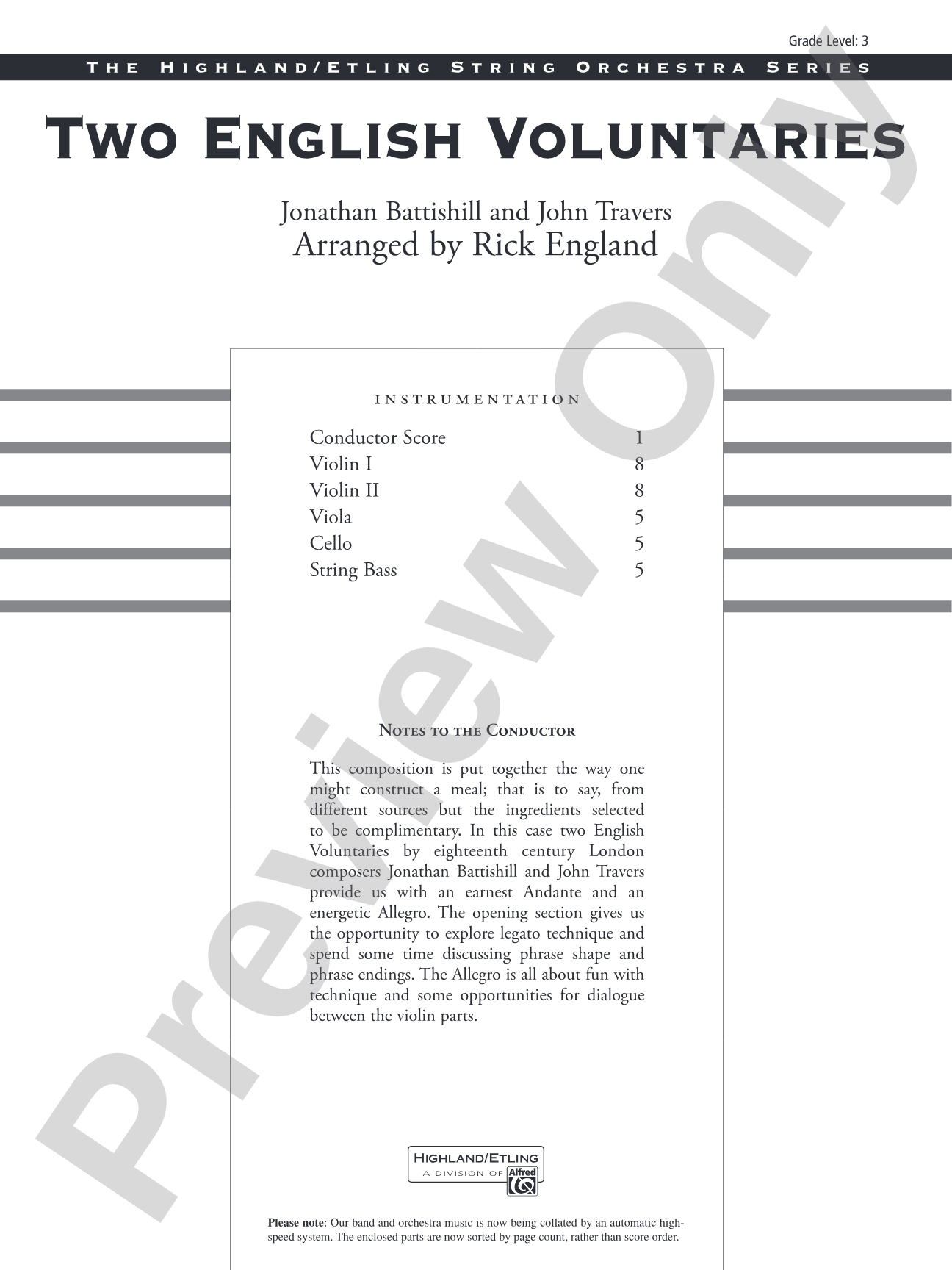
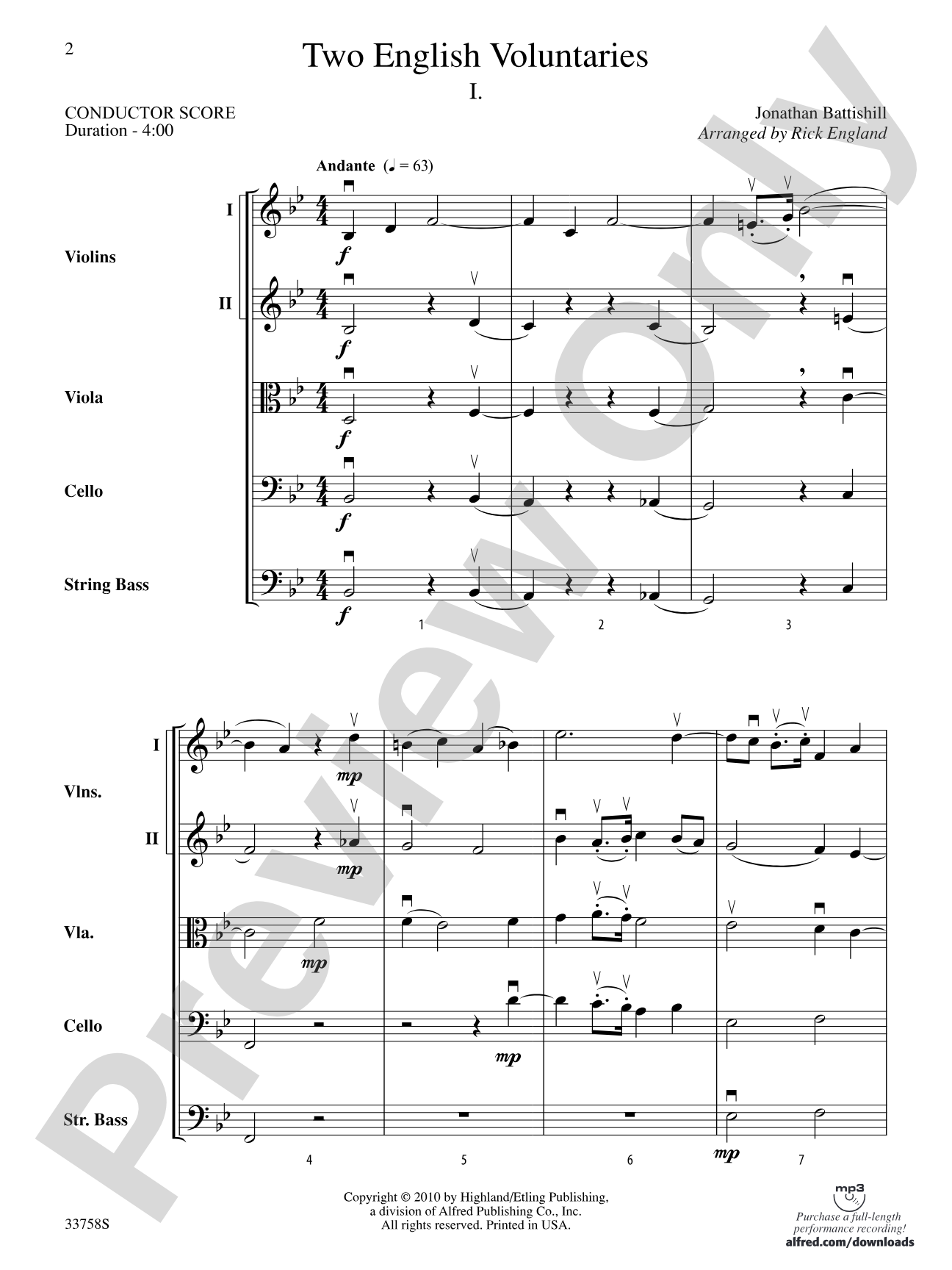
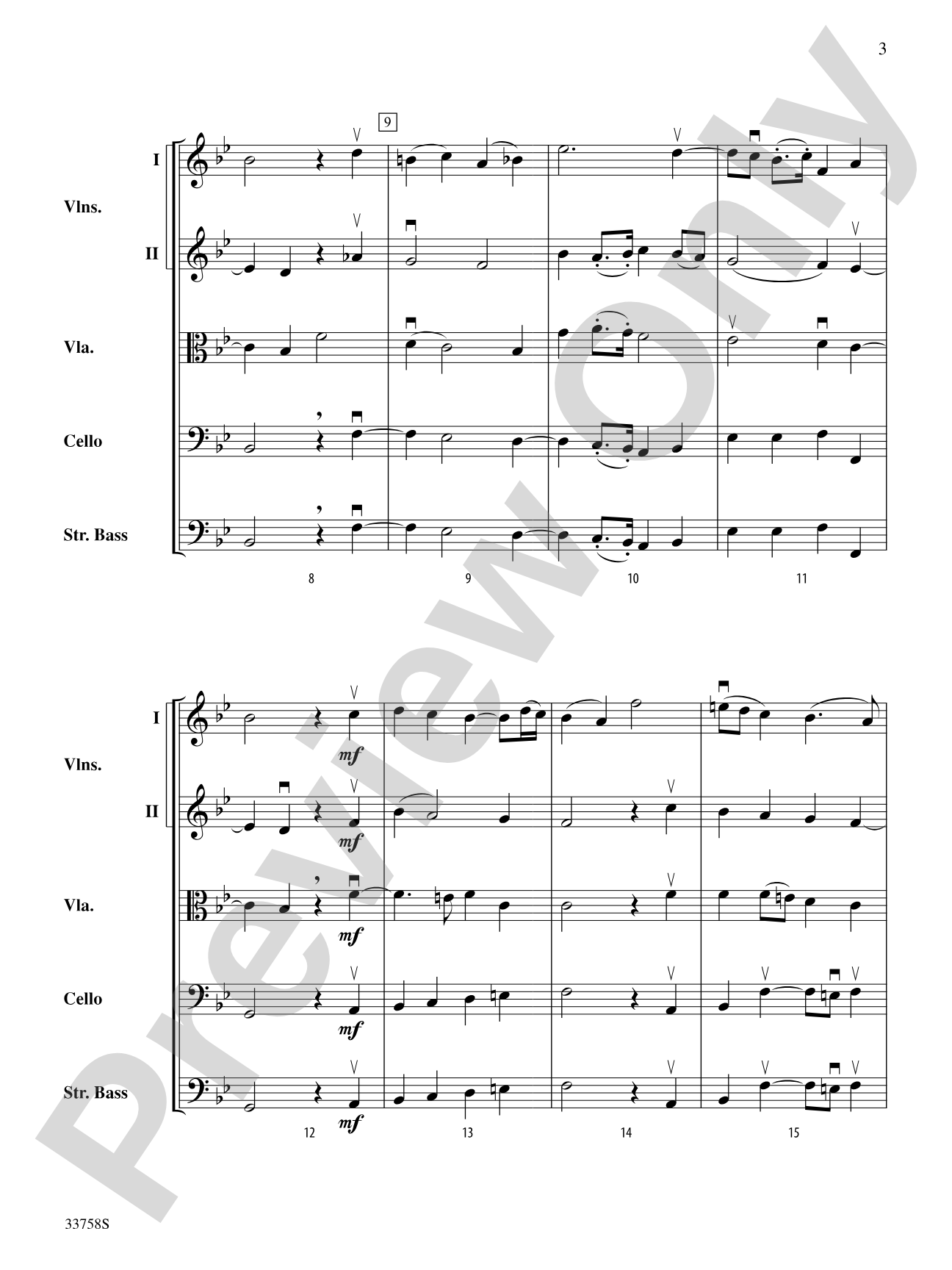
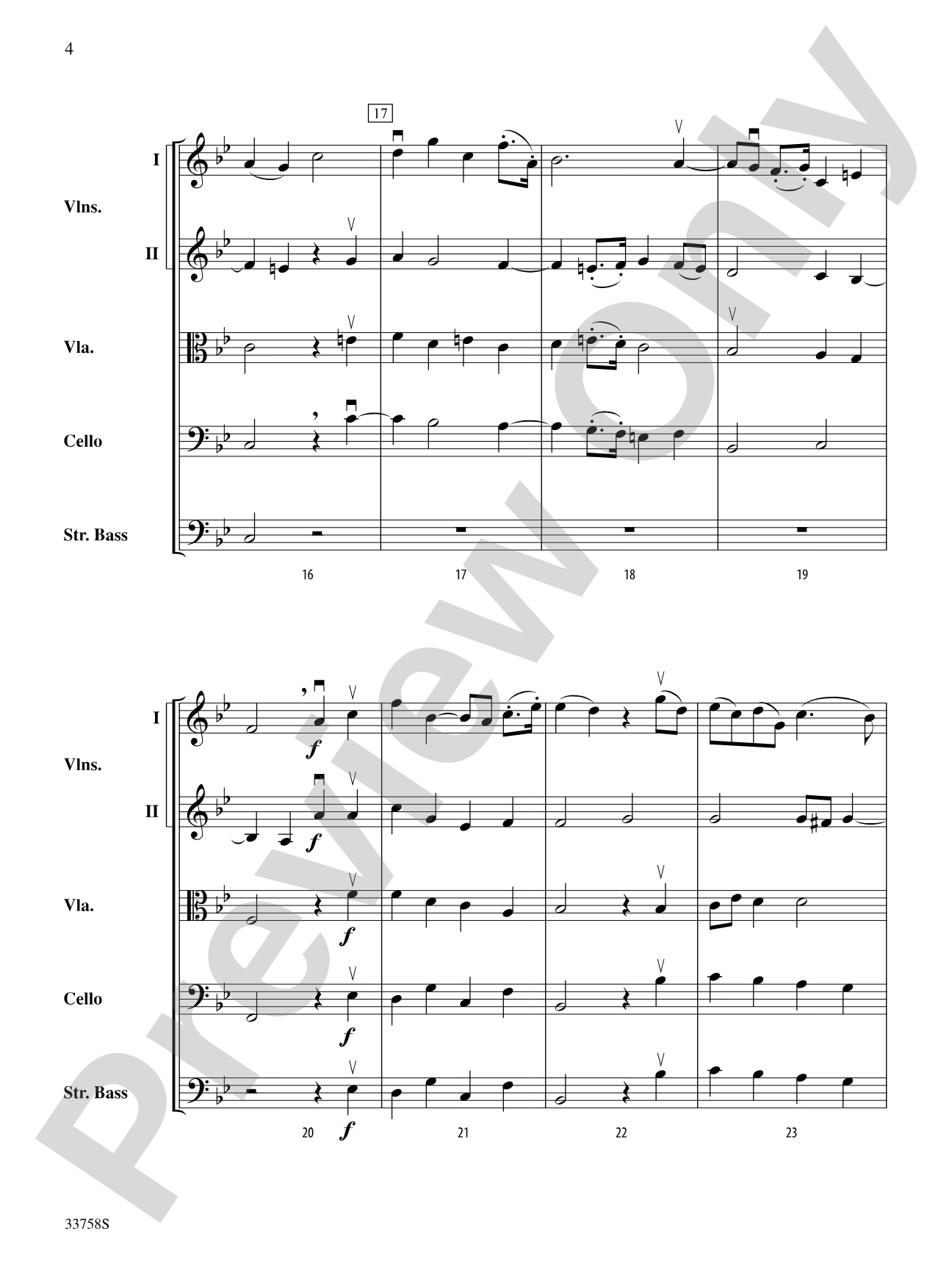
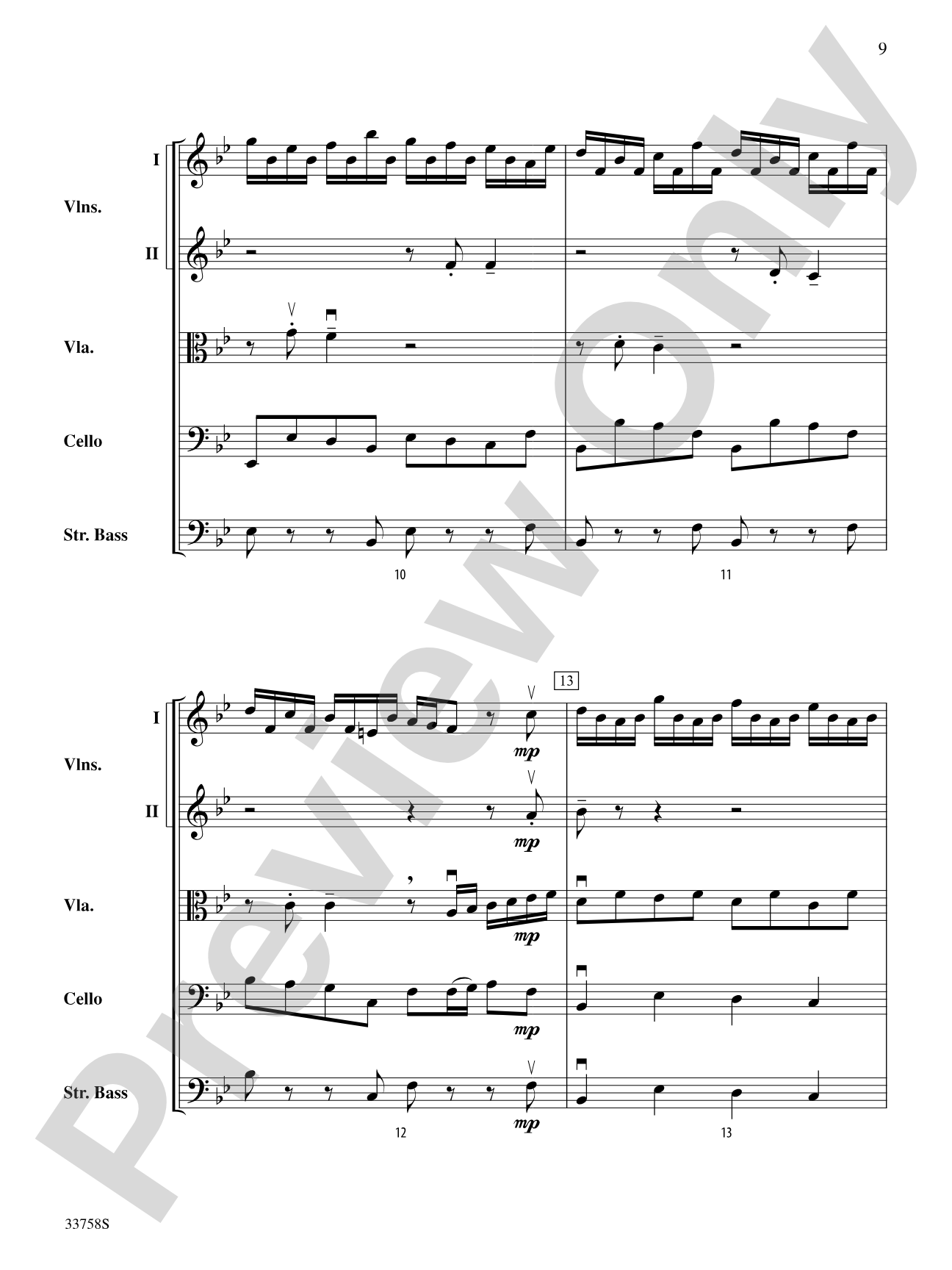
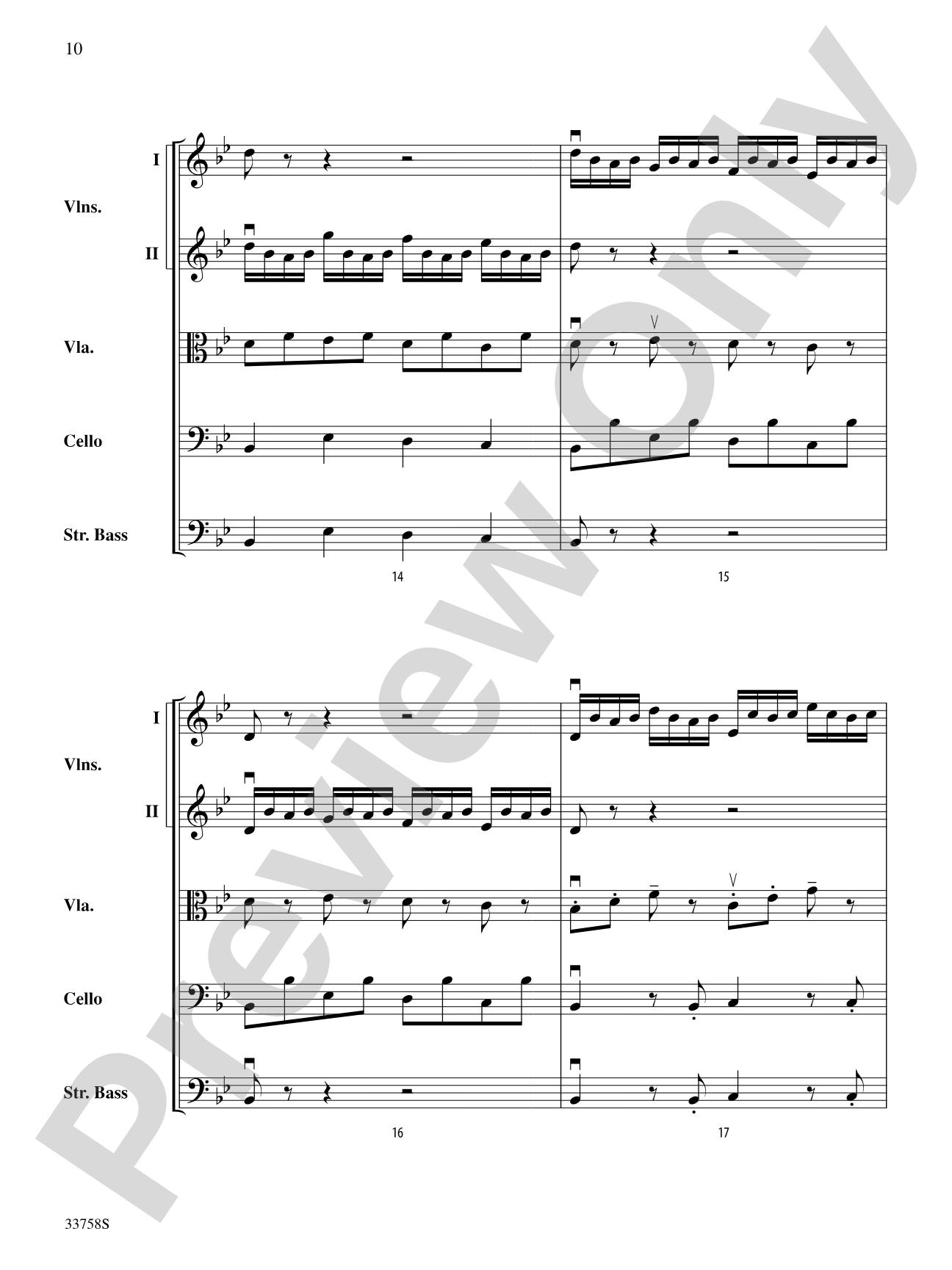
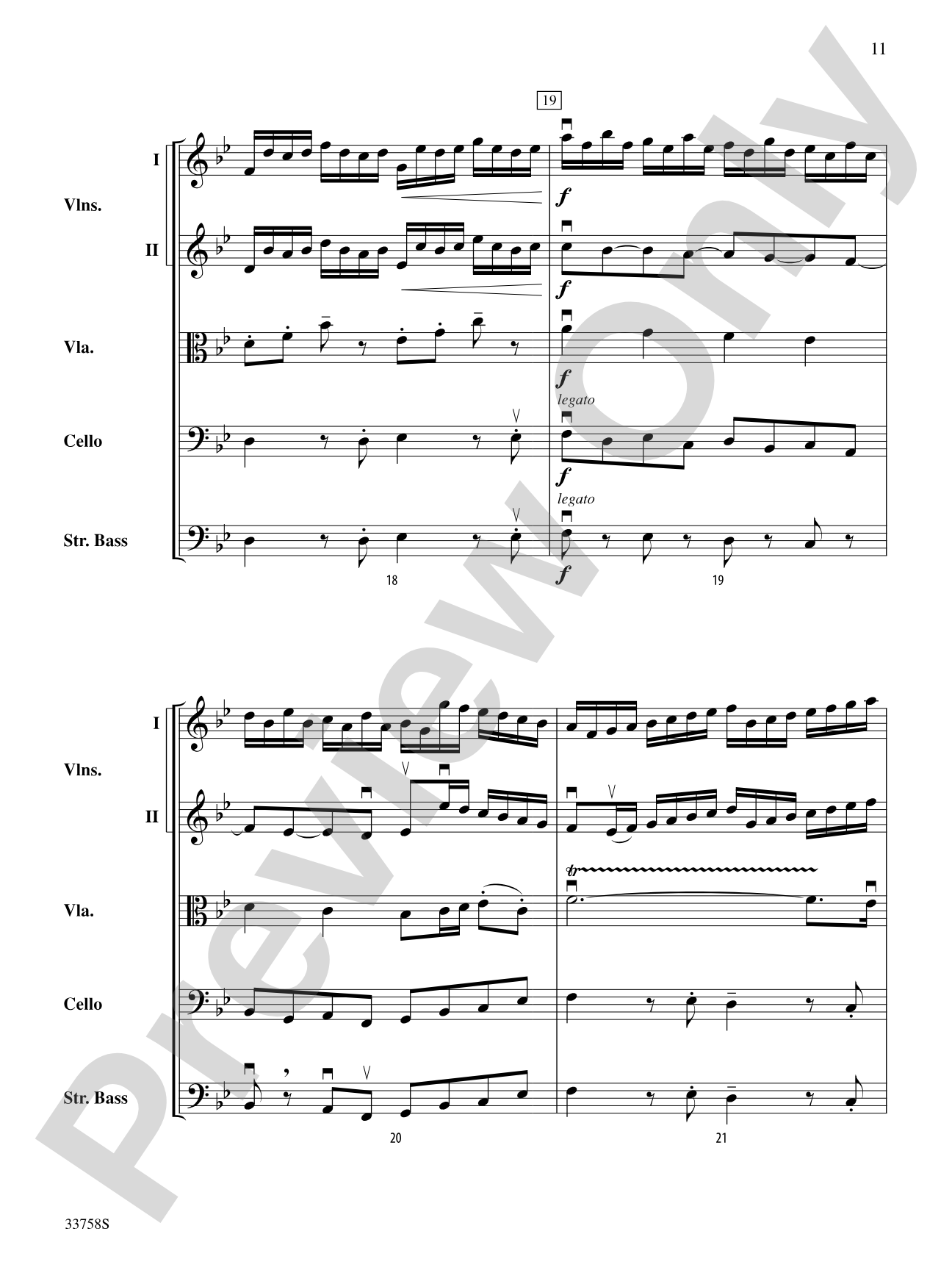
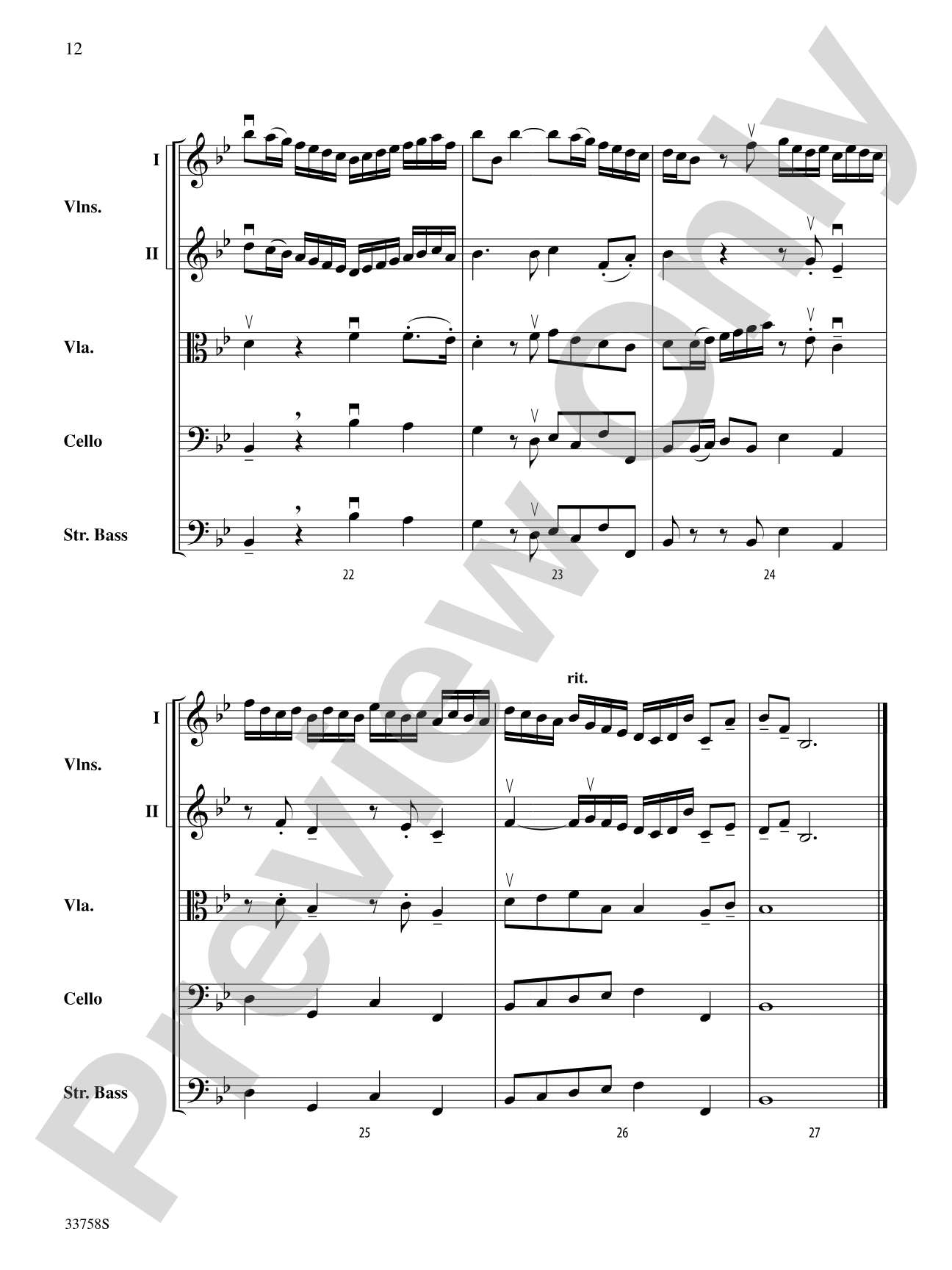
This composition is put together the way one might construct a meal; that is to say, from different sources, but the ingredients are selected to be complimentary. Complimentary movements allow us to explore legato technique, shape, and phrase endings in the earnest Andante while the Allegro is all about fun with technique and some opportunities for dialogue between the violin parts.


Don't just read it, hear it, play along with it, and watch your students grow with it. In MakeMusic Cloud, Two English Voluntaries: String Orchestra Conductor Score & Parts comes alive with professional accompaniment, adjustable tempo, and built-in practice tools that turn solo practice into real progress.
Open in the Player
Jump straight in and assign it today.
Start Your Free Trial
Open this title and explore the full library in minutes.
Sample Audio
1
Audio File
--:--
0:00
0:00
Sample Video
No sample videos found.
Additional Details
Series:
Highland/Etling String Orchestra
Publisher:
Alfred Music
Page Count:
124
SKU:
00-PK-0004246
More about this title
About the Composer: Jonathan Battishill
Jonathan Battishill (1738, 1801) was an English organist and composer whose church music and instrumental works earned him respect in London's musical circles. His voluntaries represent a distinctive English Baroque tradition, balancing technical display with genuine musical substance in ways that appeal to both performers and audiences.
Why we love this
This arrangement captures the essence of Baroque string writing while remaining accessible at Grade 3. The pairing of contrasting movements gives directors a complete musical statement that works equally well in contest or concert, and the interplay between violin parts in the Allegro creates genuine ensemble dialogue rather than simple doubling.
What to expect
The Andante breathes with genuine expressive depth despite its Grade 3 accessibility; sustained lines and careful phrase shaping create a contemplative opening. The Allegro shifts into brighter territory with dancing rhythms and playful dialogue between violin parts, giving the ensemble a chance to show off agility and precision.
Who it's for
String orchestra directors programming Grade 3 repertoire for concert or festival performance. This works for orchestras looking to develop legato playing and phrasing awareness while also exploring the lighter technical demands of the Allegro movement.
How to get the most out of it
- Shape the longer lines in the Andante by identifying the high point of each phrase and working backward from there; legato technique improves dramatically when students hear the destination before playing it.
- In the Allegro, clarify the dialogue between violin sections by having them mark their entrances lightly in pencil, then rehearse with exaggerated dynamics to separate the voices before settling into the written balance.
- Balance the parts carefully in both movements; the viola and cello lines carry harmonic weight that can easily disappear if the violins take too much volume.
- Let the natural pacing of the phrases dictate tempo rather than rushing the quicker figuration in the Allegro. Accuracy at a slightly slower tempo builds confidence and musicality.
How to use it
Program this as an opening work on a concert to establish musical sophistication early, or place it in the middle of a program as a palate cleanser between heavier Romantic or contemporary pieces. It also pairs naturally with other Baroque arrangements or works by the same arranger in the Highland/Etling series.
Skills your students will build
- Legato technique and sustained tone quality
- Phrase shaping and identifying melodic contours
- Part independence and dialogue between violin sections
- Baroque articulation and ornamentation
- Rhythmic accuracy in mixed note values
- Balance and blend across string sections