Two Degrees East, Three Degrees West Sheet Music Preview

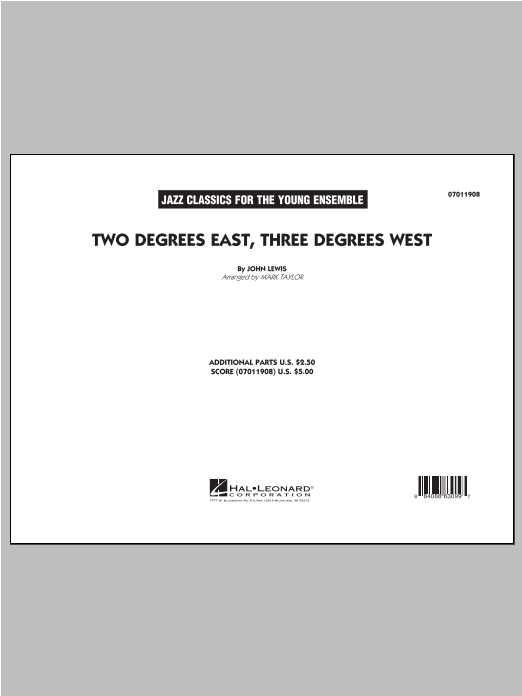
Two Degrees East, Three Degrees West: Jazz Ensemble Conductor Score & Parts

By John Lewis / Arranged by Mark Taylor

Grade: 3

Item: 35-PK00247830

Digital Download
$45.00

One moment…

Description
Made famous by the Modern Jazz Quartet, this medium swinger is a great addition to the literature for young jazz players. Mark's chart opens with a small group of 2 saxes, trumpet, trombone and guitar, but the full ensemble quickly gets in the game. The blues format makes it easy for anyone to solo, and there's a nice full ensemble send-off at the beginning of the solo section. This is a great example of quality writing for young players.

Two Degrees East, Three Degrees West: Jazz Ensemble Conductor Score & Parts isn't in MakeMusic Cloud just yet...but it could be. Let us know you'd like to see it, and you'll help shape what comes next. In the meantime, start a free trial and dive into thousands of interactive titles your students can play along with today.

Sample Audio
No sample audio found.
Sample Video
Additional Details
Publisher: Hal Leonard
SKU: 35-PK00247830

More about this title

About the Composer: John Lewis

John Lewis was the pianist and primary composer for the Modern Jazz Quartet, one of the most influential ensembles in jazz history. His approach to composition balanced sophisticated harmonic language with accessibility, creating works that could satisfy both serious musicians and general audiences. Lewis believed jazz could achieve the structural integrity of classical music without sacrificing its improvisational soul, and his writing for young musicians reflects that philosophy.

Why we love this

Mark Taylor's chart respects Lewis's original concept while meeting the needs of developing players. The orchestration builds naturally from a small group texture to full ensemble, letting younger soloists cut their teeth on blues changes without feeling overwhelmed, and the crisp ensemble writing at the start of the solo section gives everyone a confidence boost before the improvisation begins.

What to expect

Cool, urbane, and unhurried. The tune settles into a gentle swing that feels more sophisticated than its accessibility suggests, with a warmth that comes from the interplay between smaller and larger sections. It's the musical equivalent of a well-tailored suit: simple on the surface but crafted with real intention.

Who it's for

Grade 3 jazz ensembles ready to move beyond simple heads and rhythmic charts. This works especially well for groups with a mix of confident and newer soloists, since the blues form accommodates varied experience levels.

How to get the most out of it

  • Set a relaxed, medium tempo that lets the swing groove breathe. Rushing this tune drains its ease and sophistication.
  • Balance the small group opening carefully so listeners can hear the interplay between saxes and brass without any section dominating.
  • Encourage soloists to use space and silence. Young players often feel pressure to fill every beat, but the blues format rewards strategic phrasing.
  • Lock the rhythm section early in rehearsal. Guitar, bass, and drums establish the pocket that makes everything else land naturally.

How to use it

Pair this with a more energetic blues chart or contemporary jazz composition to show students how the same harmonic foundation supports different moods and arranging approaches. It also works beautifully as a standalone feature in a concert that emphasizes composition over flash.

Skills your students will build

  • Blues improvisation over a 12-bar form
  • Listening and responding to comping voices while soloing
  • Balancing ensemble sound across different section sizes
  • Swing rhythm and phrasing at a medium tempo
  • Reading and executing jazz articulation marks

You May Also Like