
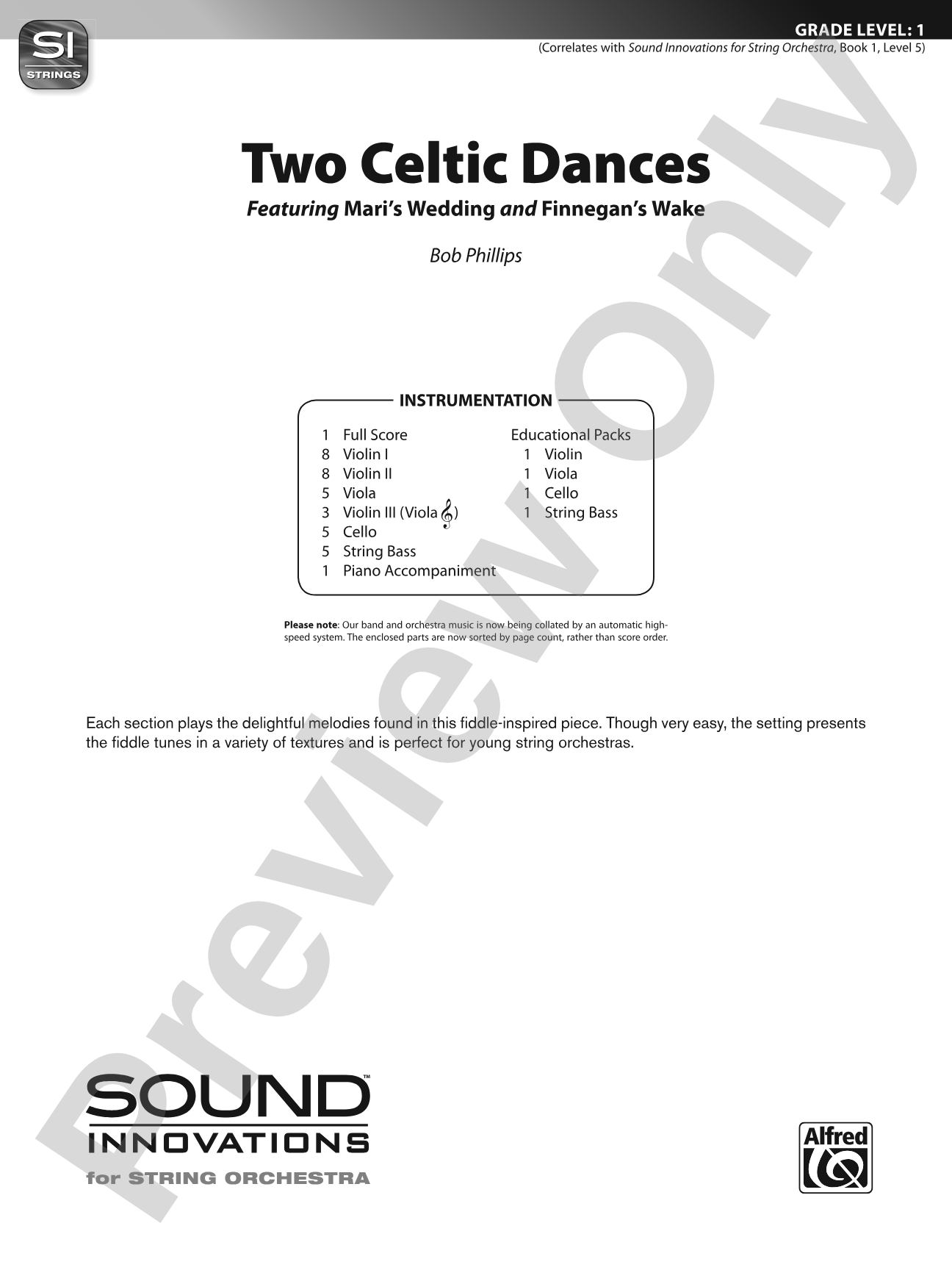
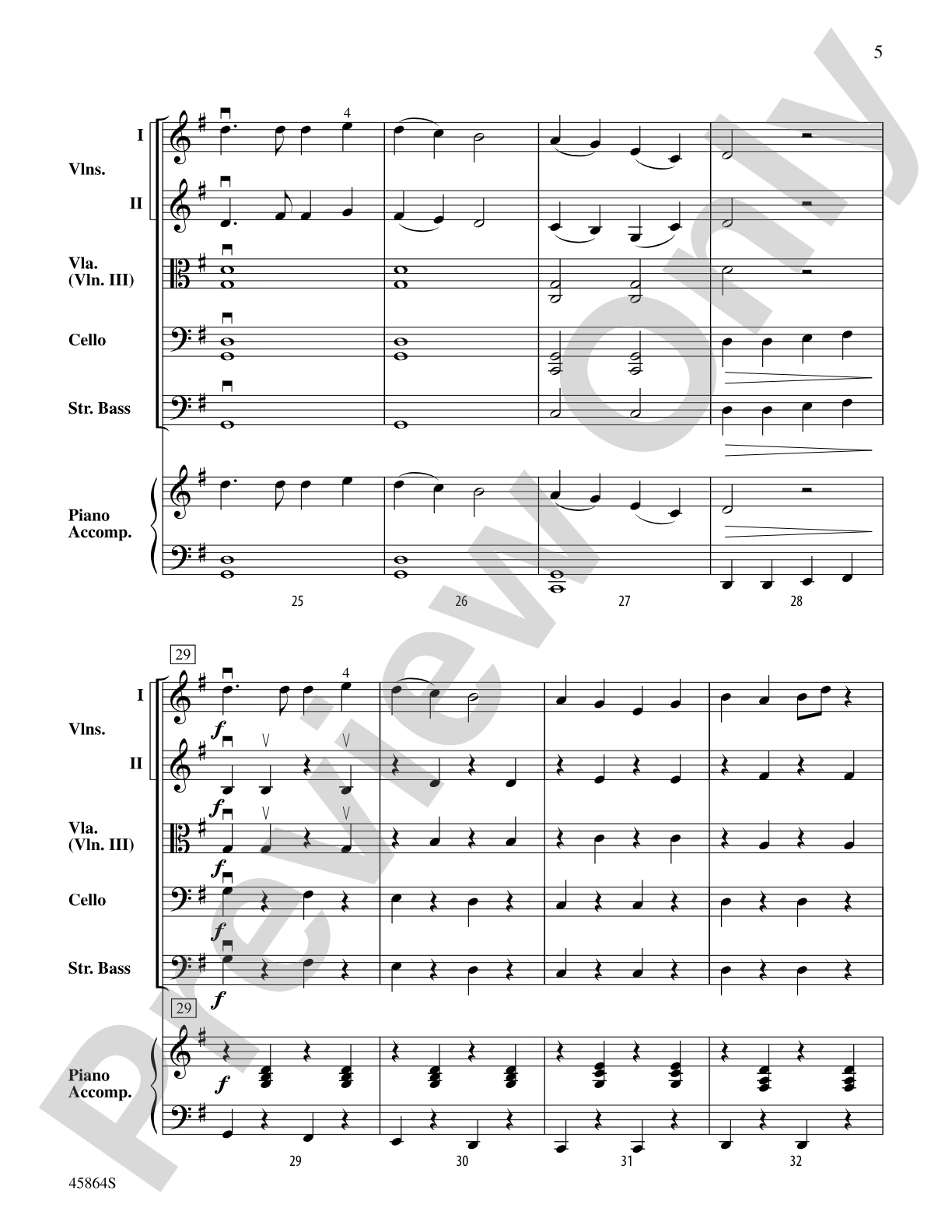
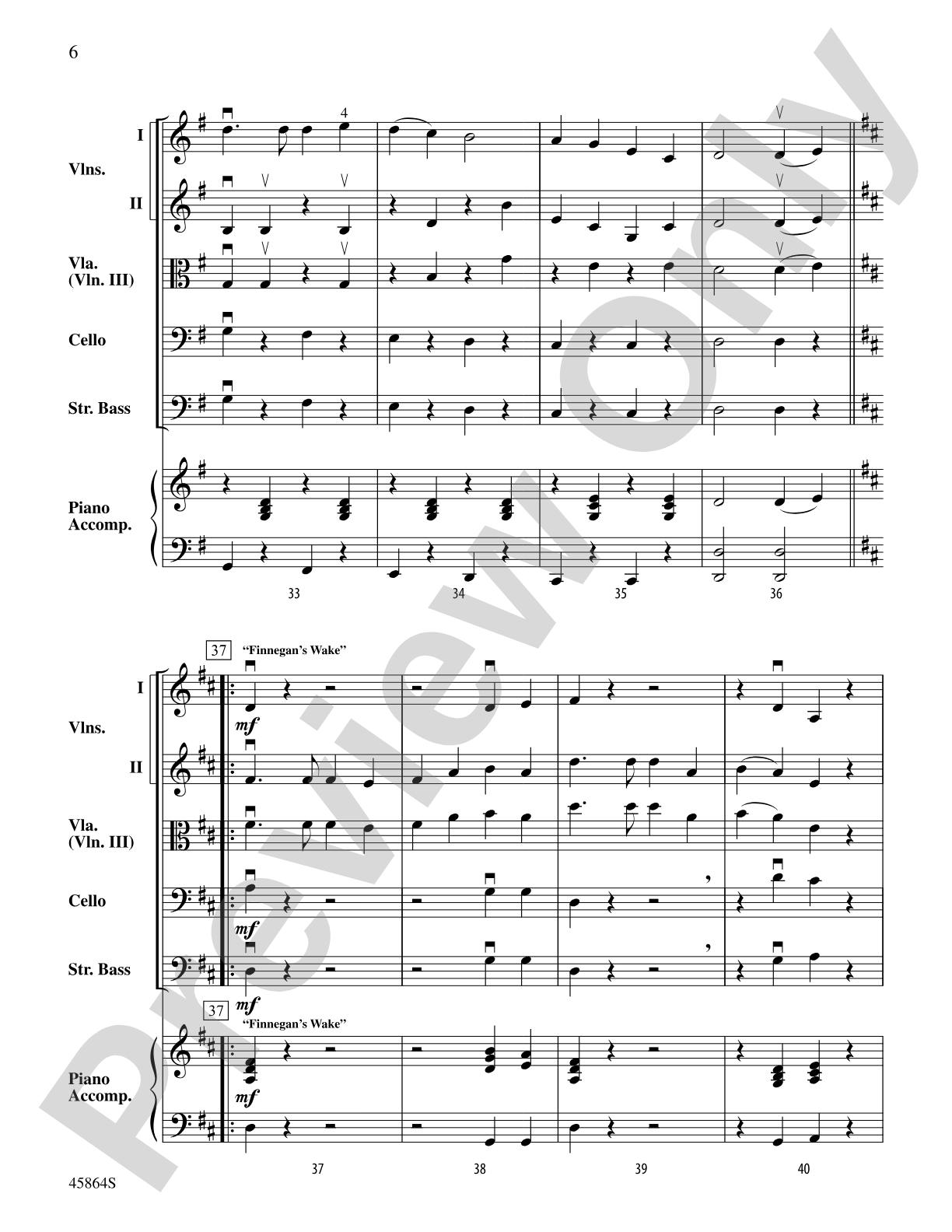
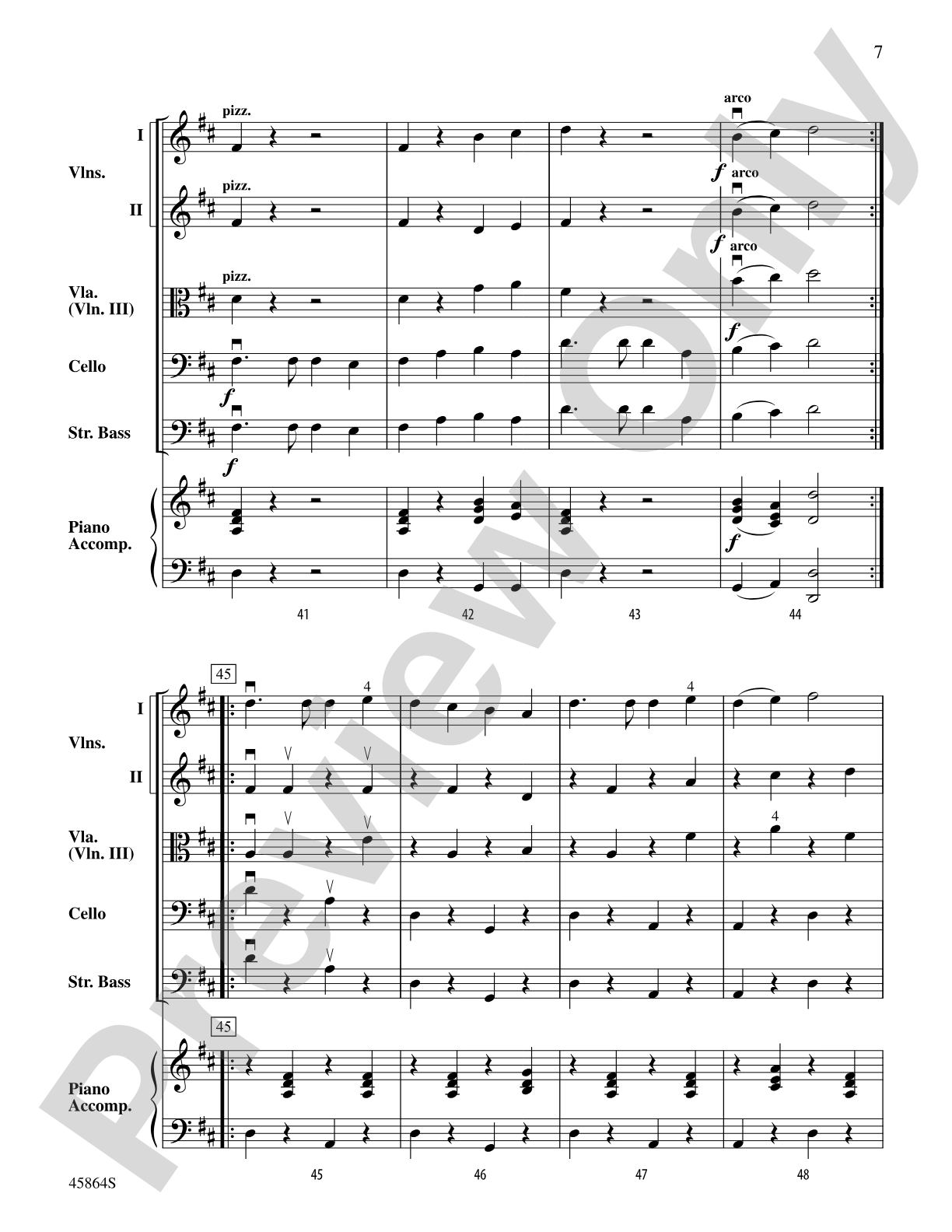
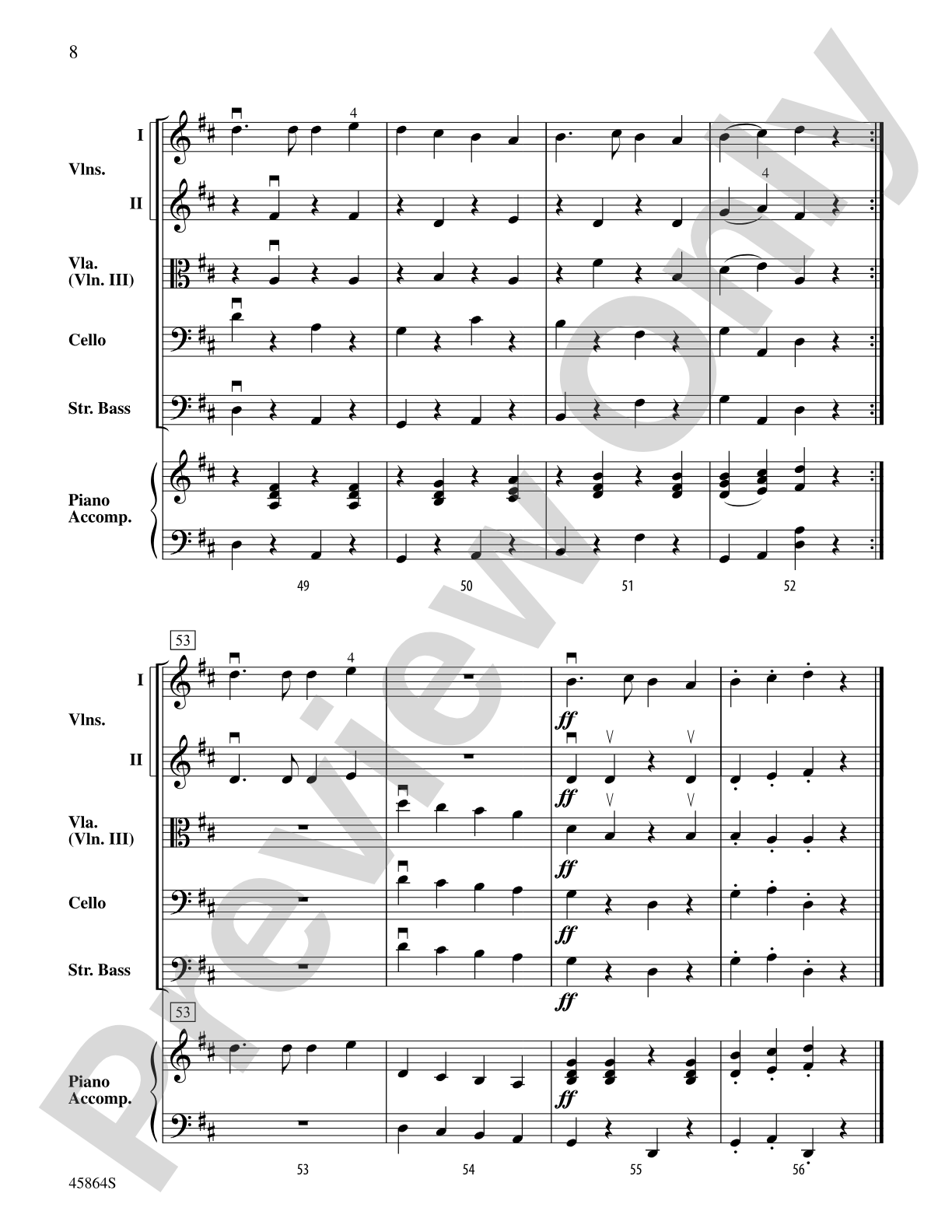

Two Celtic Dances: Score
Featuring: Mari's Wedding / Finnegan's Wake
Arr. Bob Phillips
Grade: 1
Item: 00-PR-0005911
$8.00
Pickup currently not available
Description
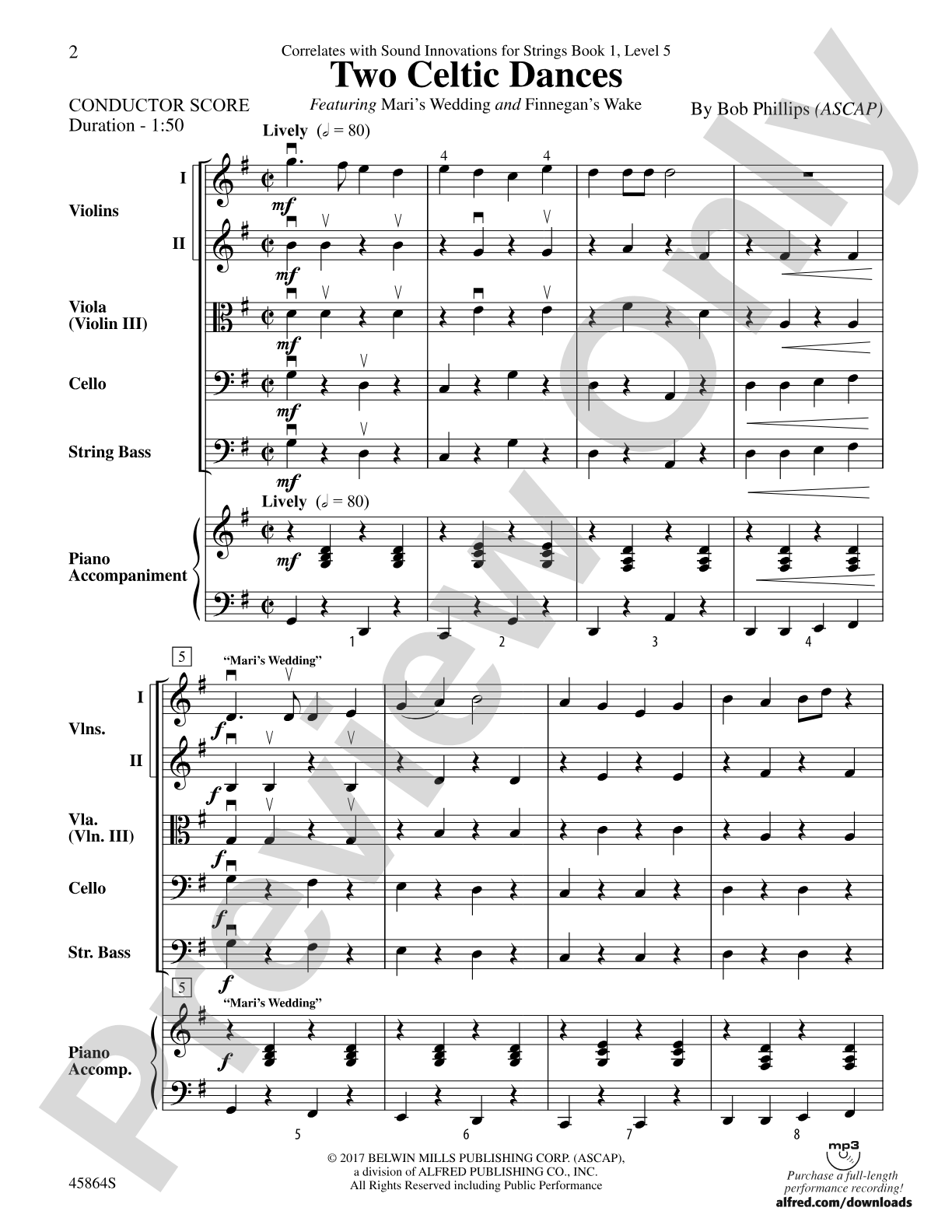
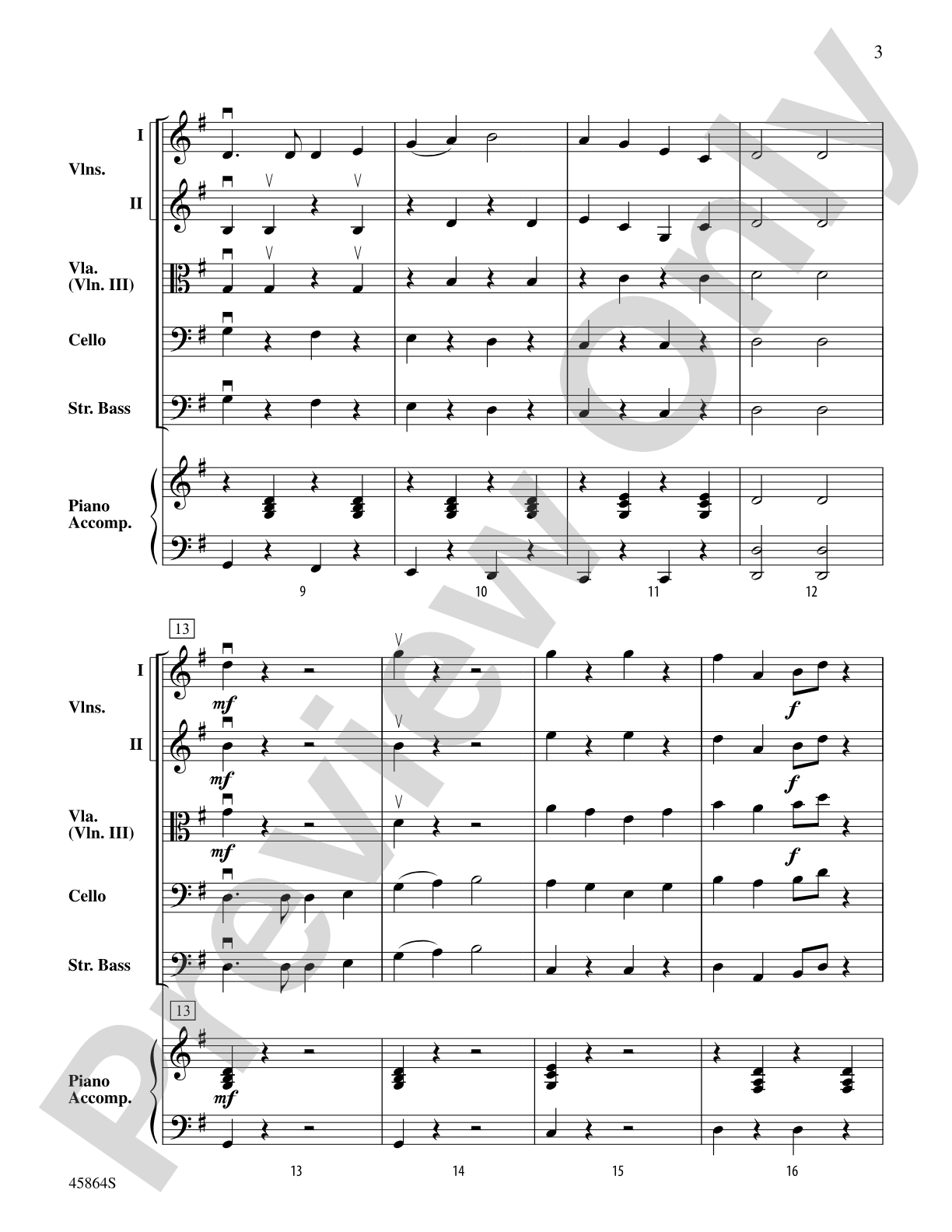
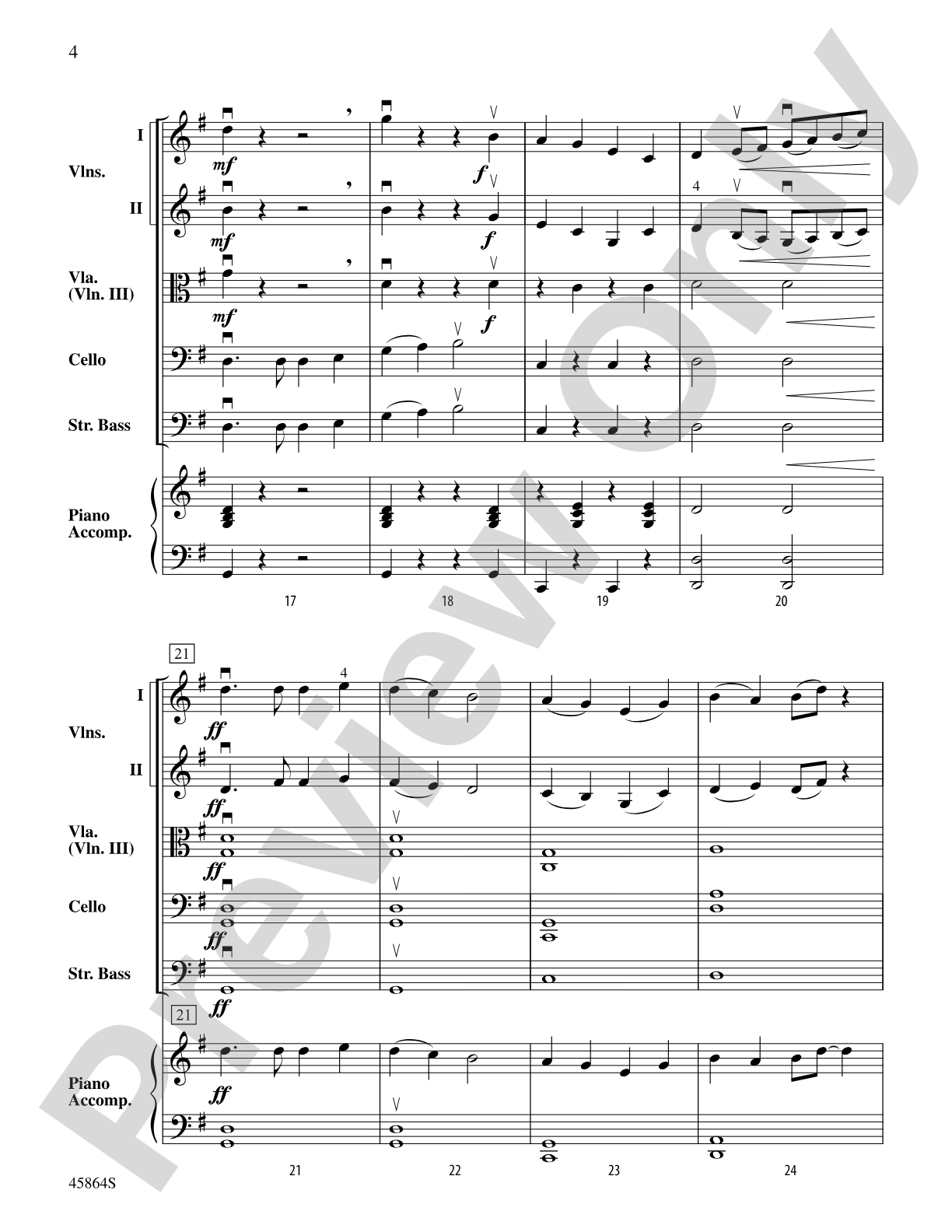
In Two Celtic Dances, each section plays the delightful melodies found in this fiddle-inspired piece. Though very easy, this setting presents the fiddle tunes "Mari's Wedding" and "Finnegan's Wake" in a variety of textures perfect for young string orchestras. This Bob Phillips arrangement will be sure to energize your string players! (1:50)


Don't just read it, hear it, play along with it, and watch your students grow with it. In MakeMusic Cloud, Two Celtic Dances: Score comes alive with professional accompaniment, adjustable tempo, and built-in practice tools that turn solo practice into real progress.
Open in the Player
Jump straight in and assign it today.
Start Your Free Trial
Open this title and explore the full library in minutes.
Sample Audio
1
Audio File
--:--
0:00
0:00
Sample Video
Additional Details
Series:
Sound Innovations for String Orchestra
Publisher:
Alfred Music
Page Count:
80
SKU:
00-PR-0005911
More about this title
About the Arranger: Bob Phillips

Bob Phillips has shaped string education for decades through a combination of conducting, arranging, and pedagogical innovation. Since the 1990s, he developed a 700-student string program in Saline, Michigan that became nationally recognized for its breadth—from classical repertoire to folk, jazz, rock, and world music styles. His foundational work includes the complete Sound Innovations series (all six levels) and landmark eclectic publications like Fiddlers Philharmonic, Jazz Philharmonic, and Rock Philharmonic, which have introduced thousands of young musicians to music beyond the traditional canon.
Phillips has published over 200 works for orchestras and bands and earned recognition as an ASCAP award-winning composer. He directed the Saline Fiddlers Philharmonic to an international reputation, leading ensembles at the White House and Midwest Clinic, and served as resident conductor and arranger for Seattle's Wintergrass Festival. His instructional DVDs and guest conducting at state honors orchestras and summer camps have extended his influence across North America.
Why we love this
Phillips knows exactly how to unlock energy in young string players by honoring the fiddle tradition without oversimplifying the writing. Each section gets compelling melodic material; there's no padding or doubled parts that make students feel like passengers. The two tunes contrast beautifully, so even at Grade 1 you're teaching your orchestra to shift texture and character.
What to expect
Spirited and celebratory, like watching dancers at a ceilidh. The fiddle tunes bounce with an infectious rhythm that makes young string players want to move; the varied voicings keep each section engaged and prevent the sameness that can happen with simple melodies.
Who it's for
Young string orchestras (Grade 1) ready to experience the joy of folk repertoire without technical overwhelm. This works beautifully for ensembles in their first or second year, as well as for mixed-level groups where you need accessible material that still engages more advanced players through arranging texture.
How to get the most out of it
- Emphasize the lilting rhythm of the fiddle idiom; these tunes live in their swing, not in metronomic precision. Let your string players feel the folk-dance character rather than playing it straight.
- Balance the melodic lines so that whichever section carries the tune sings clearly over the accompaniment. Young players often bury the melody when they're concentrating on ensemble.
- Use the tempo markings as your guide, but stay flexible within phrases. Folk music breathes; give yourself permission to shape the lines with light rubato.
How to use it
Perfect for a winter or spring concert where you want to showcase your orchestra's personality and range beyond classical work. Program it early in the concert to energize the audience and your players, or use it as a festival entry that stands out for its authentic folk character and clear Grade 1 accessibility.
Skills your students will build
- Reading and maintaining lift in folk-music rhythms
- Balancing melodic lines in varied orchestral textures
- Understanding fiddle style and ornamentation within ensemble context
- Sustaining focus when playing accompaniment parts