



Two Bridges March: Concert Band Conductor Score & Parts
By Mark Williams
Grade: 0.5 (Very Easy)
Item: 00-PK-0001234

$48.00
Pickup currently not available
Buy Extra Parts (Digital PDF Download)
Parts Added to Cart!
Description
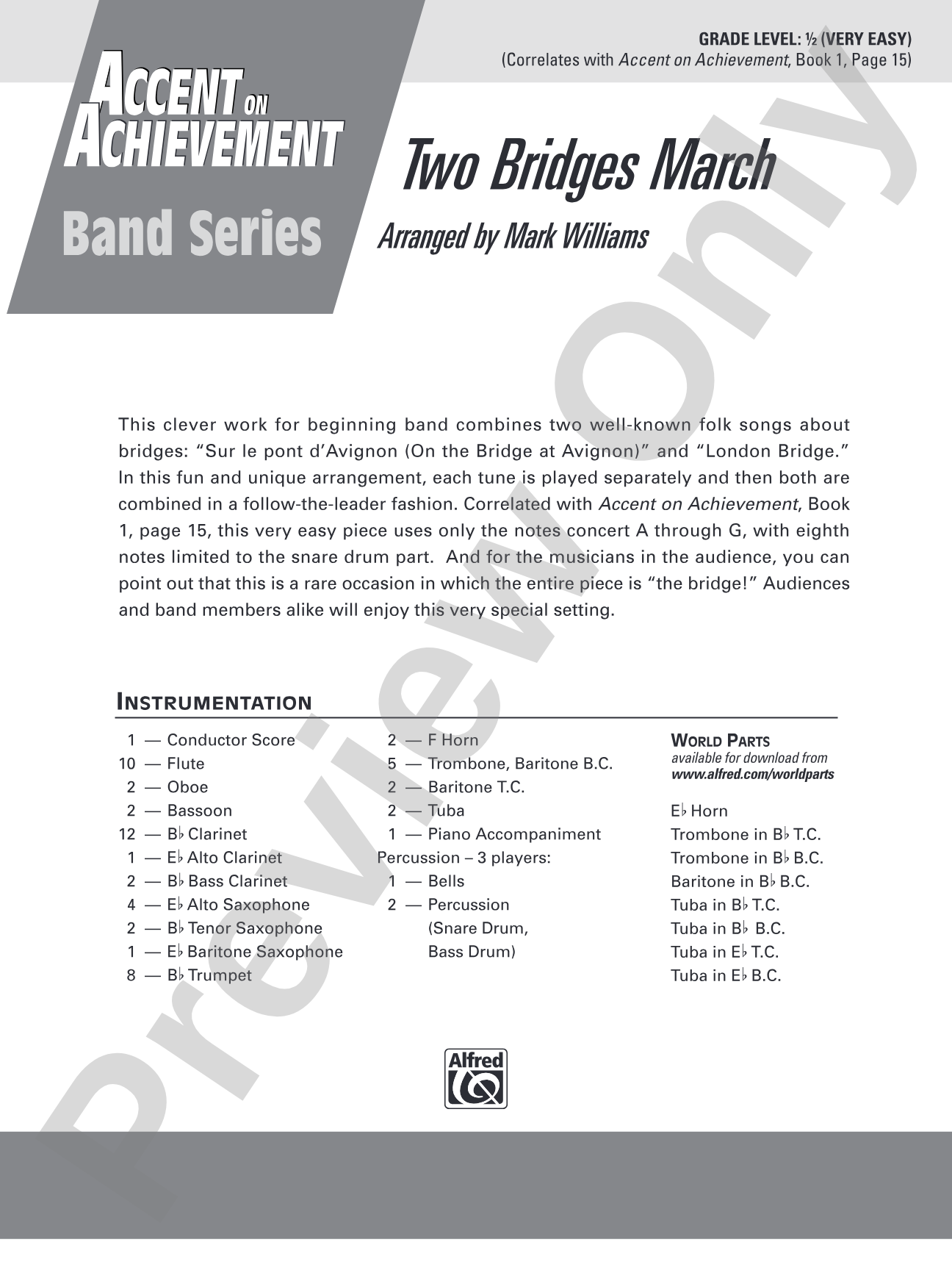
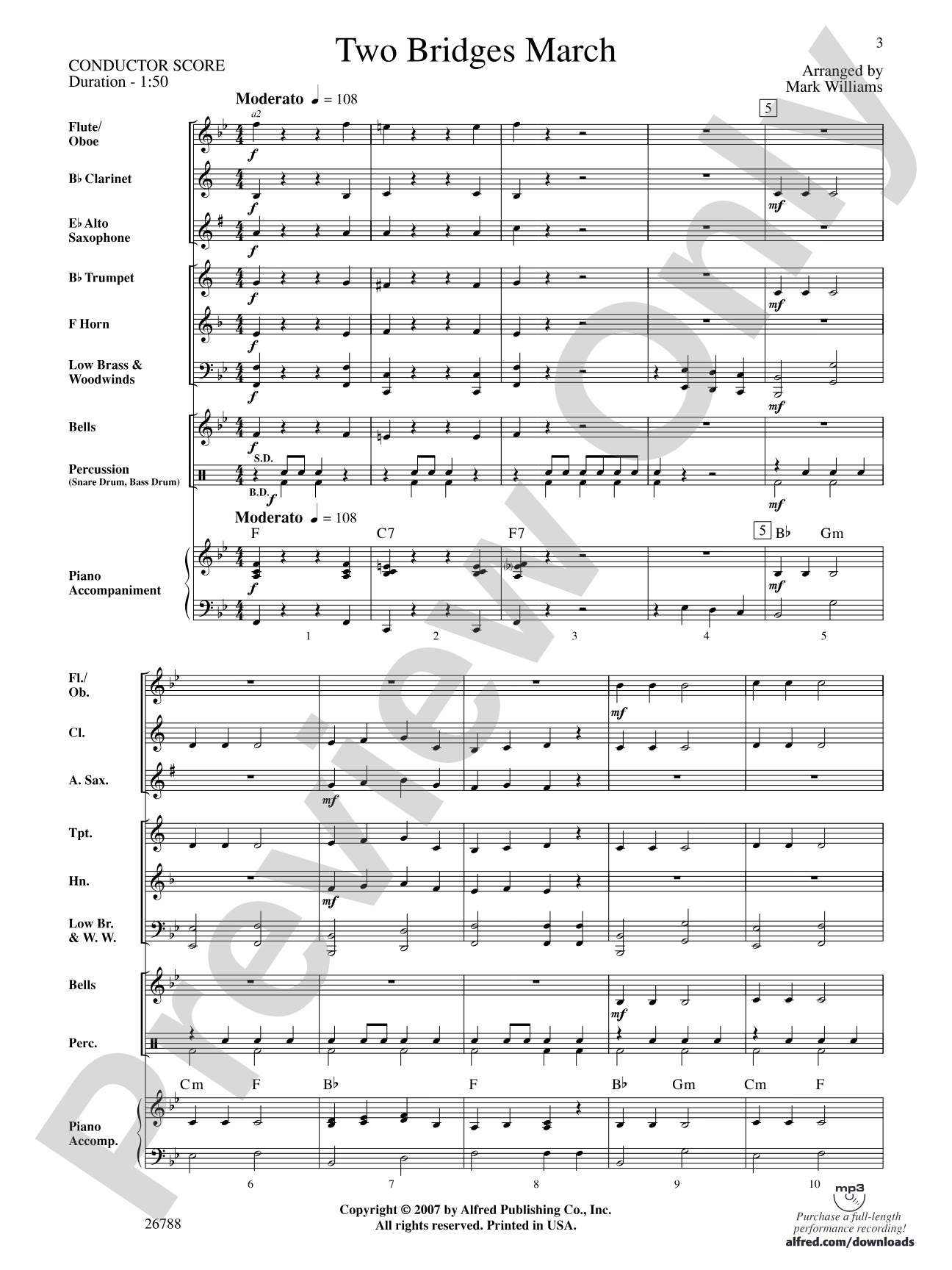
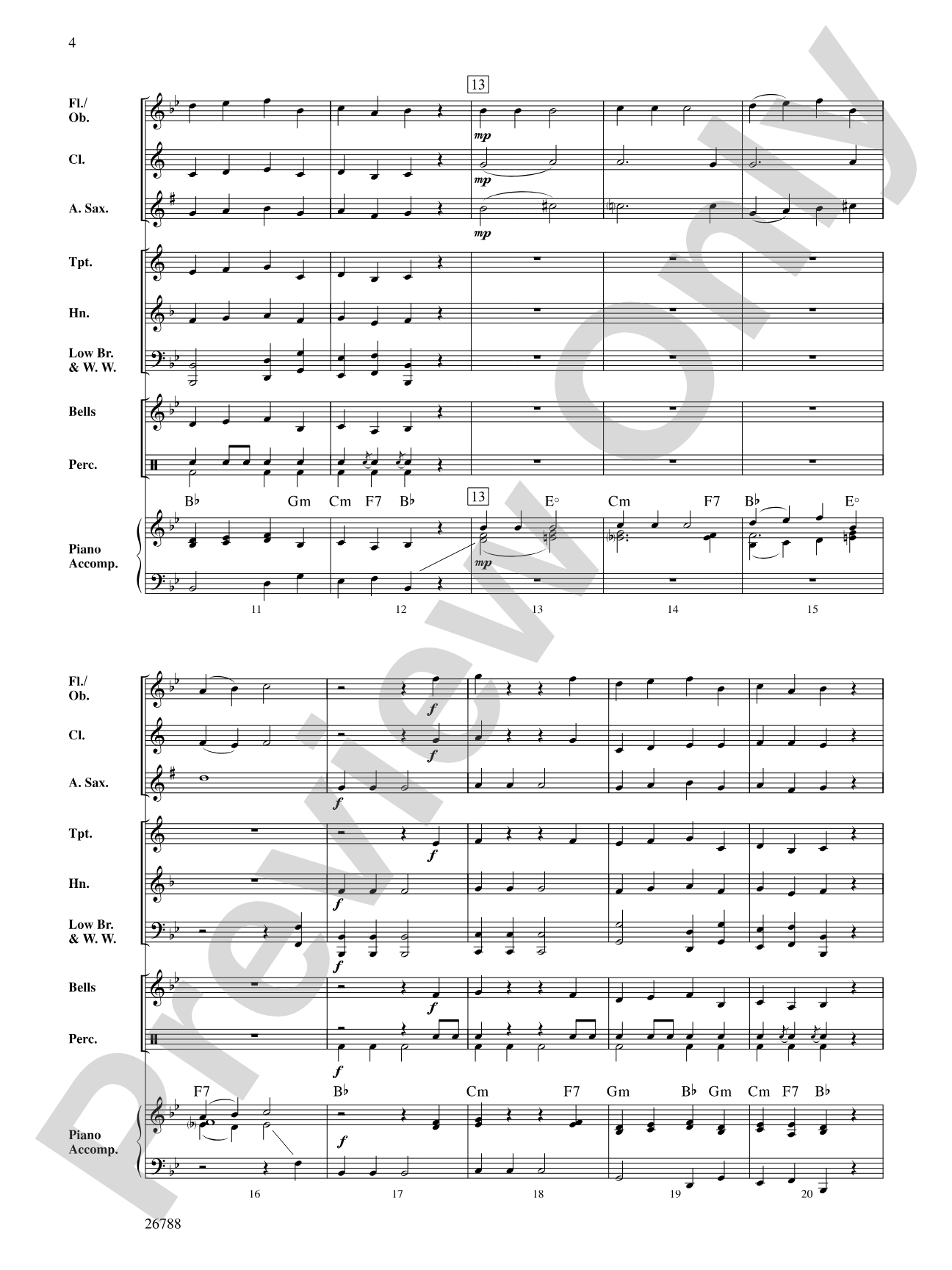
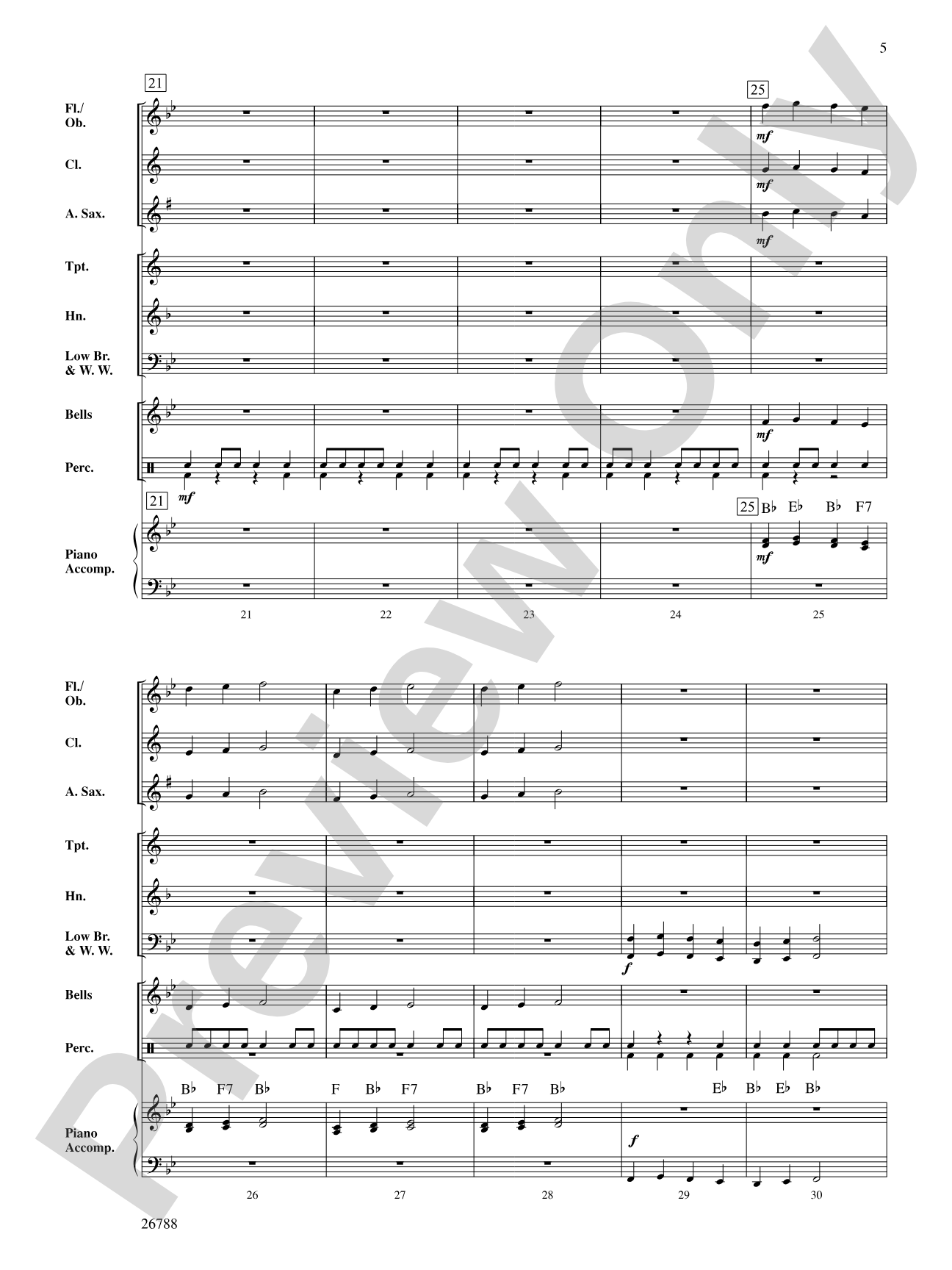
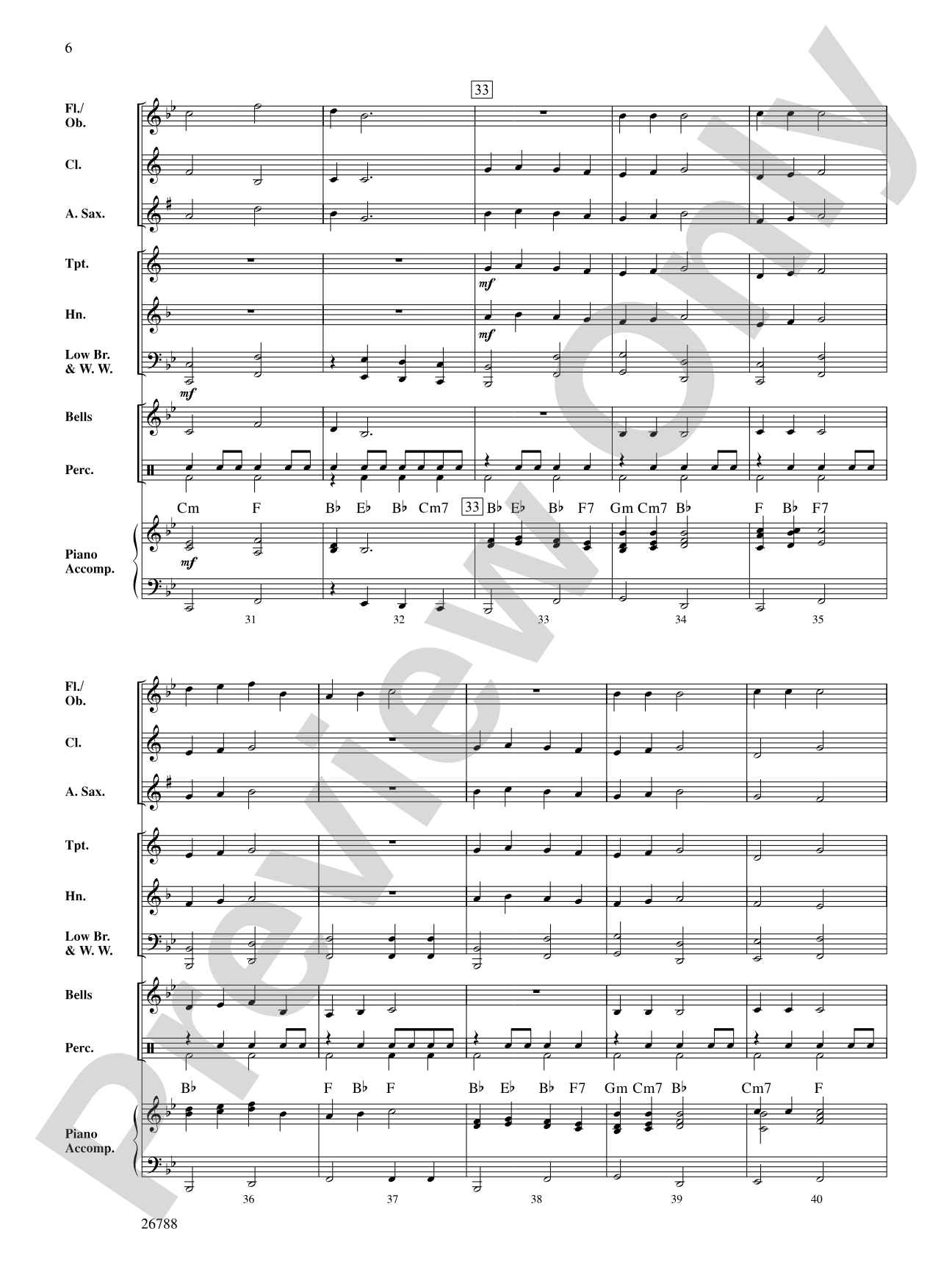
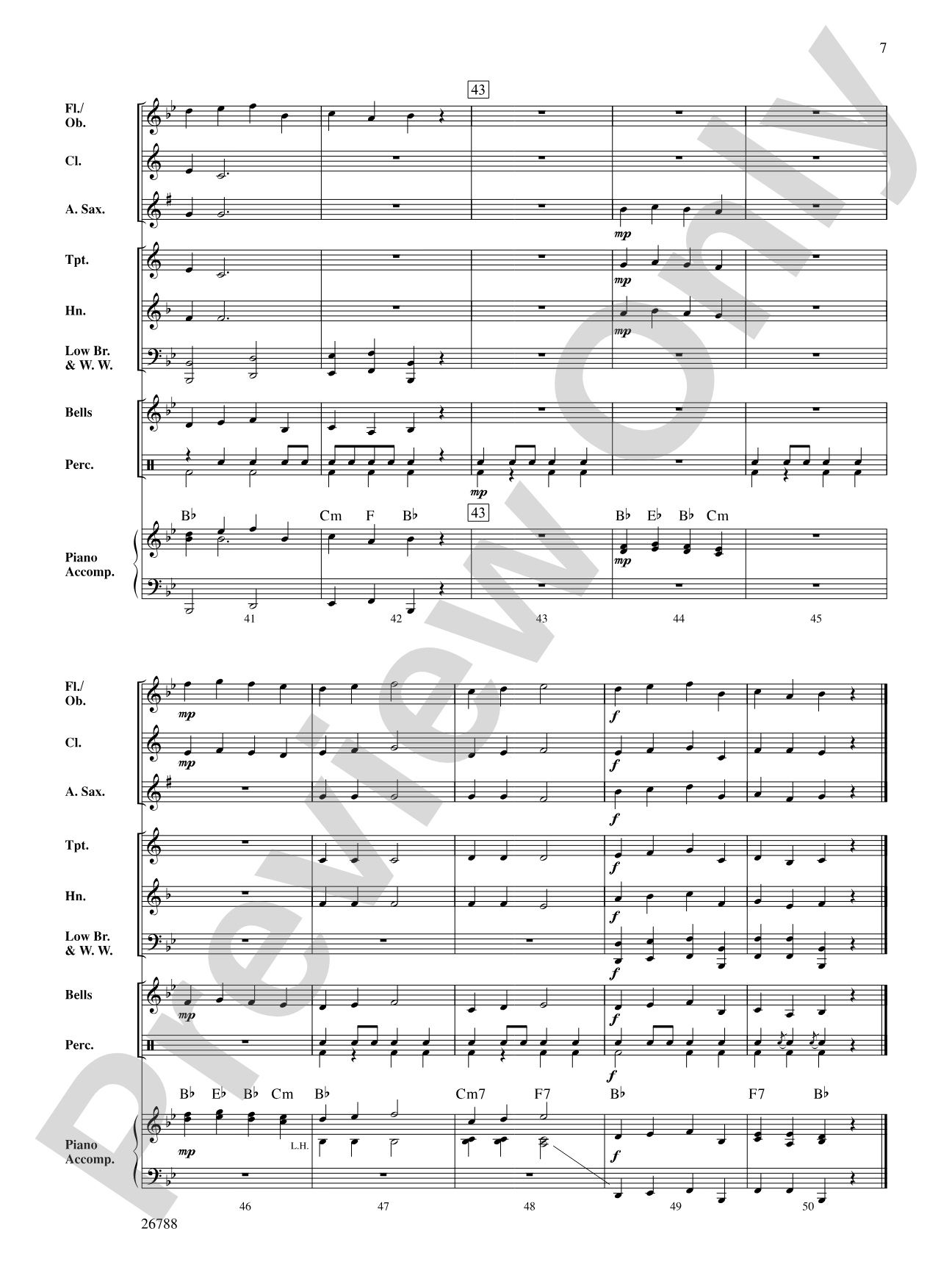
This clever work for beginning bands combines two well-known folk songs about bridges---"Sur le pont d'Avignon" (On the Bridge at Avignon) and "London Bridge." Your students will have fun playing each tune separately first, and then both tunes are combined in a unique, follow-the-leader fashion.
Correlates with Accent on Achievement Book 1, page 15. This title is available in MakeMusic Cloud.


Correlates with Accent on Achievement Book 1, page 15. This title is available in MakeMusic Cloud.
Don't just read it, hear it, play along with it, and watch your students grow with it. In MakeMusic Cloud, Two Bridges March: Concert Band Conductor Score & Parts comes alive with professional accompaniment, adjustable tempo, and built-in practice tools that turn solo practice into real progress.
Open in the Player
Jump straight in and assign it today.
Start Your Free Trial
Open this title and explore the full library in minutes.
Sample Audio
1
Audio File
--:--
0:00
0:00
Sample Video
No sample videos found.
Additional Details
Series:
Accent on Achievement
Publisher:
Alfred Music
Page Count:
60
SKU:
00-PK-0001234
More about this title
About the Composer: Mark Williams

Mark Williams shaped the landscape of school band education through both his compositions and his foundational work on the Accent on Achievement Band Method. With over 200 published works for band, orchestra, and choir, he became a sought-after clinician and guest conductor, traveling to 34 states, five Canadian provinces, and Australia to work with student musicians. His deep roots in elementary band instruction, honed through years teaching in Washington state, informed every piece he wrote for young ensembles.
Beyond the composing desk, Williams was an accomplished musician in his own right. A trained woodwind performer and bassoonist, he served as arranger for the 560th Air Force Band and conducted the Spokane British Brass Band as its artistic director. His contributions earned him recognition through the Western International Band Clinic's Gralia Competition and multiple ASCAP Special Awards. Williams earned his Bachelor of Arts in Education and Master of Education from Eastern Washington University, grounding his artistic vision in pedagogical expertise.
Why we love this
This march captures what makes early band repertoire so effective: students engage with recognizable melodies while navigating genuine musical challenges. The follow-the-leader combination of two folk tunes creates a natural teaching moment for listening, balance, and independence, skills that feel like play rather than drill.
What to expect
Bright, playful, and satisfying. The familiar folk tunes feel like a friendly challenge rather than an intimidating leap. When the two melodies finally weave together, students experience that distinct joy of making something genuinely musical happen as an ensemble.
Who it's for
Beginning band students in grades 4-6 who are working through Accent on Achievement Book 1 and ready to explore how melodies can interact. The material reinforces fundamental reading and ensemble skills while introducing the concept of musical dialogue in a fun, accessible way.
How to get the most out of it
- Balance the melody between sections as the two tunes alternate. Since students are just learning to blend, have them listen across the band rather than only to their stand partners.
- Keep the tempo steady when the follow-the-leader section begins. Conductors often rush this transition out of excitement; establish a rock-solid tempo before the canonic entries start.
- Assign the "Sur le pont d'Avignon" and "London Bridge" melodies strategically based on your instrumentation. If one section is stronger, give them the second tune so it doesn't get buried when both lines sound together.
- Work each folk song as a standalone piece first. This lets students build confidence and hear why each melody is worth playing before the complexity increases.
How to use it
Schedule this for an early fall concert or a spring pops program where it works perfectly alongside other folk-based arrangements. At 0.5 difficulty, it's ideal for filling a concert slot that builds confidence rather than tests advanced skills, or for demonstrating progress to parents when inserted between more challenging pieces.
Skills your students will build
- Playing melody lines with clarity and consistent tone
- Listening and blending within a section while maintaining individual part integrity
- Recognizing and executing canonic texture (follow-the-leader entries)
- Sustaining focus through repeated phrases without losing musicality
- Coordinating with other sections in a multi-part arrangement