
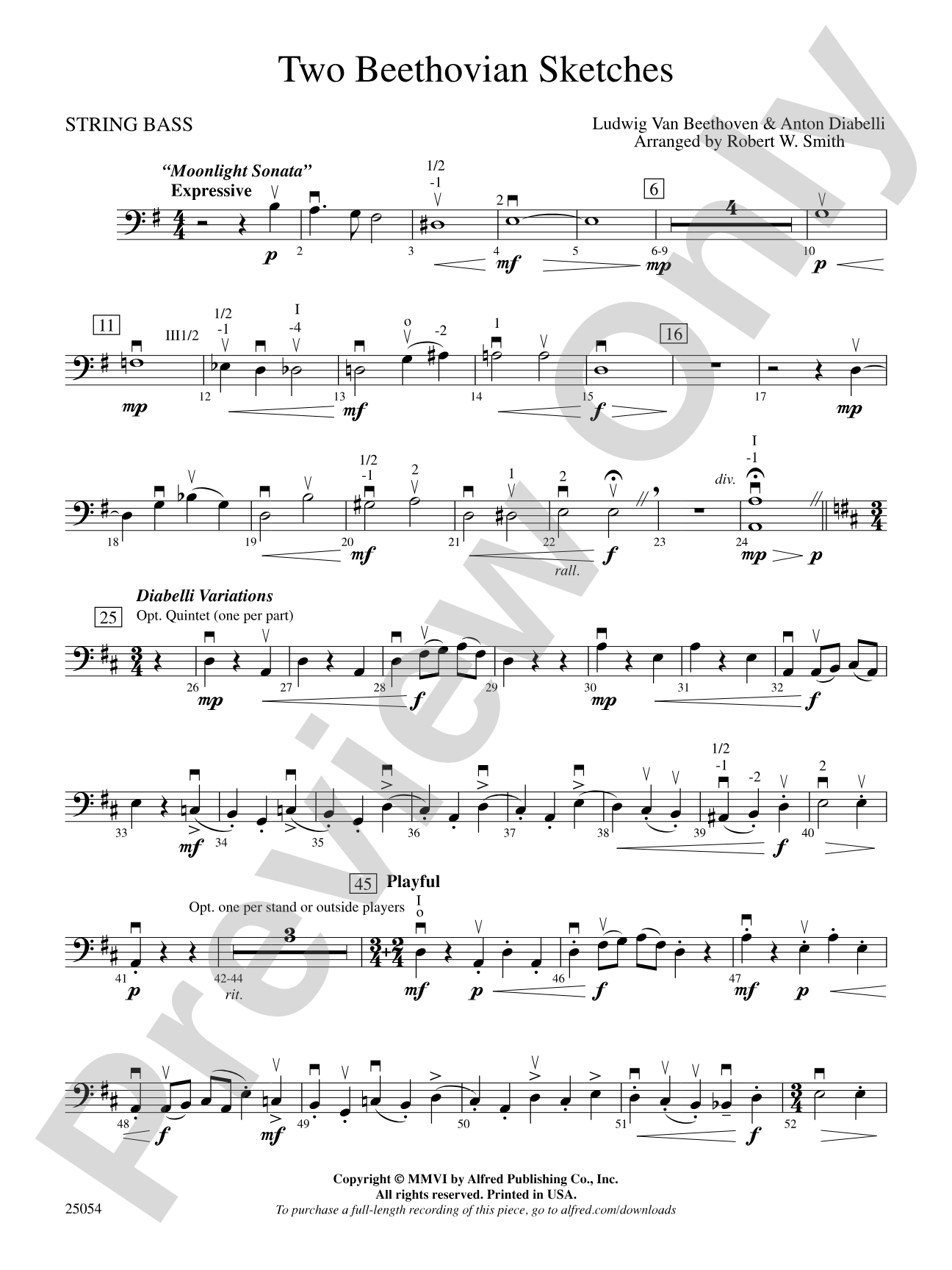

Two Beethovian Sketches: String Bass
By Ludwig van Beethoven and Anton Diabelli / arr. Robert W. Smith
Grade: 3
Item: 00-PC-0001017_SB
$5.99
Pickup currently not available
Description
"Two Beethovian Sketches" outlines a new look at Beethoven, from the pen of Robert W. Smith. A strikingly lovely string and piano setting of the ever popular Moonlight Sonata is featured first. Smith's impressions of the famous Diabelli Variations follow in the second "sketch". A great addition to any concert and a wonderful way to incorporate a student pianist in the program.


Don't just read it, hear it, play along with it, and watch your students grow with it. In MakeMusic Cloud, Two Beethovian Sketches: String Bass comes alive with professional accompaniment, adjustable tempo, and built-in practice tools that turn solo practice into real progress.
Open in the Player
Jump straight in and assign it today.
Start Your Free Trial
Open this title and explore the full library in minutes.
Sample Audio
1
Audio File
--:--
0:00
0:00
Sample Video
No sample videos found.
Additional Details
Series:
Belwin Intermediate String Orchestra
Publisher:
Alfred Music
Page Count:
148
SKU:
00-PC-0001017_SB
More about this title
About the Composer: Ludwig van Beethoven
Ludwig van Beethoven (1770-1827) transformed the Classical symphony, sonata, and string quartet into vehicles for unprecedented emotional depth and structural innovation. His nine symphonies, thirty-two piano sonatas, and chamber works remain cornerstones of the repertoire, studied and performed by musicians across every level of advancement.
Beethoven's influence on music education extends far beyond performance. His works teach musicians how to balance formal architecture with expressive urgency, how to develop modest melodic fragments into sweeping narratives, and how to write for instruments with both technical clarity and interpretive generosity. The Moonlight Sonata and Diabelli Variations included in this arrangement represent two distinct facets of his genius: intimate lyricism and witty, systematic exploration of musical material.
Why we love this
Robert W. Smith's orchestration makes two monumental keyboard works accessible to Grade 3 ensembles without sacrificing their essential character. The inclusion of a student pianist elevates the educational value considerably, creating natural collaboration between orchestra and soloist while keeping the writing within reach for developing players.
What to expect
The Moonlight Sonata emerges as a hushed, introspective conversation between strings and piano, with delicate harmonic support rather than lush orchestral weight. The shift to the Diabelli Variations brings wit and energy; Smith captures the original theme's ordinariness and then unfolds it with increasing sophistication, creating a sketch that rewards careful listening and ensemble precision.
Who it's for
String orchestras at the intermediate level seeking to program recognizable Classical masterworks with a chamber music flavor. Directors working with student pianists will find this particularly valuable; the accompaniment role is substantial but manageable, and the prestige of performing Beethoven alongside the orchestra will resonate with soloists and audiences alike.
How to get the most out of it
- Balance the string sections so that the piano's part in the Moonlight Sonata remains lyrical and conversational rather than buried. The orchestration asks for restraint from the strings, not volume.
- Attend closely to the dynamic shape within phrases. Smith's arrangement respects Beethoven's original intent for gradual swells and releases; resist the urge to jump between extremes.
- In the Diabelli Variations sketch, keep the rhythmic figurations clean and aligned. Student string players often rush or drag when patterns repeat; consistent conducting will help maintain the playful character Smith captures.
- Communicate the relationship between soloist and ensemble clearly from the podium. The pianist should feel supported and cued, especially during the transitions between the two sketches.
How to use it
Program this as a centerpiece for a concert built around Beethoven or Classical masterworks. The pairing of two contrasting sketches from Beethoven's catalog gives the piece enough substance for a full program context while remaining concise enough to work as a strong encore. It also serves well as a vehicle for featuring a talented student pianist mid-concert.
Skills your students will build
- Balancing ensemble texture when a solo instrument (piano) is the principal voice
- Sustaining legato phrasing across longer periods without crescendoing unnecessarily
- Responding to dynamic nuance in Classical orchestral writing
- Coordinating string sections to maintain clarity in figured accompaniment patterns
- Understanding thematic development and variation through orchestral arrangement