
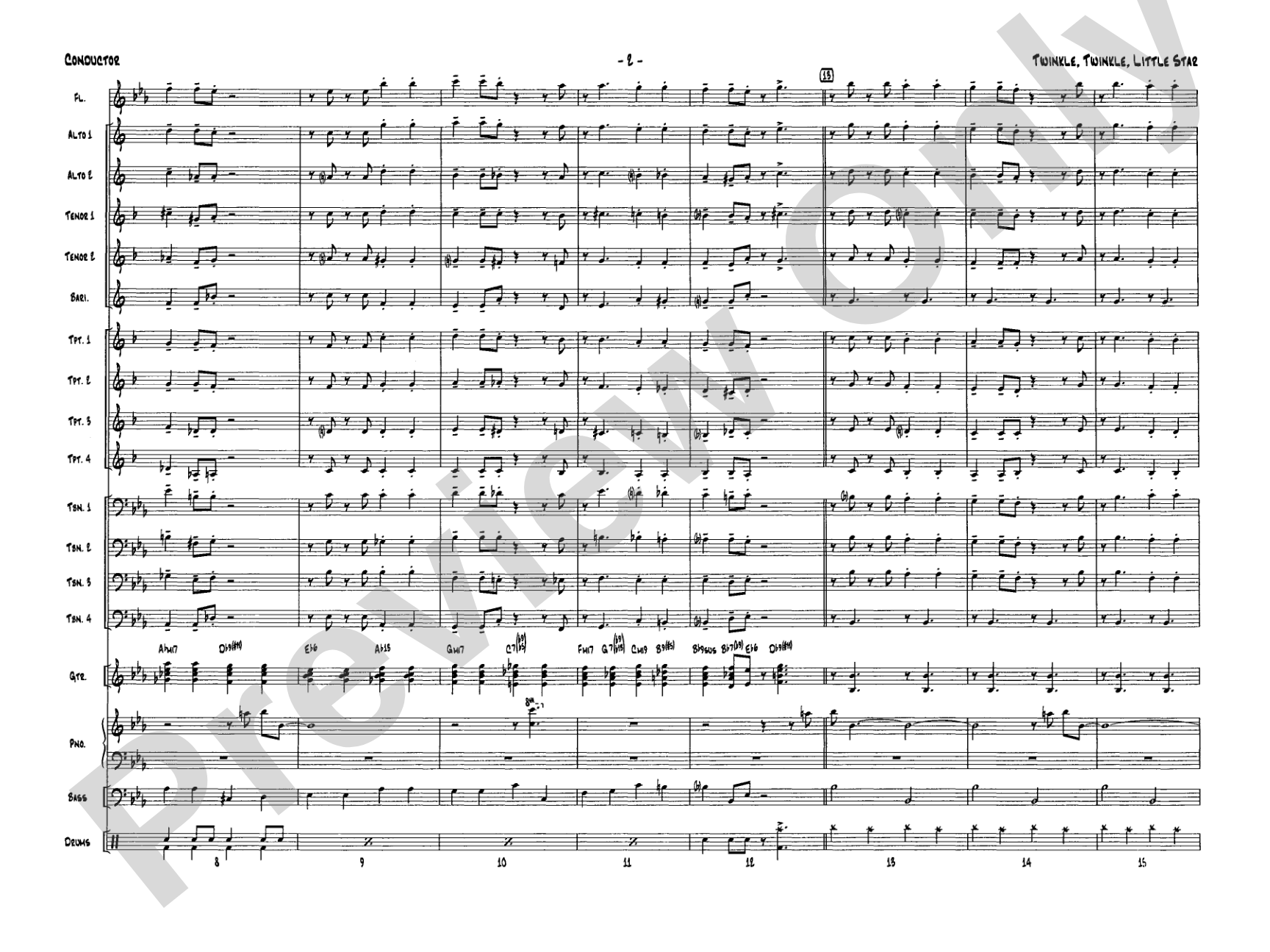
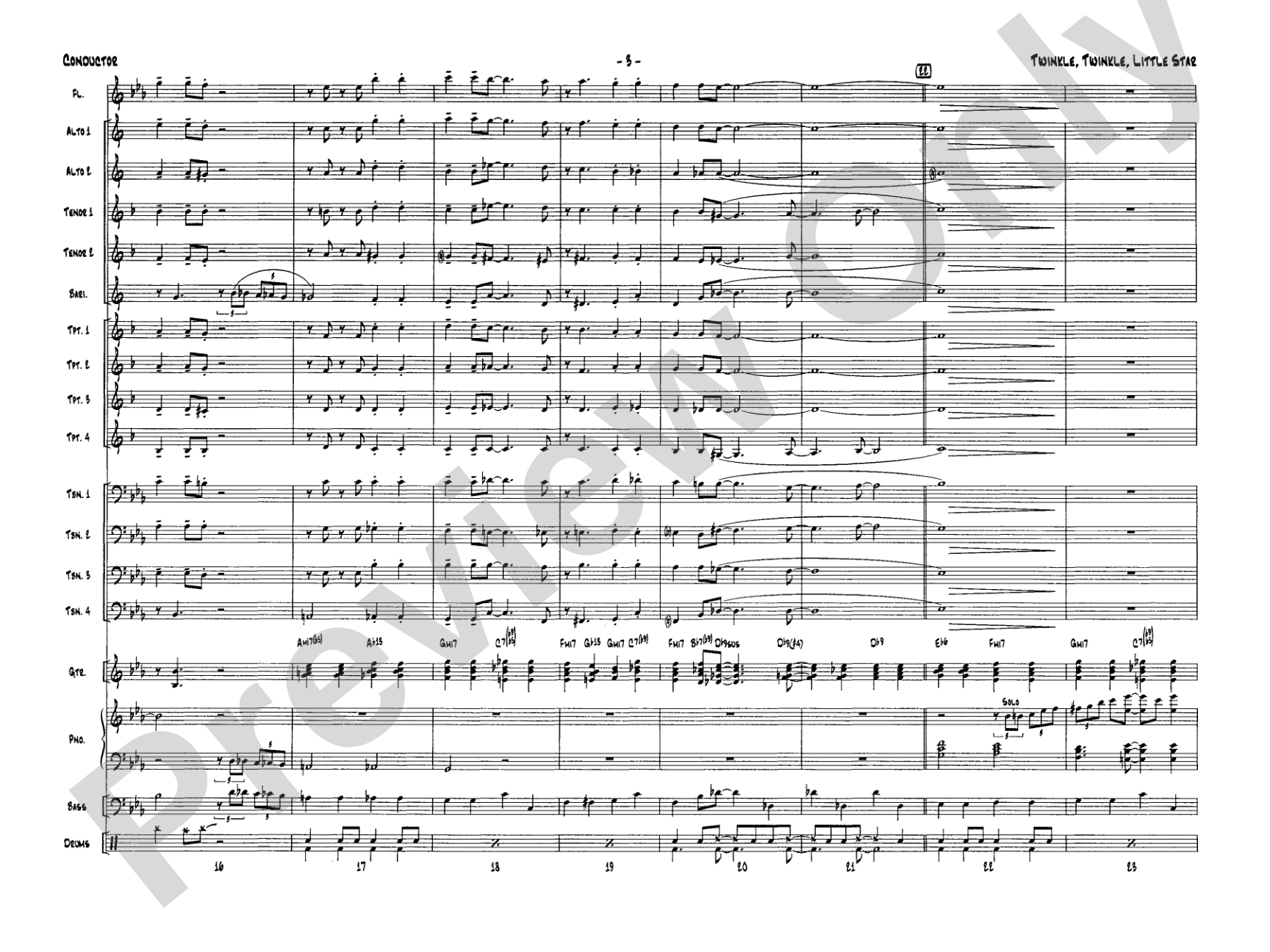
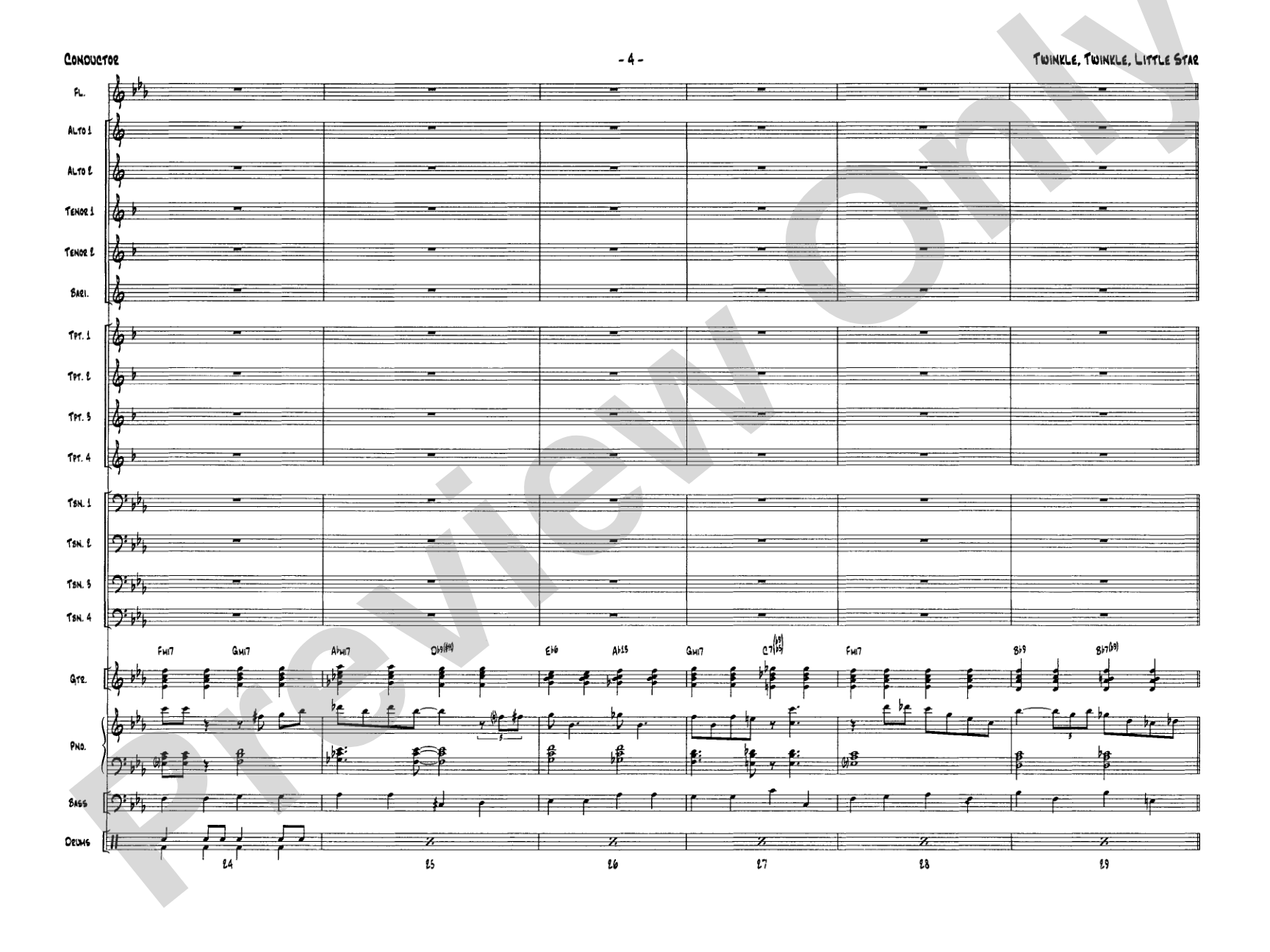
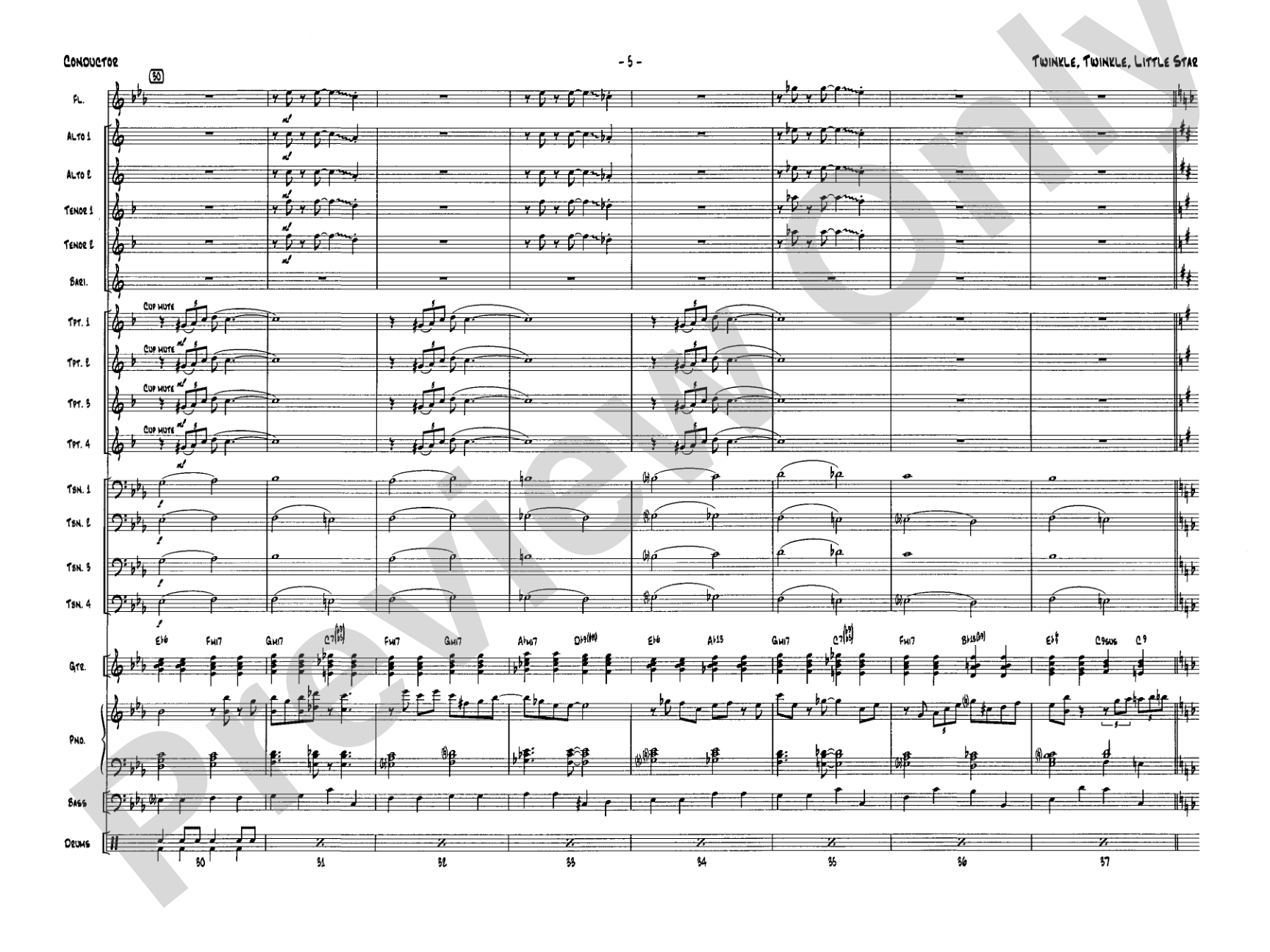
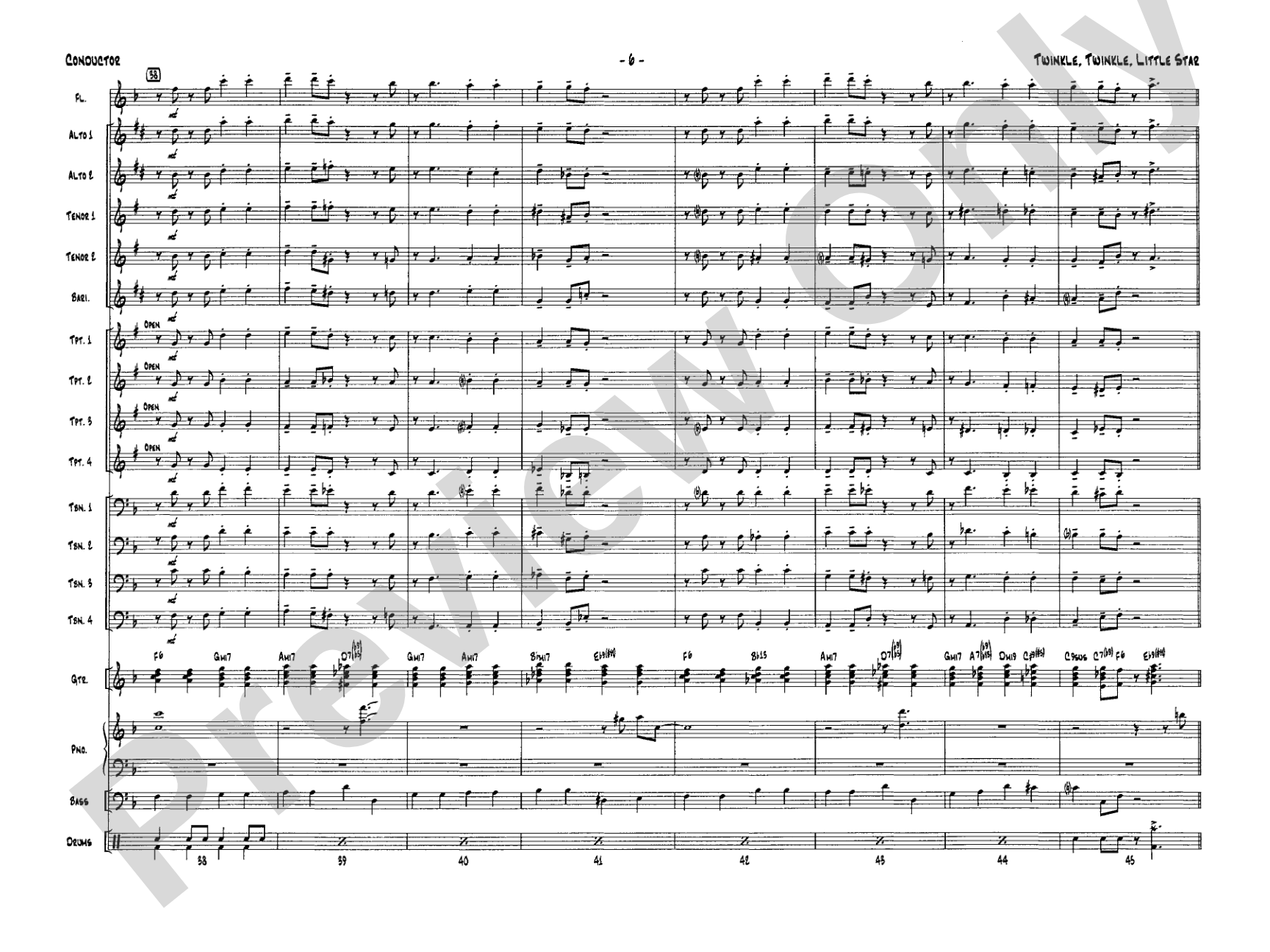
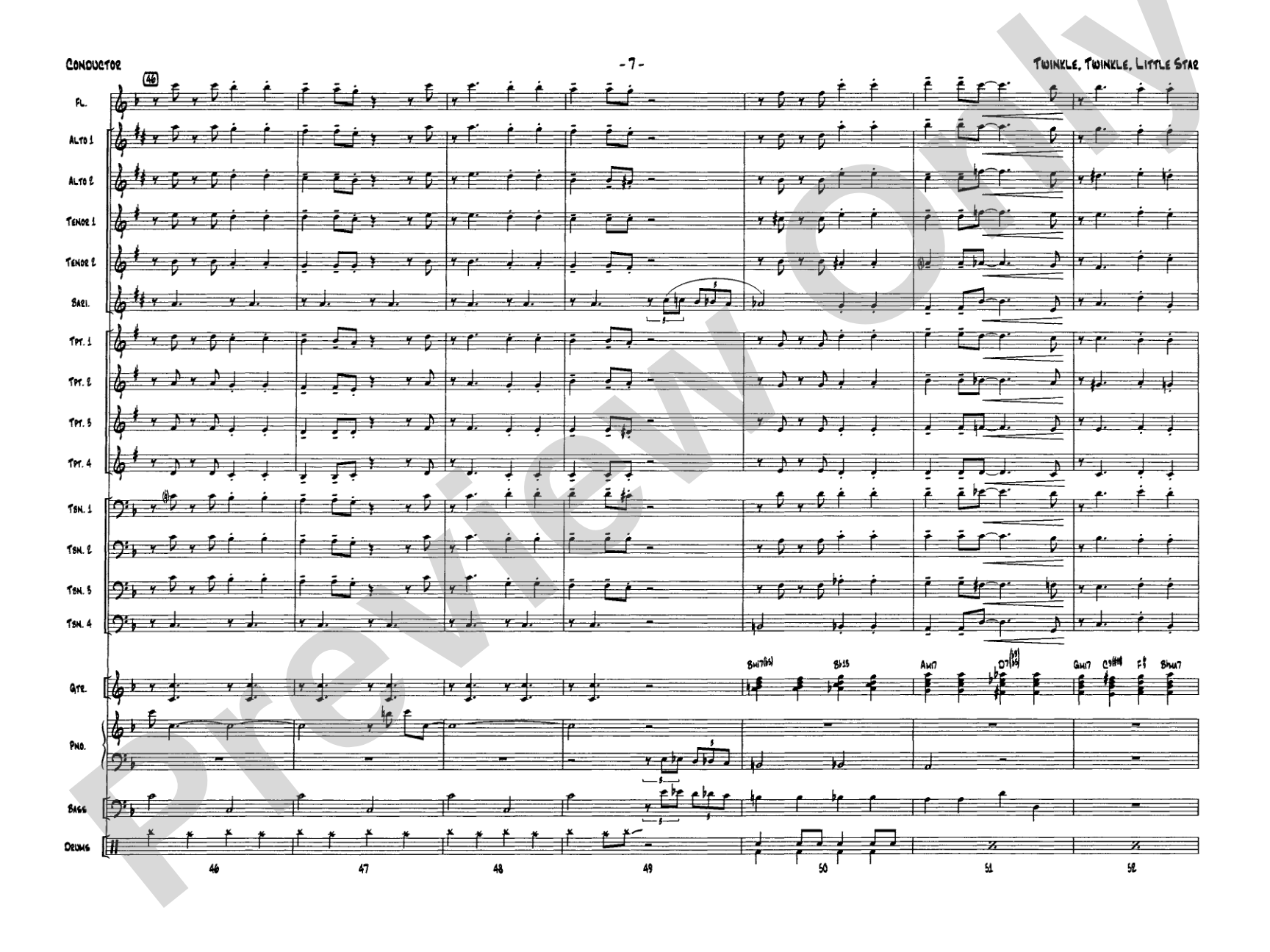
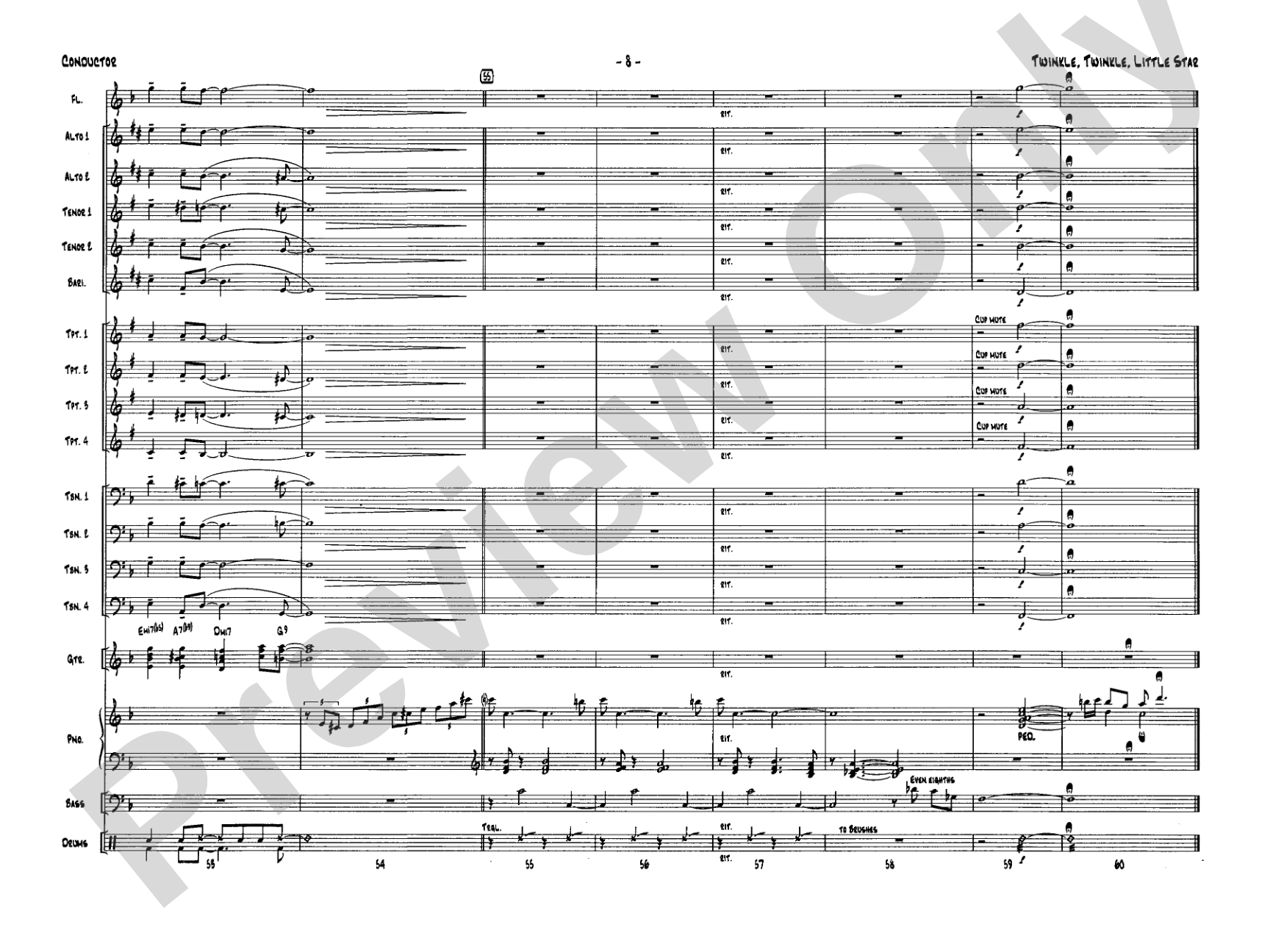

Twinkle, Twinkle Little Star: Score
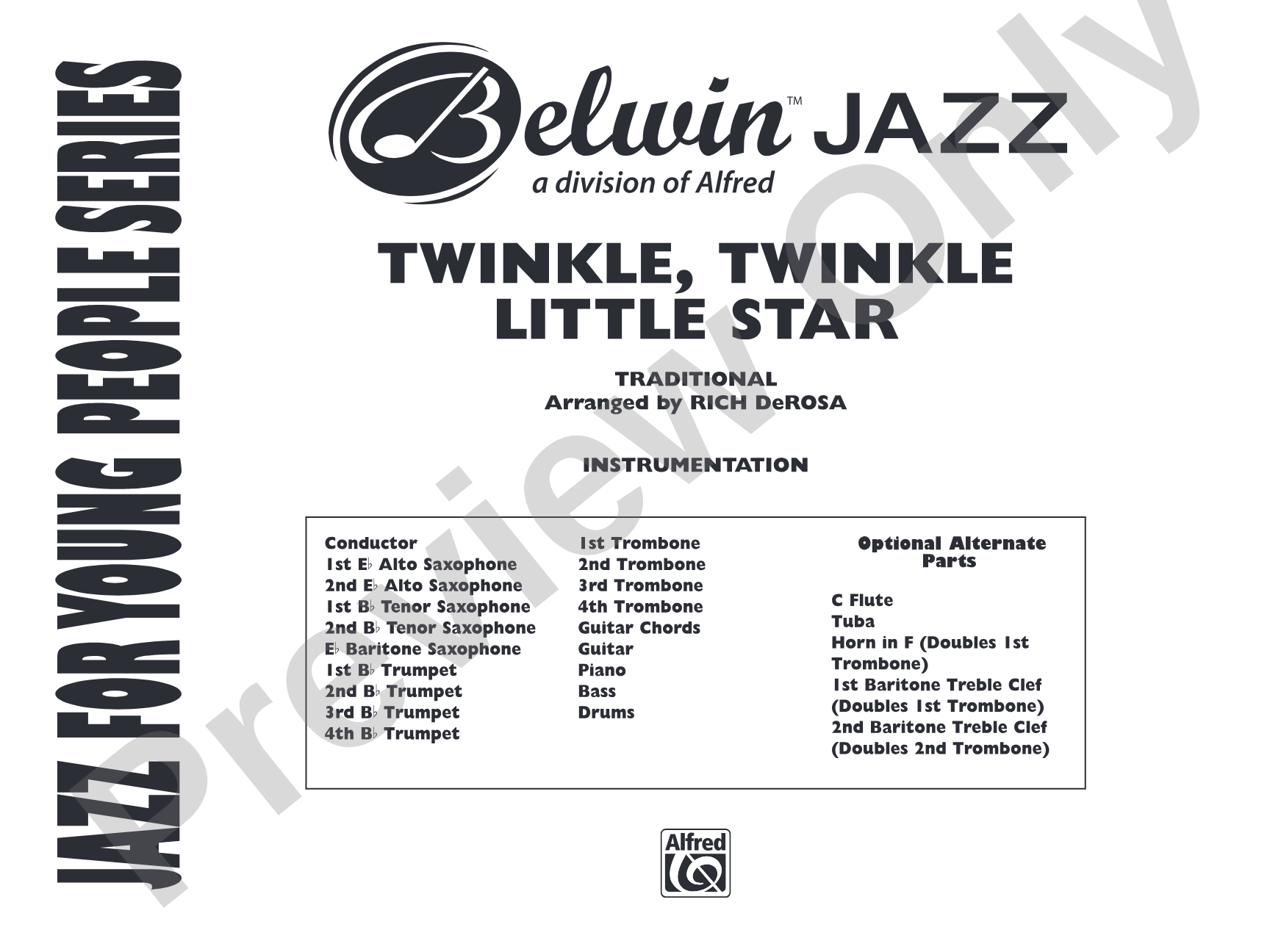
Traditional / arr. Rich DeRosa
Grade: 2 (Medium Easy)
Item: 00-PR-0003936
$7.00
Pickup currently not available
Description
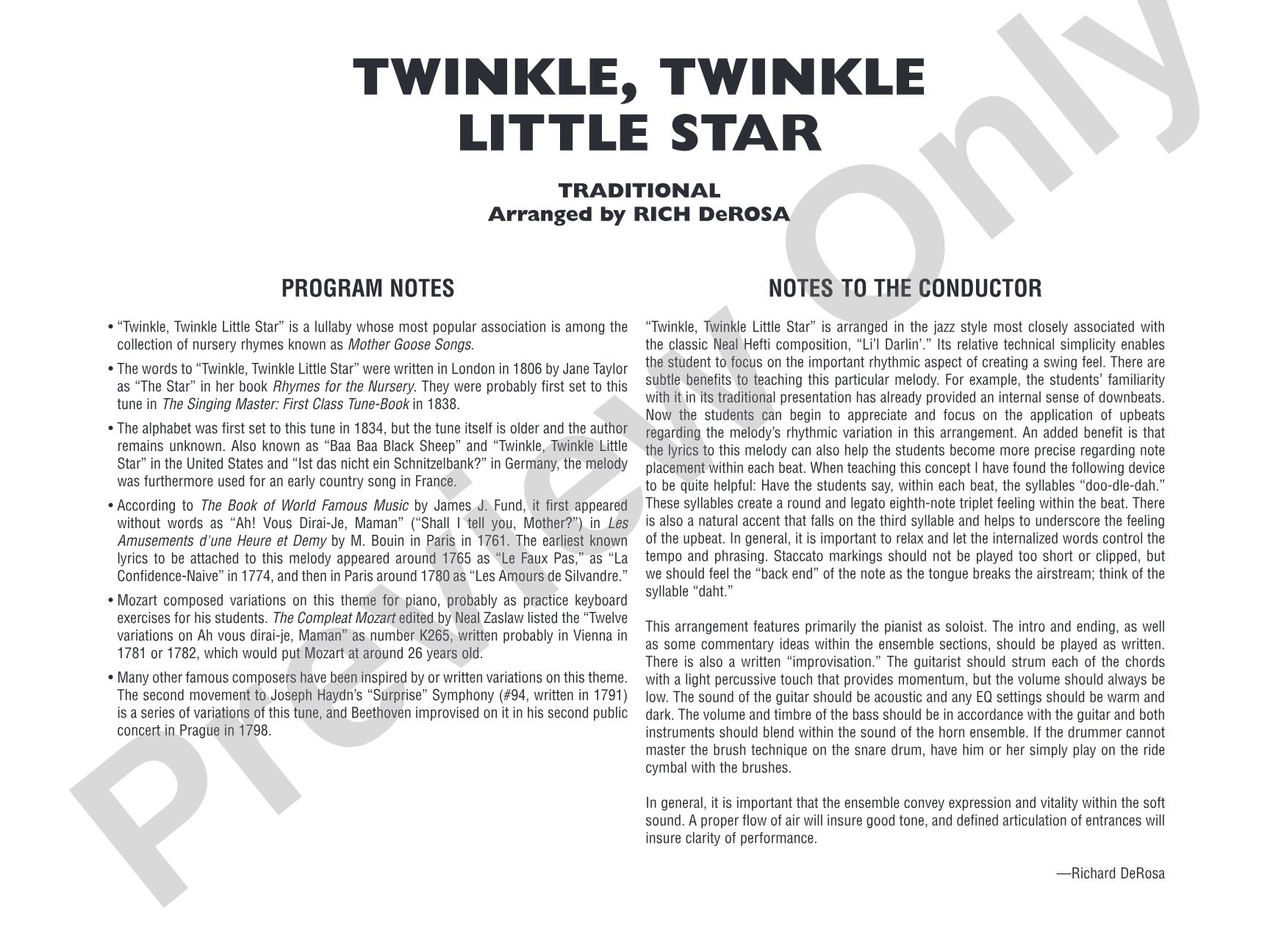
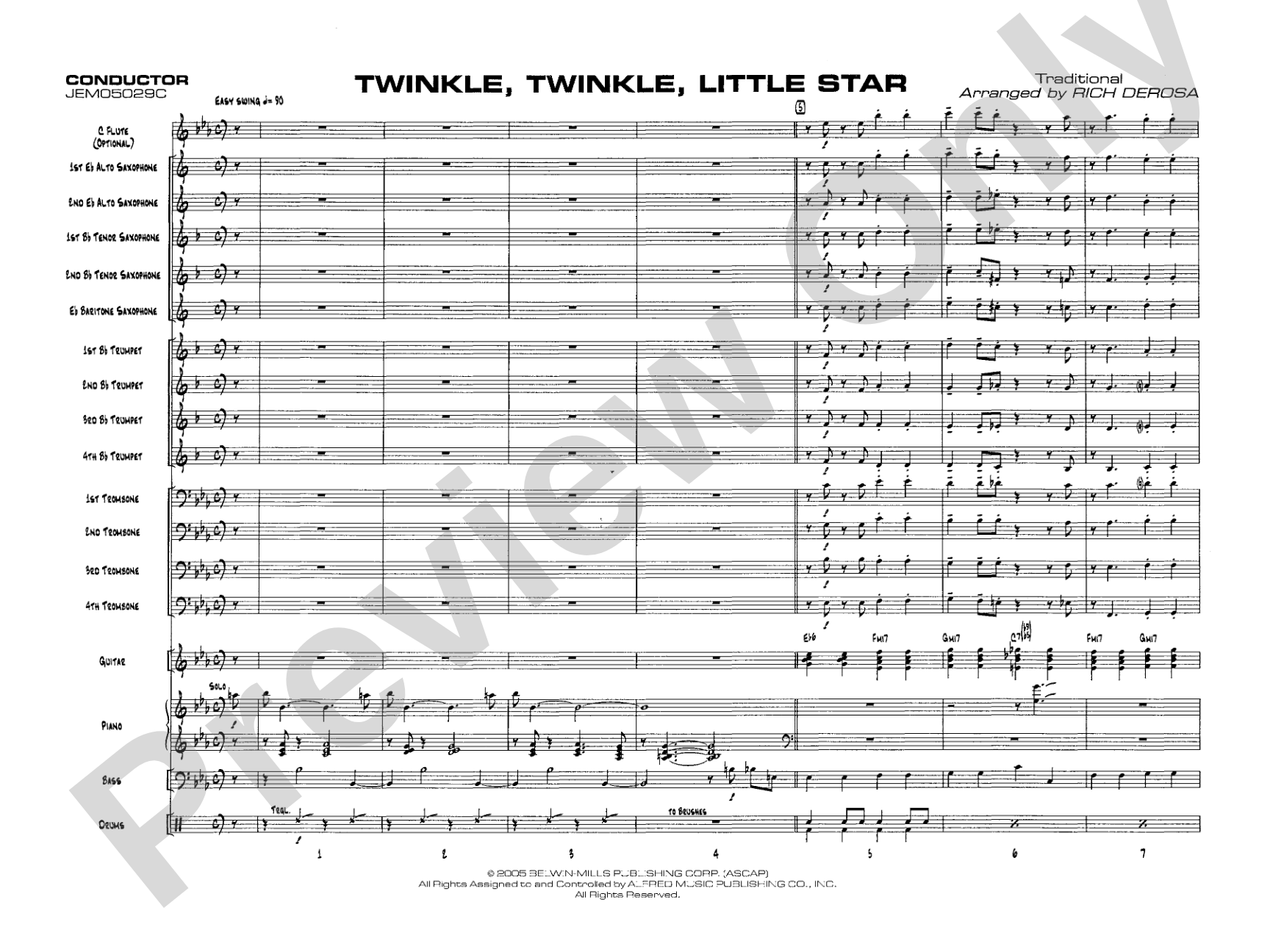
The new Jazz For Young People series! Arranged by Rich DeRosa in the relaxed Basie style of "Lil' Darlin'," this chart on "Twinkle, Twinkle" is very fresh sounding. A written out piano solo, modest ranges, and easy swing rhythms makes this chart very accessible for the young player and is guaranteed to be a big success at every concert. Includes all the usual optional parts. Correlated to the Jazz at Lincoln Center Jazz for Young People Curriculum. (2:58)


Don't just read it, hear it, play along with it, and watch your students grow with it. In MakeMusic Cloud, Twinkle, Twinkle Little Star: Score comes alive with professional accompaniment, adjustable tempo, and built-in practice tools that turn solo practice into real progress.
Open in the Player
Jump straight in and assign it today.
Start Your Free Trial
Open this title and explore the full library in minutes.
Sample Audio
1
Audio File
--:--
0:00
0:00
Sample Video
No sample videos found.
Additional Details
Series:
Jazz for Young People Series
Publisher:
Alfred Music
Page Count:
50
SKU:
00-PR-0003936
More about this title
About the Arranger: Rich DeRosa
Rich DeRosa is an arranger and composer whose work spans jazz education, commercial music, and ensemble writing. His arrangements are known for balancing musical authenticity with pedagogical clarity, making sophisticated jazz styles accessible to young ensembles without sacrificing artistic integrity.
Why we love this
This arrangement proves that young jazz ensembles can sound genuinely swinging without complicated voicings or extended ranges. DeRosa's decision to channel the Basie aesthetic gives the chart an established jazz language while the written-out piano solo and modest ranges mean your players focus on pocket and feel rather than struggling with logistics.
What to expect
Warm, relaxed, and gently swinging. The familiar melody sits inside an urbane big band groove that feels sophisticated without demanding virtuosity. There's a lightness here that comes from restraint rather than simplification.
Who it's for
Grade 2 jazz ensembles with players who are still building fundamental jazz skills and confidence. The accessible ranges and straightforward swing rhythms make this ideal for students encountering Basie-style writing for the first time.
How to get the most out of it
- Balance the written piano solo so it sits naturally within the ensemble texture; it should feel like a featured voice, not a soloist performing over the band.
- Lock the rhythm section early in rehearsal. Get the drummer and bass player comfortable with the swing feel before layering in horns and melody.
- Emphasize the relaxed quality of the Basie style by resisting the urge to tighten everything rhythmically. Young players often swing harder when given permission to sit back slightly.
- Use the optional parts strategically. You can perform this with a smaller core group if needed, or layer in fuller instrumentation as confidence builds.
How to use it
Program this as a crowd-pleasing concert opener or closer that showcases your ensemble's command of jazz fundamentals. It pairs well with other mid-20th century standards on a jazz-themed concert and works equally well at festival competitions where audiences appreciate musical phrasing over technical showmanship.
Skills your students will build
- Swing rhythm and feel in an established big band style
- Reading and executing written-out jazz solos
- Playing with modest ranges while maintaining musical shape
- Ensemble balance and blend in a four-part jazz voicing context
- Understanding the Basie aesthetic and its influence on jazz ensemble writing