Twilight Time Sheet Music Preview

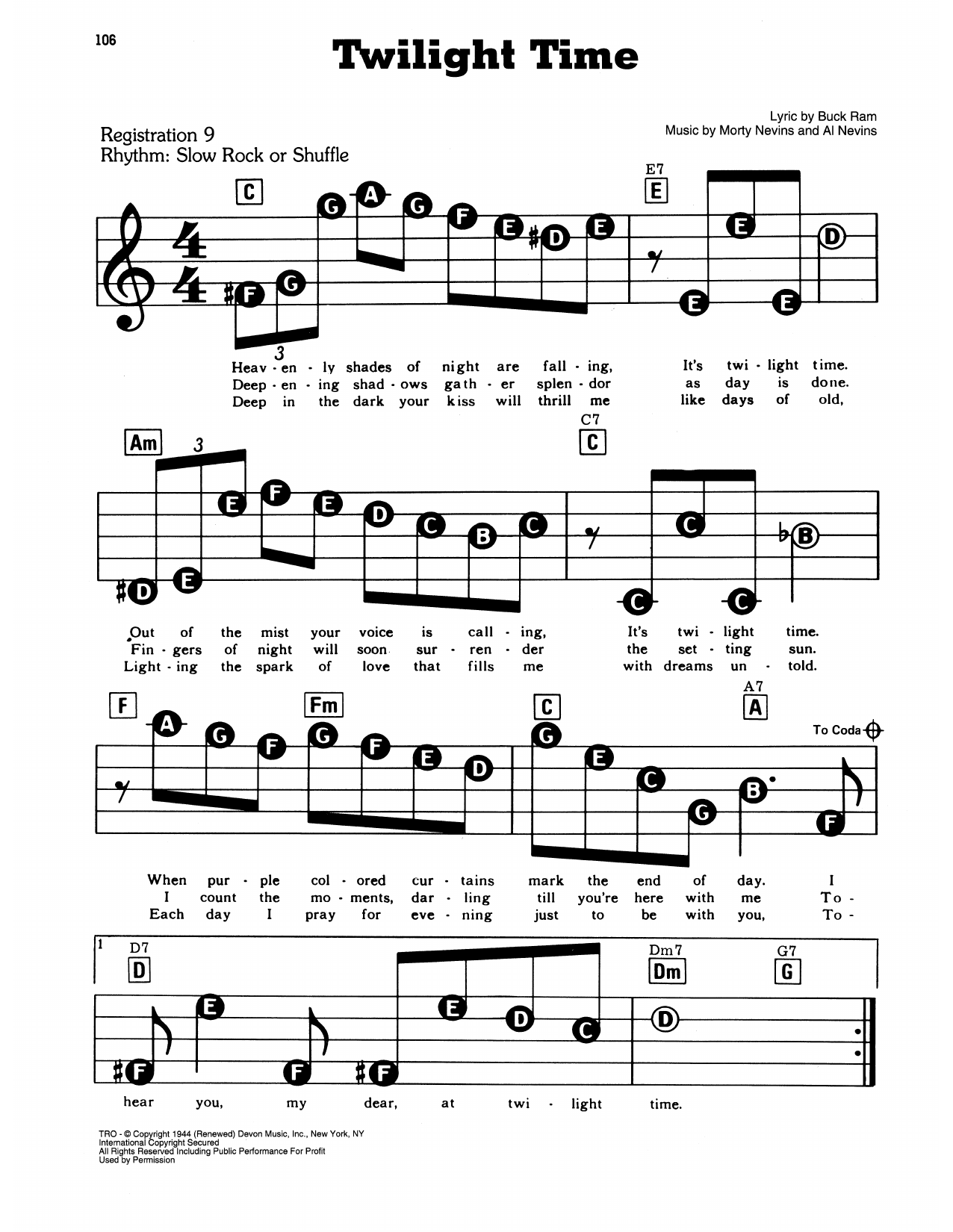
Twilight Time: E-Z Play Today

As performed by The Platters

Item: 35-DS01865717

Digital Download
$4.99
Description

Twilight Time: E-Z Play Today isn't in MakeMusic Cloud just yet...but it could be. Let us know you'd like to see it, and you'll help shape what comes next. In the meantime, start a free trial and dive into thousands of interactive titles your students can play along with today.

Sample Audio
No sample audio found.
Sample Video
Additional Details
Publisher: Hal Leonard
Page Count: 2
SKU: 35-DS01865717

More about this title

About the Artist: The Platters

The Platters revolutionized vocal harmony in the 1950s, bringing sophisticated doo-wop arrangements and R&B sensibilities to mainstream audiences. Their smooth, tightly blended sound and carefully crafted vocal lines became a model for ensemble singing and remain influential in how musicians approach blend and intonation today.

Why we love this

This arrangement captures the lush, yearning quality that made the original so enduring, with piano voicings that feel both accessible and genuinely musical. It's an excellent choice for students learning to shape rubato and sustain phrases without rushing, and the harmonic language rewards careful listening to chord quality.

What to expect

Nostalgia wrapped in velvet; the kind of song that asks the player to sit with silence and space as much as with notes. There's an ache to the harmony that rewards slow practice and careful attention to pedal work.

Who it's for

Piano students comfortable with moderate reading fluency and ready to explore mid-century pop ballads with genuine harmonic and expressive depth. This works equally well for teachers seeking repertoire that connects music history to emotional musicianship.

How to get the most out of it

  • Resist the urge to march through the tempo. Allow the melody room to breathe, especially at phrase endings where the original recording lingers.
  • Voice the left hand chords with attention to color. These aren't functional progressions filling time; they're the foundation of the song's romantic character.
  • Balance the melody so it sits just above the accompaniment without forcing it. The effect should feel intimate rather than theatrical.

How to use it

Include this in a jazz standards or American songbook recital to introduce students to the vocabulary of vocal arrangements and how they translate to solo piano. It also pairs beautifully with other mid-century ballads in a program exploring the evolution of pop music.

Skills your students will build

  • Shaping phrasing with rubato and sustain without losing metric clarity
  • Understanding and voicing jazz-influenced chord progressions
  • Balancing melody and accompaniment in a romantic texture
  • Reading and interpreting stylistic language specific to 1950s pop arrangements

You May Also Like