
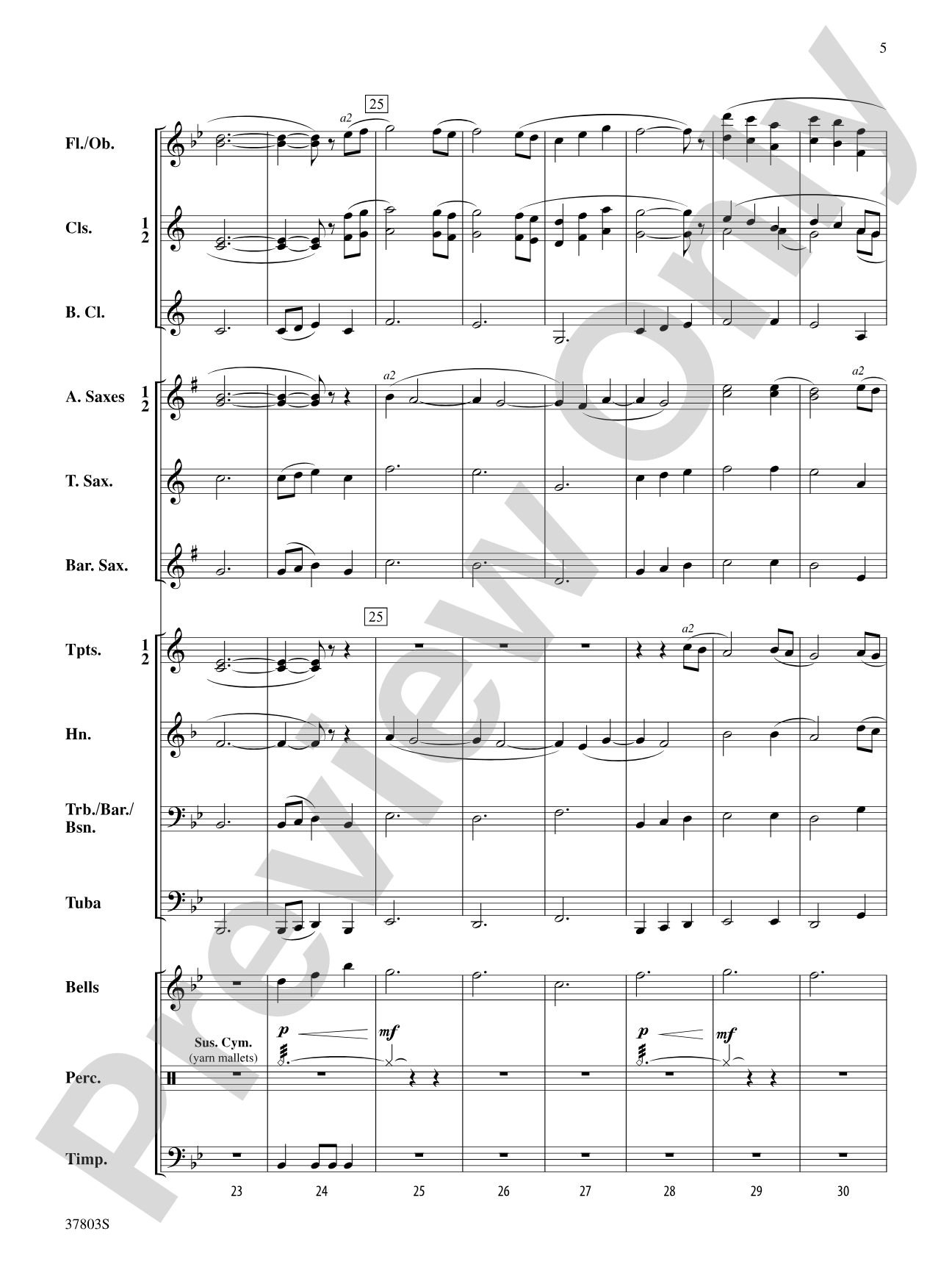
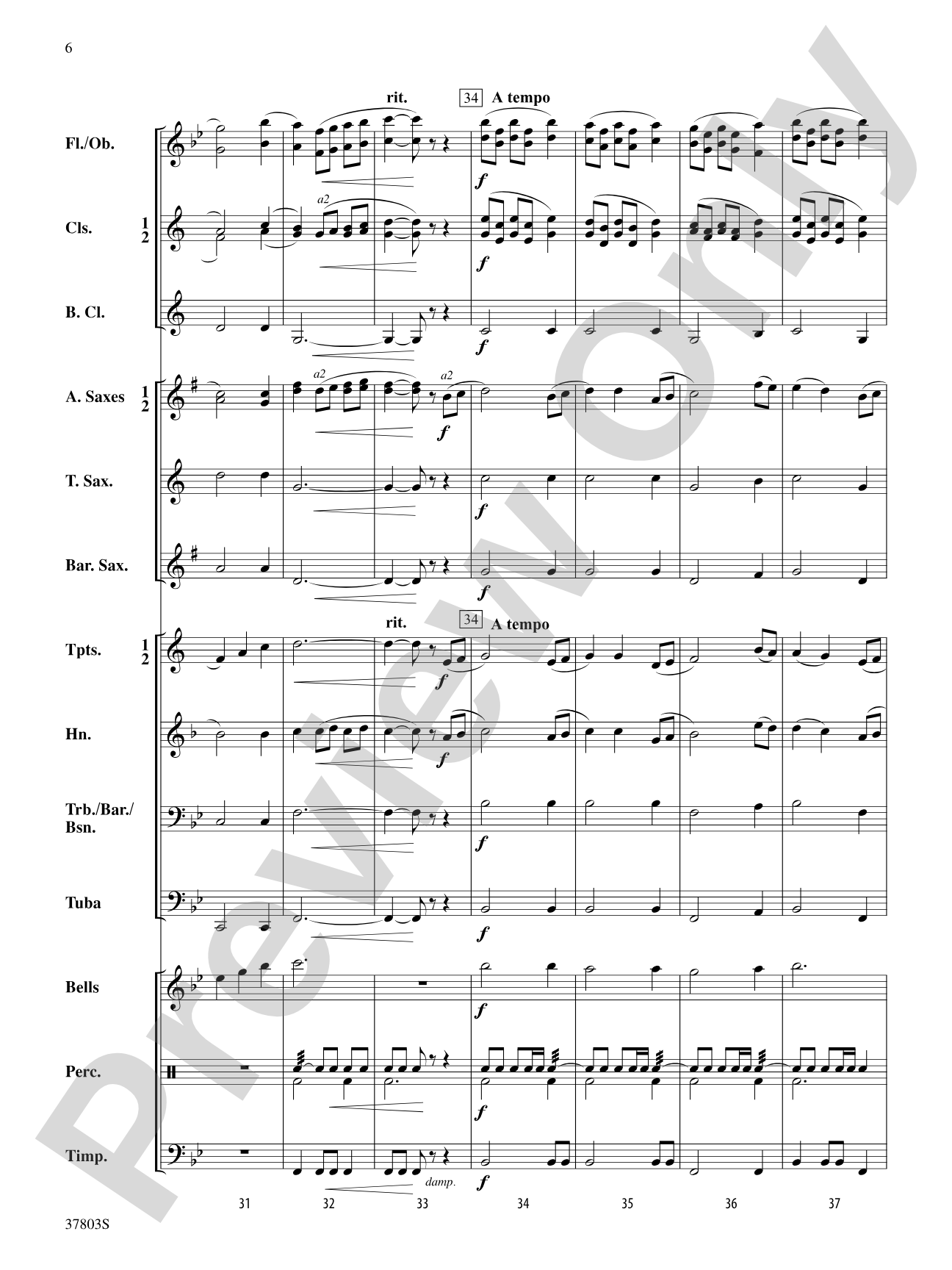
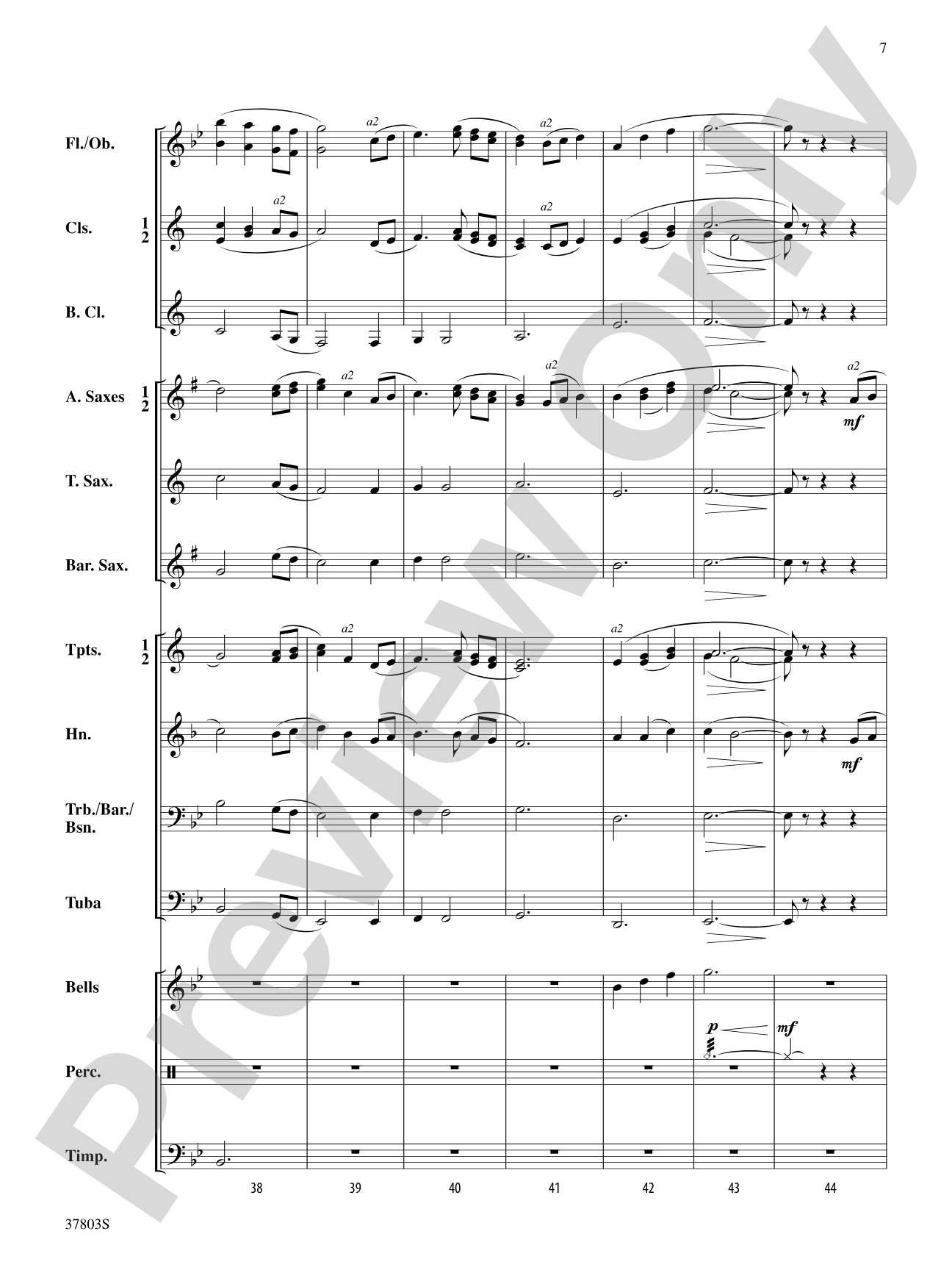
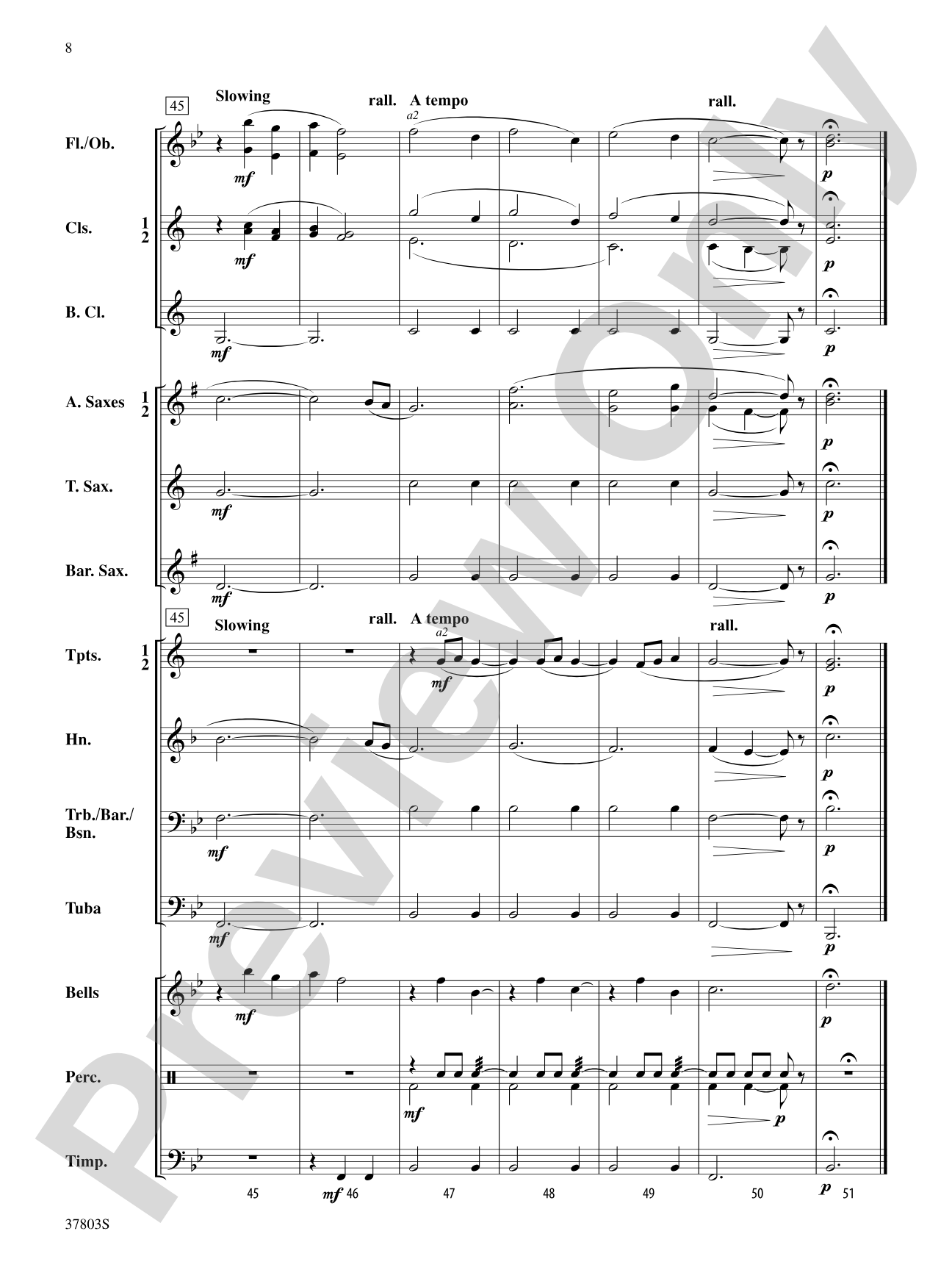

Twilight Serenade: Concert Band Conductor Score & Parts
By Steve Hodges
Grade: 1 (Very Easy)
Item: 00-PK-0005078

$45.00
Pickup currently not available
Buy Extra Parts (Digital PDF Download)
Parts Added to Cart!
Description
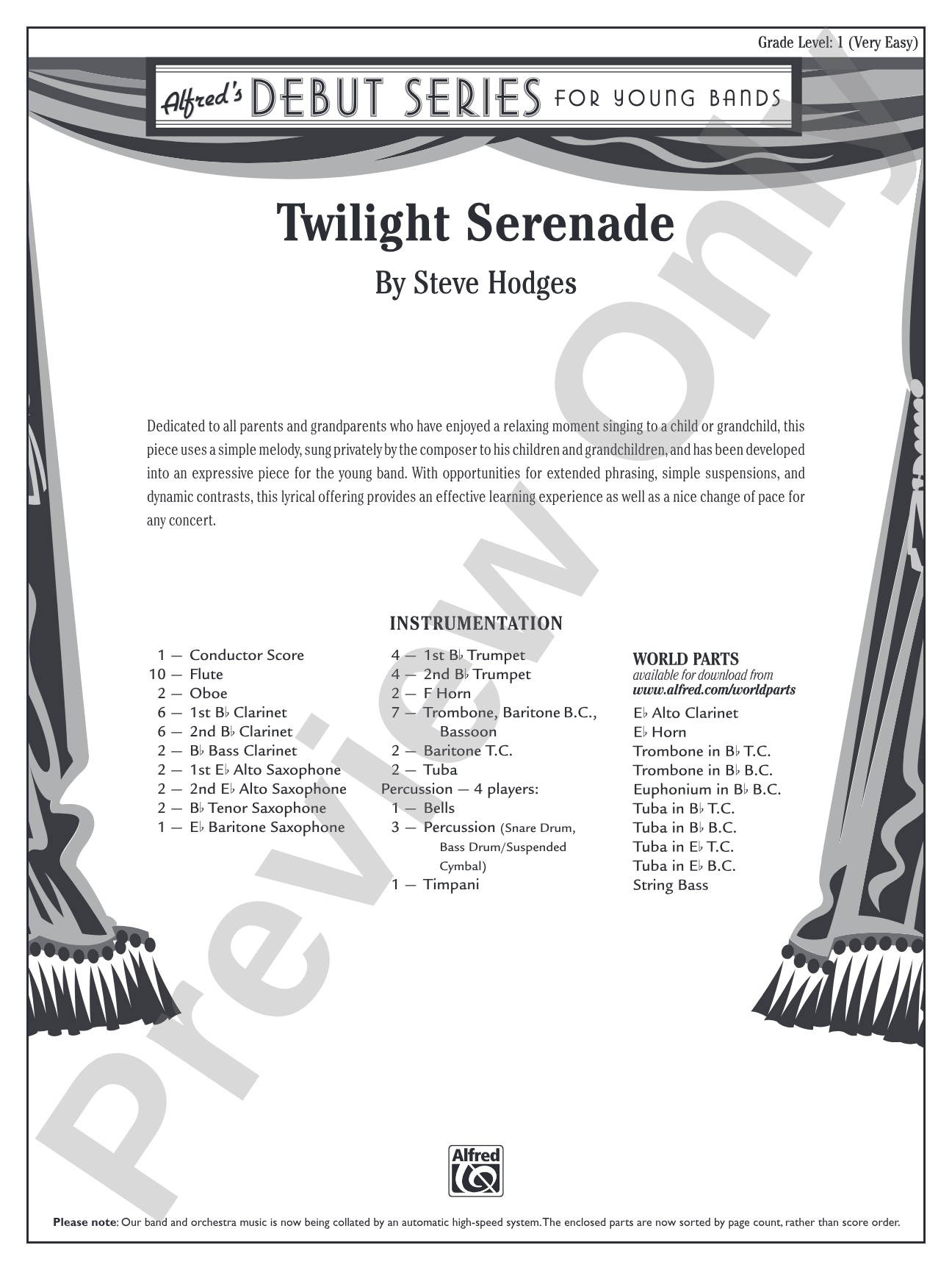
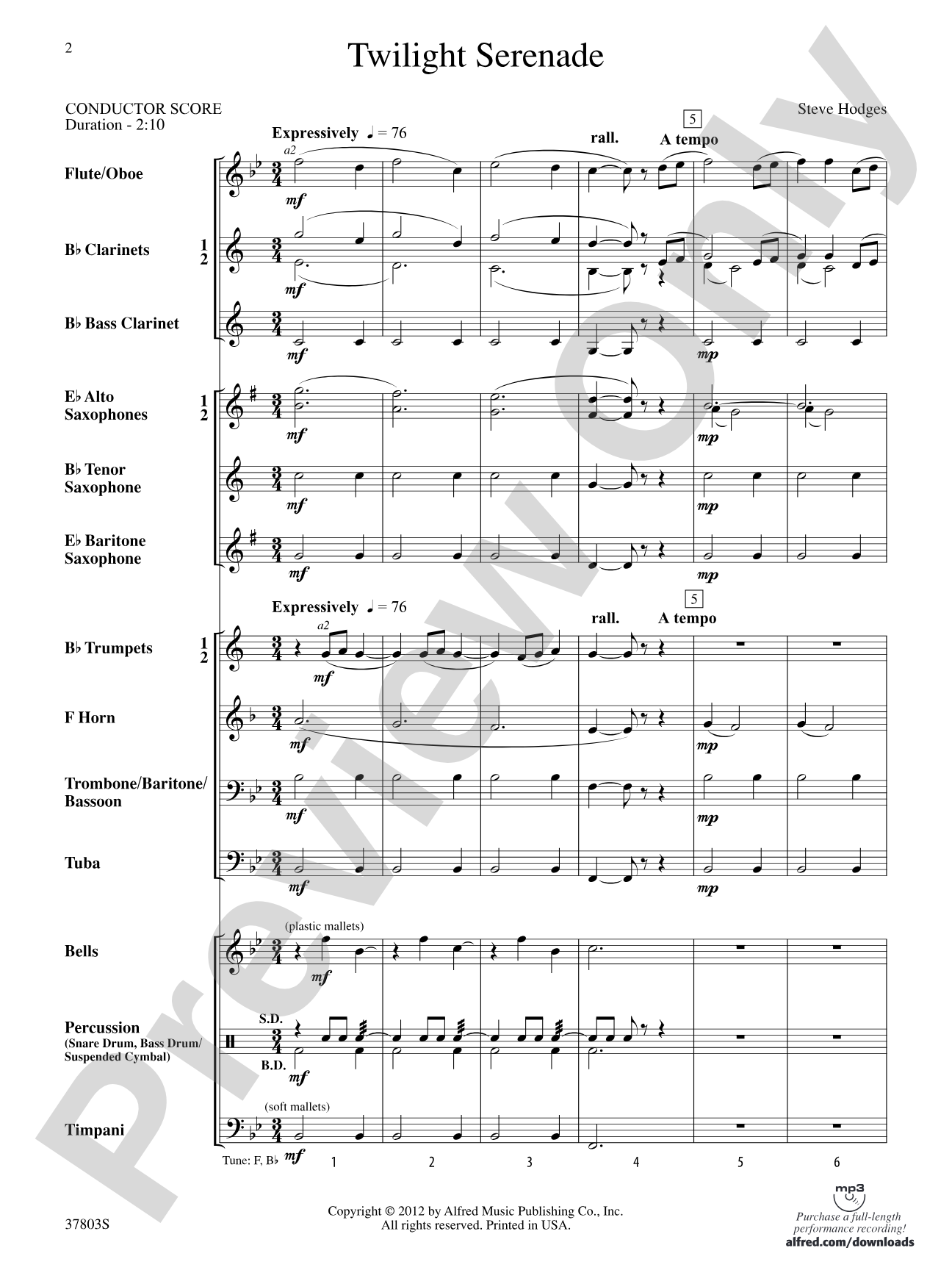
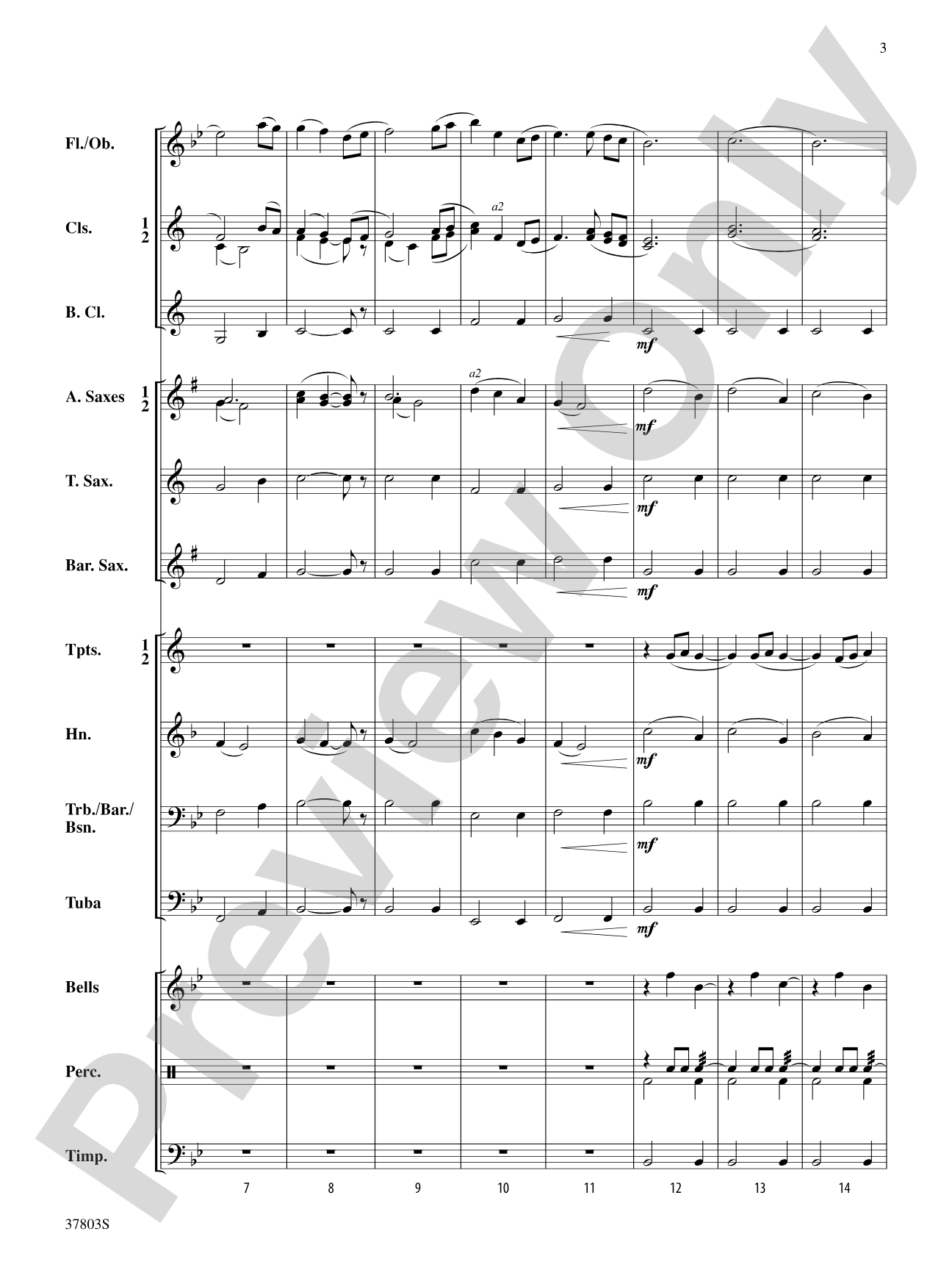
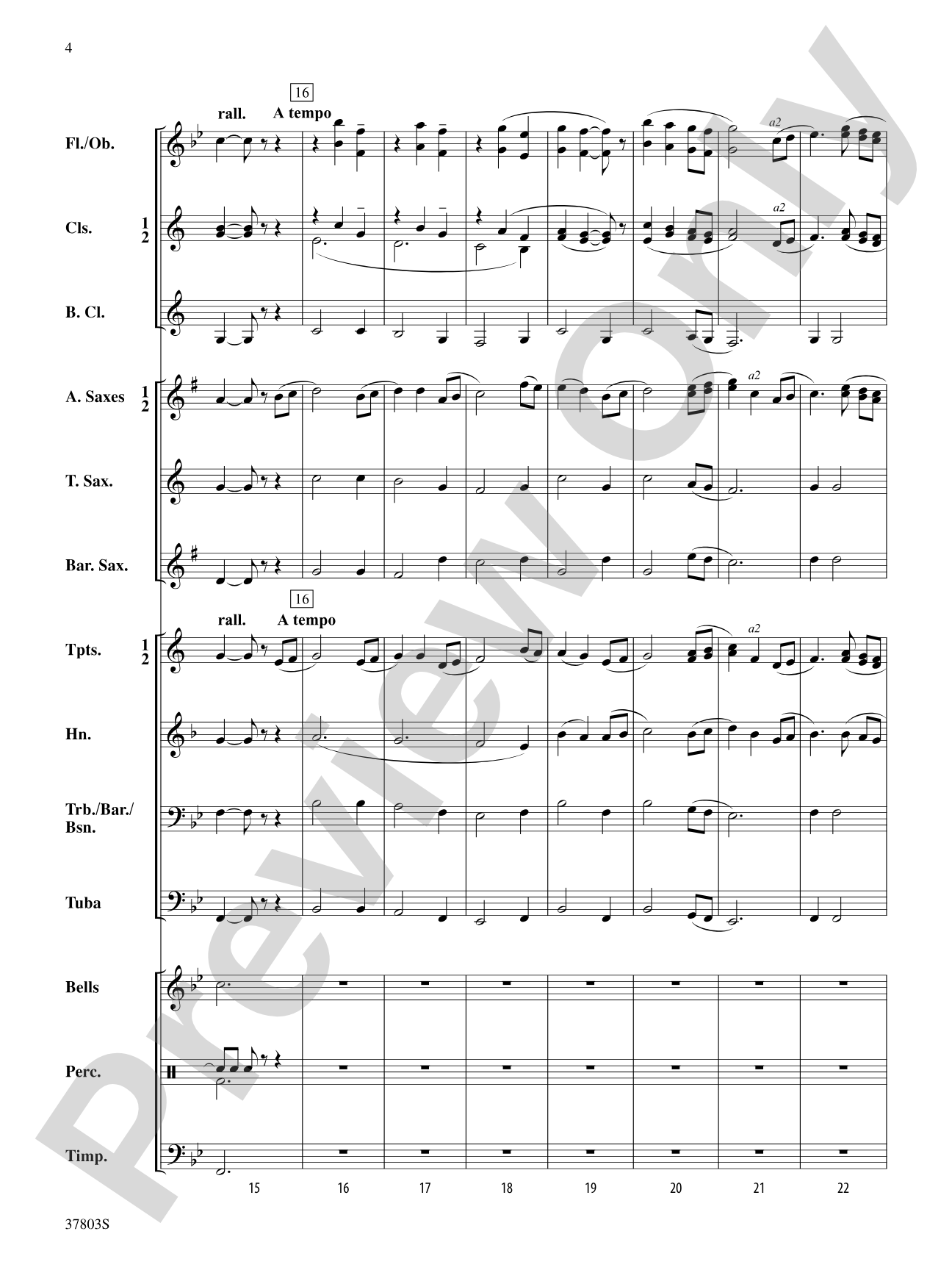
Dedicated to all parents and grandparents who have enjoyed a relaxing moment singing to a child or grandchild, this piece uses a simple melody, sung privately by the composer to his children and grandchildren, and has been developed into an expressive piece for the young band. With opportunities for extended phrasing, simple suspensions, and dynamic contrasts, this lyrical offering provides an effective learning experience as well as a nice change of pace for any concert. (2:10)


Don't just read it, hear it, play along with it, and watch your students grow with it. In MakeMusic Cloud, Twilight Serenade: Concert Band Conductor Score & Parts comes alive with professional accompaniment, adjustable tempo, and built-in practice tools that turn solo practice into real progress.
Open in the Player
Jump straight in and assign it today.
Start Your Free Trial
Open this title and explore the full library in minutes.
Sample Audio
1
Audio File
--:--
0:00
0:00
Sample Video
No sample videos found.
Additional Details
Series:
Alfred Debut Series
Publisher:
Alfred Music
Page Count:
118
SKU:
00-PK-0005078
More about this title
About the Composer: Steve Hodges

Steve Hodges holds degrees from Western Oregon University (B.S.) and Central Washington University (M.A. in Music Education). He spent four decades in public school music education, directing bands, choirs, and small ensembles across multiple grade levels before retiring from the classroom.
Since 1986, Hodges has composed over 120 concert band works published by Alfred Music, along with choral arrangements for Staff Music and Shawnee Press. His commissions have come from honor bands and schools throughout North America, and his music has appeared on TBS and ESPN programming. An ASCAP member and recipient of several standard awards, Hodges remains active in community music in The Dalles, Oregon, where he enjoys seeing his grandchildren perform his compositions in their school bands.
Why we love this
Hodges writes with genuine understanding of what young bands can accomplish musically without overwhelming them technically. The piece draws from his decades directing young ensembles, so every phrase sits naturally under the fingers and voice. A piece this lyrical at Grade 1 gives your students something genuinely expressive to sink their teeth into, not just exercises dressed up as music.
What to expect
Twilight Serenade unfolds like a quiet moment of connection, warm and unhurried. The simple melody carries a tender quality, rooted in the composer's own bedtime songs to children, while the modest harmonic movement and dynamic shaping create a reflective, peaceful soundscape that audiences recognize instantly.
Who it's for
Grade 1 concert bands that are ready for genuine musicality beyond technical exercises. This work suits newer programs looking to program a piece that sounds mature and purposeful while remaining accessible, and it fits ensembles preparing for festival or concert performance.
How to get the most out of it
- Shape the melody line with subtle dynamic peaks even within the simple phrasing; let the band hear where each phrase wants to breathe and release.
- Balance the suspensions so they have room to resolve; they're the emotional heart of the piece, so resist the urge to rush through them.
- Use the concert context to discuss what makes a lullaby effective: stillness, repetition, and warmth. This piece mirrors those qualities.
- Record a sectional rehearsal focusing on sustained tones and intonation in the slower passages; young players often rush through soft, lyrical music out of discomfort.
How to use it
Program this as a contrast piece on a concert that includes faster or more energetic works; its calm center will settle the audience and give your band a chance to demonstrate expressive control. It also works well as a closing number or as part of a thematic program celebrating family and community.
Skills your students will build
- Sustaining tones with consistent intonation and tone quality
- Shaping extended phrases with subtle dynamic contours
- Resolving simple harmonic suspensions
- Balancing melody and harmony in a chorale-style texture
- Matching articulation and phrasing across sections