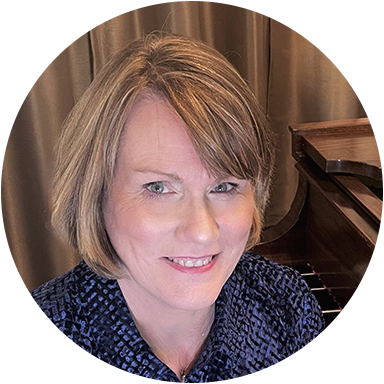
Jennifer Linn has shaped music education through three decades of teaching, composing, and mentoring. Her background spans independent studio work with students of all ages, university-level pedagogy, and leadership roles at major publishers. A graduate of the UMKC Conservatory of Music with degrees in piano performance, she won the Concerto-Aria competition and received the Vice Chancellor's award for academic excellence.
Linn's prolific output includes over 300 compositions and arrangements published by Alfred, G. Schirmer, Hal Leonard, and Music Sales America. She has conducted workshops and master classes across the United States, Canada, and India, and spent a decade as Manager of Educational Piano for Hal Leonard. Her contributions to music education were recognized with the 2013 UMKC Alumni of the Year award and the 2020 Albert Nelson Marquis Lifetime Achievement Award.
Why we love this
Linn writes from real classroom experience, which means every phrase and harmonic turn serves the student's development. The title suggests lyrical depth, yet the piece respects the technical boundaries of early intermediate players, making it genuinely playable without sacrificing musical substance.
What to expect
Twilight evokes that suspended moment between day and night, where quiet reflection meets gentle motion. The nocturne unfolds with intimate lyricism, inviting the player to linger in its contemplative spaces while maintaining forward momentum.
Who it's for
Early intermediate pianists ready to explore Romantic character pieces with genuine expressive demands. Teachers seeking repertoire that develops legato touch, phrase shaping, and musical storytelling in a compact, achievable form.
How to get the most out of it
Shape the melodic line with subtle dynamic waves rather than rigid terraces. Nocturnes ask for breathing and repose, which your hands can communicate through release and lean.
Let the left hand establish a steady, unhurried pulse. Resistance here creates tension that undermines the piece's meditative quality.
Listen for balance between melody and accompaniment. The nocturne style relies on the pianist knowing when to recede and when to sing.
How to use it
Pair this with other short Romantic character pieces for a recital segment on mood and miniature forms. Its four pages make it ideal for student showcases, studio recitals, or as a transition piece between more virtuosic selections.
Skills your students will build
Legato voicing and hand independence between melody and accompaniment
Phrase shaping with dynamic subtlety and minimal notation
Sustain and control of the right hand in lyrical passages
Understanding of nocturne conventions and Romantic style
You May Also Like
Scan to Complete Your Purchase
Use your phone's camera to scan the code below
You'll log in on your phone and the order will be added to your account