


Twilight Dancers: Score
By Susan H. Day
Grade: 1
Item: 00-PR-0002820
$9.00
Pickup currently not available
Description
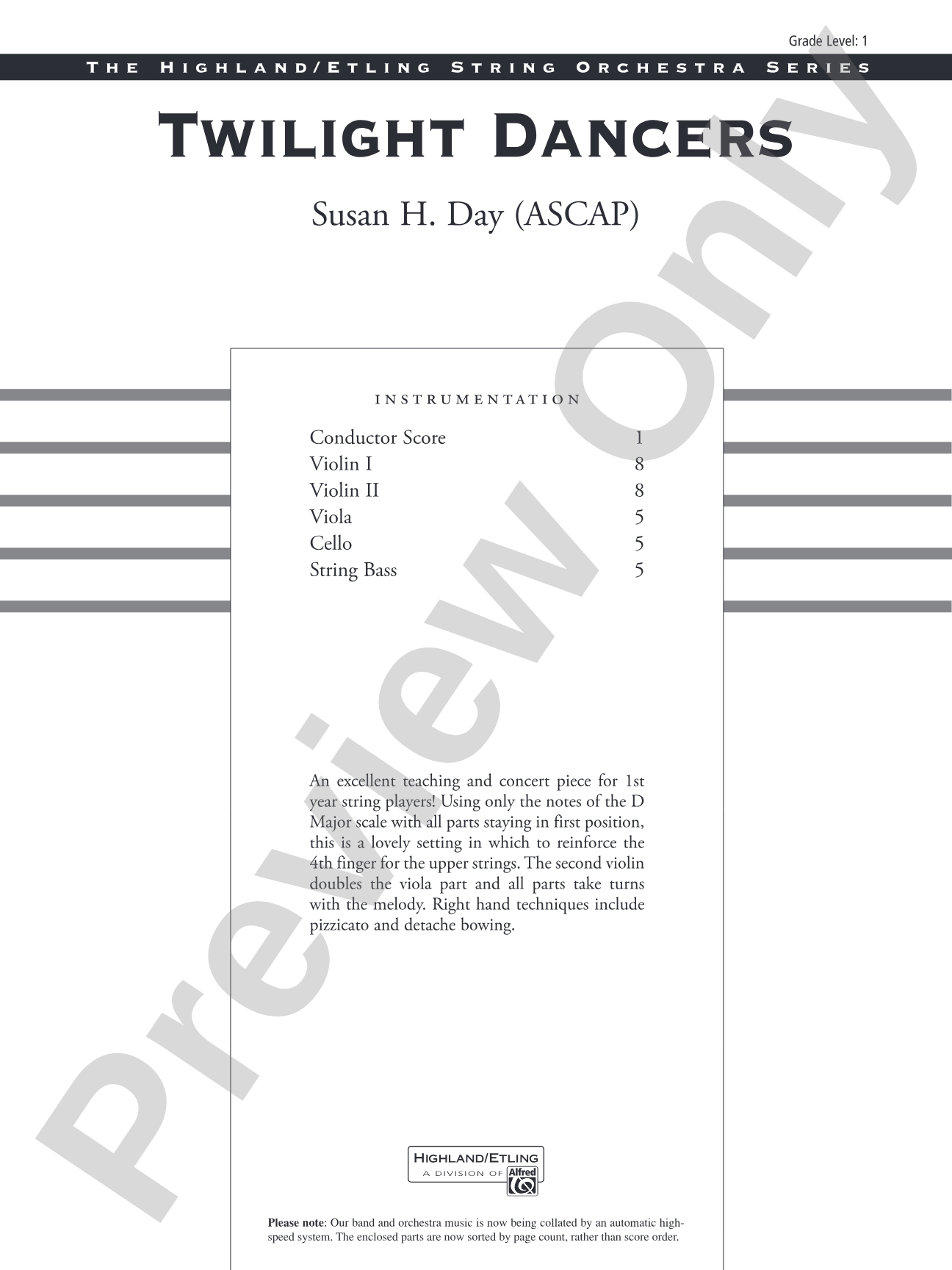
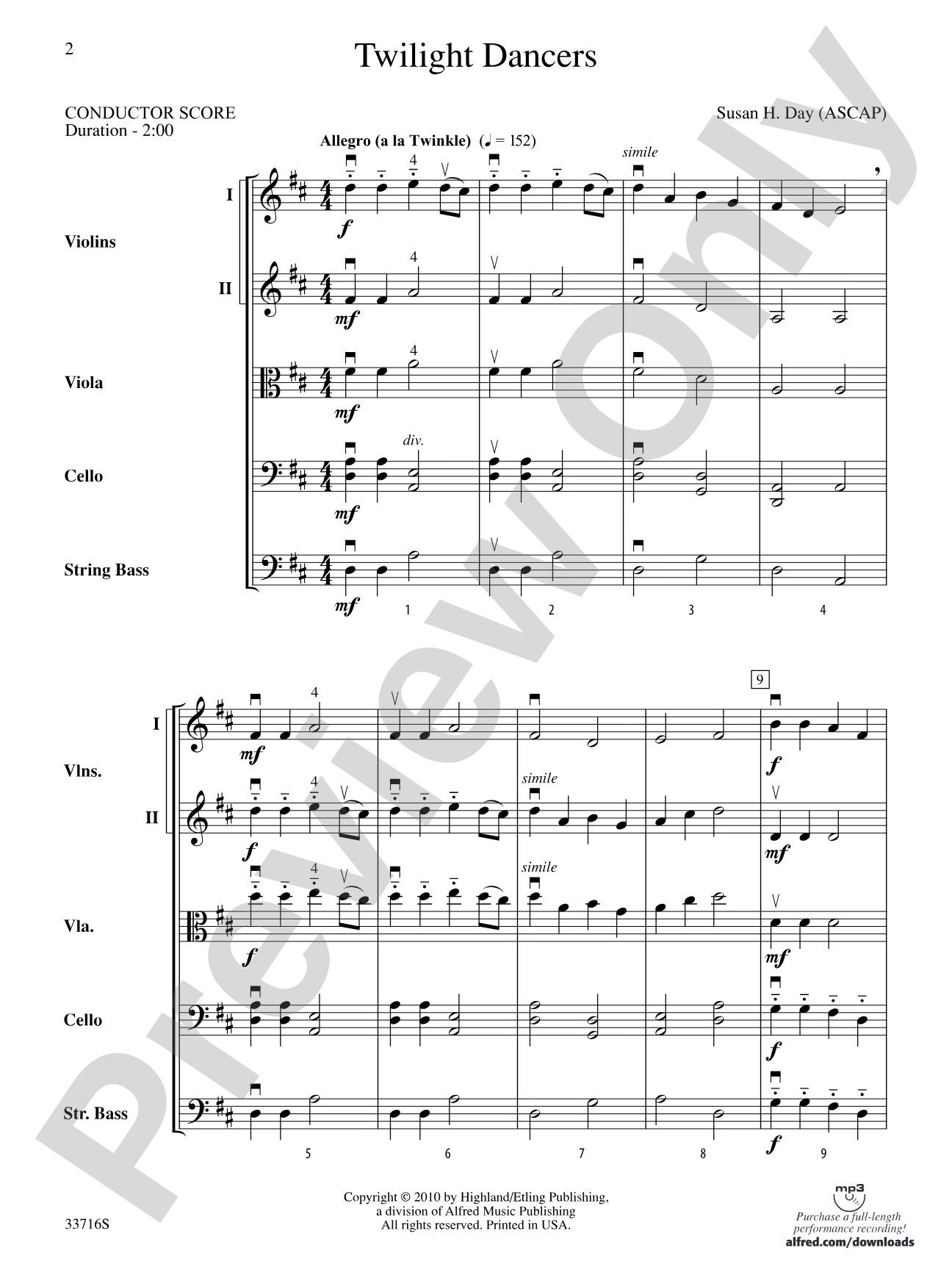
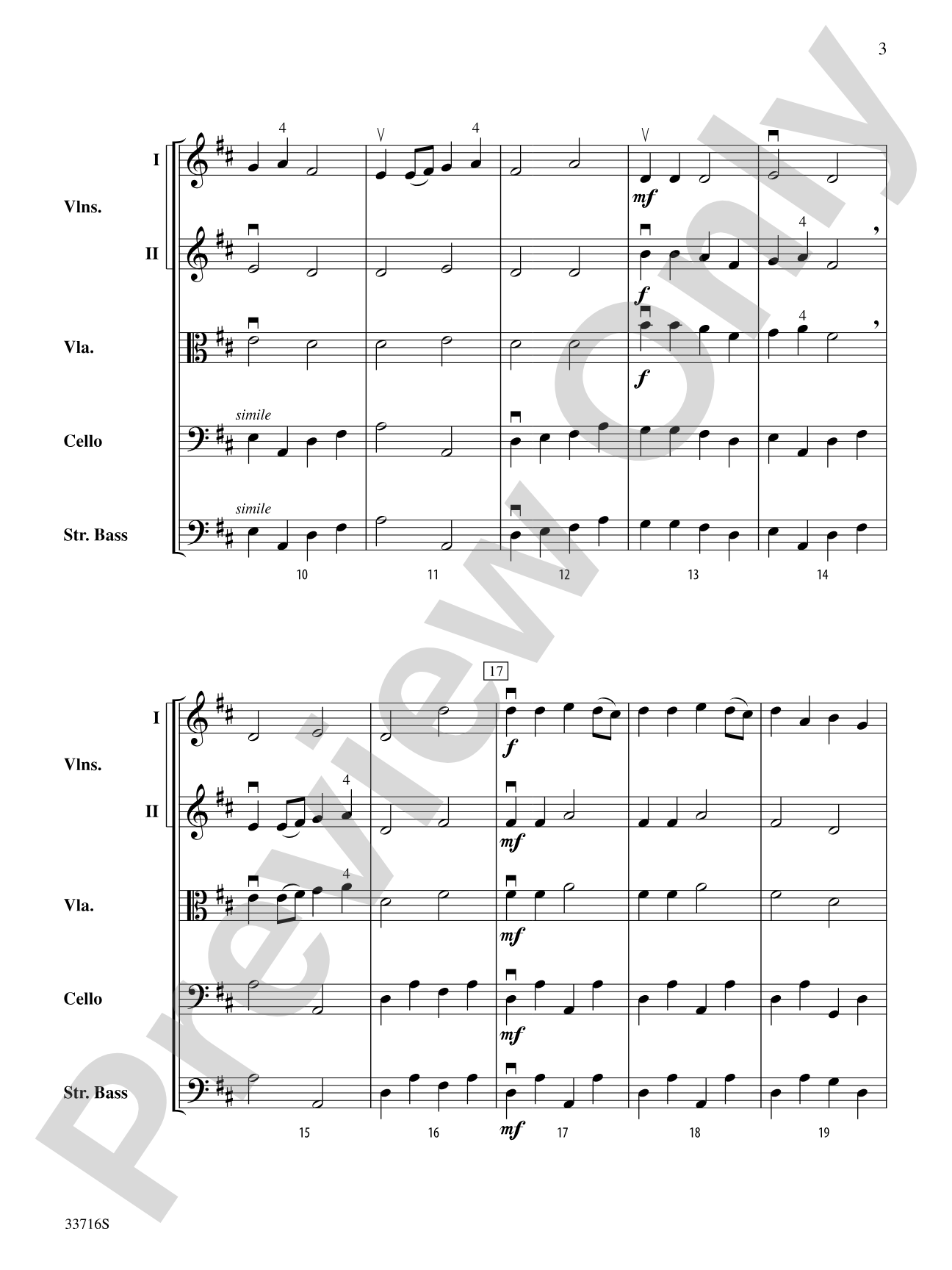
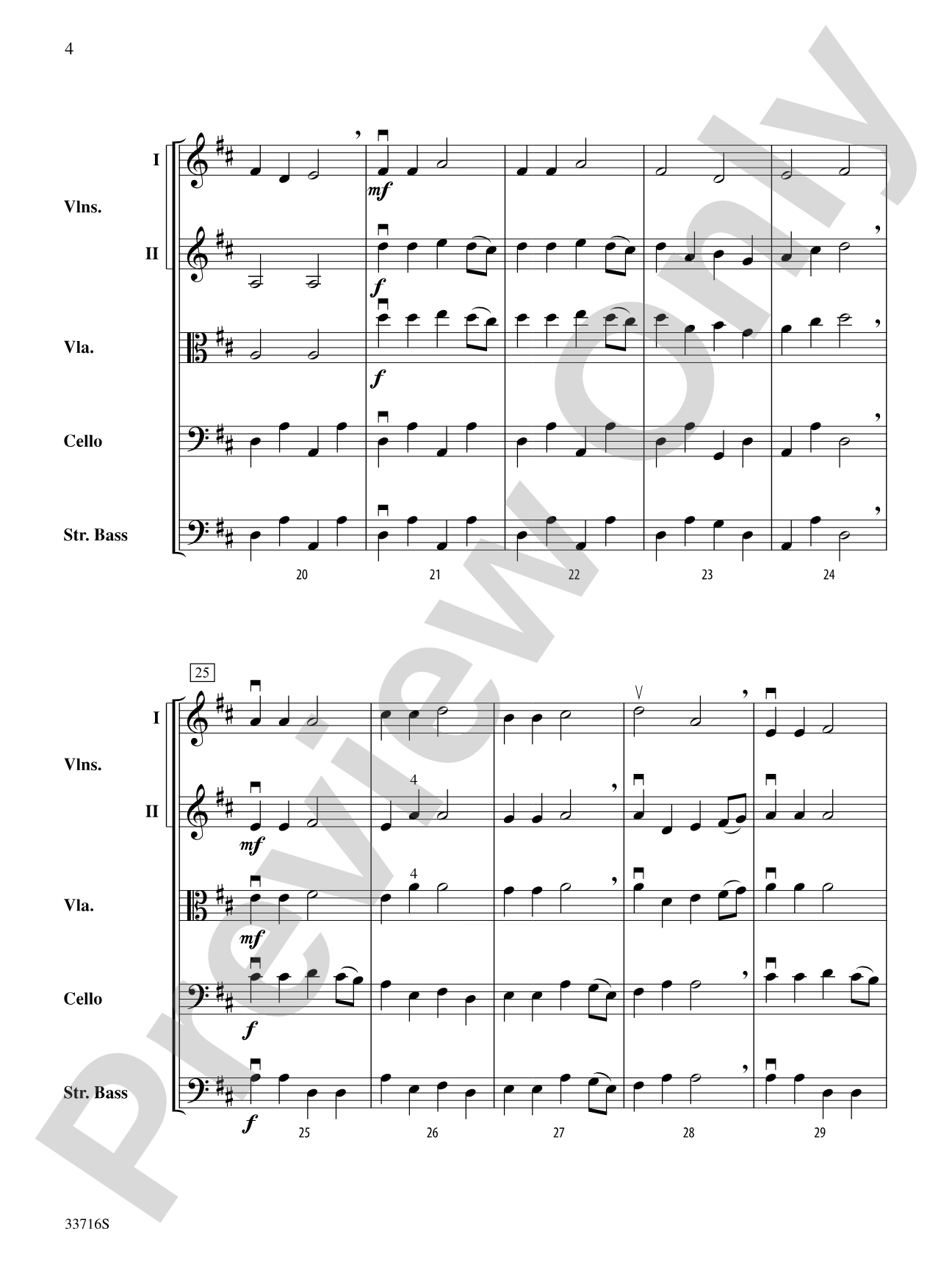
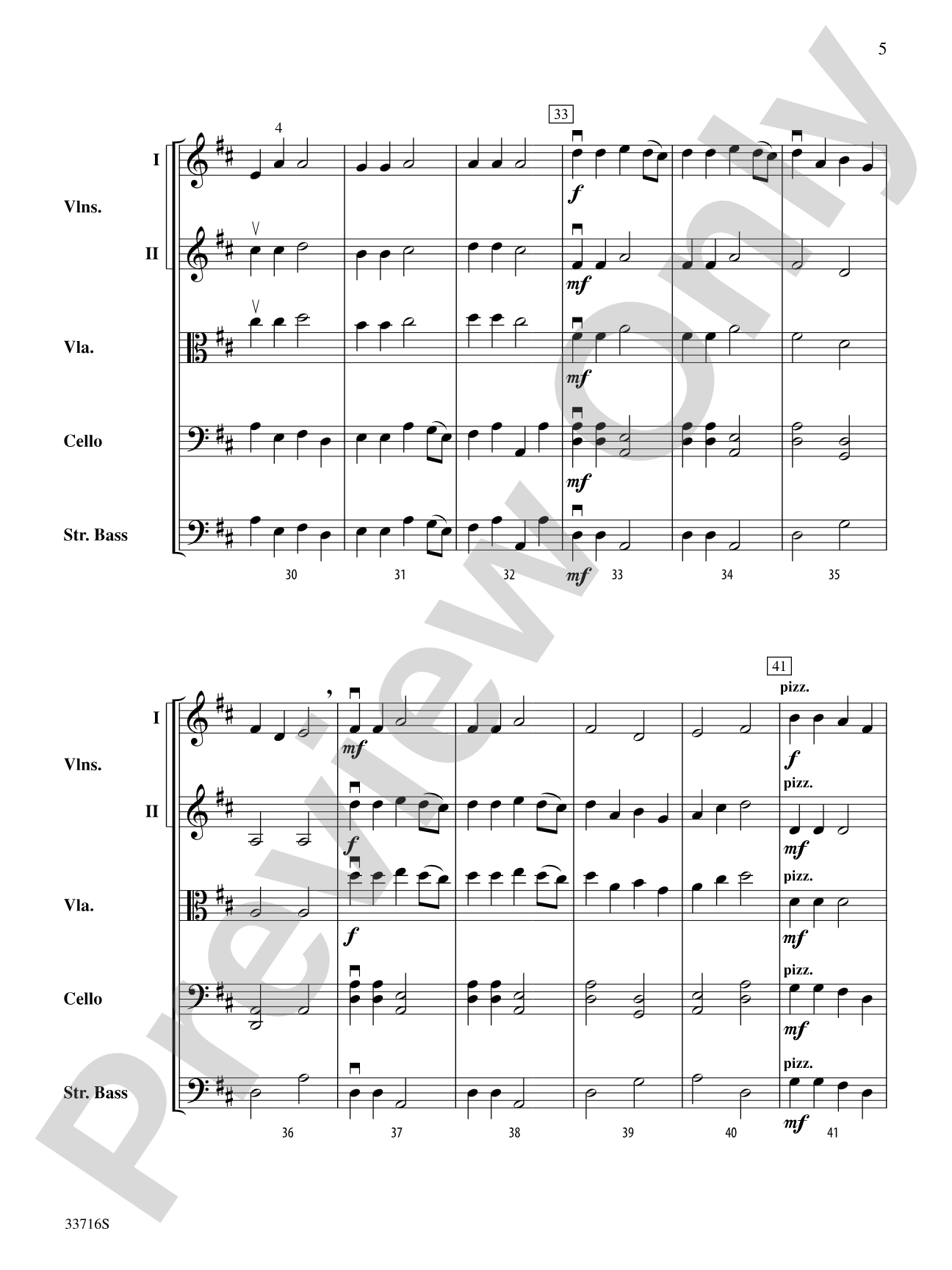
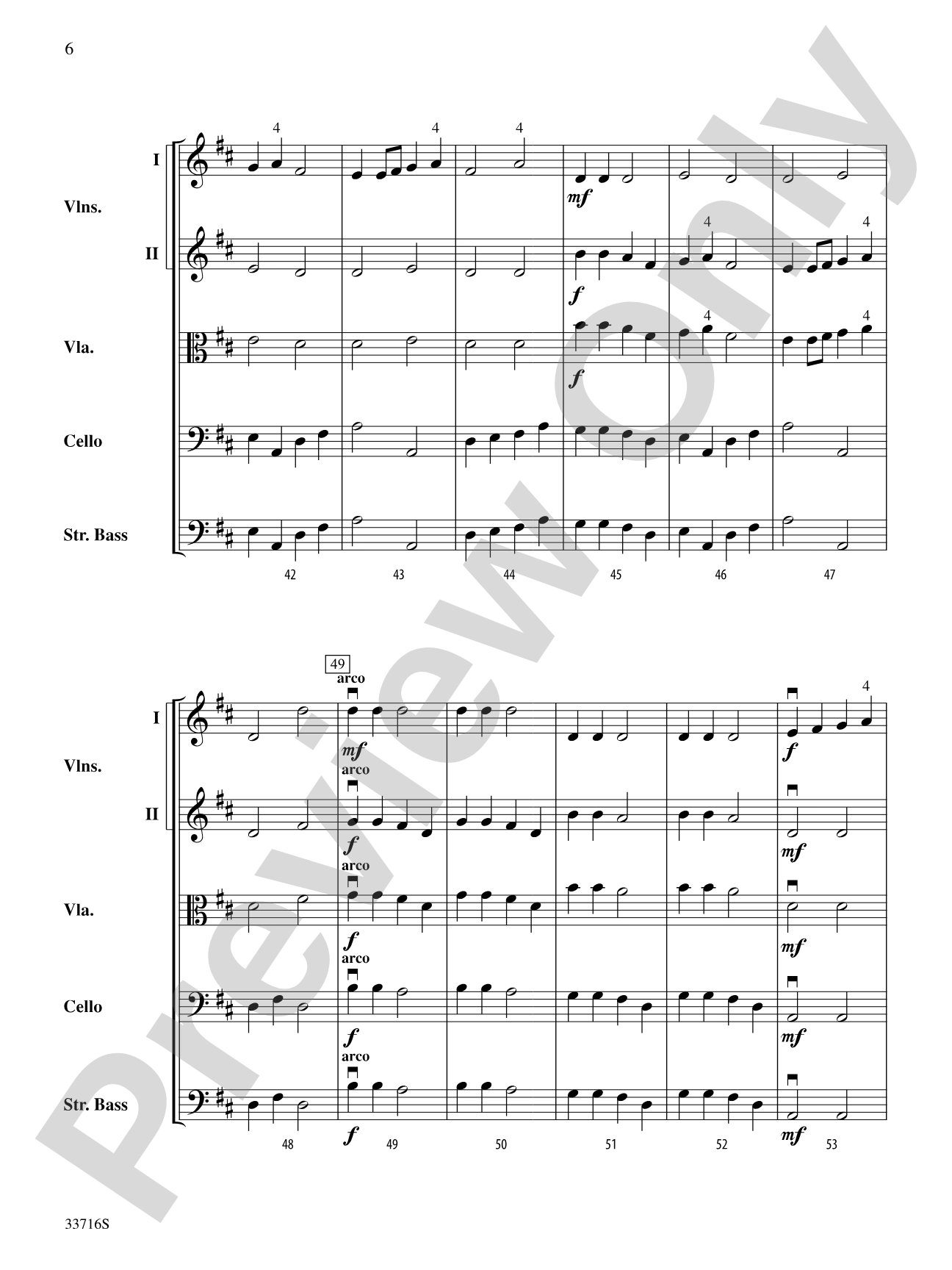
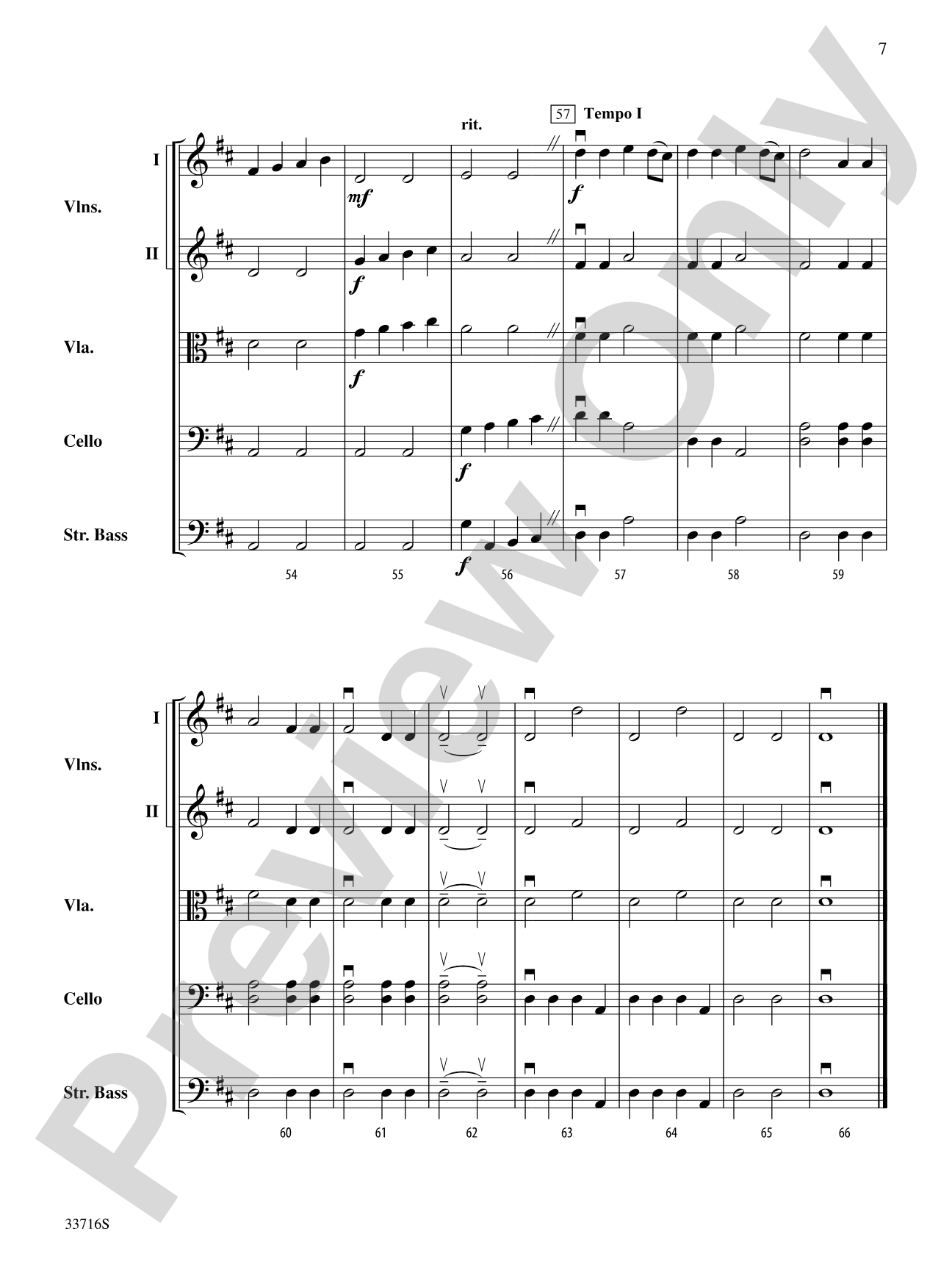
An excellent teaching and concert piece for 1st year string players! Using only the notes of the D Major scale with all parts staying in first position, this is a lovely setting in which to reinforce the 4th finger for the upper strings. The second violin doubles the viola part and all parts take turns with the melody. Right hand techniques include pizzicato and detache bowing. This title is available in MakeMusic Cloud.


Don't just read it, hear it, play along with it, and watch your students grow with it. In MakeMusic Cloud, Twilight Dancers: Score comes alive with professional accompaniment, adjustable tempo, and built-in practice tools that turn solo practice into real progress.
Open in the Player
Jump straight in and assign it today.
Start Your Free Trial
Open this title and explore the full library in minutes.
Sample Audio
1
Audio File
--:--
0:00
0:00
Sample Video
Additional Details
Series:
Highland/Etling String Orchestra
Publisher:
Alfred Music
Page Count:
62
SKU:
00-PR-0002820
More about this title
Why we love this
Susan H. Day writes with clear pedagogical intention. She knows exactly what first-year string players need to practice and builds those technical goals directly into the musical fabric so that reinforcement never feels like work. The melody passes between sections, giving every player a moment to shine while maintaining genuine ensemble coherence.
What to expect
Graceful and lyrical, with a gentle waltz-like quality. The combination of pizzicato and detaché passages creates rhythmic variety that keeps the texture from feeling static, while the D Major tonality gives the whole piece a warm, approachable character.
Who it's for
String orchestra conductors working with beginning players who are ready for their first real concert piece. This is ideal for groups in their second or third semester of instruction, when students have enough technical foundation to handle multiple bowing styles and understand part independence.
How to get the most out of it
- Balance the melody line across sections as it passes from violins to violas to second violins. Mark your part clearly so players know when they're carrying the tune.
- Establish the pizzicato sound first in rehearsal before layering in the detaché bowing. Clean articulation in both techniques will define the character of the piece.
- Use the key of D Major to your advantage during tuning and warm-up. Have players recognize the scale they're working in and listen for the brightness that key provides.
- Spend rehearsal time on the transition between first and fourth position fingerings for the upper strings. Smooth shifts will polish the overall sound significantly.
How to use it
Program this early in a concert where you want to demonstrate fundamental musicality alongside technical growth. It works beautifully as a teaching piece that still reads as polished concert repertoire, making it an excellent choice for festival performances or end-of-year showcases.
Skills your students will build
- Reinforcing fourth finger placement on upper strings while maintaining first position
- Switching between pizzicato and detaché bowing techniques
- Following melodic lines as they pass between string sections
- Playing in D Major with confident intonation
- Reading and responding to conductor cues during section transitions