Twentysomething (arr. Tijs Krammer) Sheet Music Preview

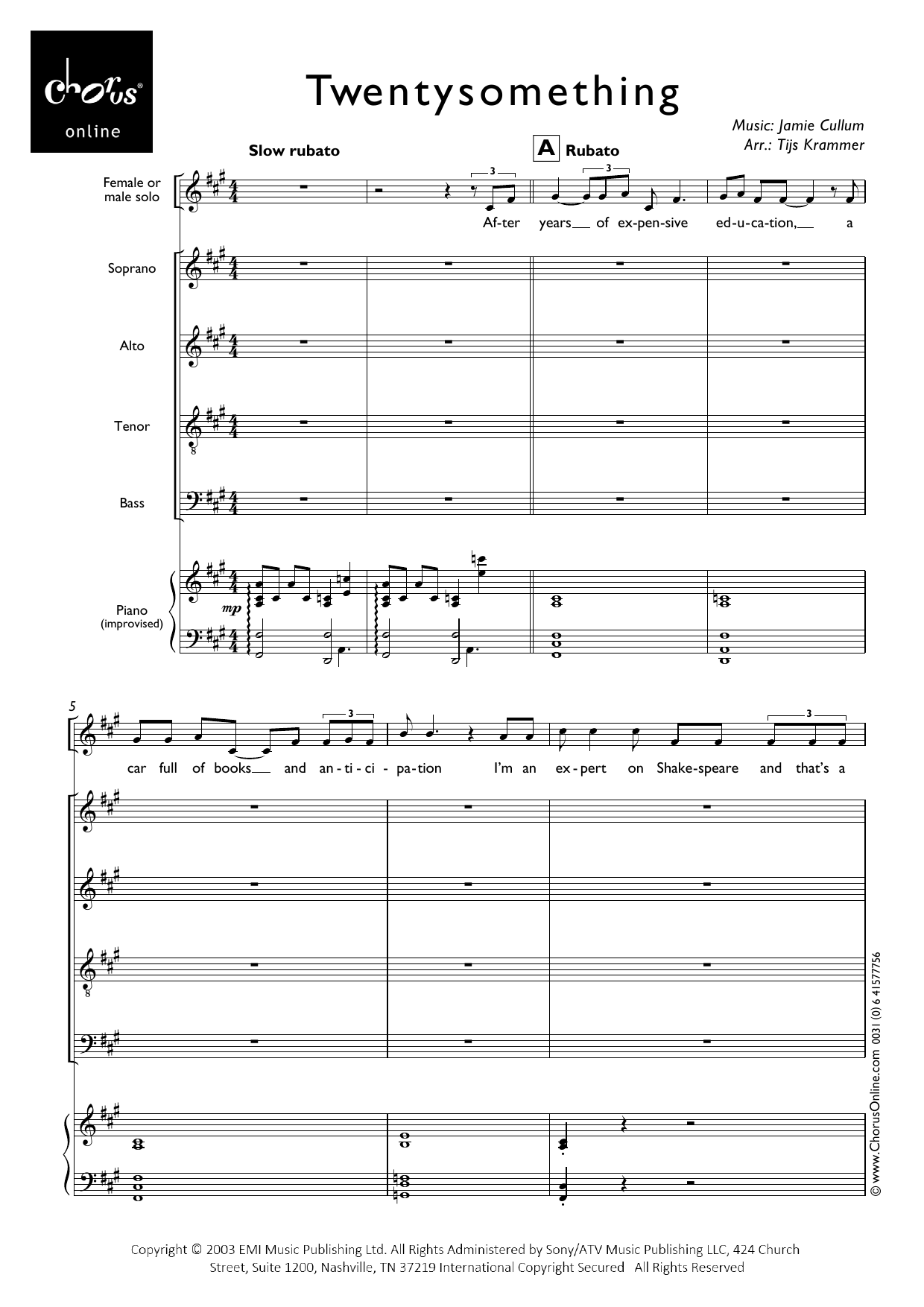
Twentysomething (arr. Tijs Krammer): SATB Choral Octavo

As performed by Jamie Cullum / Arranged by Tijs Krammer

Item: 35-DS00481415

Digital Download
$2.99
Description

Twentysomething (arr. Tijs Krammer): SATB Choral Octavo isn't in MakeMusic Cloud just yet...but it could be. Let us know you'd like to see it, and you'll help shape what comes next. In the meantime, start a free trial and dive into thousands of interactive titles your students can play along with today.

Sample Audio
No sample audio found.
Sample Video
Additional Details
Publisher: Hal Leonard
Page Count: 17
SKU: 35-DS00481415

More about this title

About the Artist: Jamie Cullum

Jamie Cullum burst onto the jazz scene in the early 2000s with a refreshing approach that blended traditional jazz sensibilities with contemporary pop and soul influences. His piano playing and expressive vocals established him as a distinctive voice in modern jazz, appealing to audiences far beyond jazz circles through his accessible melodic sensibility and sophisticated harmonic vocabulary.

Cullum's gift for crafting intimate, introspective songs has made his work particularly valuable for choral arrangers seeking material that resonates with younger singers and contemporary audiences. His catalog offers the rare combination of genuine musicality and immediate emotional accessibility that keeps students engaged.

Why we love this

Tijs Krammer's arrangement transforms a contemporary pop ballad into something genuinely singable for mixed voices without sacrificing the vulnerability that makes Cullum's original so affecting. The 17-page score suggests intelligent voice leading and harmonic depth, giving directors a piece that feels fresh to modern ears while offering real musical substance for your ensemble to sink into.

What to expect

Introspective and emotionally direct, this arrangement captures the intimate confessional quality of the original while expanding it across four voices. There's a sophistication here born from jazz harmony that prevents the arrangement from ever feeling saccharine, even in its most vulnerable moments.

Who it's for

Directors seeking contemporary material that engages singers and audiences alike will find this arrangement particularly valuable. It works equally well for concert choirs wanting to expand beyond traditional repertoire and for programs aiming to program music that reflects the actual musical world students inhabit outside the choir room.

How to get the most out of it

  • Balance the lead line carefully between sections; consider rotating which part carries the primary melody across different verses to maintain listener interest and distribute the technical demands.
  • Attend to the jazz-influenced harmonic language by sculpting dynamic layers. The accompaniment voices should breathe as a unified backdrop rather than pushing forward.
  • Allow space for text clarity, particularly in moments of introspection. The emotional weight of this piece depends on audiences hearing what the singers are communicating.
  • Explore the recorded original not just for style reference but for the specific vocal inflections and phrasing that define the song's character. Use those insights to guide your interpretation.

How to use it

Consider pairing this with other contemporary works to create a concert segment that speaks to current listeners without sacrificing musical credibility. It also works beautifully as a closer to a pops concert or as a bridge between your classical and more experimental programming.

Skills your students will build

  • Jazz-influenced harmonic listening and chord function recognition
  • Sustaining lyrical phrasing across longer melodic lines
  • Balancing lead voice against harmonic accompaniment
  • Expressive control and dynamic nuance in popular music contexts
  • Collaborative section singing that prioritizes ensemble blend over individual voice

You May Also Like