
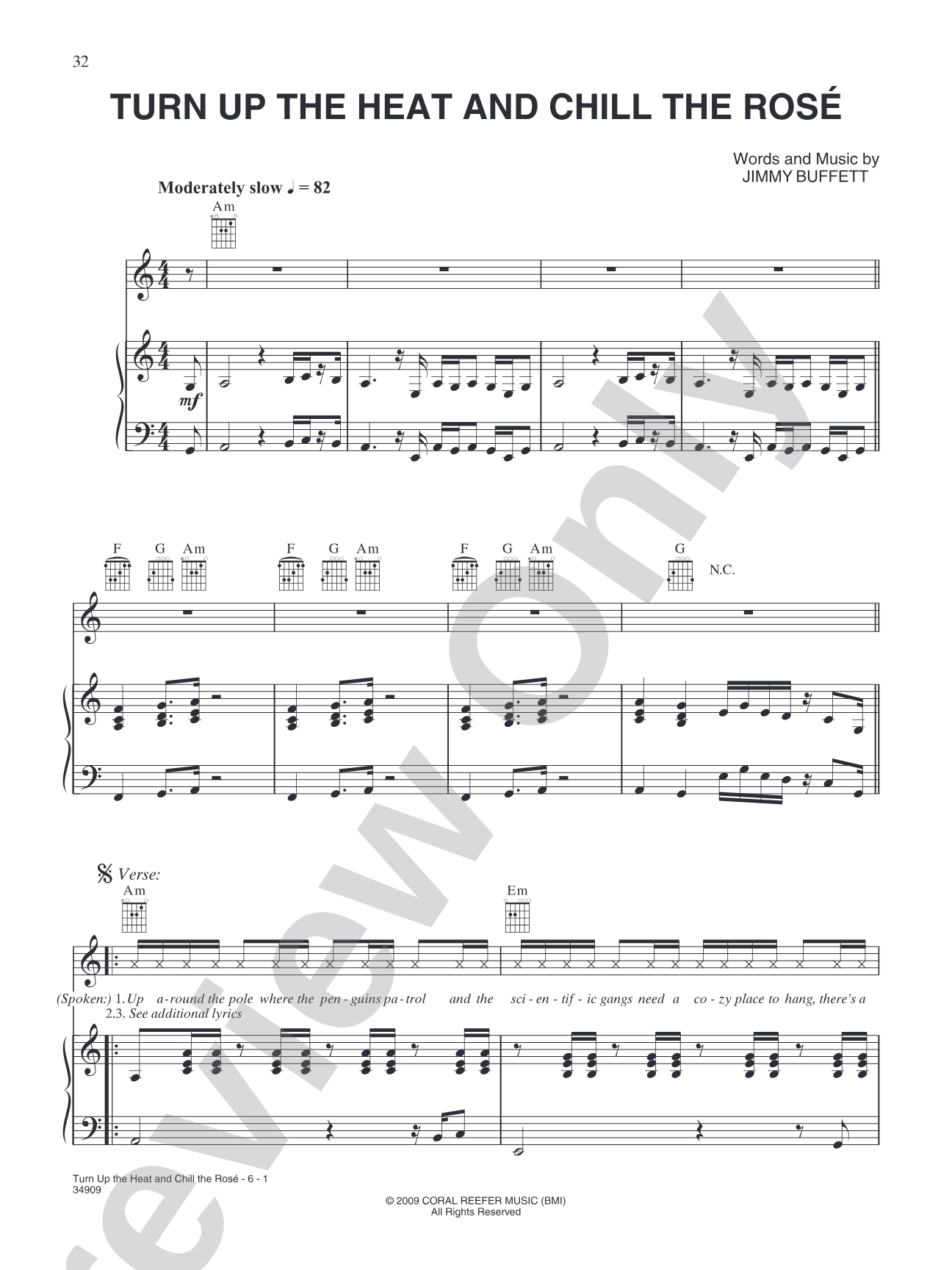
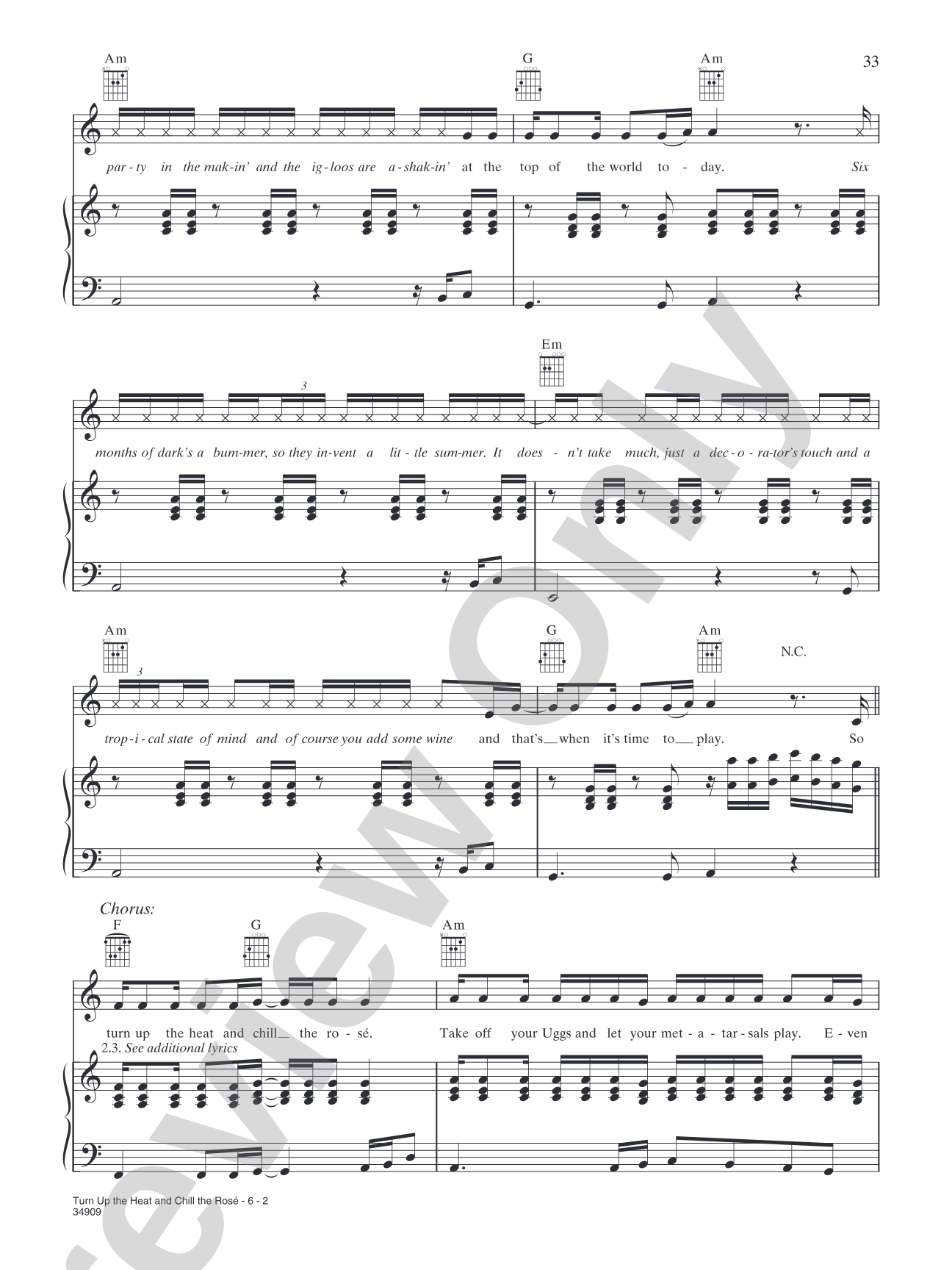

Turn Up the Heat and Chill the Rose: Piano/Vocal/Chords
Jimmy Buffett
Item: 00-PS-0012955
$5.99
Pickup currently not available
Related Items
Rhumba Man: Piano/Vocal/Chords |
$5.99
|
View | |
Summerzcool: Piano/Vocal/Chords |
$4.99
|
View | |
We Learned to Be Cool From You: Piano/Vocal/Chords |
$4.99
|
View | |
Surfing In a Hurricane: Piano/Vocal/Chords |
$5.99
|
View | |
Wings: Piano/Vocal/Chords |
$4.99
|
View | |
Buffet Hotel: Piano/Vocal/Chords |
$4.99
|
View | |
Beautiful Swimmers: Piano/Vocal/Chords |
$4.99
|
View | |
A Lot to Drink About: Piano/Vocal/Chords |
$5.99
|
View | |
Big Top: Piano/Vocal/Chords |
$5.99
|
View | |
Jimmy Buffett: Buffet Hotel: Piano/Vocal/Guitar Book |
$19.99
|
View |
Description
Titles: Nobody from Nowhere * Wings * Big Top * Beautiful Swimmers * Turn Up the Heat and Chill the Rosé * Summerzcool * Rhumba Man * We Learned to Be Cool from You * Surfing in a Hurricane * Life Short Call Now * Buffet Hotel * A Lot to Drink About.


Turn Up the Heat and Chill the Rose: Piano/Vocal/Chords isn't in MakeMusic Cloud just yet...but it could be. Let us know you'd like to see it, and you'll help shape what comes next. In the meantime, start a free trial and dive into thousands of interactive titles your students can play along with today.
Request This Title
Tell us you want it.
Start Your Free Trial
Explore everything that's ready to play right now.
Sample Audio
No sample audio found.
Sample Video
No sample videos found.
Additional Details
Publisher:
Alfred Music
Page Count:
72
SKU:
00-PS-0012955
More about this title
About the Composer: Jimmy Buffett
Jimmy Buffett built a four-decade career as a singer-songwriter whose narrative style and laid-back rock sensibility made him a fixture on radio and in live performance. His songs often weave storytelling, humor, and social observation into melodies that stick with listeners, earning him a devoted following across multiple generations of popular music audiences.
Buffett's work demonstrates how strong melodic writing and clear lyrical storytelling can sustain a creative career. For music educators, his catalog offers accessible examples of song form, conversational lyric writing, and the ways pop and rock conventions can accommodate character-driven narratives.
Why we love this
This collection gives singers and pianists immediate access to contemporary pop-rock material written for small ensembles. The range of moods across 12 titles means you can pull repertoire for different rehearsal contexts, teaching moments, or concert slots without hunting through multiple collections.
What to expect
These songs carry the ease and narrative warmth of seasoned pop-rock writing. You'll encounter moments of humor, reflection, and observational detail that reward expressive singing and attentive ensemble listening, all grounded in accessible melodic and harmonic language.
Who it's for
Piano and voice students working with contemporary singer-songwriter material will find straightforward arrangements that highlight melodic and harmonic storytelling. Guitarists and keyboardists can use this collection to expand their popular music repertoire or develop skills in comping behind a vocalist in small ensemble settings.
How to get the most out of it
- Balance the vocal line against the accompaniment so lyrics remain the focal point; these songs rely on storytelling clarity.
- Pay attention to rhythmic pocket and groove markers in the guitar chords; they signal the song's fundamental feel and help lock in the ensemble.
- Treat dynamic contrasts as emotional turning points rather than technical exercises; Buffett's songs often build through understated dynamics before shifting mood.
- Use the chord symbols as a guide to harmonic color rather than as strict voicing requirements; adapt them to your ensemble's instrumentation and register.
How to use it
Solo recital singers can build a thematic program around these titles or select individual pieces to offset classical or art song repertoire. Studio teachers will find ready-made duets for student singers paired with student pianists, offering both performers equal engagement with contemporary material.
Skills your students will build
- Reading piano/vocal/guitar scores with chord symbols
- Balancing vocal line with accompaniment texture
- Interpreting lyrical phrasing and narrative intent in popular song form
- Collaborating across instruments (voice, piano, guitar) in small ensemble settings
- Recognizing and executing rhythmic groove and pocket in contemporary genres