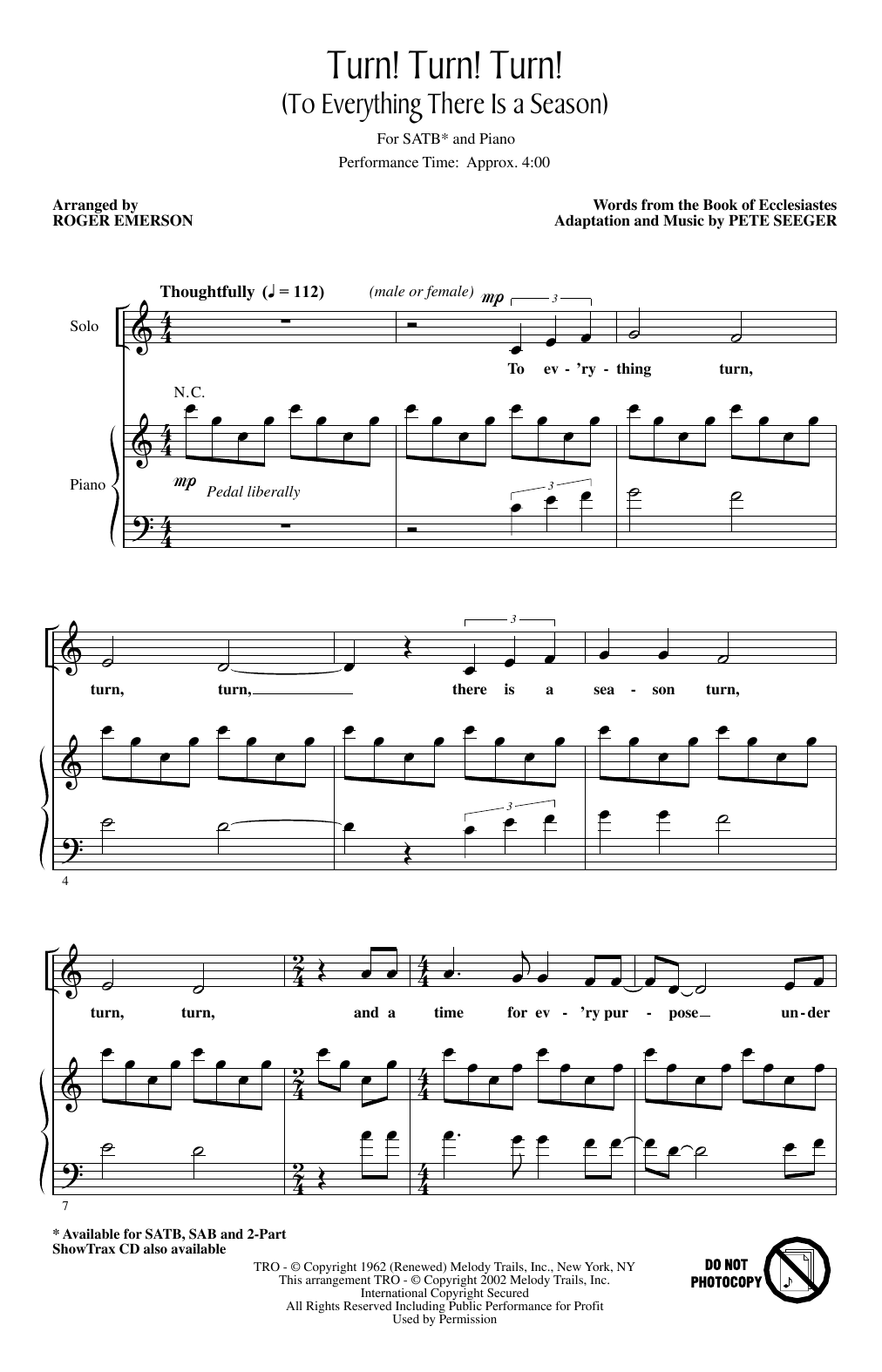
Turn! Turn! Turn! (To Everything There Is A Season) (arr. Roger Emerson) Sheet Music Preview

Turn! Turn! Turn! (To Everything There Is A Season) (arr. Roger Emerson): SATB Choral Octavo

As performed by The Byrds / Arranged by Roger Emerson

Item: 35-DS00454302

Digital Download
$2.99
Description

Turn! Turn! Turn! (To Everything There Is A Season) (arr. Roger Emerson): SATB Choral Octavo isn't in MakeMusic Cloud just yet...but it could be. Let us know you'd like to see it, and you'll help shape what comes next. In the meantime, start a free trial and dive into thousands of interactive titles your students can play along with today.

Sample Audio
No sample audio found.
Sample Video
Additional Details
Publisher: Hal Leonard
Page Count: 10
SKU: 35-DS00454302

More about this title

About the Artist: The Byrds

The Byrds emerged from the Los Angeles folk scene in the mid-1960s and became architects of folk-rock, a genre that electrified acoustic traditions and proved that popular music could carry literary and philosophical weight. Their 1965 recording of "Turn! Turn! Turn!" exemplified this fusion: Pete Seeger's lyrics (adapted from Ecclesiastes) set to a 12-string Rickenbacker jangle that influenced generations of musicians. The band's willingness to respect folk songwriting while embracing rock instrumentation opened doors for choral arrangers seeking repertoire that connects students to authentic popular music history.

Facing the Vietnam War era and social upheaval, The Byrds chose a peace anthem rooted in biblical wisdom. This choice matters for educators: it demonstrates how popular artists engaged moral questions through music, and how a single song can bridge folk tradition, rock innovation, and timeless spiritual reflection. Roger Emerson's arrangement honors that legacy while making the piece accessible to school choirs.

Why we love this

Roger Emerson's voicing captures the iconic shimmer of the original while remaining singable for mixed choirs at the high school level. Programming this piece signals that your choir values repertoire with substance and cultural resonance; students recognize the melody, which immediately engages their musicianship and builds their confidence. The arrangement treats the famous chorus as a rallying point, giving your ensemble a moment that feels both familiar and newly discovered through the act of singing.

What to expect

The piece carries the open, questioning spirit of the 1960s alongside the timeless wisdom of its source text. Singers experience the tension between rock energy and reflective lyricism; the melody floats almost like a hymn, yet the harmonic movement and rhythm section ground it in contemporary sound. There's a sense of walking between protest and prayer.

Who it's for

High school and community choirs ready for repertoire that balances accessibility with artistic credibility. This arrangement works equally well for directors seeking a secular concert piece with spiritual depth and those looking to explore the intersection of folk and rock traditions through choral singing.

How to get the most out of it

  • Emphasize the 12-string Rickenbacker texture by balancing soprano brightness with a warm, resonant alto line; this shimmer is central to what makes the piece recognizable.
  • Treat the text phrases as natural speech patterns first, then layer the musical shape; the Ecclesiastes poetry works best when singers understand what they're singing about.
  • Lock the rhythm section (bass and any rhythmic accompaniment) into a steady groove rather than pushing tempo; the power comes from lockstep precision, not acceleration.
  • Shape the dynamic arc across the full 10 pages so the final chorus builds genuinely; resist the urge to peak too early in the arrangement.

How to use it

Pair this as a concert centerpiece that bridges a traditional first half with contemporary material in the second, or use it as the emotional anchor in a thematic program about social justice and music history. The piece works well in spring concerts where broader repertoire scope is expected, and it provides a natural conversation starter about how pop songs enter the canon.

Skills your students will build

  • Sustained singing within rock/pop rhythmic frameworks without losing legit tone
  • Sectional independence while maintaining ensemble cohesion across all four parts
  • Textual interpretation of poetry adapted from religious sources
  • Balancing familiarity with a melody against disciplined choral blend
  • Navigating moderate rhythmic complexity in a secular, contemporary context

You May Also Like