Turkish Rondo Sheet Music Preview

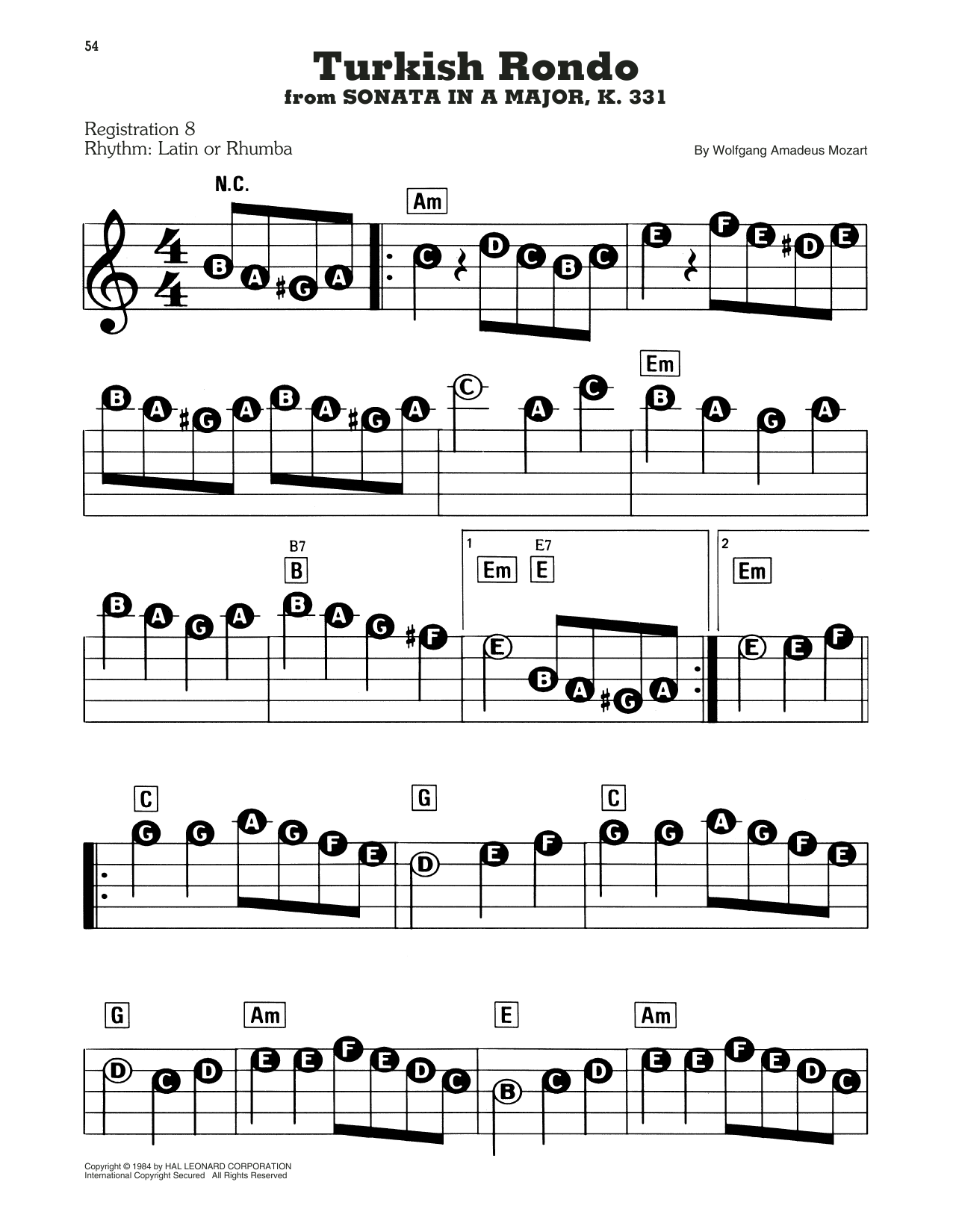
Turkish Rondo: E-Z Play Today

Item: 35-DS00960565

Digital Download
$4.99
Description

Turkish Rondo: E-Z Play Today isn't in MakeMusic Cloud just yet...but it could be. Let us know you'd like to see it, and you'll help shape what comes next. In the meantime, start a free trial and dive into thousands of interactive titles your students can play along with today.

Sample Audio
No sample audio found.
Sample Video
Additional Details
Publisher: Hal Leonard
Page Count: 3
SKU: 35-DS00960565

More about this title

About the Creator

Mozart's rondo form allowed him to craft melodies that loop back with satisfying inevitability, giving listeners the pleasure of recognition paired with fresh harmonic turns. His ability to write idiomatically for keyboard instruments made him a standard bearer for pianists across centuries; this piece exemplifies his gift for accessible yet sophisticated writing.

Why we love this

The E-Z Play Today series strips away excessive notation complexity while preserving the essential character of the music. A rondo this charming gives early intermediate students a genuine Classical masterwork to play, not a watered-down approximation, and the three-page length keeps it achievable for the school year.

What to expect

Bright and conversational, with a graceful melodic line that dances forward before returning home. The piece invites a sense of refined playfulness, letting the pianist experience the logic and satisfaction of rondo architecture at their own tempo.

Who it's for

Early intermediate pianists ready to explore Classical forms with music that sounds sophisticated without overwhelming them technically. This works well for students who have built comfort with major and minor keys and can manage moderate hand independence.

How to get the most out of it

  • Bring out the rondo theme each time it returns by allowing it just slightly more weight in the hand without disrupting the overall elegance of the phrasing.
  • Track your tempo stability through the couplet sections; consistency here makes the returns to the A section feel more architecturally satisfying.
  • Listen for the harmonic colors that distinguish each episode, and shape the dynamics within phrases rather than using big contrasts between sections.

How to use it

Include this on a spring studio recital as a palette cleanser between weightier contemporary pieces, or pair it with other Classical-era keyboard works to show students the breadth of short-form writing. It also serves as an excellent entry point into form study during repertoire selection.

Skills your students will build

  • Recognition and execution of rondo form (A-B-A-C-A structure)
  • Phrasing and articulation appropriate to Classical style
  • Hand coordination across contrasting melodic and accompaniment textures
  • Consistent tempo maintenance across sectional returns

You May Also Like