Turkish March (Rondo alla Turca): Flute 1 Sheet Music Preview

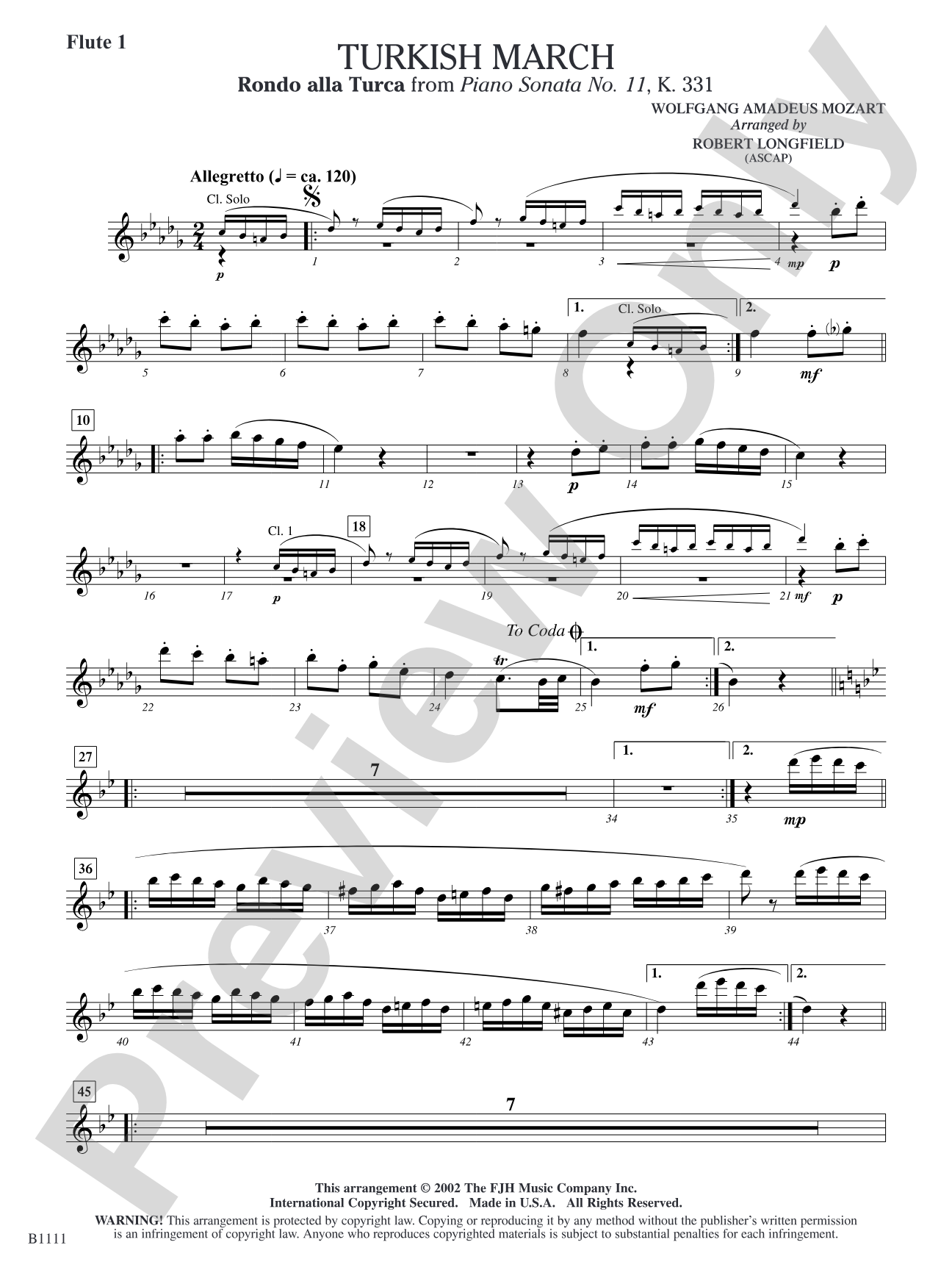
Turkish March (Rondo alla Turca): Flute 1

Rondo alla Turca

By Wolfgang Amadeus Mozart / arr. Robert Longfield

Grade: 4

Item: 98-PC-DB1111_F1

Digital Download
$7.00
Description
This delightful march from Mozart's Piano Sonata No. 11, K.331 is masterfully scored by Robert Longfield in a light, allegretto style. The piece moves between a B-flat minor/major tonality. Robert has layered many of the sections to create a moving and ever-changing timbrel pattern. An easy grade 4. (3:40)

Turkish March (Rondo alla Turca): Flute 1 isn't in MakeMusic Cloud just yet...but it could be. Let us know you'd like to see it, and you'll help shape what comes next. In the meantime, start a free trial and dive into thousands of interactive titles your students can play along with today.

Sample Audio
0:00
0:00
Sample Video
Additional Details
Series: FJH Masterworks for Concert Band
Publisher: The FJH Music Company, Inc.
SKU: 98-PC-DB1111_F1

More about this title

About the Composer: Wolfgang Amadeus Mozart

Wolfgang Amadeus Mozart (1756-1791) composed across every major genre of his era and produced over 600 works before his death at 35. His music combines technical brilliance with emotional directness, making it as engaging for young musicians as it is for concert audiences. Piano Sonata No. 11, K.331 stands among his most popular keyboard works, and its final movement—the Rondo alla Turca—has become a concert staple in countless arrangements.

Why we love this

Longfield's scoring breathes new life into this beloved movement by distributing the character-rich melody across the band while keeping the lightness Mozart intended. The Grade 4 difficulty makes this masterwork accessible to developing ensembles without sacrificing the sophistication of the original; it programs beautifully as a concert closer that audiences recognize and players enjoy executing.

What to expect

Spirited and charming, with the character of an 18th-century Turkish march rendered in a conversational, almost playful tone. The piece moves with infectious energy while maintaining an elegance that feels refined rather than bombastic, creating a musical experience that is both entertaining and musically substantive.

Who it's for

Concert bands at the Grade 4 level seeking a polished masterwork that bridges classical sophistication and accessible ensemble playing. Directors who want students to experience Mozart's craftsmanship firsthand without overwhelming less advanced sections of the band.

How to get the most out of it

  • Keep the articulation crisp and the tempo steady. The allegretto marking and light character depend on clean tonguing and precise rhythmic alignment across all sections.
  • Balance the timbral layering carefully. Since Longfield has intentionally shifted instrumental colors throughout, individual sections should play with clear projection so listeners hear each new orchestration.
  • Shape the B-flat minor/major movement as a harmonic journey rather than a shift between two separate colors. The piece gains shape when the band understands how these tonal areas relate and support the forward motion.
  • Let the ensemble breathe where the phrasing naturally asks for it, especially in the quieter passages. This prevents the piece from sounding mechanical and honors Mozart's elegant melodic line.

How to use it

Program this as a concert finale to send audiences out with brightness and wit, or place it mid-concert as a palate cleanser between weightier works. Its moderate length (3:40) and straightforward demands make it ideal for spring or end-of-year programs where you want to celebrate both the repertoire and the ensemble's growth.

Skills your students will build

  • Tonal center recognition and balance between parallel major and minor tonalities
  • Clear articulation and rhythmic precision in allegretto tempo
  • Dynamic control and sectional balance in layered orchestrations
  • Phrasing and shaping in a classical melody structure

You May Also Like