
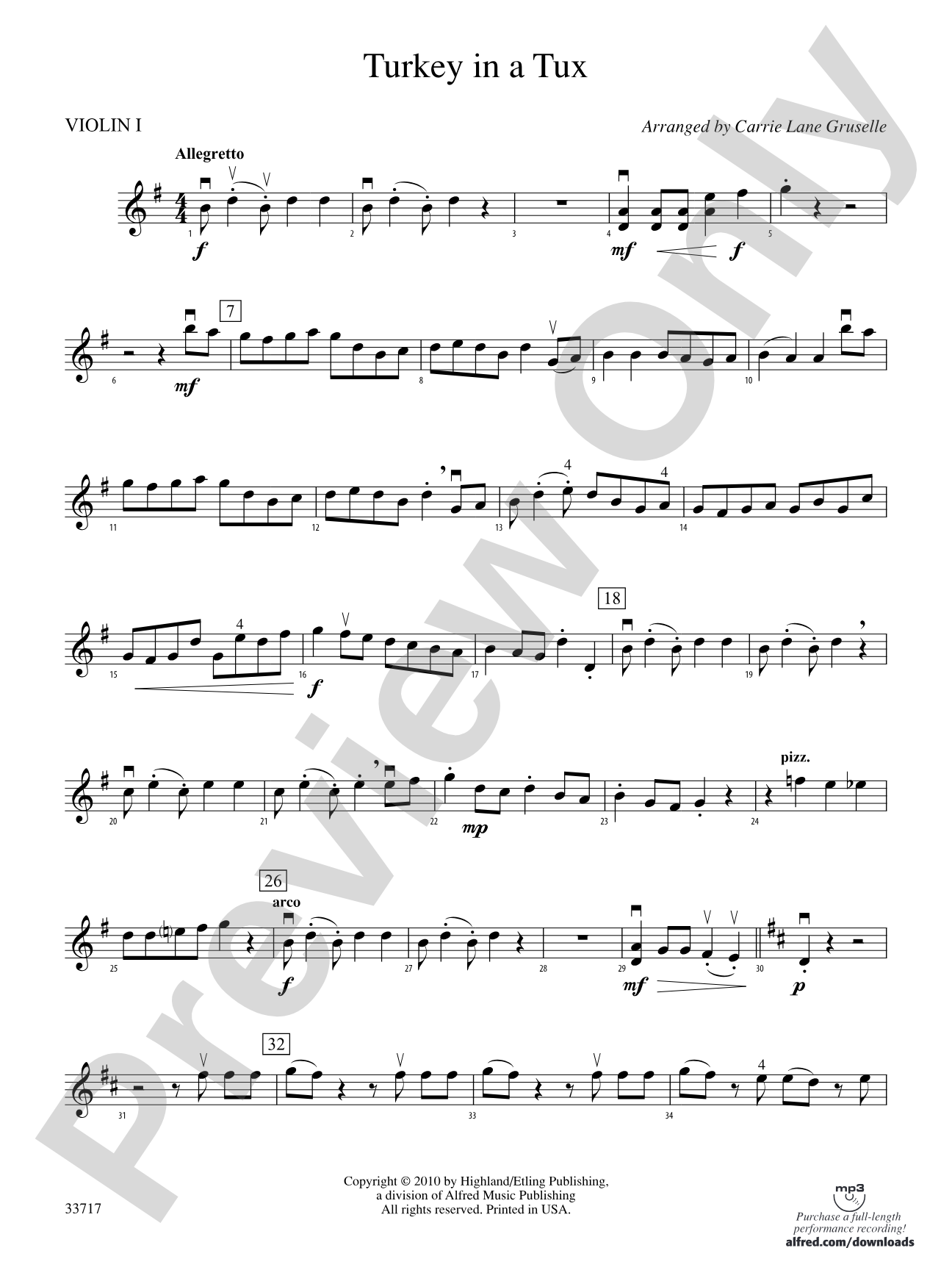

Turkey in a Tux: 1st Violin
Arr. Carrie Lane Gruselle
Grade: 2
Item: 00-PC-0014502_VN1
$5.99
Pickup currently not available
Description
In this arrangement of the fiddle tune "Turkey in the Straw," the turkey has dressed up and gone to the concert hall where its tune is heard in the style of Bach, Rossini, and Strauss, with a cameo appearance by Beethoven. The varied dynamics and articulations will challenge the students as they experience the Baroque, Classical, and Romantic musical styles through this familiar folk tune.


Don't just read it, hear it, play along with it, and watch your students grow with it. In MakeMusic Cloud, Turkey in a Tux: 1st Violin comes alive with professional accompaniment, adjustable tempo, and built-in practice tools that turn solo practice into real progress.
Open in the Player
Jump straight in and assign it today.
Start Your Free Trial
Open this title and explore the full library in minutes.
Sample Audio
1
Audio File
--:--
0:00
0:00
Sample Video
Additional Details
Series:
Highland/Etling String Orchestra
Publisher:
Alfred Music
Page Count:
124
SKU:
00-PC-0014502_VN1
More about this title
About the Arranger: Carrie Lane Gruselle

Carrie Lane Gruselle earned her Bachelor of Music Education from the University of Wisconsin-Eau Claire and went on to complete a Master of Music Education with Suzuki emphasis from the University of Wisconsin-Stevens Point. She has taught elementary and middle level strings for the Appleton Area School District while also serving as cello instructor for the Lawrence University Arts Academy in Appleton, Wisconsin.
Her work as both a classroom educator and private instructor has shaped her approach to arrangement and repertoire selection, with particular attention to how students learn musical style and technique through familiar material.
Why we love this
Gruselle transforms a beloved folk tune into a genuinely educational journey through three centuries of compositional style without sacrificing the playfulness of the original. The varied articulations and dynamic contrasts keep Grade 2 players engaged while building exposure to Baroque, Classical, and Romantic characteristics in a context where they can hear the differences clearly. It's the kind of piece that makes students actually listen to themselves and each other.
What to expect
A tour through musical history that never loses sight of the tune's dance-floor roots. One moment the turkey is mincing through a Bach invention with proper harpsichord deportment; the next it's bowing with Rossini's operatic charm, then waltzing with Strauss before a final nod to Beethoven's gravitas. The piece sparkles with humor while remaining musically substantive.
Who it's for
Grade 2 string orchestras ready to experience compositional style through familiar material. This works equally well for groups building their concert repertoire and for those seeking pieces that deepen musical literacy while maintaining accessibility and enjoyment.
How to get the most out of it
- Separate rehearsals by style section. Work the Bach section with clean articulation and steady phrasing; tackle the Rossini section with lighter, more detached bowing; approach Strauss and Beethoven passages with the warmth and rubato students hear on their reference recordings.
- Conduct the meter changes deliberately at first, then gradually release control as the ensemble internalizes each transition. Students need to feel the shift in character, not fight against sudden tempo or rhythmic surprises.
- Mark dynamic contrasts clearly in student parts before the first read. Grade 2 players often miss unmarked dynamic shifts, and this piece relies on those contrasts to showcase each style.
- Balance the melody across stands rather than doubling all parts from one section. The folk tune works best when it can breathe through the full orchestra.
How to use it
Program this as the centerpiece of a concert exploring musical style, or pair it with a straight folk arrangement and a classical reworking of different material to create a thematic concert on how composers reimagine tradition. Its humor and accessibility make it an excellent opener for family concerts or young people's concerts where you want to set an engaging, intelligent tone.
Skills your students will build
- Recognizing and performing stylistic differences (Baroque articulation and phrasing, Classical clarity, Romantic expressiveness)
- Dynamic contrast and nuanced articulation across a full piece
- Maintaining intonation and ensemble balance through varied textures and tempo relationships
- Listening for melodic line through different orchestral voices and harmonic contexts