
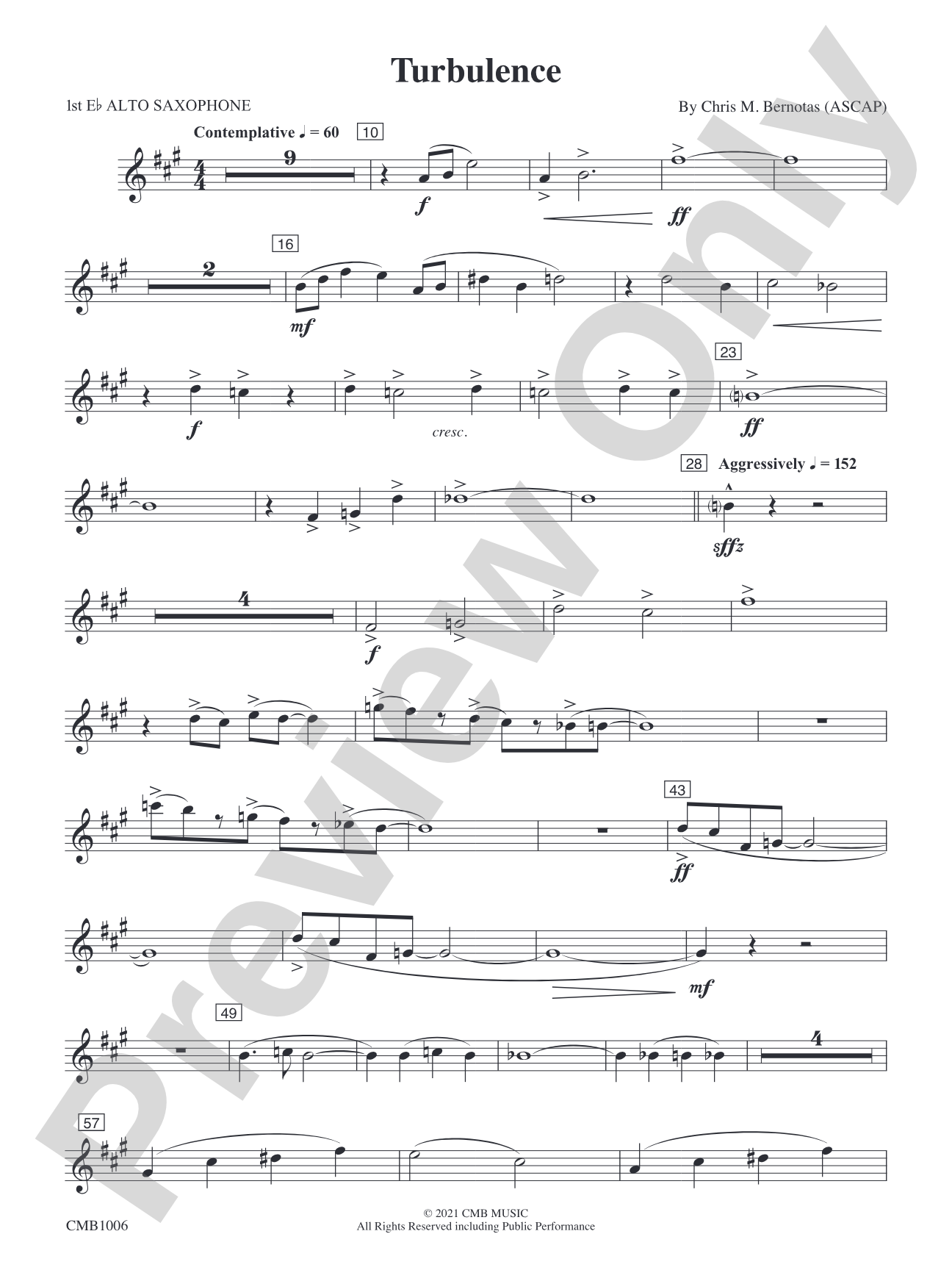

Turbulence: E-flat Alto Saxophone
By Chris M. Bernotas
Grade: 3
Item: 00-PC-0018738_AX1
$5.99
Pickup currently not available
Description
Settle in for a bumpy ride! Turbulence by Chris M. Bernotas begins with an ominous atmosphere, foreshadowing the tension that lies ahead. Students will be provided with exciting, challenging parts that will help them develop their musicality. Turbulence has driving percussion, angular rhythms, and an energy that doesn't stop! (3:25)


Discover MakeMusic Cloud: thousands of interactive titles your students can play along with today.
Sample Audio
1
Audio File
--:--
2
Audio File
--:--
Audio File
0:00
0:00
Sample Video
No sample videos found.
Additional Details
Series:
Alfred Digital Concert Band
SKU:
00-PC-0018738_AX1
More about this title
About the Composer: Chris M. Bernotas

Chris M. Bernotas brings over 25 years of classroom and publishing experience to his work as a composer and conductor. Currently serving as Director of Instrumental Publications at Alfred Music, he has shaped the landscape of band and orchestra education by creating accessible, engaging repertoire that speaks to both student musicians and their teachers. His compositions balance musical substance with pedagogical thoughtfulness, a combination born from his own years spent in the rehearsal room.
Beyond the printed page, Bernotas remains deeply connected to music education through guest conducting, clinician work, and collaborative projects with teachers nationwide. He has co-authored several cornerstone resources including the Sound Innovations series, Sound Artistry, and Sound Performance, each reflecting his commitment to supporting directors at every level. His work continues to reach ensembles worldwide, from emerging musicians to advanced groups seeking dynamic, meaningful literature.
Why we love this
Turbulence delivers the kind of visceral energy that galvanizes student musicians while remaining genuinely teachable at Grade 3. The angular rhythms and relentless percussion writing demand attention without sacrificing clarity, and the dramatic arc from ominous opening to climactic release gives your students a complete musical journey to shape. This is the sort of piece that reminds young players why they care about precision and ensemble listening.
What to expect
Turbulence captures the visceral discomfort of chaos in motion. It opens with a brooding, unsettling quality, as though something dangerous is gathering just beyond sight. Then the storm breaks: angular gestures cut across driving rhythms, and the ensemble is swept into relentless forward momentum. The urgency never quite settles, keeping listeners and performers alike suspended in anticipation until the final moment.
Who it's for
Grade 3 concert bands seeking repertoire that combines contemporary energy with strong educational value. Directors preparing for festival or contest will find that Turbulence offers both the musical substance judges respond to and the technical challenges that push developing musicians forward. The piece works equally well for students exploring modern compositional language and for those ready to extend their rhythmic and ensemble skills.
How to get the most out of it
- Lock the percussion section's rhythmic foundation early in rehearsal. The driving pulse is the glue holding the angular brass and woodwind writing together, so establish it as your reference point before layering in the melodic voices.
- Shape the opening's ominous quality through dynamic restraint and careful balance. The tension works only if the ensemble resists the urge to push the sound, allowing the slow build toward conflict to feel inevitable rather than forced.
- Subdivide the angular rhythms in your conducting with clarity and consistency. Students will navigate the written figures more confidently when your gesture removes ambiguity about where the beat lives within each measure.
- Bring the energy level to its peak in the final section without allowing tempo to slip. The 3:25 duration is tight, and student ensembles often rush when excitement builds; lock in with your drummer and hold the line.
How to use it
Program this as a closing statement on a festival or concert program, where its uncompromising energy and contemporary voice make a strong final impression. It pairs well alongside standard Grade 3 repertoire that demands similar rhythmic precision and ensemble balance, or as the centerpiece of a thematic program exploring modern compositional approaches. The contest-ready designation makes it an excellent choice for festival preparation when your ensemble is ready to tackle pieces that require both musical maturity and technical discipline.
Skills your students will build
- Reading angular, syncopated rhythms across multiple instrumental voices
- Maintaining steady pulse and ensemble cohesion amid complex rhythmic figures
- Balance and blend when performing dissonant harmonic structures
- Shaping dramatic tension through dynamic control and pacing
- Precision articulation under tempo and energy demands