Tumekuja Kuimba (We Have Come To Sing!) Sheet Music Preview

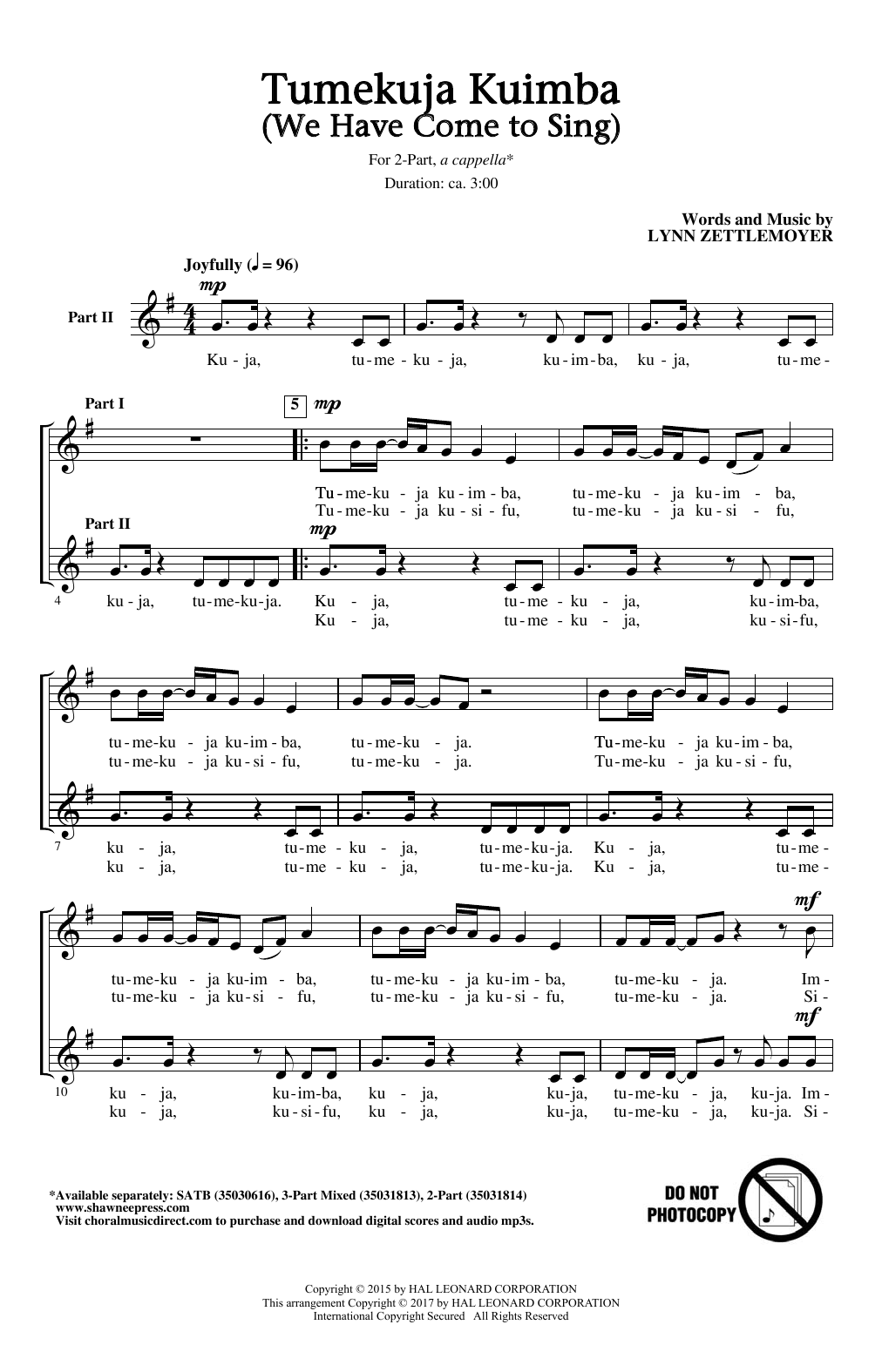
Tumekuja Kuimba (We Have Come To Sing!): 2-Part Choral Octavo

By Lynn Zettlemoyer

Item: 35-DS00408075

Digital Download
$2.99
Description

Tumekuja Kuimba (We Have Come To Sing!): 2-Part Choral Octavo isn't in MakeMusic Cloud just yet...but it could be. Let us know you'd like to see it, and you'll help shape what comes next. In the meantime, start a free trial and dive into thousands of interactive titles your students can play along with today.

Sample Audio
No sample audio found.
Sample Video
Additional Details
Publisher: Hal Leonard
Page Count: 6
SKU: 35-DS00408075

More about this title

Why we love this

Zettlemoyer gives you genuine African material without requiring extensive soloists or complex arranging on your part. The title itself, meaning 'We Have Come To Sing,' sets an inviting tone that feels earned by the music rather than announced. Your singers will feel the joy of participatory singing that actually belongs to the piece.

What to expect

Communal and grounded. There's an immediacy to this music that comes from its roots in participatory singing traditions. Your choir moves from observers to participants the moment the first phrase lands.

Who it's for

Middle and high school choirs seeking authentic repertoire that engages singers without overwhelming them technically. Directors building programs that center non-Western musical traditions will find a piece that respects its source rather than simplifying it into cliché.

How to get the most out of it

  • Treat the text as a living language. Spend rehearsal time on authentic pronunciation and rhythmic placement of the Swahili words; they're not decoration but essential to the piece's identity.
  • Balance clarity in the two parts against the impulse to blend everything smoothly. These lines often have distinct characters, and letting them breathe separately will strengthen the overall texture.
  • Explore the dynamic range within phrases rather than applying uniform volume across each section. African call and response traditions thrive on shifting energy, not static sound.

How to use it

Program this as a gateway piece early in your concert, where it can set a warm, inclusive tone for the audience and energize your singers. It pairs naturally with other world music selections or serves as a compelling standalone moment in a more traditional program seeking cultural breadth.

Skills your students will build

  • Pronunciation and natural delivery of text in non-English languages
  • Awareness of call and response structures in music traditions beyond the Western canon
  • Independence between two choral parts with different textural and rhythmic functions
  • Singing with stylistic authenticity rather than applied technique alone

You May Also Like