Tumekuja Kuimba (We Have Come To Sing!) Sheet Music Preview

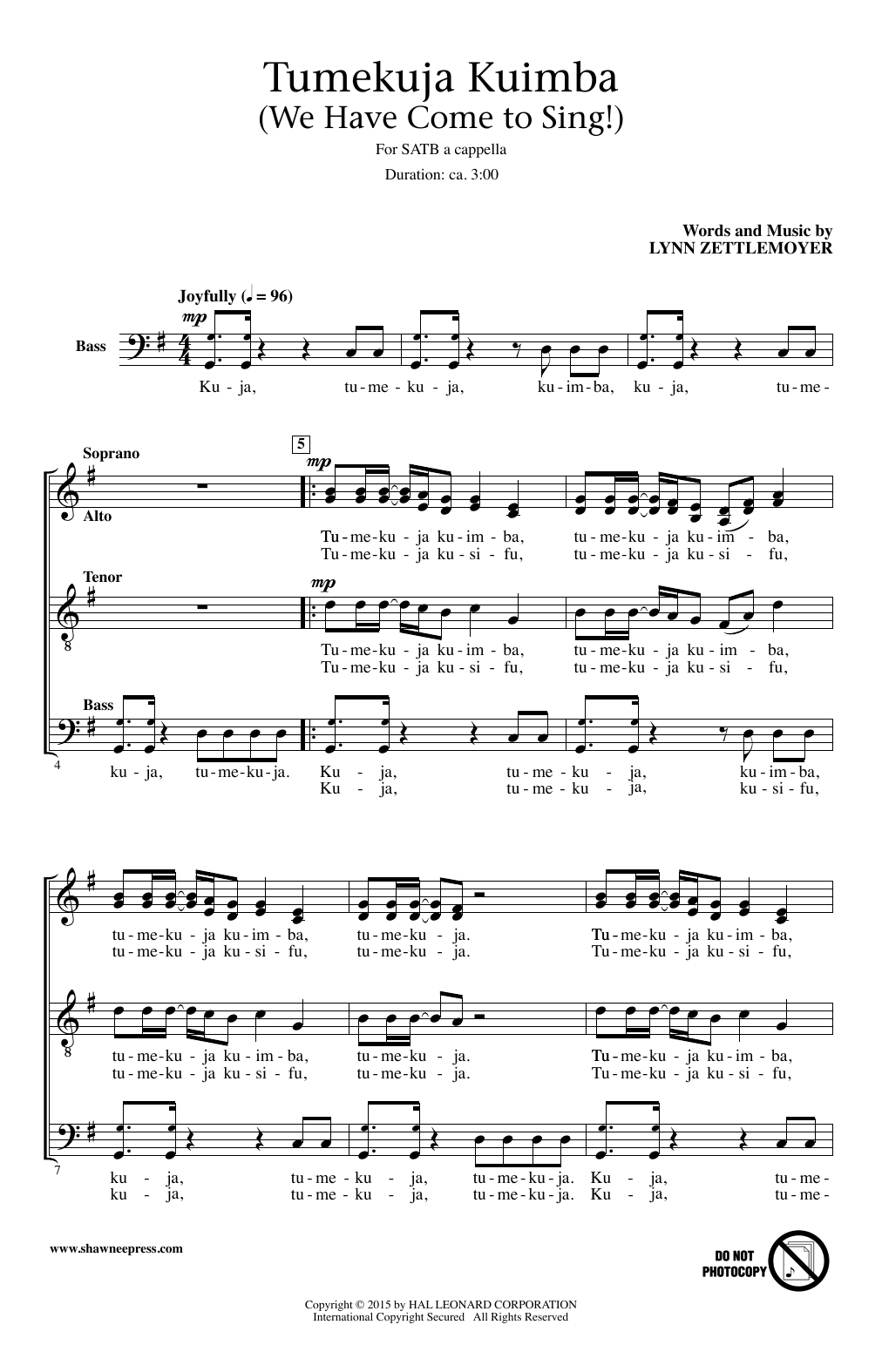
Tumekuja Kuimba (We Have Come To Sing!): SATB Choral Octavo

By Lynn Zettlemoyer

Item: 35-DS00316588

Digital Download
$2.99
Description

Tumekuja Kuimba (We Have Come To Sing!): SATB Choral Octavo isn't in MakeMusic Cloud just yet...but it could be. Let us know you'd like to see it, and you'll help shape what comes next. In the meantime, start a free trial and dive into thousands of interactive titles your students can play along with today.

Sample Audio
No sample audio found.
Sample Video
Additional Details
Publisher: Hal Leonard
Page Count: 7
SKU: 35-DS00316588

More about this title

Why we love this

Zettlemoyer captures the infectious energy and communal spirit of African musical traditions without resorting to tired stereotypes or oversimplification. The title itself becomes an invitation: "We Have Come To Sing" reminds singers that ensemble music is fundamentally about gathering and shared purpose, not perfection. The a cappella setting keeps the focus entirely on voices and text, making it an ideal choice for groups ready to celebrate unaccompanied singing.

What to expect

Bright and purposeful, with the warmth of many voices joining in common cause. The music pulses with rhythmic vitality while maintaining an intimate, congregational quality that draws listeners into the circle of singers.

Who it's for

This works for intermediate to advanced SATB choirs seeking repertoire with genuine cultural roots and forward momentum. It suits both festival competitions and concert programming where you want to program something that feels both polished and alive.

How to get the most out of it

  • Spend time establishing what "Tumekuja Kuimba" means to your singers before rehearsals begin. When singers understand they're claiming a statement of belonging and celebration, the text takes on weight that transforms how they approach phrasing and dynamics.
  • Shape the piece through rhythmic precision rather than rubato. A cappella African music traditions rely on rock-solid ensemble rhythm as the foundation; lock the pulse in early rehearsals and build expressiveness from that secure rhythmic base.
  • Balance brightness in the upper voices with grounded resonance in the lower parts. SATB voicing in this style benefits from allowing the basses and tenors to anchor the harmonic color while sopranos and altos ring out above them.

How to use it

Pair this with other world music selections to build a thematic concert exploring musical traditions beyond the Western classical canon. Its upbeat character and a cappella accessibility make it an excellent opener that energizes an audience and sets a collaborative tone for the evening.

Skills your students will build

  • Reading and performing in non-traditional rhythmic patterns common to African music
  • Balancing four-part SATB harmony without instrumental support
  • Sustaining ensemble tuning and intonation across longer phrases in a cappella singing
  • Connecting text and cultural context to interpretive choices in performance

You May Also Like