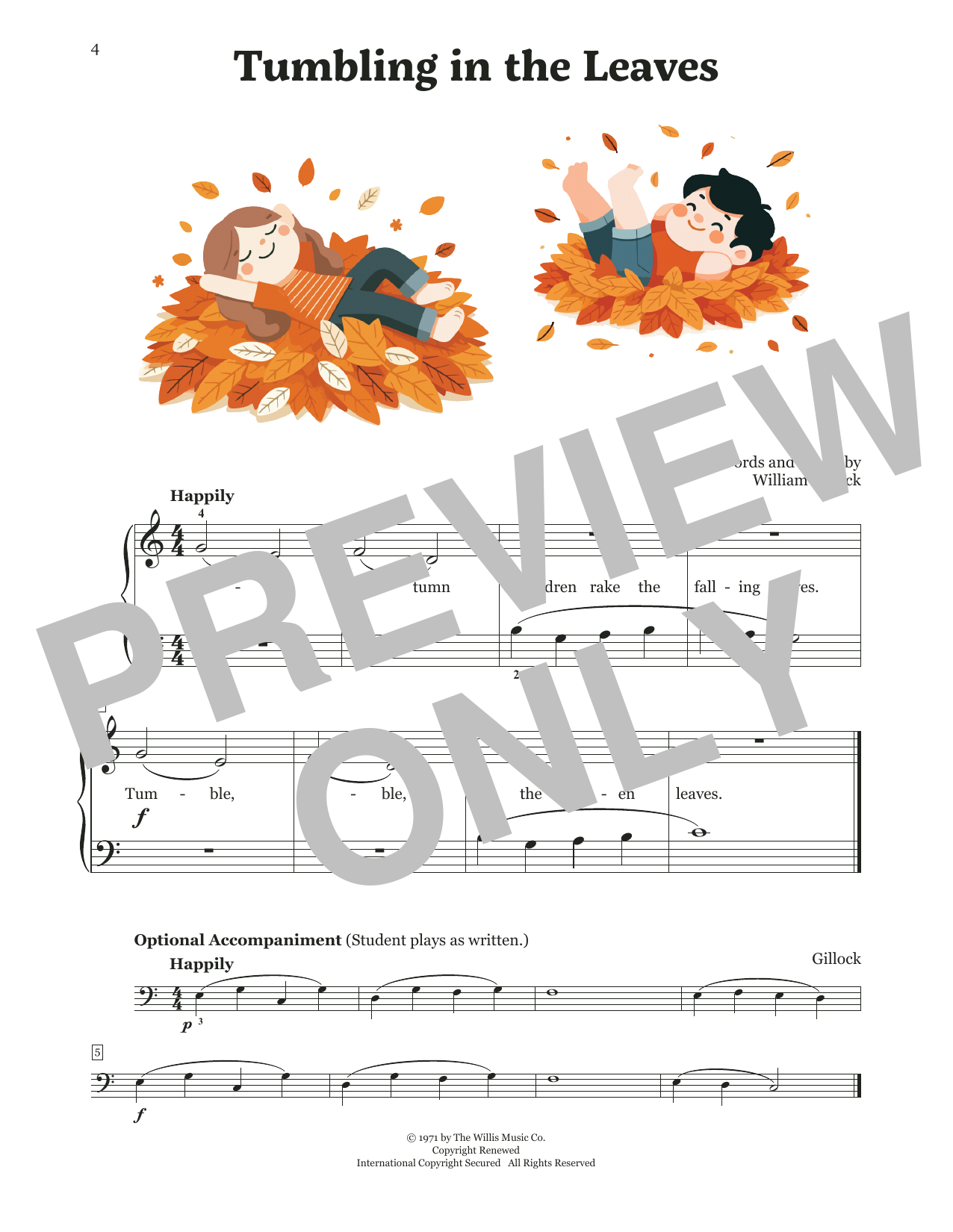
William Gillock (1917-2002) composed accessible yet musically sophisticated pieces that became standards in American music education. His output spans hundreds of works across multiple genres, but his piano compositions remain his most enduring legacy, widely adopted in studios and classrooms for their balance of technical instruction and genuine musicality.
Why we love this
Gillock writes pieces that feel like real music rather than finger exercises. This one captures the visual charm of autumn in a single page that's genuinely fun to play and listen to, making it an ideal choice when you need something seasonal that won't feel trivial to developing pianists.
What to expect
Gentle motion and natural grace characterize this piece. The musical imagery of leaves tumbling carries throughout without becoming overwrought; instead, it suggests movement with lightness and occasional shifts of direction, creating an intimate rather than bombastic autumnal mood.
Who it's for
Intermediate elementary pianists who have developed basic hand independence and can sustain melodic phrases. Teachers seeking a short, complete piece that teaches musicality without requiring extensive technical prerequisites.
How to get the most out of it
Shape the melodic phrases with slight rubato; let the hand fall naturally into the rhythm rather than keeping it mechanically strict
Differentiate the accompaniment from the melody by keeping the left hand lighter and more uniform in touch, allowing the right hand to sing
Explore the piece's harmonic colors by listening carefully to chord quality changes; this awareness will deepen the musical interpretation
When repeating sections, find subtle variations in dynamic shading or articulation to keep the ear engaged
How to use it
Include this in a fall recital or studio showcase where seasonal programming makes sense without requiring thematic unity across the entire concert. Its brevity also makes it valuable as an opening piece that establishes an inviting tone before longer works.
Skills your students will build
Phrasing across small musical units with attention to gesture and direction
Balance between melody and accompaniment
Harmonic awareness through listening to chord color
Rubato and expressive timing in a tonal context
Quick musical recall and confident performance of a complete work
You May Also Like
Scan to Complete Your Purchase
Use your phone's camera to scan the code below
You'll log in on your phone and the order will be added to your account