Tudor Sketches Cover Image

Tudor Sketches: Concert Band Conductor Score

$19.00 USD
Sale price  $19.00 USD Regular price 
Skip to product information
Tudor Sketches Cover Image

Tudor Sketches: Concert Band Conductor Score

By William Owens

Grade: 3

Item: 98-B1544S

$19.00
Shipped

One moment…

Description
This magnificent three-movement work pays homage to the House of Tudor, a European royal house that ruled England and Ireland in the 16th century. A blithely woodwind anthem and a rollicking dance heralds in Hampton Court, a principal residence of King Henry VIII. Good Queen Bess, the regal second movement, depicts the court of Queen Elizabeth I. The intrepid Hunting at Chobham portrays an aggressive game of chase in the vast 500 acre hunting park held by the Tudors for nearly 70 years. Fantastic writing!

Tudor Sketches: Concert Band Conductor Score isn't in MakeMusic Cloud just yet...but it could be. Let us know you'd like to see it, and you'll help shape what comes next. In the meantime, start a free trial and dive into thousands of interactive titles your students can play along with today.

Sample Pages

Sample Audio
No sample audio found.
Sample Video
Additional Details
Series: FJH Concert Band
Publisher: The FJH Music Company, Inc.
UPC: 241444504390
SKU: 98-B1544S

More about this title

About the Composer: William Owens
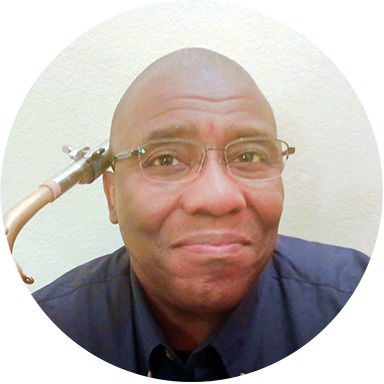
William Owens

William Owens was born in Gary, Indiana in 1963 and has spent his career bridging the gap between accessible writing and musical substance. A VanderCook College of Music graduate, he spent three decades as a band director in Texas before retiring in 2014, giving him deep classroom experience that shapes every measure he writes. His catalog now exceeds 300 published works for concert band, string orchestra, and chamber ensembles, many of which appear on state contest lists and in music education curricula across North America.

Owens holds professional membership in ASCAP, TMEA, and Phi Beta Mu International Bandmasters Fraternity, and has received commissions from institutions including South Plains College and the American Bandmasters Association. His compositional approach balances practical pedagogical concerns with genuine artistic vision, a combination that has earned him recognition as a Distinguished Alumnus of VanderCook and the Texas Bandmasters Association's Meritorious Achievement Award.

Why we love this

Owens understands what Grade 3 bands actually need: music that sounds sophisticated and programmatic without requiring virtuosity beyond the players' current abilities. Tudor Sketches wraps three distinct movements in a historical narrative that engages student musicians intellectually while keeping the technical demands reasonable. The woodwind writing, dance rhythms, and dramatic hunt sequence give every section meaningful material to perform, making this a program piece that rehearses well and impresses audiences.

What to expect

Tudor Sketches unfolds like a guided tour through Tudor court life. The opening movement sparkles with courtly wit and woodwind energy; the second movement invites you into ceremonial grandeur; the finale crackles with the thrill of a royal hunt across open countryside. Owens captures the historical period without pastiche, creating music that feels period-aware rather than period-trapped.

Who it's for

Grade 3 concert bands seeking a multi-movement work with genuine historical substance and distinct musical personalities in each section. Programs looking for contest or festival material that combines accessibility with programmatic appeal will find this a strong choice. Directors who want students engaged with a narrative arc will appreciate how Owens integrates story and music seamlessly.

How to get the most out of it

  • Establish the character of each movement clearly in early rehearsals. Hampton Court should feel bright and spirited; Good Queen Bess requires a stately, sustained quality; Hunting at Chobham demands driven rhythmic energy.
  • Balance the woodwind textures in the opening movement. Owens layers woodwind voices thickly, so ensure clarinet and flute lines emerge distinctly without overwhelming the lower winds.
  • Shape the Tudor-era harmonic language intentionally. These are not chromatic passages; the modal and traditional harmonic structures benefit from clarity in phrase direction and line projection.
  • Secure rhythmic precision in the hunt movement. The aggressive character depends on crisp, confident articulation across all sections rather than forced volume.

How to use it

This three-movement suite works beautifully as a centerpiece for a concert with a historical or British music theme. It pairs naturally with other Grade 3 programmatic works or as a mid-concert feature between lighter opener and dramatic closer. Many directors program it for spring festivals and contests where its blend of accessibility, character, and technical soundness earns strong adjudications.

Skills your students will build

  • Sustaining lyrical melodic lines across phrase boundaries
  • Articulation clarity in woodwind-dominated textures
  • Rhythmic precision in dance-based meters and syncopated passages
  • Dynamic shaping and phrasing that serves a programmatic narrative
  • Ensemble balance when multiple woodwind lines interact simultaneously

You May Also Like