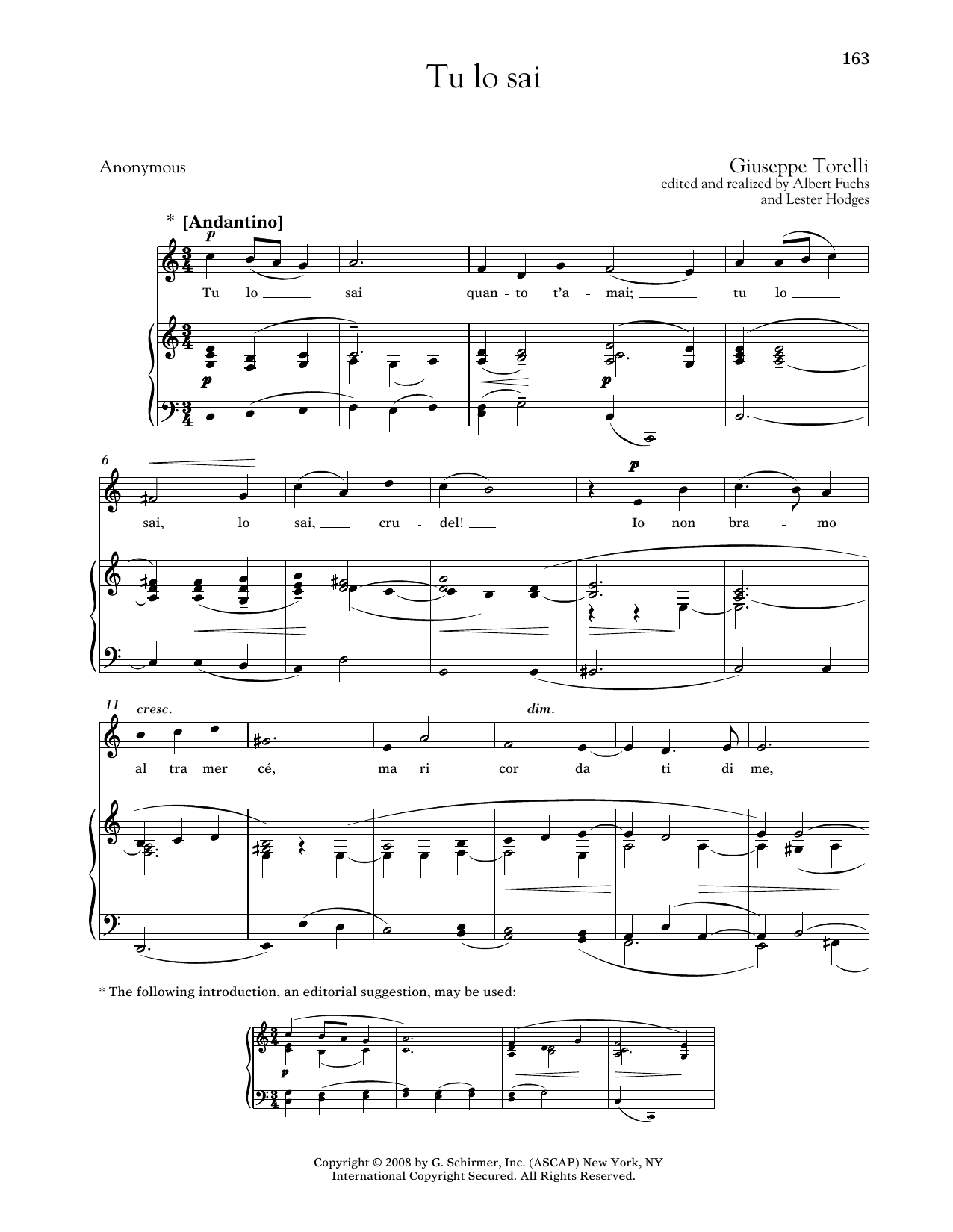
Tu Lo Sai (Medium Low Voice) Sheet Music Preview

Tu Lo Sai (Medium Low Voice): Piano Vocal

Edited by Lester Hodges (ed.) / Edited by Albert Fuchs (ed.)

Item: 35-DS01579705

Digital Download
$5.99
Description

Tu Lo Sai (Medium Low Voice): Piano Vocal isn't in MakeMusic Cloud just yet...but it could be. Let us know you'd like to see it, and you'll help shape what comes next. In the meantime, start a free trial and dive into thousands of interactive titles your students can play along with today.

Sample Audio
No sample audio found.
Sample Video
Additional Details
Publisher: Hal Leonard
Page Count: 3
SKU: 35-DS01579705

More about this title

Why we love this

This intimate song sits perfectly in the medium-low voice range without requiring excessive transposition, making it accessible for mature singers who might otherwise struggle with high-lying soprano material. The piano writing is sophisticated enough to engage accompanists while remaining manageable for collaborative rehearsals.

What to expect

A tender, introspective moment that invites close listening. The song unfolds with classical restraint, allowing the poetry to emerge through clean melodic writing rather than orchestral sweep.

Who it's for

This edition serves medium-low voice singers preparing classical vocal repertoire for recitals, competitions, or formal concert programs. It also suits voice studios seeking authentic Italian song material that doesn't require constant transposition.

How to get the most out of it

  • Shape the melodic line with attention to how the text naturally breathes; Italian vocal music rewards singers who follow the language's inherent phrasing rather than imposing artificial divisions.
  • Balance the voice against the piano carefully in rehearsal. The accompaniment deserves clarity but should never overshadow the singer's connection to the text.
  • Explore the harmonic underpinning at the keyboard. Understanding the chord progression helps singers commit confidently to their line and gives the pianist interpretive options.

How to use it

Consider pairing this with other Italian vocal works to create a focused recital segment, or place it as a quieter moment between more dramatic pieces to showcase textural variety and the singer's lyrical control.

Skills your students will build

  • Sustained vocal tone production at a lower tessitura
  • Musical phrasing in Italian
  • Collaborative listening between voice and piano
  • Interpretation of classical vocal accompaniment patterns

You May Also Like