
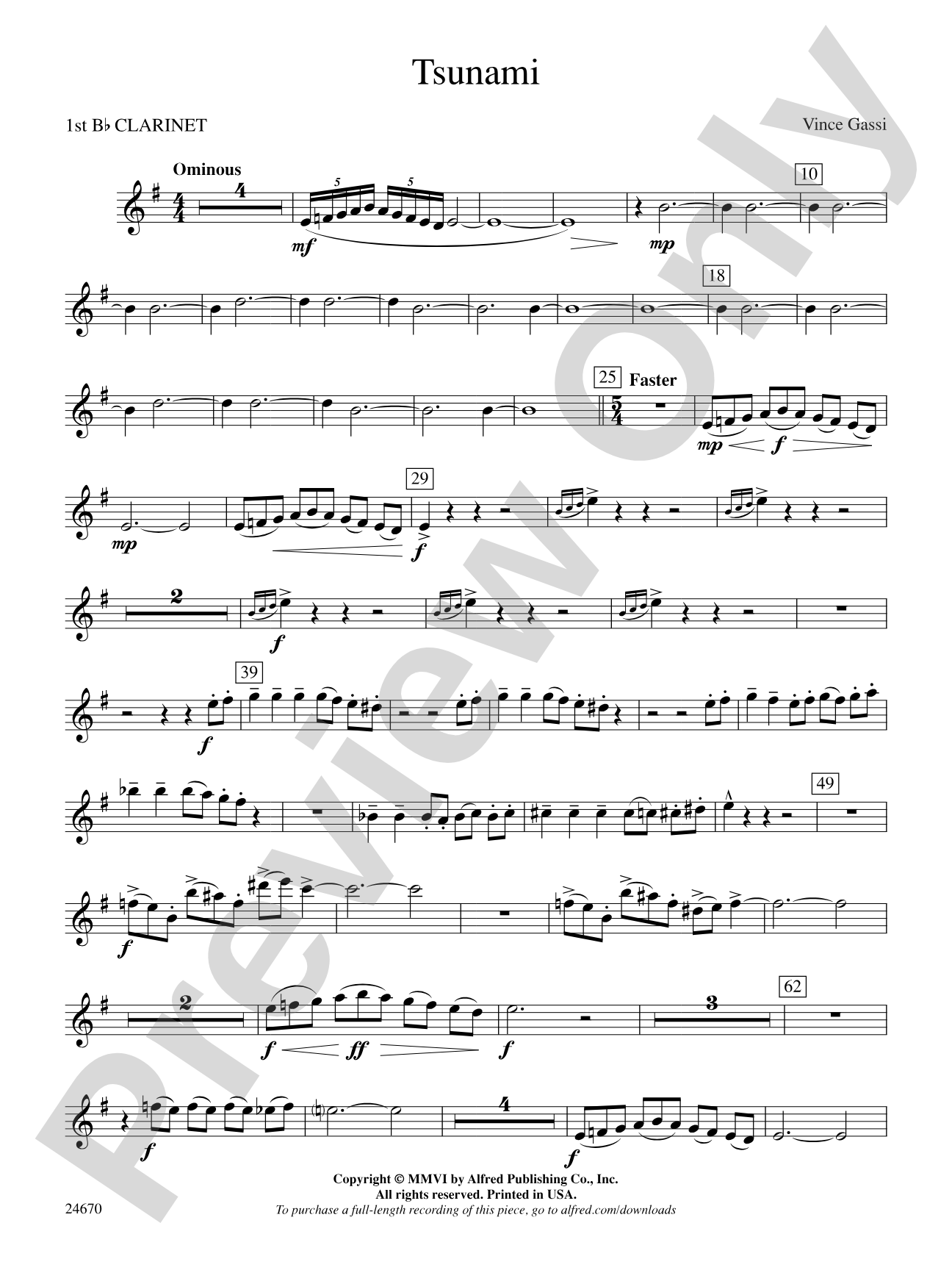

Tsunami: 1st B-flat Clarinet
By Vince Gassi
Grade: 4 (Medium Difficult)
Item: 00-PC-0000838_C1
$3.00
Pickup currently not available
Description
In 1,500 B.C. the volcano of Santorin, an island to the north of Crete, exploded with unprecedented violence sending millions of tons of volcanic ash into the atmosphere, producing intense atmospheric shock waves, and creating disastrous tsunamis. It is now believed that this caused the extinction of the great Minoan civilization. This piece was written in the spring of 2004, prior to the more recent tsunami in December of that year, and is dedicated to the memory of all who were affected by that disaster. This title is available in MakeMusic Cloud.


Don't just read it, hear it, play along with it, and watch your students grow with it. In MakeMusic Cloud, Tsunami: 1st B-flat Clarinet comes alive with professional accompaniment, adjustable tempo, and built-in practice tools that turn solo practice into real progress.
Open in the Player
Jump straight in and assign it today.
Start Your Free Trial
Open this title and explore the full library in minutes.
Sample Audio
1
Audio File
--:--
0:00
0:00
Sample Video
No sample videos found.
Additional Details
Series:
Alfred Concert Band
Publisher:
Alfred Music
Page Count:
300
SKU:
00-PC-0000838_C1
More about this title
About the Composer: Vince Gassi
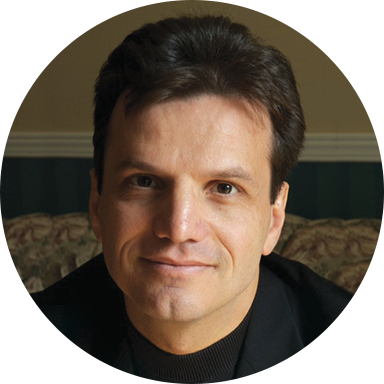
Vince Gassi has been composing for Alfred Music since 2006, building a catalog of more than 100 published works that consistently appear on contest and festival programs across North America, Europe, and Japan. His reputation rests on balancing musical substance with accessibility; his scores challenge young musicians without sacrificing the joy of performance.
Gassi's background spans performance, pedagogy, and formal training. He earned his Bachelor of Music from the University of Western Ontario, studied composition and arranging at the Dick Grove School of Music in Los Angeles, and completed his Ph.D. at York University in Toronto. For twenty-five years he taught instrumental music at elementary and secondary levels and remains a sought-after guest conductor, adjudicator, and clinician. His seminars on creative engagement and digital workflows for music directors reflect his commitment to helping educators and students grow beyond the printed page.
Why we love this
Gassi captures something genuinely dramatic here without resorting to cheap effects. The programmatic arc unfolds with real orchestral sophistication, giving your band the chance to shape a narrative arc that feels earned rather than imposed. Contest adjudicators recognize this as serious writing, but students respond to it because the musical storytelling is immediate and visceral.
What to expect
Tsunami unfolds like a documentary in sound. It begins with atmospheric tension, builds through mounting pressure and chaos, and resolves with a kind of somber acceptance. The orchestration shifts between moments of brooding quiet and overwhelming force, creating a sense of witnessing something vast and terrible.
Who it's for
Concert bands at the intermediate to early advanced level (Grade 4) who are ready for programmatic, emotionally substantial writing. Gassi's scoring provides clear parts for developing musicians while demanding real musical maturity in interpretation and ensemble balance.
How to get the most out of it
- Map the historical narrative with your students before rehearsal. Understanding the volcanic catastrophe and tsunami sequence gives players interpretive context for the dynamic and harmonic shifts Gassi uses to depict each stage.
- Balance the exposed moments carefully. Grade 4 writing often asks multiple sections to carry thematic material simultaneously; isolate those passages and ensure each voice can be heard without sacrificing blend.
- Shape the climactic passages with deliberate control of tempo and dynamics rather than relying on raw volume. The shock wave and disaster imagery demand precision in articulation and release, not just intensity.
- Experiment with the recorded accompaniment to internalize Gassi's intended orchestration and pacing, then set it aside and find the band's own voice in the final polished version.
How to use it
This works powerfully as a standalone dramatic work on a festival or contest program, or as the centerpiece of a thematic concert exploring natural disasters, historical events, or human resilience. Its 1500 B.C. setting pairs well with classical or ancient-inspired repertoire, or conversely as the emotional anchor in a program of more lighthearted works.
Skills your students will build
- Reading and executing dynamic contrasts from pppp to ff across extended phrases
- Balancing multiple simultaneous melodic lines in a complex harmonic context
- Shaping programmatic narrative through tempo, articulation, and ensemble control
- Responding to conductor interpretation and refinement of dramatic timing
- Sustaining focus and control during extended climactic passages