Try A Little Tenderness Sheet Music Preview

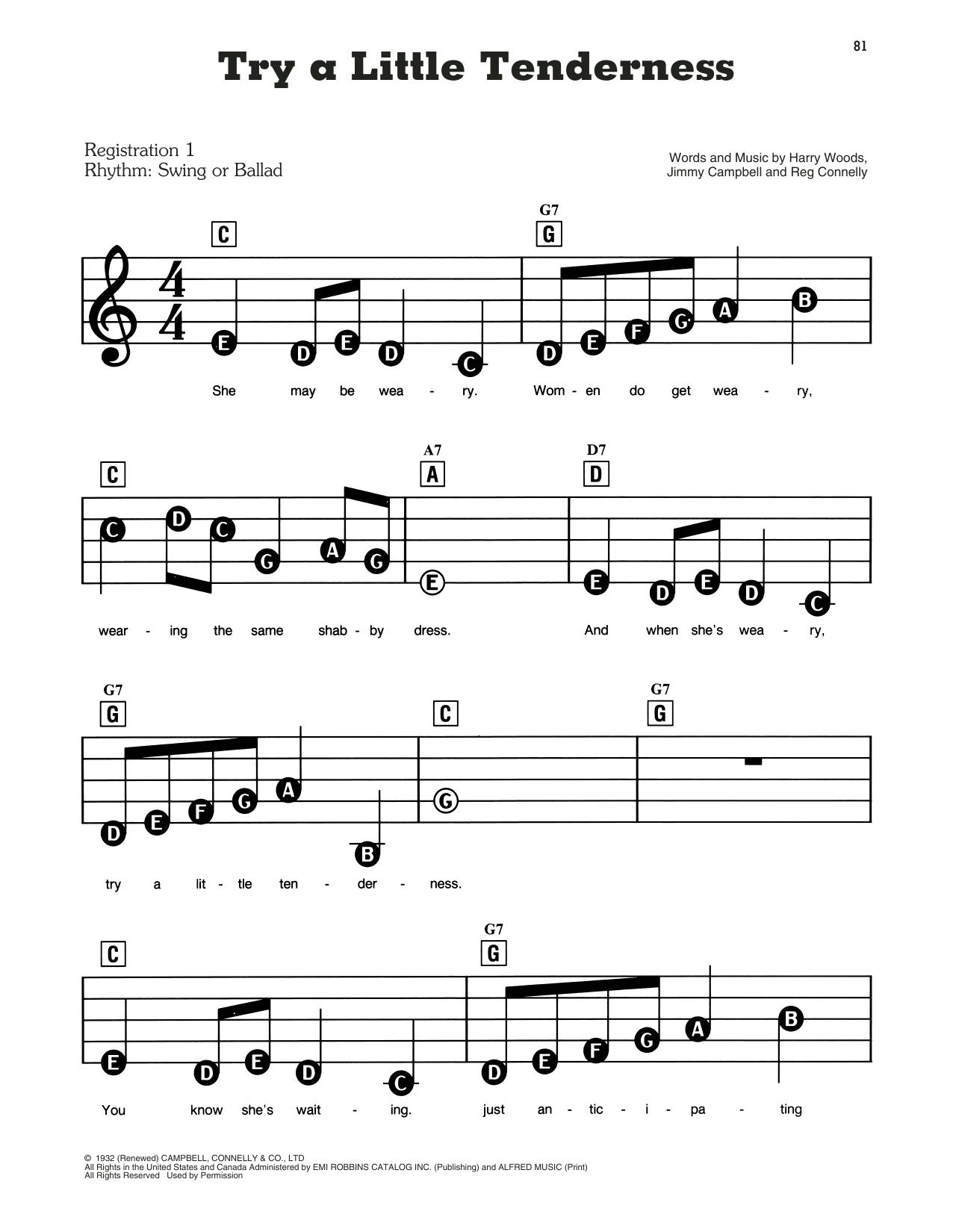
Try A Little Tenderness: E-Z Play Today

As performed by Frank Sinatra / As performed by Otis Redding

Item: 35-DS00454986

Digital Download
$4.99
Description

Try A Little Tenderness: E-Z Play Today isn't in MakeMusic Cloud just yet...but it could be. Let us know you'd like to see it, and you'll help shape what comes next. In the meantime, start a free trial and dive into thousands of interactive titles your students can play along with today.

Sample Audio
No sample audio found.
Sample Video
Additional Details
Publisher: Hal Leonard
Page Count: 3
SKU: 35-DS00454986

More about this title

About the Artist: Frank Sinatra

Frank Sinatra shaped American popular music across seven decades, moving seamlessly between jazz, swing, and pop standards. His influence on phrasing, breath control, and emotional storytelling fundamentally changed how singers approach the American songbook, making his interpretations essential reference points for any musician studying vocal jazz or popular song.

Why we love this

This arrangement captures one of the most recorded standards in jazz history, giving pianists direct access to a song that bridges jazz sophistication and pop accessibility. The three-page length makes it manageable for intermediate players while preserving the harmonic depth that makes the tune endure across generations of artists.

What to expect

Intimate and unhurried, with a warmth that invites both tenderness and vulnerability. The harmonic movement supports sustained, connected playing that rewards control and musical maturity.

Who it's for

Piano students comfortable with jazz chord voicings and pop standards will find this a natural next step in their repertoire. This works equally well for pianists accompanying singers or performing solo.

How to get the most out of it

  • Lean into the rubato; this standard rewards singers and players who stretch phrases for emotional weight rather than strict metronomic precision.
  • Balance the melody's simplicity with harmonic richness in the accompaniment. The left hand carries much of the song's sophistication.
  • Study both the Sinatra and Redding versions if possible. They offer radically different approaches to tempo, dynamics, and emotional color that inspire different interpretive choices.

How to use it

Include this in a jazz standards showcase, a pop music concert, or a cabaret-style recital. It pairs naturally with other classic American songs and offers a refreshing alternative to more frequently programmed material.

Skills your students will build

  • Jazz chord voicing and substitution
  • Rubato and expressive phrasing in accompaniment
  • Balance between melody and harmonic accompaniment
  • Reading and interpreting chord symbols with musical sensitivity

You May Also Like