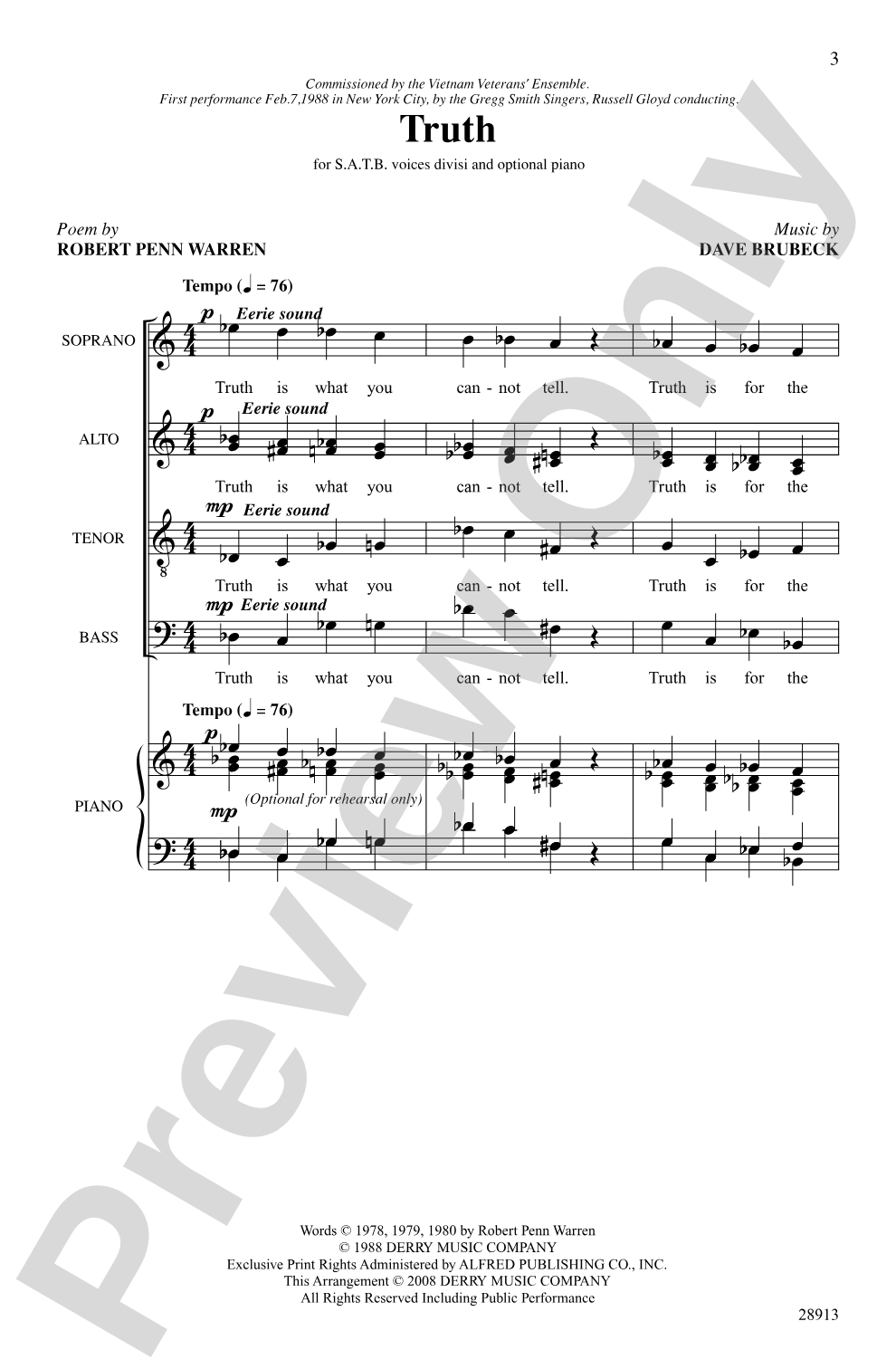
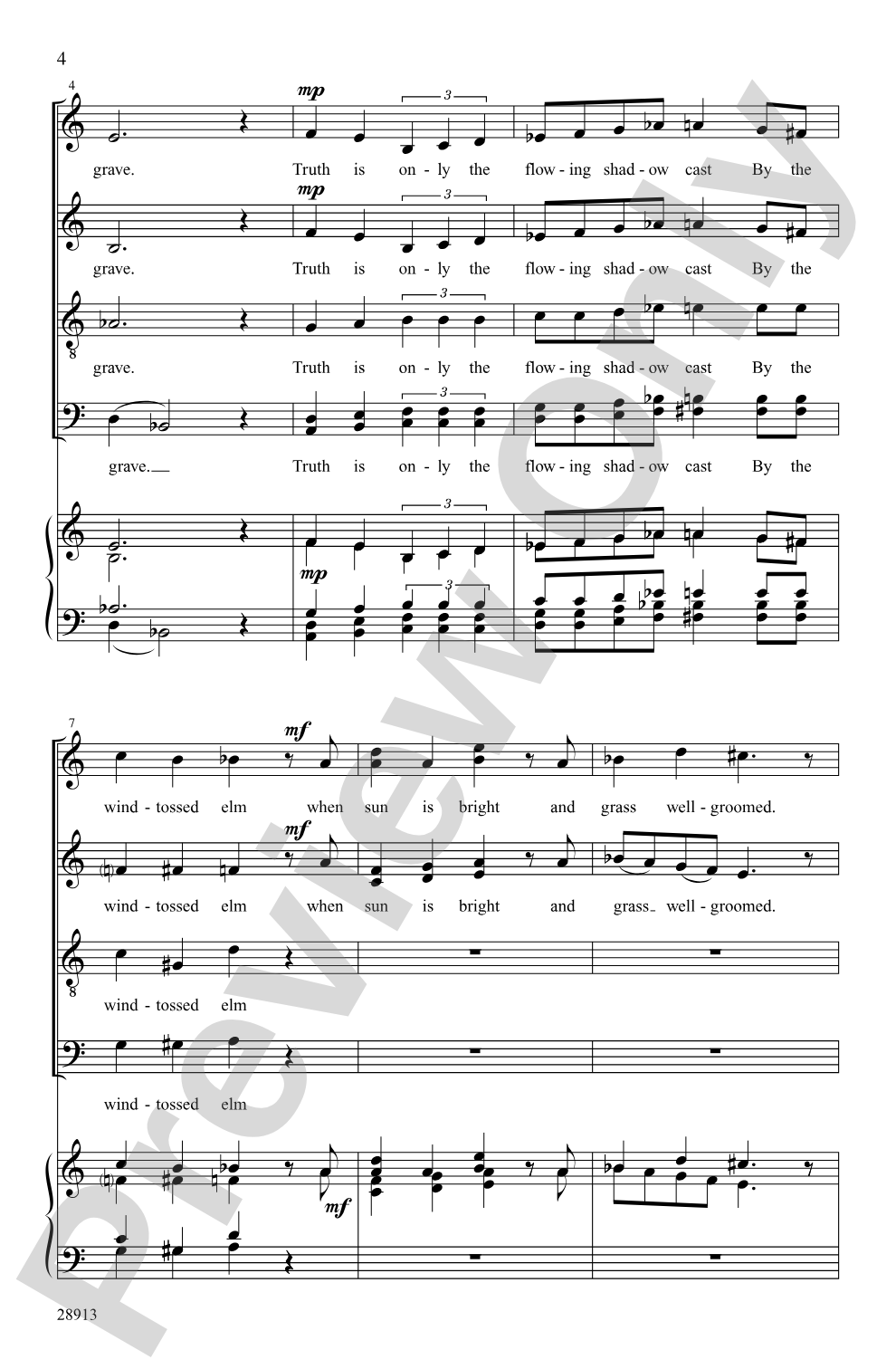
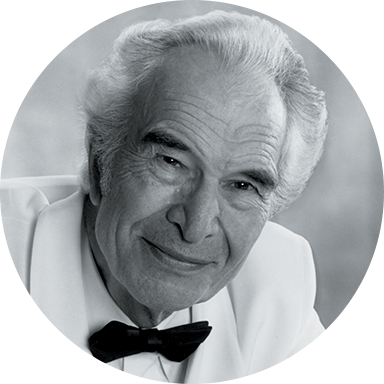
Truth Sheet Music Preview

Truth: SATB Choral Octavo

By Dave Brubeck

Item: 00-PO-0004388

Digital Download
$2.25

Minimum order quantity: 20 copies

Description

Truth: SATB Choral Octavo isn't in MakeMusic Cloud just yet...but it could be. Let us know you'd like to see it, and you'll help shape what comes next. In the meantime, start a free trial and dive into thousands of interactive titles your students can play along with today.

Sample Audio
No sample audio found.
Sample Video
Additional Details
Series: Lawson-Gould: The Dave Brubeck Series
Publisher: Alfred Music
Page Count: 12
SKU: 00-PO-0004388

More about this title

About the Composer: Dave Brubeck

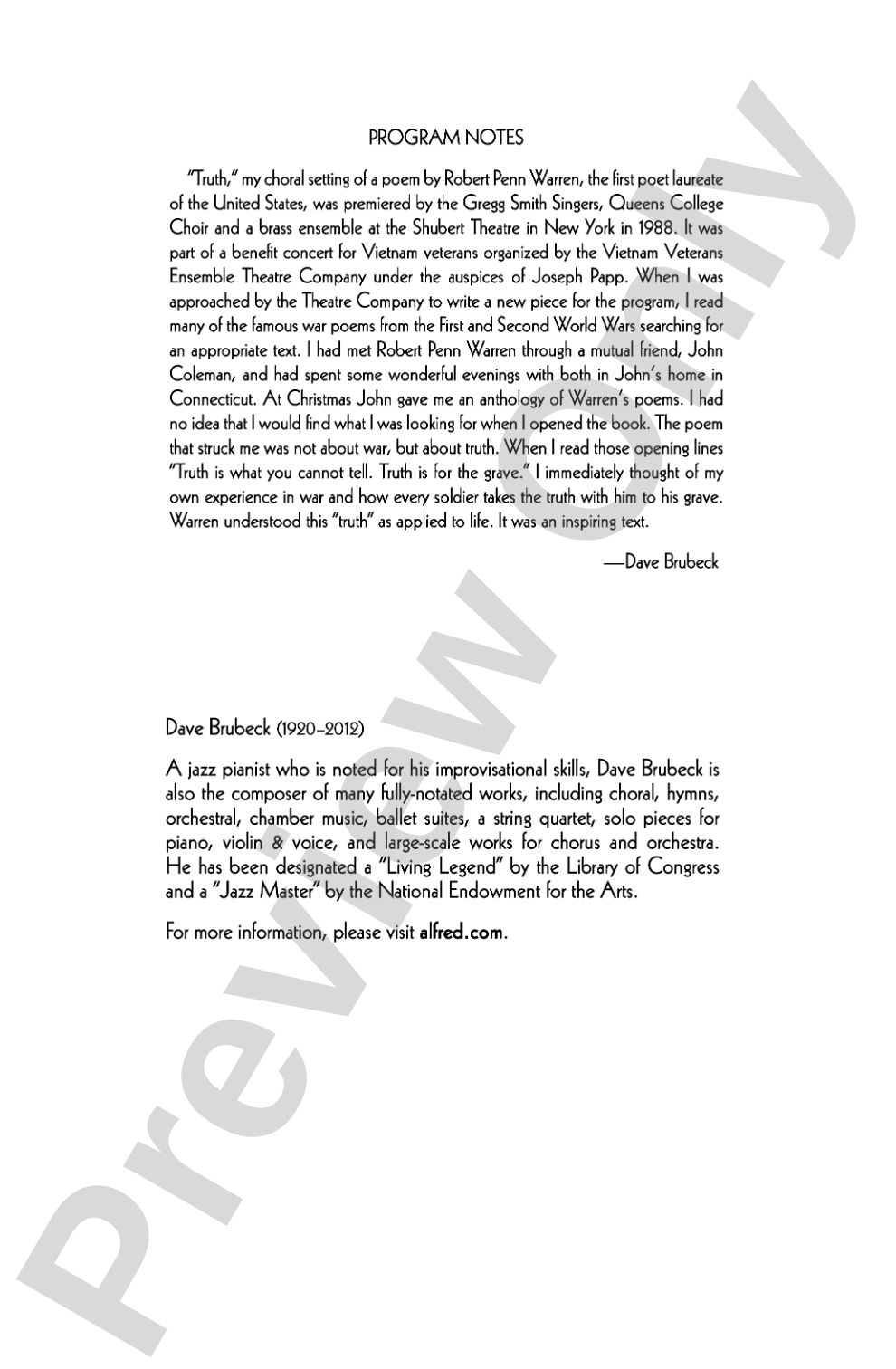
Dave Brubeck

Dave Brubeck earned international recognition as a jazz pianist whose improvisational command and compositional vision shaped modern jazz. Beyond his groundbreaking work in jazz—including the landmark album "Time Out" and the canonical piece "Take Five"—he composed extensively across genres: sacred choral works, orchestral pieces, chamber music, ballets, and large-scale works for chorus and orchestra. His studies with French composer Darius Milhaud at Mills College after World War II profoundly influenced his approach, encouraging him to synthesize jazz vocabulary with classical forms.

Brubeck's major choral works, including the mass "To Hope!," the oratorios "The Voice of the Holy Spirit" and "Beloved Son," and variations on "Pange Lingua," have been performed and recorded by prestigious ensembles worldwide. He was elected to the American Classical Music Hall of Fame in 2003 and received the Presidential Medal of the Arts from President Clinton, a Grammy Lifetime Achievement Award, and a lifetime achievement award from the London Symphony Orchestra in 2007. Beyond his artistic contributions, Brubeck was a pioneering force in breaking racial barriers in mid-20th-century American music.

Why we love this

This piece brings Brubeck's sophisticated harmonic language and jazz-inflected sensibility into the choral rehearsal room. The writing respects the acoustic beauty of SATB voicing while maintaining the intellectual rigor and accessibility that characterizes his larger sacred works, making it rewarding for both singers and audiences.

What to expect

The piece carries both spiritual weight and intellectual engagement, unfolding with the graceful logic of Brubeck's compositional voice. There is an intimacy here—the kind that emerges when a master musician distills deep conviction into clear, singable lines.

Who it's for

Choirs with solid sight-reading skills and experience with contemporary harmonic language will connect with this work. It serves excellent for choirs performing sacred repertoire that reaches beyond traditional hymn settings while remaining accessible and meaningful.

How to get the most out of it

  • Approach the harmonic language with clarity; Brubeck's jazz-informed chord progressions need clean voice leading and attention to balance so each line remains audible
  • Mark the text rhythms carefully in early rehearsals, as Brubeck's setting may use asymmetrical or syncopated rhythmic groupings that differ from hymn-style patterns
  • Conduct with attention to the overall arc rather than measure-by-measure; let the piece breathe and find its natural phrasing through the text and harmonic motion

How to use it

Pair this with other sacred works from your season to showcase the breadth of 20th-century choral composition. Its moderate length and formal clarity make it suitable for a concert centerpiece or a meaningful addition to a service of worship.

Skills your students will build

  • Reading and performing contemporary harmonic language (jazz-inflected chords and progressions)
  • Balancing complex voice leading while maintaining textual clarity
  • Interpreting the spiritual content of text through precise intonation and phrasing
  • Understanding how jazz compositional techniques apply to choral writing

You May Also Like