
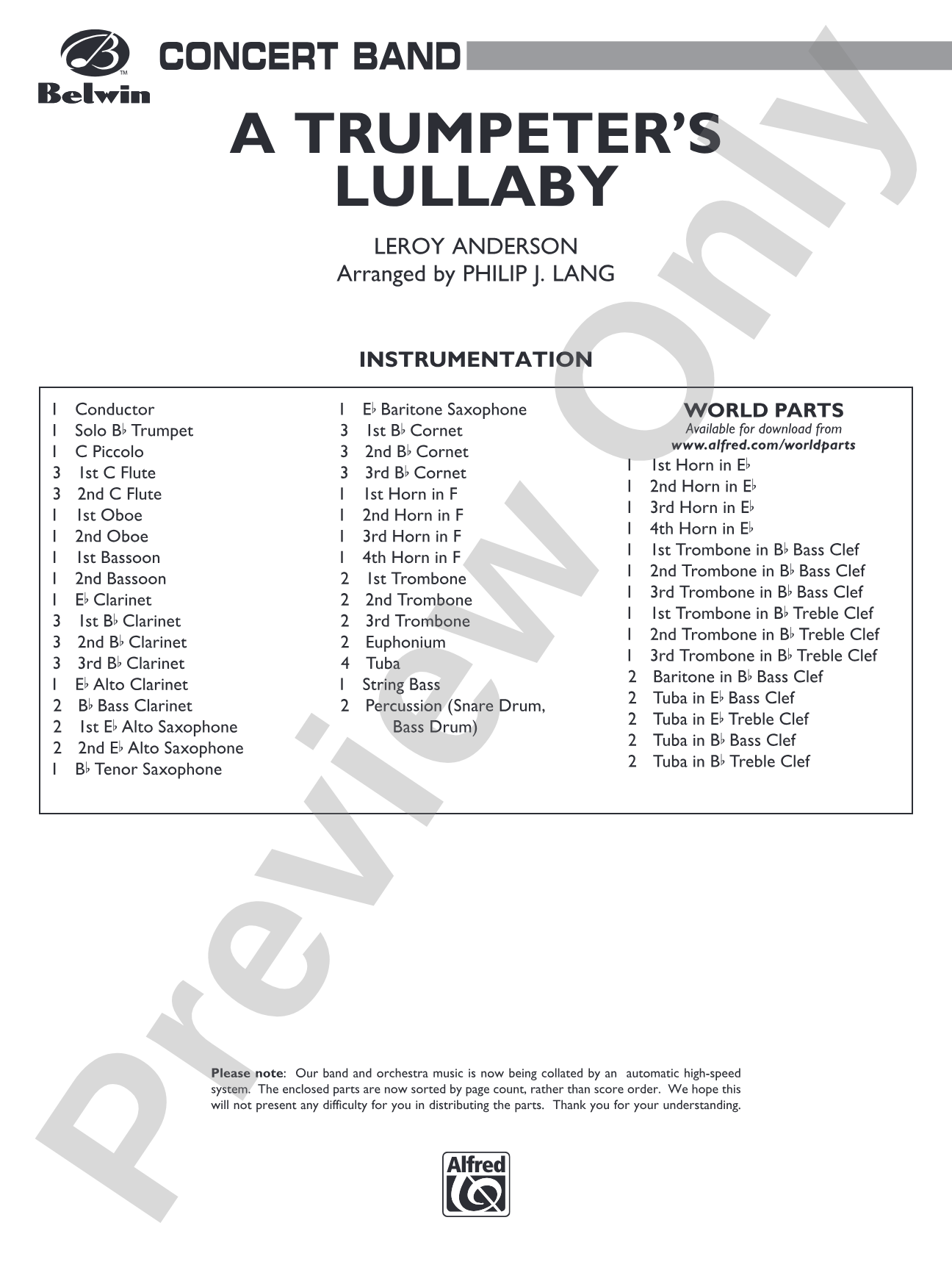

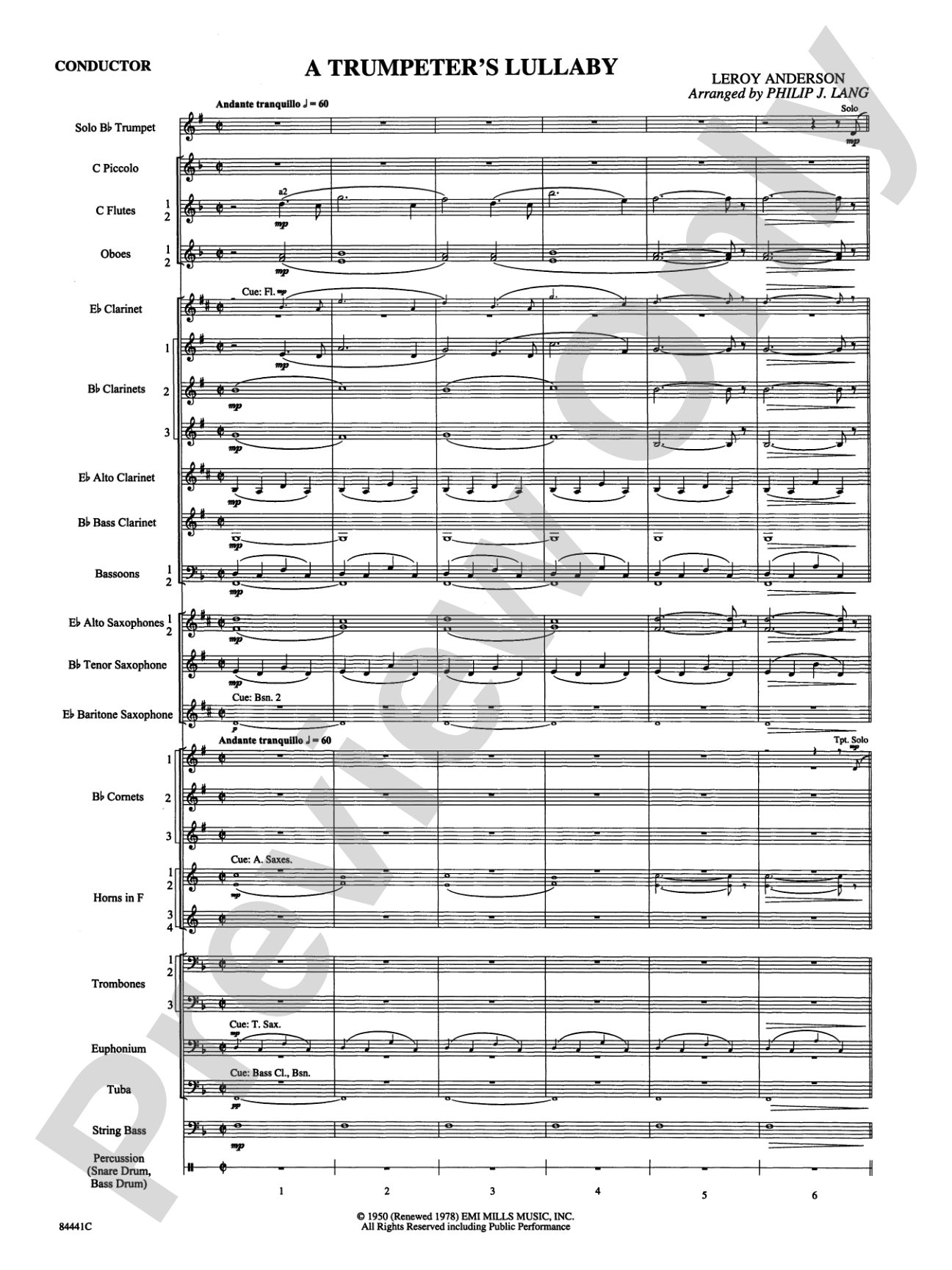
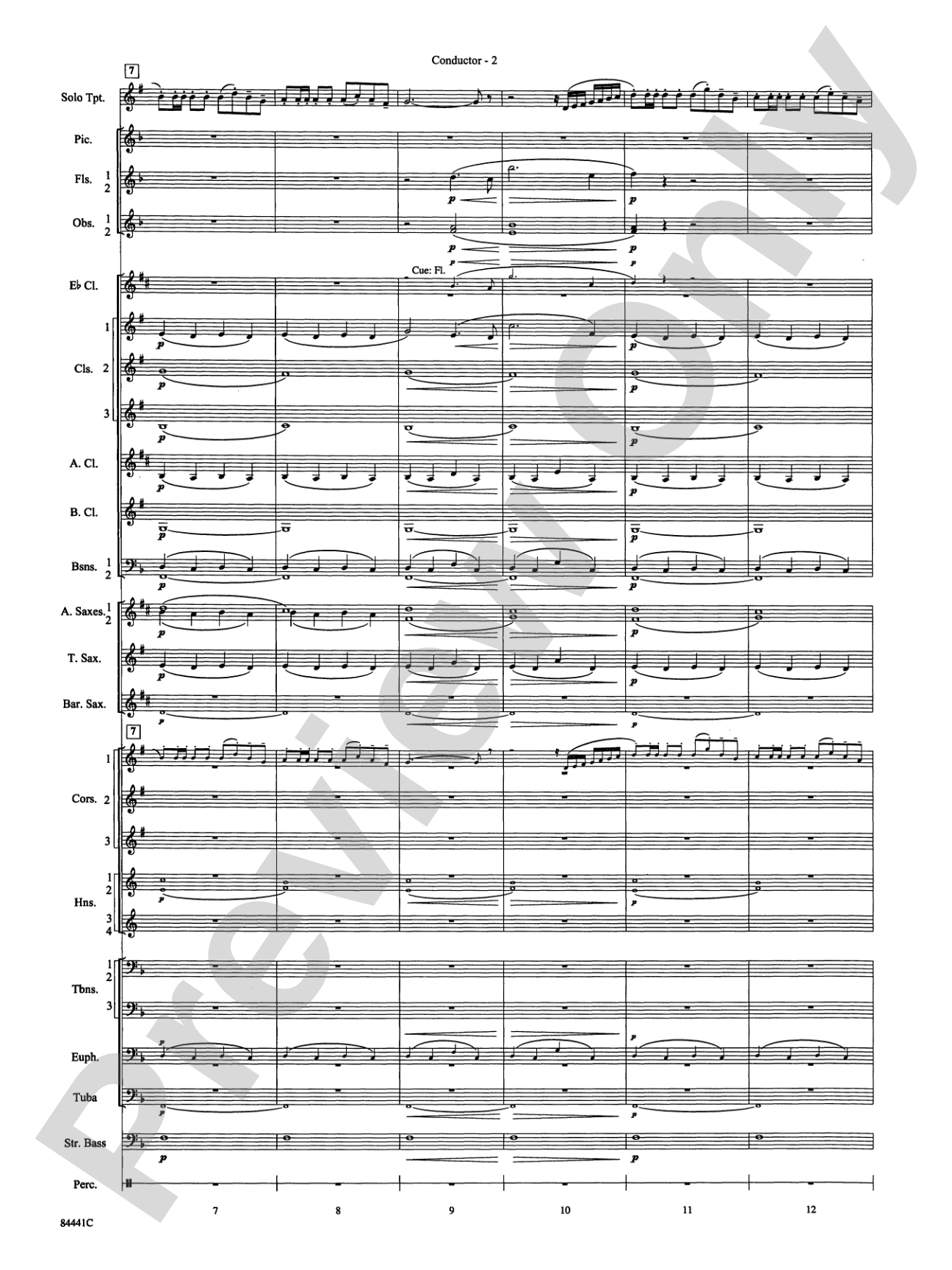
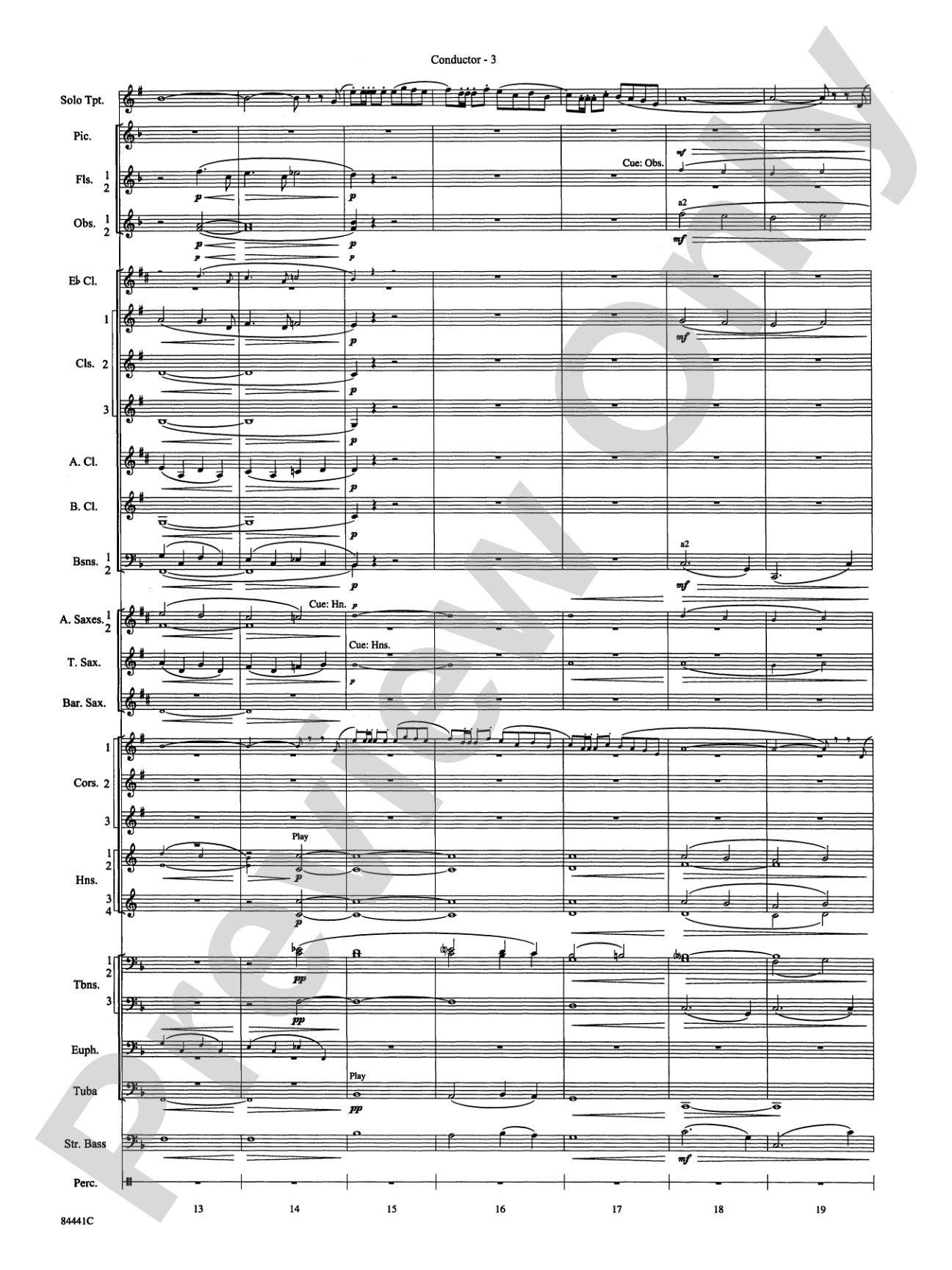
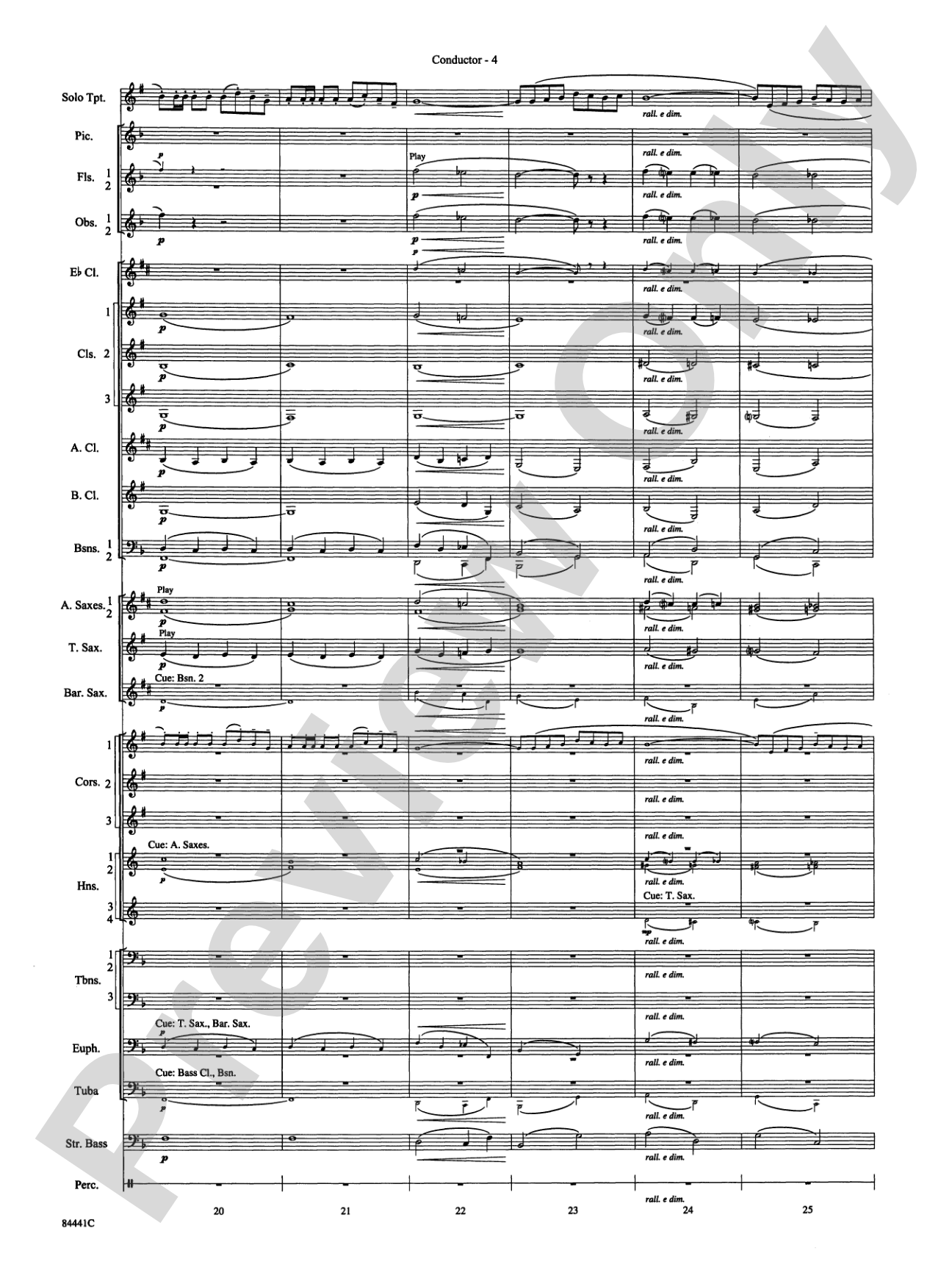
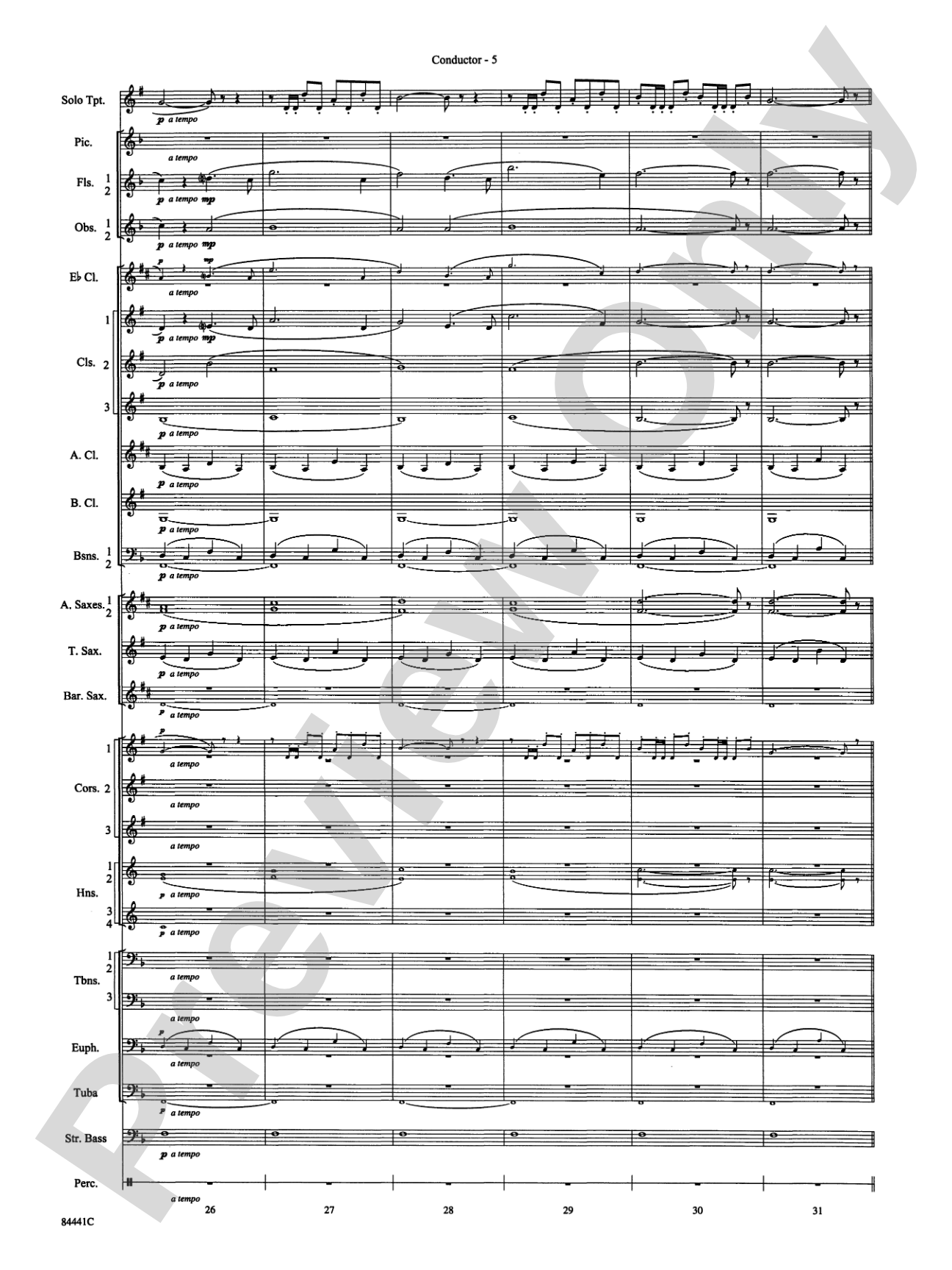
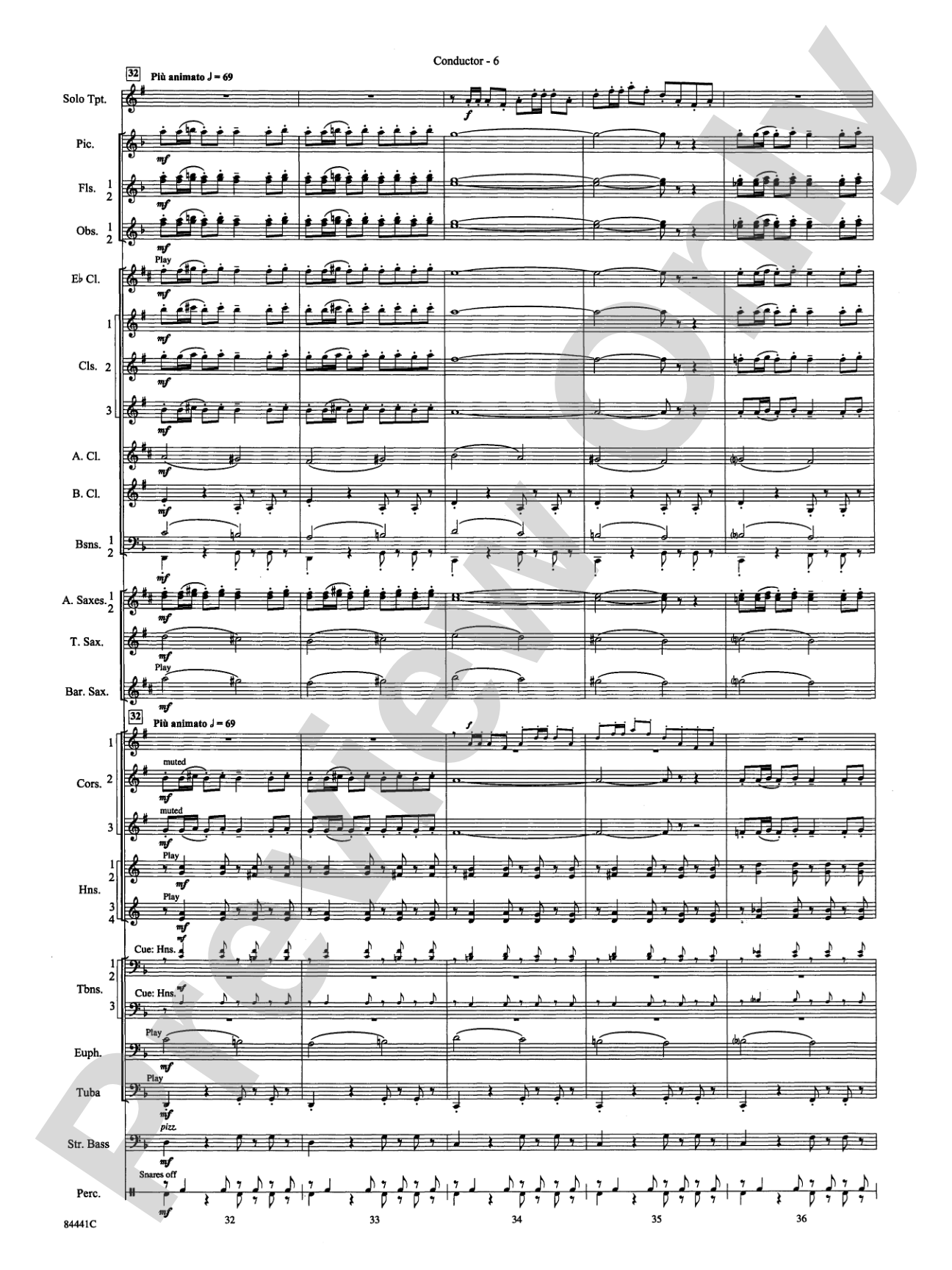
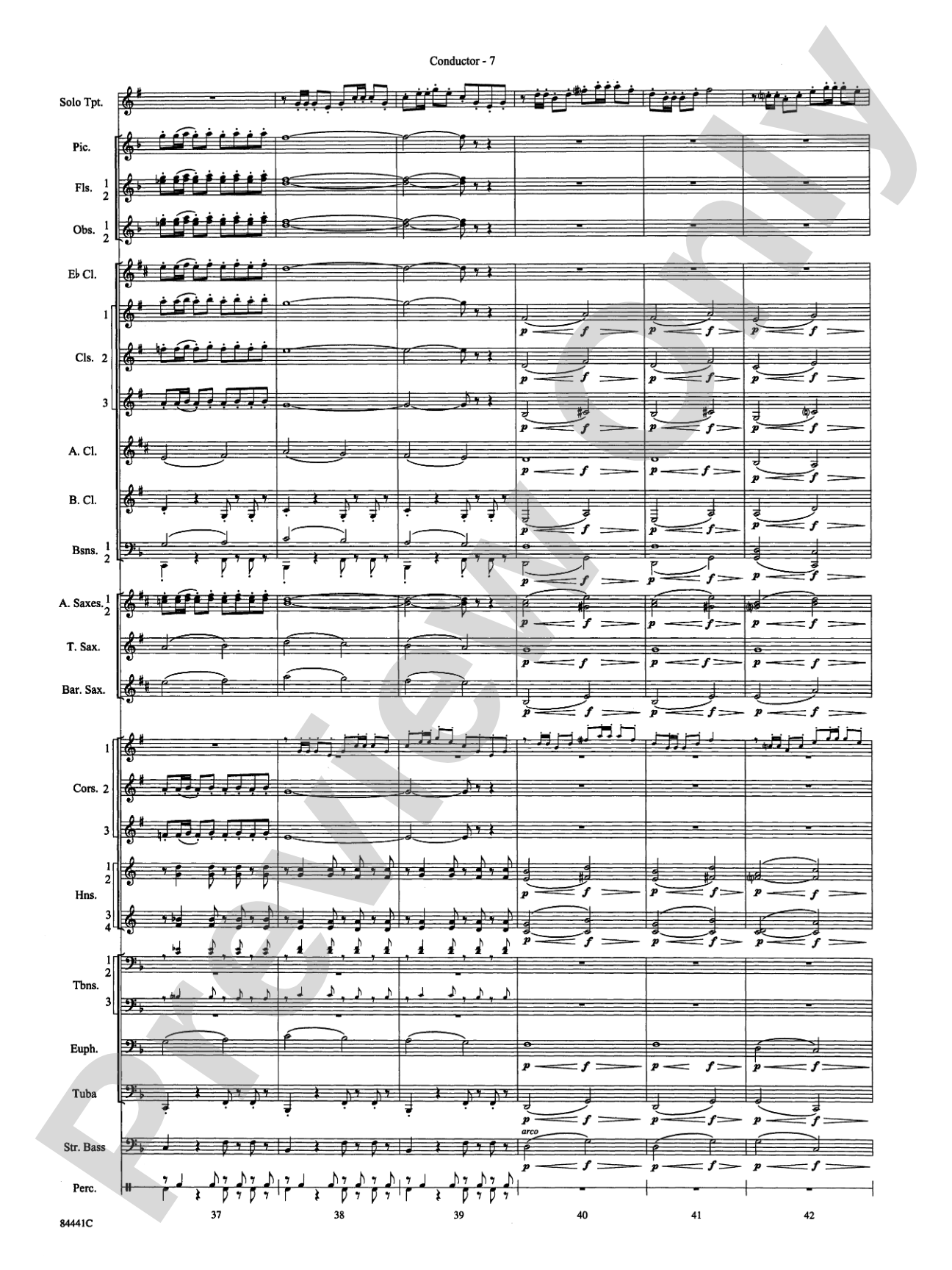
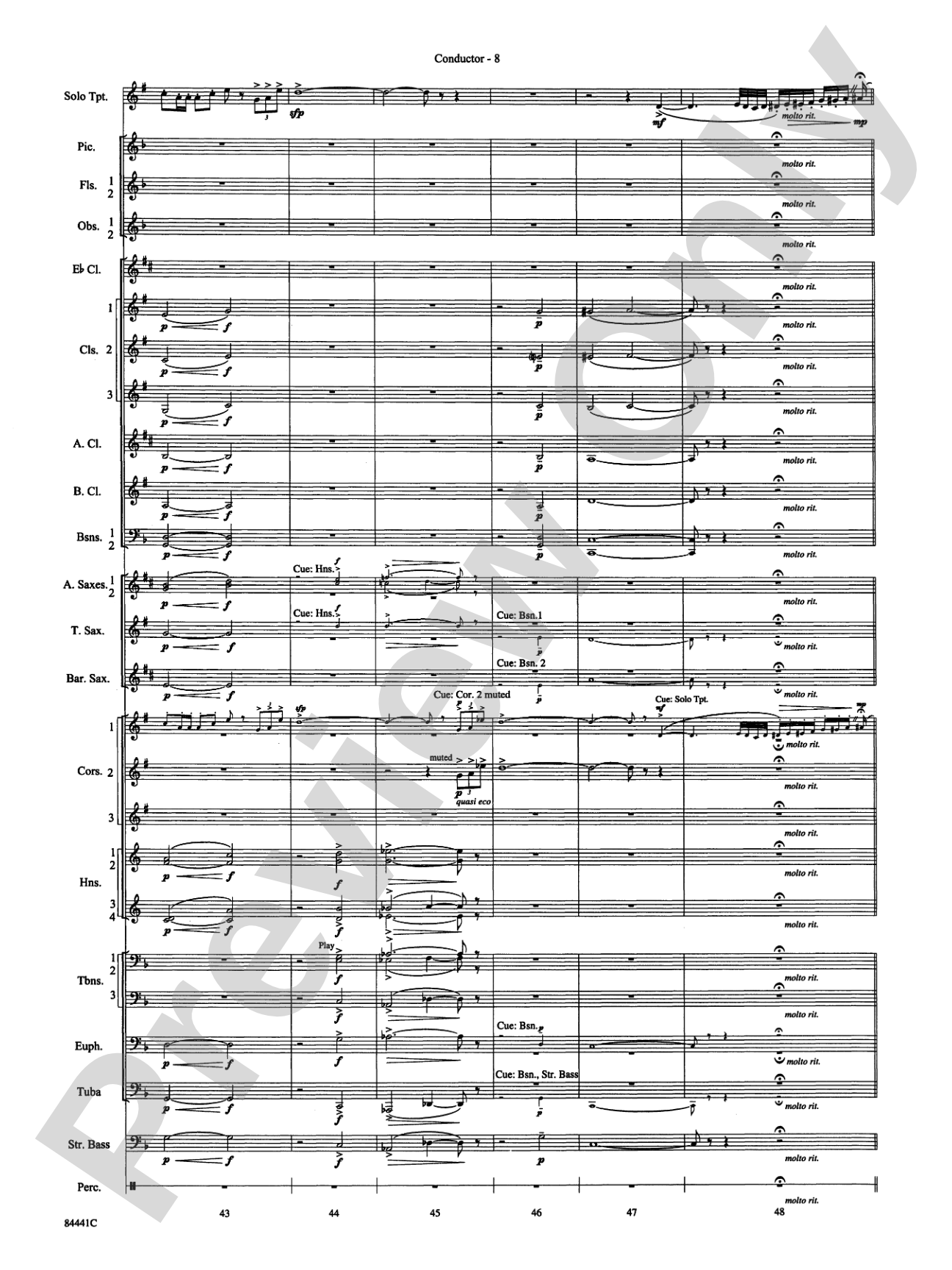
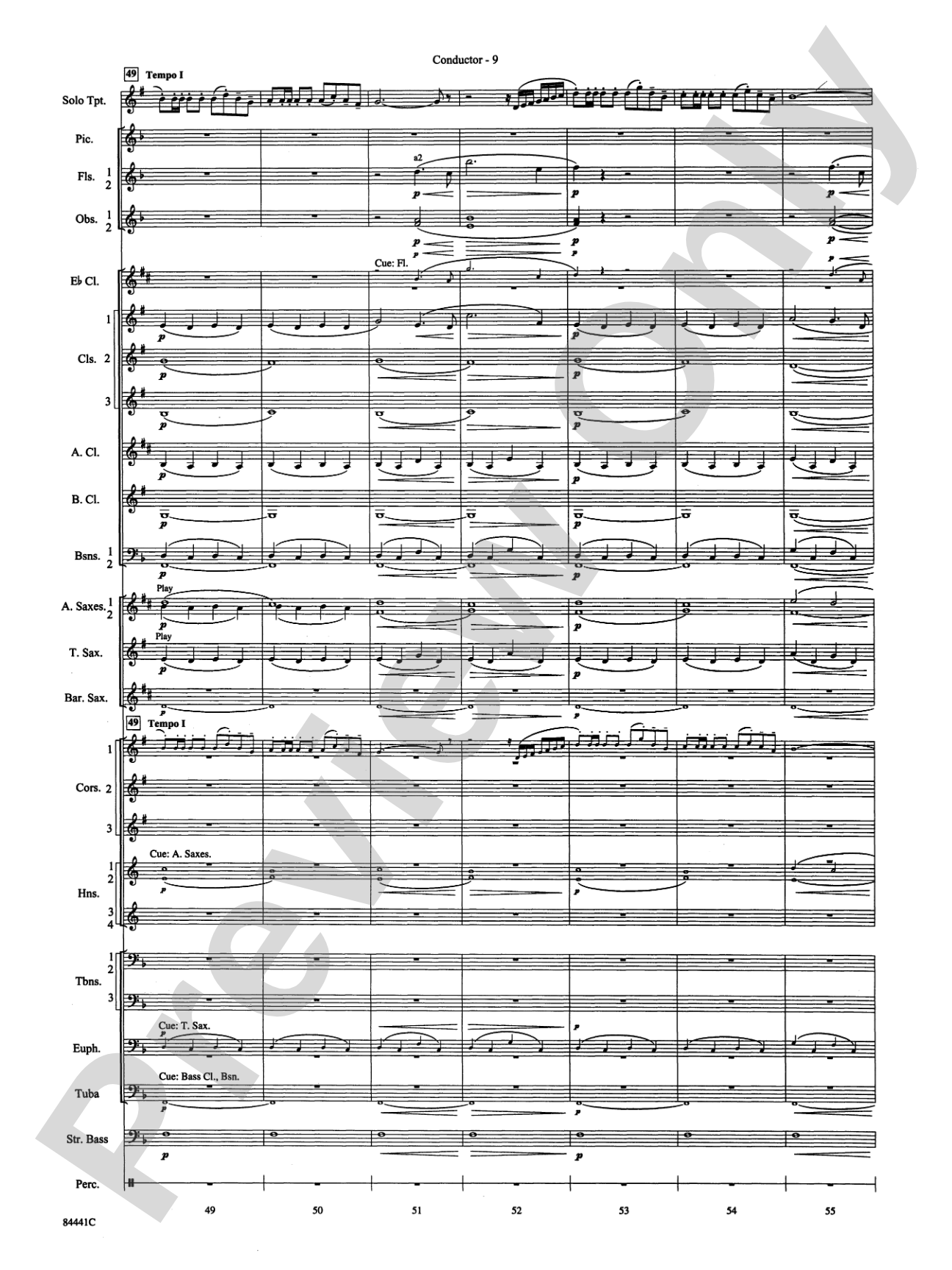
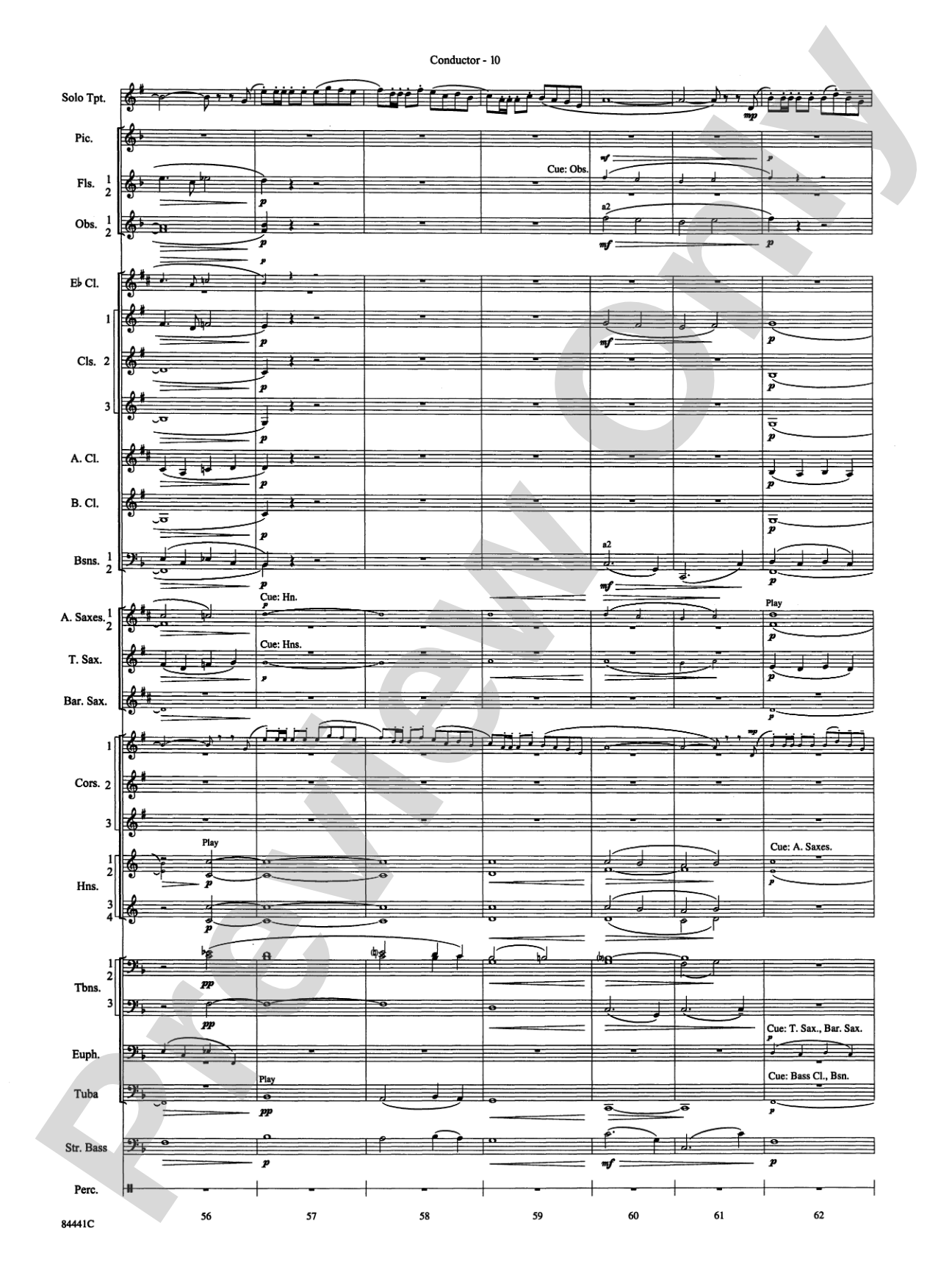
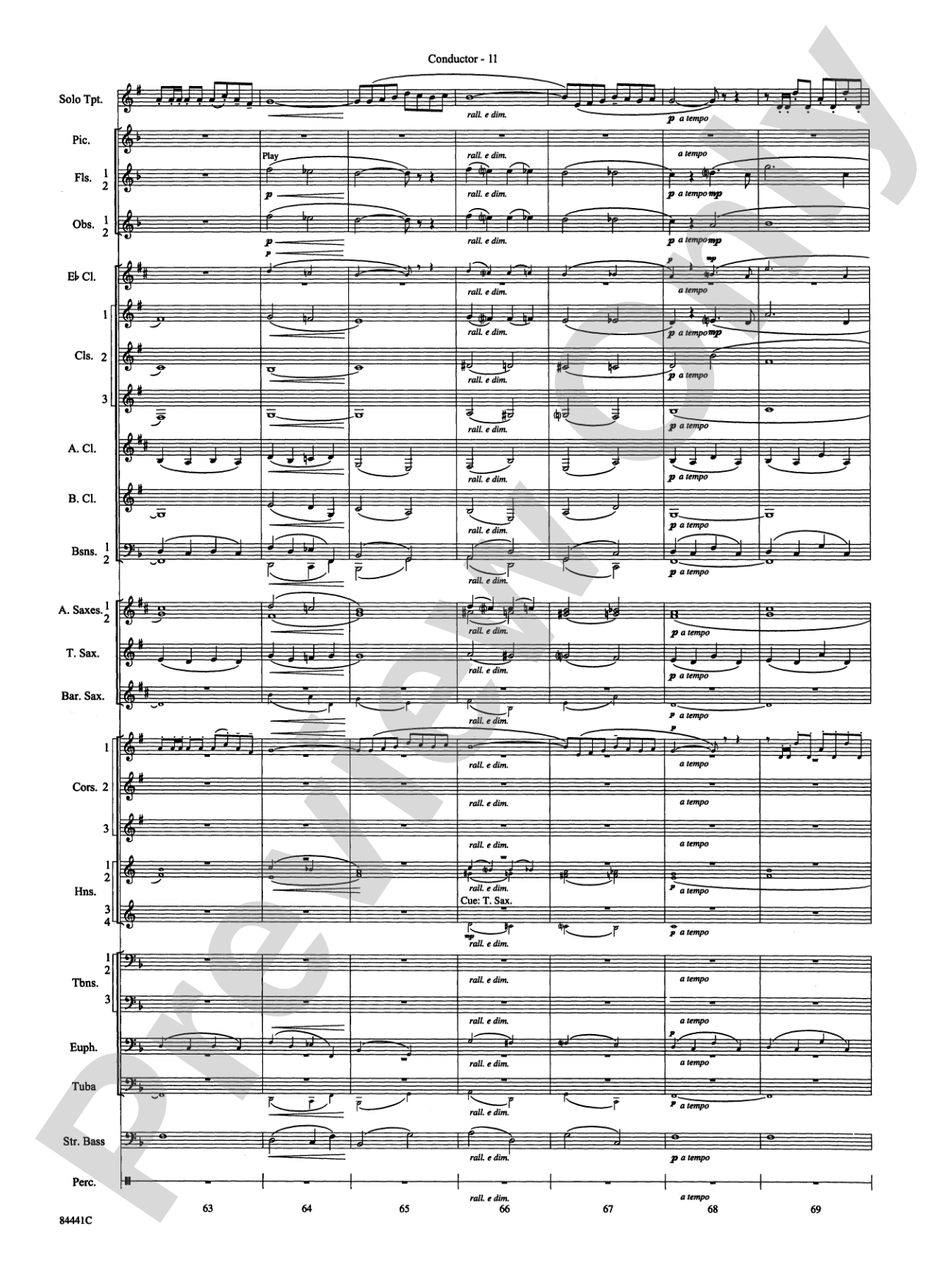
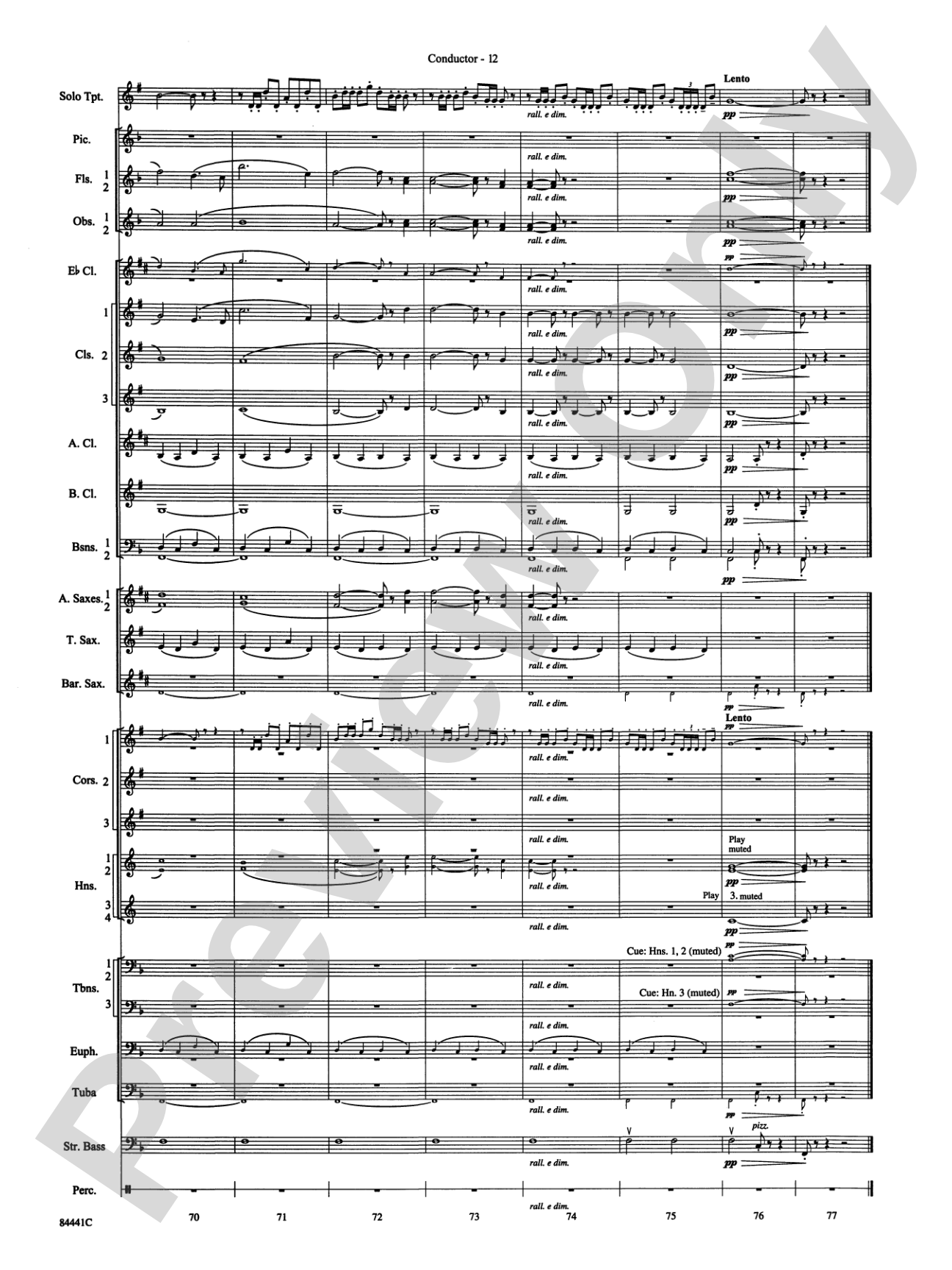



Trumpeter's Lullaby (with Trumpet Solo): Concert Band Conductor Score & Parts
Trumpet Solo Feature
By Leroy Anderson
Grade: 3.5 (Medium Easy to Medium)
Item: 00-PK-0001958

$75.00
Pickup currently not available
Buy Extra Parts (Digital PDF Download)
Parts Added to Cart!
Related Items
Trumpeter's Lullaby: Full Orchestra Conductor Score & Parts |
$73.00
|
View | |
Trumpeter's Lullaby: Full Orchestra Conductor Score & Parts |
$73.00
|
View | |
Trumpeter's Lullaby: Full Orchestra Conductor Score |
$9.00
|
View | |
Trumpeter's Lullaby: Concert Band Conductor Score & Parts |
$75.00
|
View | |
Trumpeter's Lullaby: Concert Band Conductor Score |
$9.00
|
View | |
Trumpeter's Lullaby: Trumpet Part(s) |
$7.95
|
View |
Description
Among the most beautiful of all melodies written by this master of light composition, this selection is well known the world over. Feature your best trumpeter in this original version. The work has been completely re-engraved with a full score for the very first time and all-new, better-than-ever performer parts. (2:56)


Don't just read it, hear it, play along with it, and watch your students grow with it. In MakeMusic Cloud, Trumpeter's Lullaby (with Trumpet Solo): Concert Band Conductor Score & Parts comes alive with professional accompaniment, adjustable tempo, and built-in practice tools that turn solo practice into real progress.
Open in the Player
Jump straight in and assign it today.
Start Your Free Trial
Open this title and explore the full library in minutes.
Sample Audio
1
Audio File
--:--
0:00
0:00
Sample Video
No sample videos found.
Additional Details
Series:
Leroy Anderson Classics
Publisher:
Alfred Music
Page Count:
160
SKU:
00-PK-0001958
More about this title
About the Composer: Leroy Anderson
Leroy Anderson (1908-1975) stands as one of America's most prolific composers of light orchestral music, crafting over 150 works that became staples of concert bands, orchestras, and pops ensembles worldwide. His gift for memorable melody and orchestration that sounds effortless yet sophisticated made him a favorite among performers and audiences alike; his catalog includes Plink, Plank, Plunk and Sleigh Ride, pieces that define the genre of American light classical music.
Why we love this
Anderson's melodic gift is on full display here, and this arrangement gives your strongest trumpeter a chance to shine without overshadowing the ensemble. The Grade 3.5 scoring lets the full band support the solo meaningfully rather than simply accompany it, creating a genuinely satisfying musical experience for everyone on stage. Audiences respond immediately to this piece, and the fresh engraving and new parts make preparation straightforward.
What to expect
The piece unfolds like a gentle song at rest. A hushed, dreamlike accompaniment creates space for the trumpet's singing line, which moves with natural grace and expressive warmth. There is refinement in every phrase, the kind of composed simplicity that only comes from a master's hand.
Who it's for
Concert bands at the high school or early college level looking for a showcase piece that is musically rewarding without being technically overwhelming. Directors seeking a feature for a strong trumpeter will find this gives the soloist a genuinely beautiful melody while keeping the ensemble engaged throughout.
How to get the most out of it
- Balance the trumpet solo carefully with the ensemble; the band should provide warm harmonic support without drowning out the lyrical line. The accompaniment is written to sit naturally behind the soloist when tuned and voiced properly.
- Shape the melody with gentle rubato and breathing space, especially in the quieter passages. Anderson's phrasing works best when the trumpeter has freedom to breathe at natural phrase breaks rather than strict metric regularity.
- Ensure the ensemble maintains consistent intonation in the sustained chords. Minor pitch fluctuations become noticeable behind a solo, so tune carefully during rehearsal without rushing past this step.
- Take time in the introduction and transitions to establish the lullaby character. Soft, focused articulation from all sections sets the intimate mood that makes the trumpet entrance effective.
How to use it
Program this as a contrast piece in a concert that includes more rhythmically driven selections; its lyrical quality offers valuable variety. It works particularly well on a program with other Anderson selections, or as a bridge between a brisk march and a larger dramatic work, where its intimate scale and beauty reset the audience's attention.
Skills your students will build
- Balancing a featured soloist with ensemble accompaniment
- Sustaining soft, even dynamics and intonation in accompanying parts
- Shaping lyrical phrasing with rubato and expressive breathing
- Reading Anderson's light orchestral idiom and characteristic harmonies