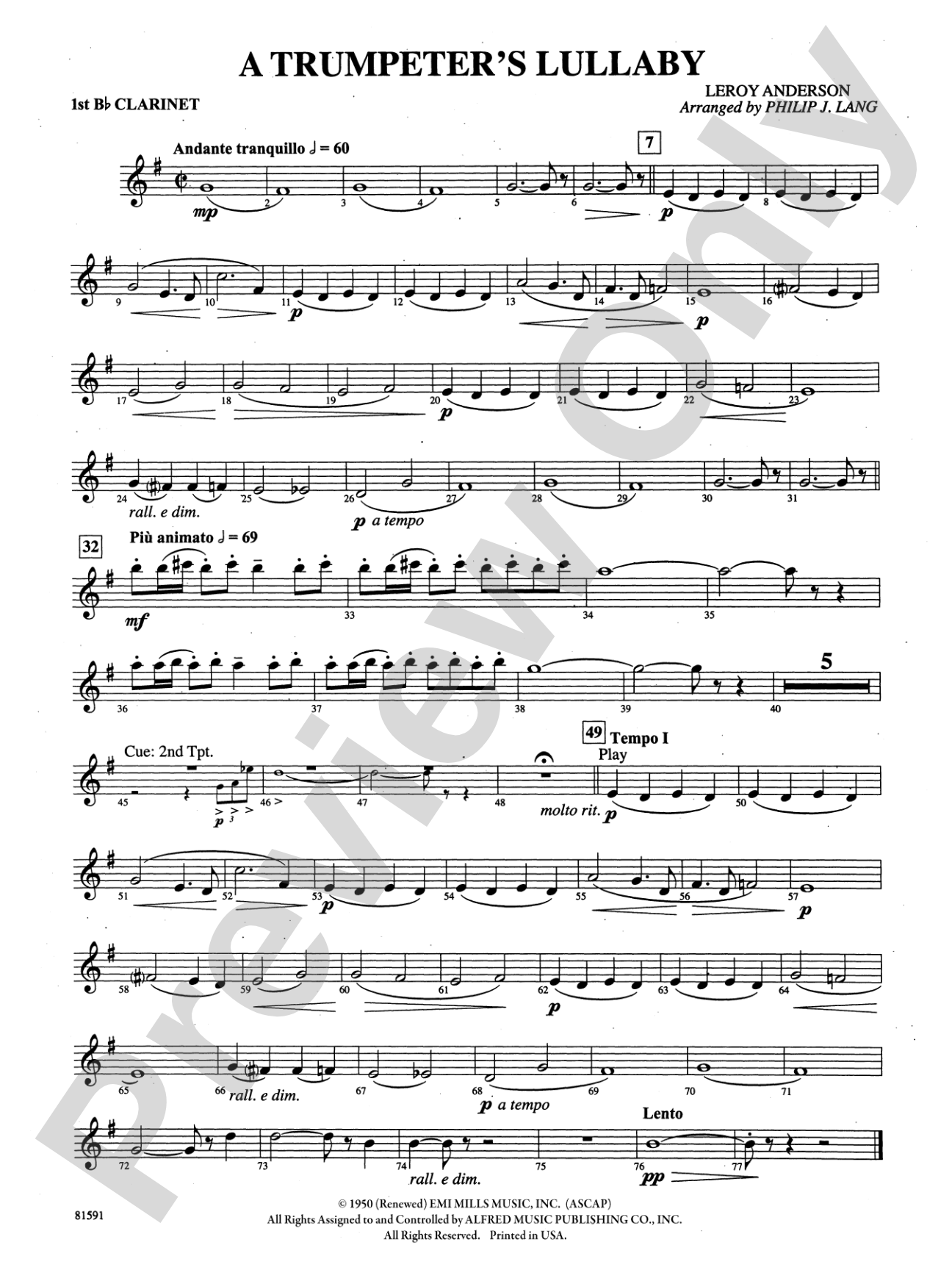
Trumpeter's Lullaby: 1st B-flat Clarinet Sheet Music Preview

Trumpeter's Lullaby: 1st B-flat Clarinet

By Leroy Anderson

Grade: 3.5

Item: 00-PC-0017529_C1

Digital Download
$3.00
Description
Among the most beautiful of all melodies written by this master of light composition, this selection is well known the world over. Feature your best trumpeter in this original version -- now with a new full score and edited parts. (2:55)

Don't just read it, hear it, play along with it, and watch your students grow with it. In MakeMusic Cloud, Trumpeter's Lullaby: 1st B-flat Clarinet comes alive with professional accompaniment, adjustable tempo, and built-in practice tools that turn solo practice into real progress.

Sample Audio
0:00
0:00
Sample Video
Additional Details
Series: Belwin Concert Full Orchestra
Publisher: Alfred Music
Page Count: 106
SKU: 00-PC-0017529_C1

More about this title

About the Composer: Leroy Anderson

Leroy Anderson (1908-1975) was an American composer and conductor whose gift for orchestration and melodic invention made him one of the most recorded composers of the twentieth century. His prolific output of light concert works, many featuring imaginative solo spotlights and clever orchestral effects, became staples of pops concerts and community orchestras worldwide. Anderson's ability to write music that sounds sophisticated yet remains accessible to young orchestras has secured his place in music education curricula for generations.

Why we love this

Anderson's gift for memorable melody combined with transparent orchestration means your orchestra will sound full and polished even at this grade level. The opportunity to feature a capable trumpeter in such a beloved tune gives soloists a moment that feels genuinely special rather than merely technically showy. This piece consistently draws applause because audiences recognize it immediately, yet the arrangement respects young orchestras by keeping the accompaniment musical and manageable.

What to expect

Gently lilting and warmly nostalgic, the piece evokes a lullaby told through an orchestral voice. The melody floats above shimmering accompaniment figures with an unhurried grace that feels both intimate and grand.

Who it's for

Orchestras and full bands at the intermediate level seeking repertoire that sounds confident and professional while remaining within reach. Directors who want to feature an advanced trumpeter in a piece that feels like a genuine musical moment rather than a showcase of technical facility.

How to get the most out of it

  • Balance the trumpet solo so it sings above the ensemble without forcing; Anderson's melody carries naturally when the accompaniment plays with a light, dance-like quality rather than full dynamic weight.
  • Shape the opening phrase in the trumpet part with gentle phrase contours rather than playing straight through. The lullaby character depends on breathing space and subtle dynamic shaping.
  • Let the woodwinds bloom during their accompanying figures. These countermelodies are part of what makes Anderson's orchestration so satisfying, and they'll frame the trumpet solo beautifully.
  • Maintain consistent tempo throughout. The moderate pace that lets the melody breathe will feel natural to audiences and gives your trumpeter room to phrase expressively.

How to use it

This works beautifully as a stand-alone feature in a pops concert or community orchestra event, where it will anchor an evening with its immediate recognition and emotional simplicity. Program it early in a concert to establish an audience connection, or use it as a contrast piece between more demanding contemporary or classical selections. The modest length and Grade 3.5 difficulty make it ideal for a showcase concert highlighting your best young soloists.

Skills your students will build

  • Balancing a solo with ensemble accompaniment
  • Playing light concert style with clarity and transparency
  • Maintaining lyrical phrasing across moderate phrase lengths
  • Following a conductor's tempo and dynamic shape
  • Reading standard full orchestra instrumentation and entrances

You May Also Like