
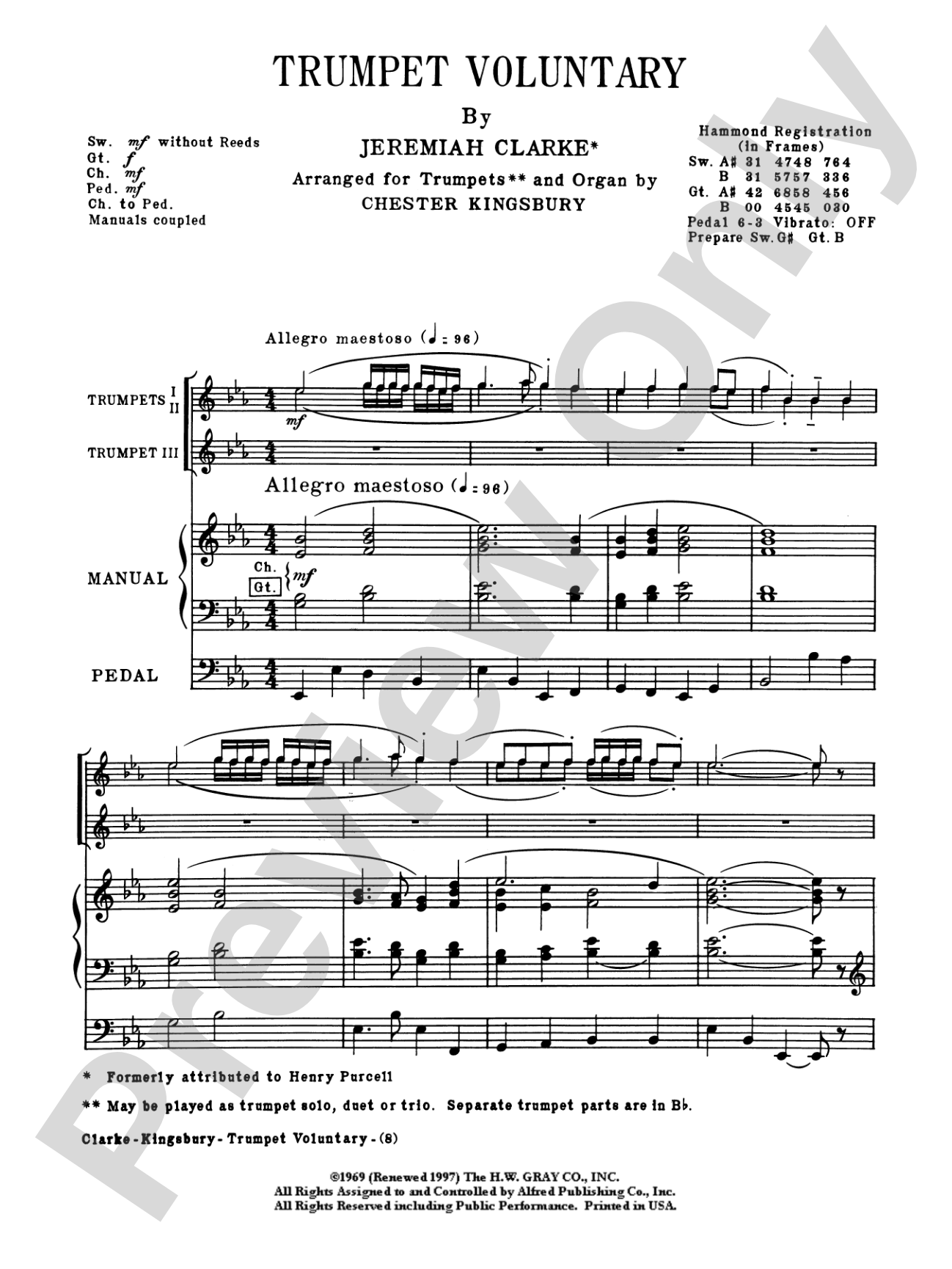
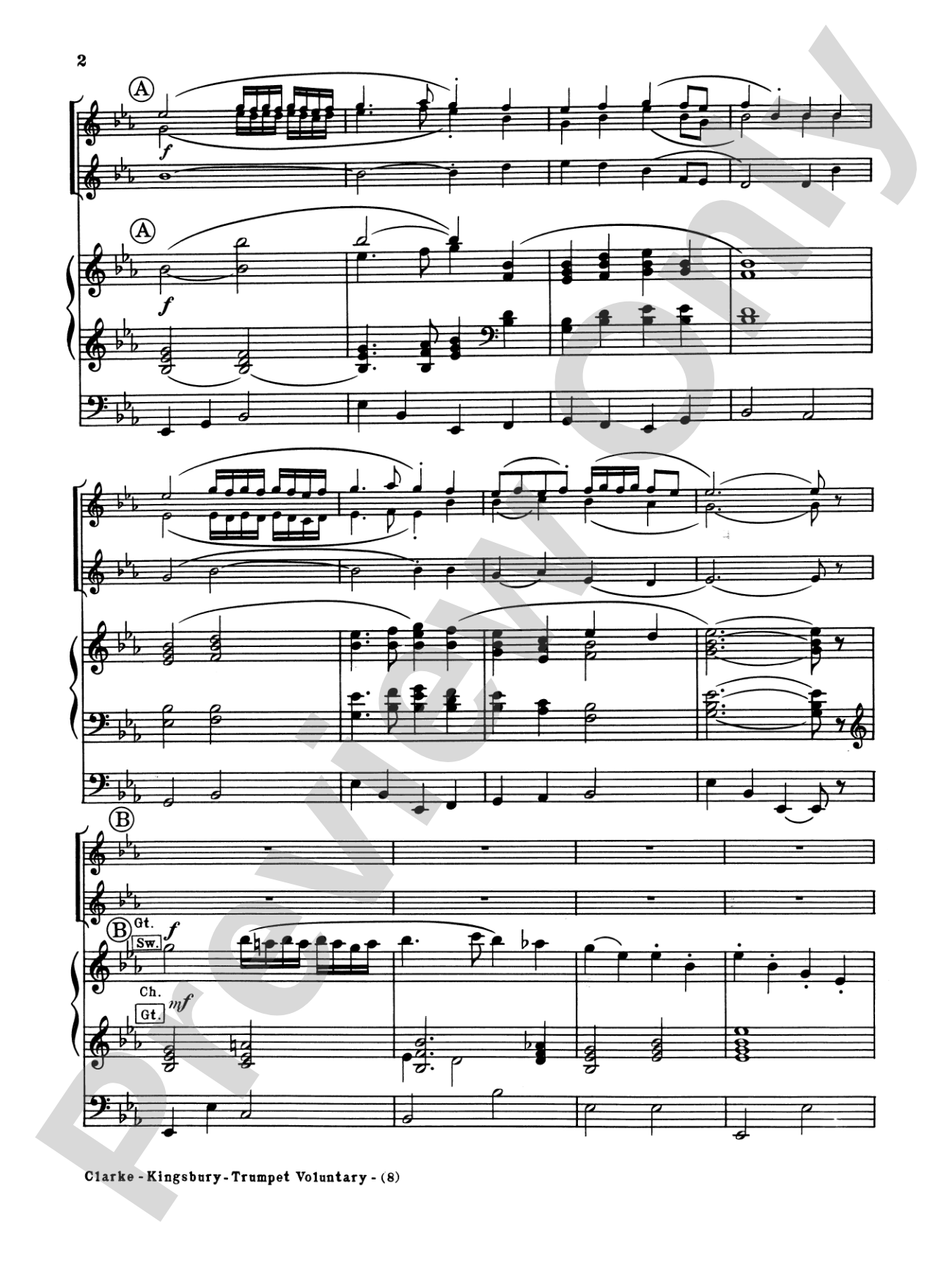
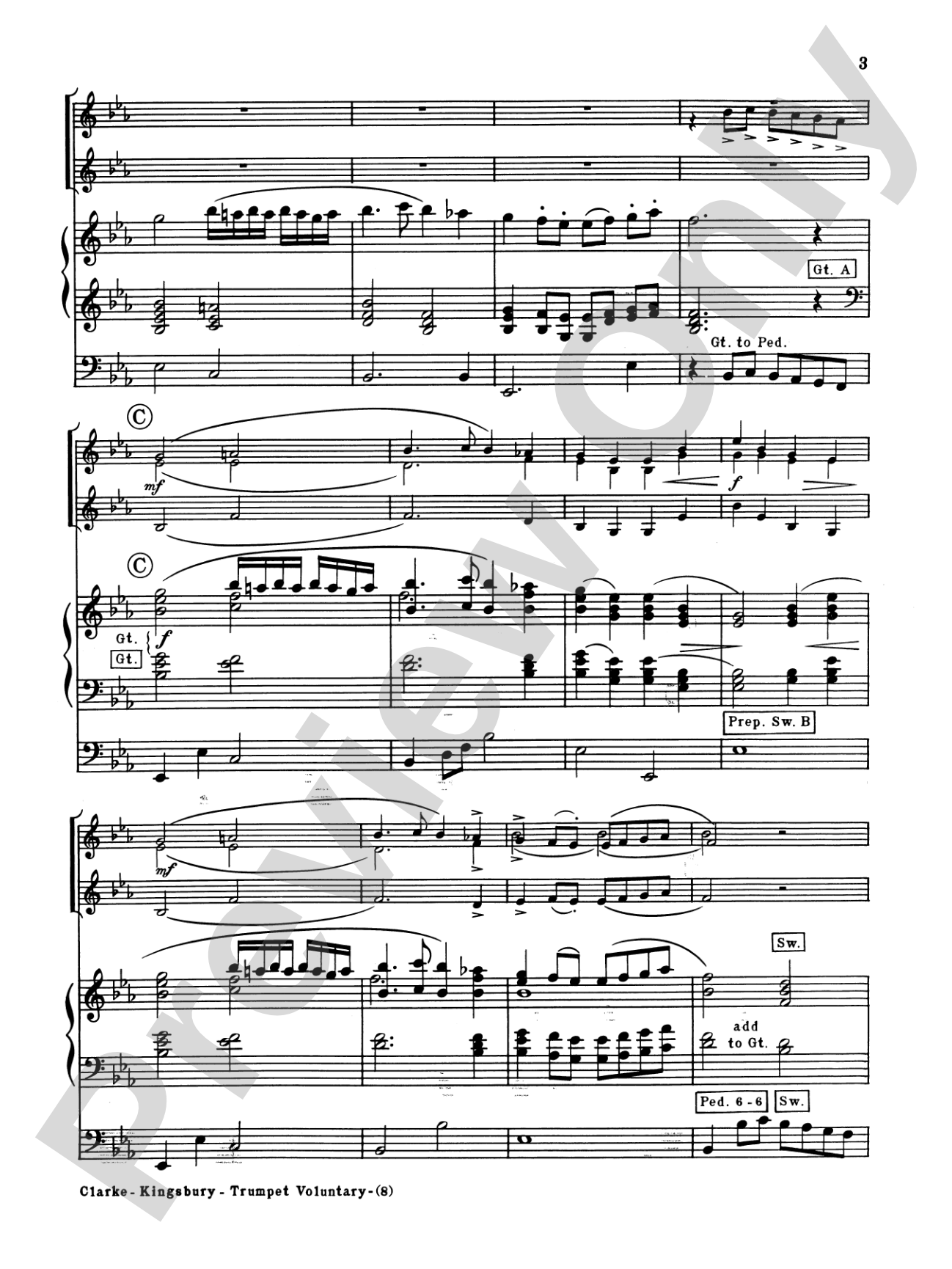
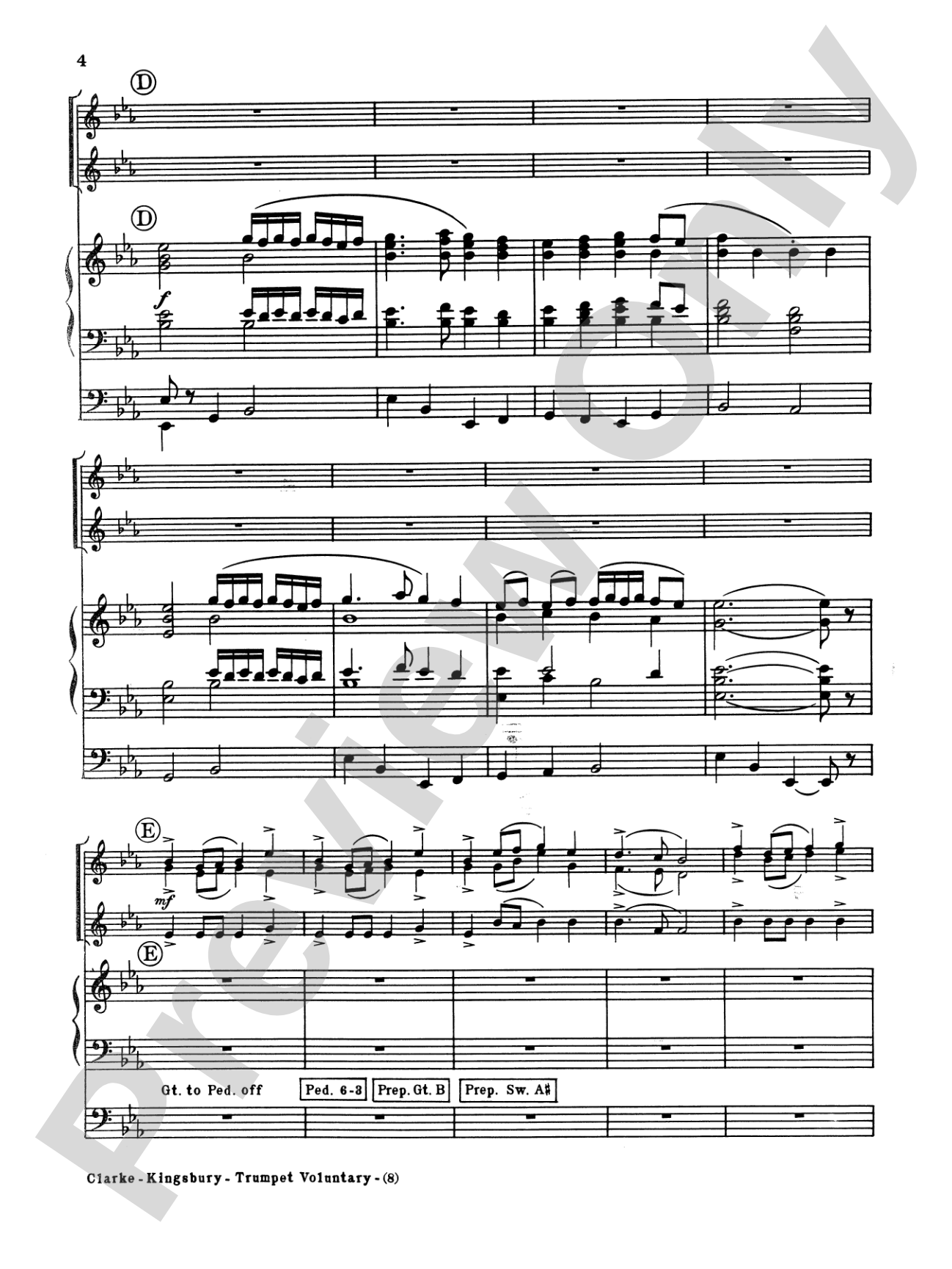
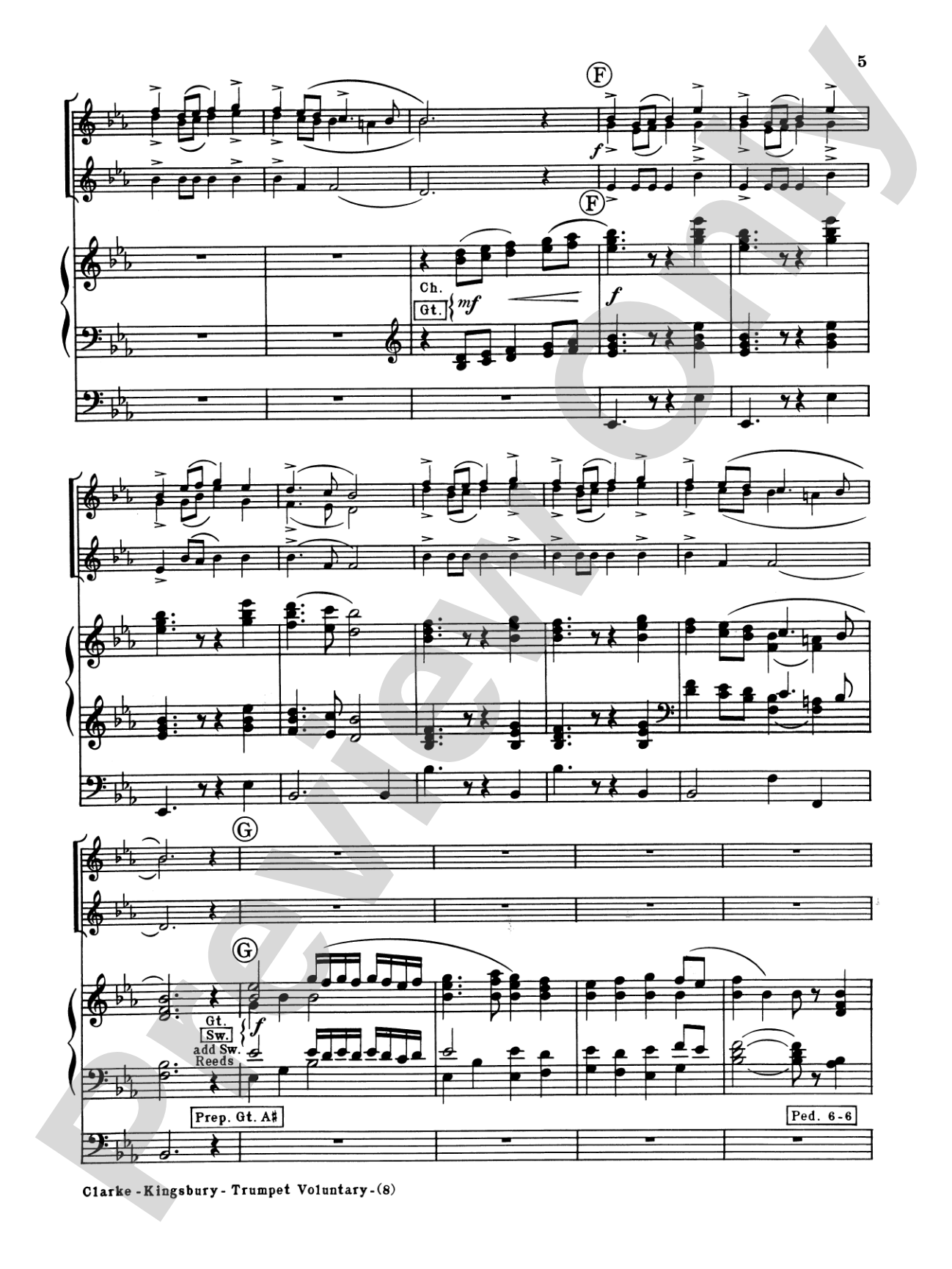
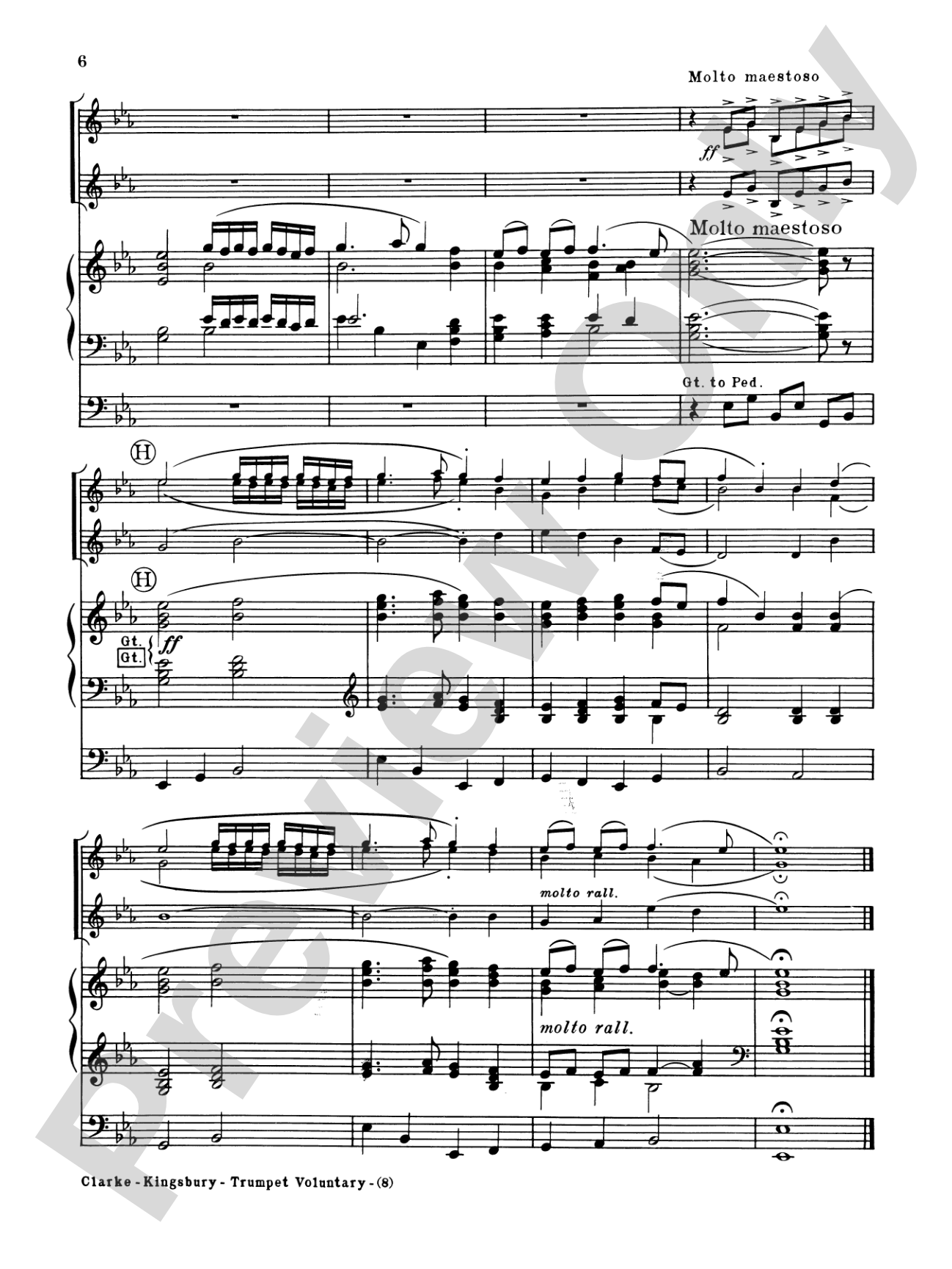



Trumpet Voluntary: Score
By Jeremiah Clarke / arr. Chester Kingsbury
Level: Late Intermediate
Item: 00-PR-0002353
$8.00
Pickup currently not available
Description
The famous and festive fanfare piece of Jeremiah Clarke is presented in this arrangement for organ and either 1, 2 or 3 trumpets, and the musical combination will produce a perfect processional or recessional for weddings or other festive services. Full manual chords and a polyphonic pedal part will be the demands on the organist, with most melodic material taken by the trumpet soloists.


Don't just read it, hear it, play along with it, and watch your students grow with it. In MakeMusic Cloud, Trumpet Voluntary: Score comes alive with professional accompaniment, adjustable tempo, and built-in practice tools that turn solo practice into real progress.
Open in the Player
Jump straight in and assign it today.
Start Your Free Trial
Open this title and explore the full library in minutes.
Sample Audio
No sample audio found.
Sample Video
No sample videos found.
Additional Details
Series:
H. W. Gray
Publisher:
Alfred Music
Page Count:
14
SKU:
00-PR-0002353
Instrumentation:
Organ & 1, 2 or 3 Trumpets
More about this title
About the Composer: Jeremiah Clarke
Jeremiah Clarke (1674, 1707) was an English Baroque composer and organist whose instrumental music bridged the formal grandeur of the court with the emerging popular tastes of London's concert life. Though his career was cut short by his early death, Clarke left behind keyboard works and orchestral pieces that remain staples of ceremonial music, valued for their directness and brilliant harmonic language.
The Trumpet Voluntary stands as Clarke's most enduring composition. Originally conceived as a keyboard showpiece, its fanfare idiom and predictable harmonic progressions made it instantly accessible to performers and audiences alike. This accessibility, combined with genuine musical craft, explains why it has survived three centuries of performance and arrangement.
Why we love this
Kingsbury's arrangement respects the piece's ceremonial DNA while giving the organ a genuinely substantial role beyond mere accompaniment. The pedal part demands real independence and voicing skill from the organist, transforming what could be a simple support function into a true collaborative partnership with the trumpet section.
What to expect
Bright, ceremonial confidence. The piece radiates the kind of well-mannered grandeur that fits processionals and recessionals perfectly, dignified without pomposity, celebratory without chaos. The organ's full harmonies and the trumpets' natural gleam create an unmistakably Baroque sound world that feels both timeless and occasion-appropriate.
Who it's for
Organists with solid independent pedal technique and trumpet players at the intermediate level will find this arrangement satisfying without requiring soloistic virtuosity. Wedding musicians and church musicians looking for liturgically appropriate festive music will appreciate how flexibly this scores to your available trumpet resources.
How to get the most out of it
- Treat the organ's manual chords as structural backbone rather than background filler. Their rhythmic vitality propels the trumpets forward and deserves clear articulation.
- The number of trumpets you deploy should reflect the venue's acoustic. A single trumpet in a large church gains transparency and cut; three trumpets create genuine fanfare weight but demand precise ensemble balance.
- Coordinate with your trumpet players on the extent of their ornamentation. Clarke's style invites a measure of embellishment, but restraint often serves the processional or recessional function better than exuberance.
How to use it
This works as a wedding processional, a recessional for festive services, or an opening fanfare before spoken words or choral movements. Its 14-page length makes it substantial enough to anchor a short instrumental program without overshadowing other repertoire.
Skills your students will build
- Independent pedal articulation while managing full manual chords
- Baroque articulation and phrasing appropriate to fanfare idiom
- Ensemble balance between keyboard and wind instruments
- Flexible voicing across multiple trumpet configurations (1, 2, or 3 parts)
- Reading and executing ornamental figures in Baroque style