Trumpet March and Ayre: (wp) 2nd B-flat Trombone B.C. Sheet Music Preview

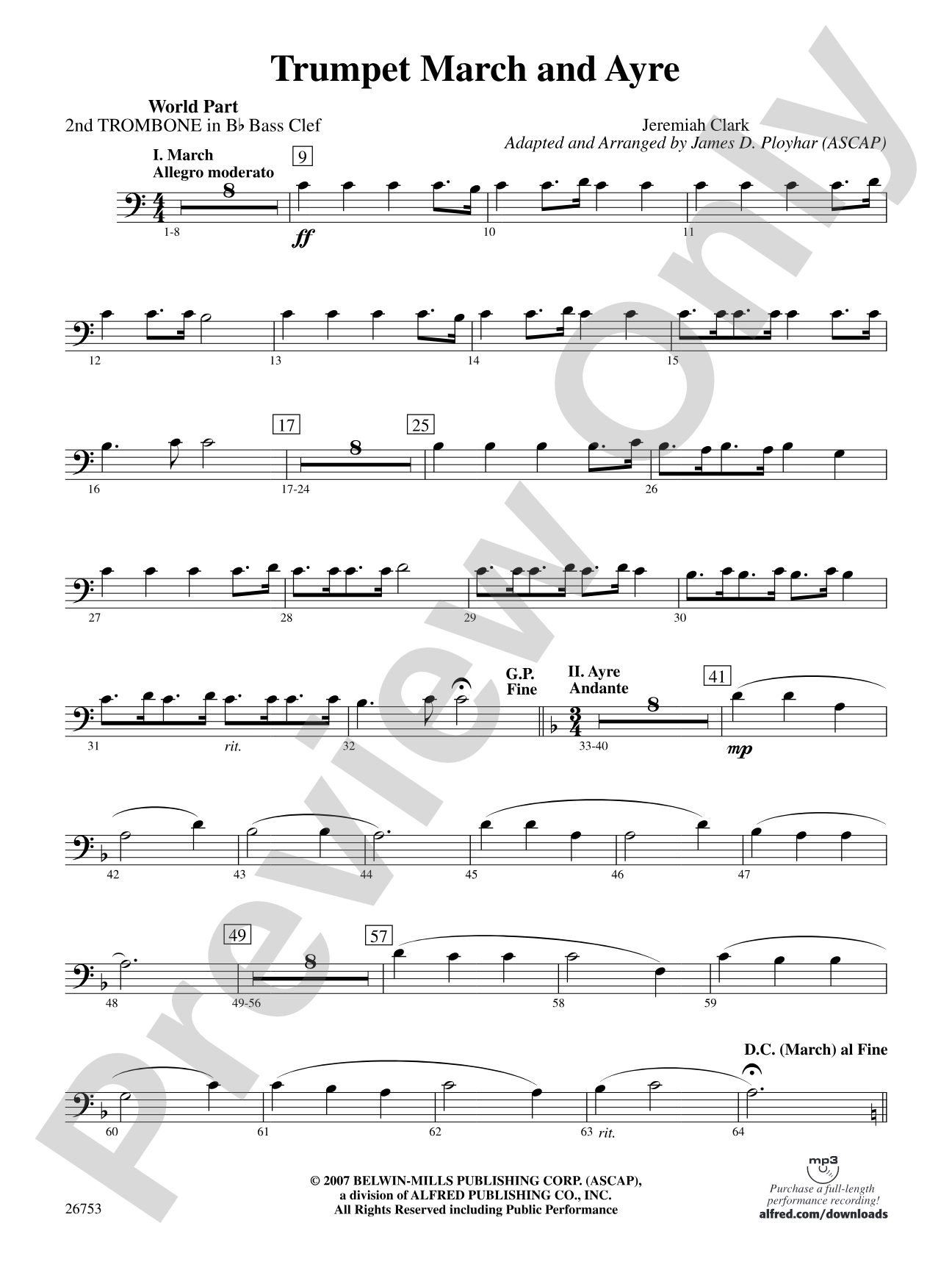
Trumpet March and Ayre: (wp) 2nd B-flat Trombone B.C.

By Jeremiah Clarke / arr. James D. Ployhar

Grade: 3 (Medium Easy)

Item: 00-PC-0001214_wpTN2BC

Digital Download
$3.00
Description
Jeremiah Clark was a composer of Baroque music and his Trumpet March and Ayre is incredibly distinctive. Scored for contemporary concert band by James Ployhar, this adaptation is slated in traditional A-B-A form. The flowing middle section features the woodwinds surrounded by the regal march theme. A stately work that would serve as an excellent introduction to the Baroque style. This title is available in MakeMusic Cloud.

Don't just read it, hear it, play along with it, and watch your students grow with it. In MakeMusic Cloud, Trumpet March and Ayre: (wp) 2nd B-flat Trombone B.C. comes alive with professional accompaniment, adjustable tempo, and built-in practice tools that turn solo practice into real progress.

Sample Audio
0:00
0:00
Sample Video
Additional Details
Series: Belwin Concert Band
Publisher: Alfred Music
Page Count: 59
SKU: 00-PC-0001214_wpTN2BC

More about this title

About the Composer: Jeremiah Clarke

Jeremiah Clarke (1674–1707) was an English Baroque composer and organist whose church music and instrumental works earned him a respected position in London's musical life. Though his output was modest due to his early death, his compositions reveal a gift for graceful melody and structural clarity that made them enduring staples of the Baroque keyboard and instrumental repertoire.

Why we love this

Ployhar's arrangement brings Clarke's Baroque sensibility directly into the modern concert band sound without sacrificing the piece's elegant character. The A-B-A structure is immediately clear to students, making this an ideal introduction to formal sectional thinking and how contrast and return create satisfying musical architecture. The scoring distributes interest across the full ensemble while keeping the texture transparent enough for young players to hear themselves.

What to expect

A stately processional with an elegant, unhurried stride. The march theme carries dignified purpose, while the lyrical middle section opens into a more intimate, graceful landscape where woodwinds dance lightly above shifting harmonies. The return to the march feels like coming home, grounded and satisfied.

Who it's for

Grade 3 concert bands ready to engage with Baroque style and structure through a piece that respects both the historical source and the ensemble's capabilities. Directors seeking substantive repertoire that develops musical awareness without demanding virtuosic technique will find this arrangement serves emerging musicianship well.

How to get the most out of it

  • Balance the march theme carefully when it appears against the flowing woodwind writing in the middle section; the march should anchor without overwhelming.
  • Shape each phrase with gentle tapering rather than sudden dynamic drops; the Baroque style depends on elegant voice leading that carries through to the end of every gesture.
  • Let the woodwind writing in the B section breathe; these lyrical passages will sound stiff if players rush or fail to shape individual lines with care.
  • Approach the return to A with freshness; resist the temptation to rush back into the march theme, and allow the restatement to feel like a natural arrival rather than a repetition.

How to use it

Program this as an opener or transitional work on a concert that pairs Baroque and contemporary repertoire, letting it establish stylistic context for later selections. It also works as a festival or contest choice where musical maturity and structural clarity matter more than technical showiness.

Skills your students will build

  • Recognizing and performing A-B-A form
  • Balancing independence within ensemble texture (particularly voice leading in the B section)
  • Characteristic articulation and phrasing of Baroque style
  • Maintaining rhythmic stability in the march theme while supporting lyrical material
  • Listening for and responding to harmonic progression

You May Also Like