

Trouble!: SATB Choral Octavo
Traditional Spirituals / arr. Sally K. Albrecht
Item: 00-PO-0001621
$1.85
Minimum order quantity: 20 copies
Pickup currently not available
Related Items
Trouble!: SoundTrax Digital Audio Download |
$27.99
|
View | |
Trouble!: SSAB Choral Octavo |
$2.05
|
View | |
Trouble!: 2-Part / SSA Choral Octavo |
$1.85
|
View | |
Trouble!: SATB Choral Octavo |
$1.85
|
View | |
Trouble!: SSAB Choral Octavo |
$2.05
|
View | |
Trouble!: 2-Part / SSA Choral Octavo |
$1.85
|
View | |
Trouble!: Choral Octavo SoundTrax CD |
$27.99
|
View |
Description
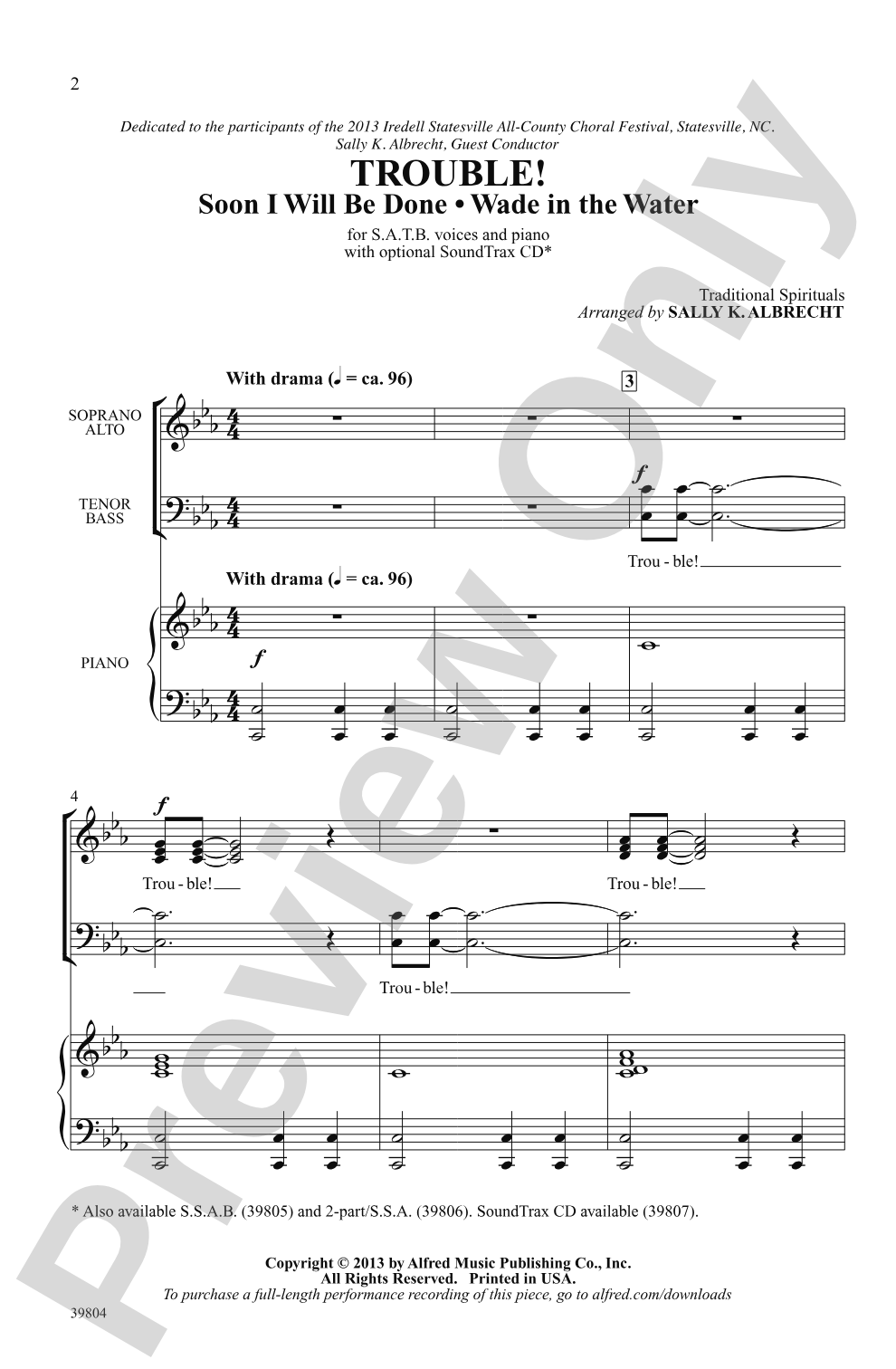
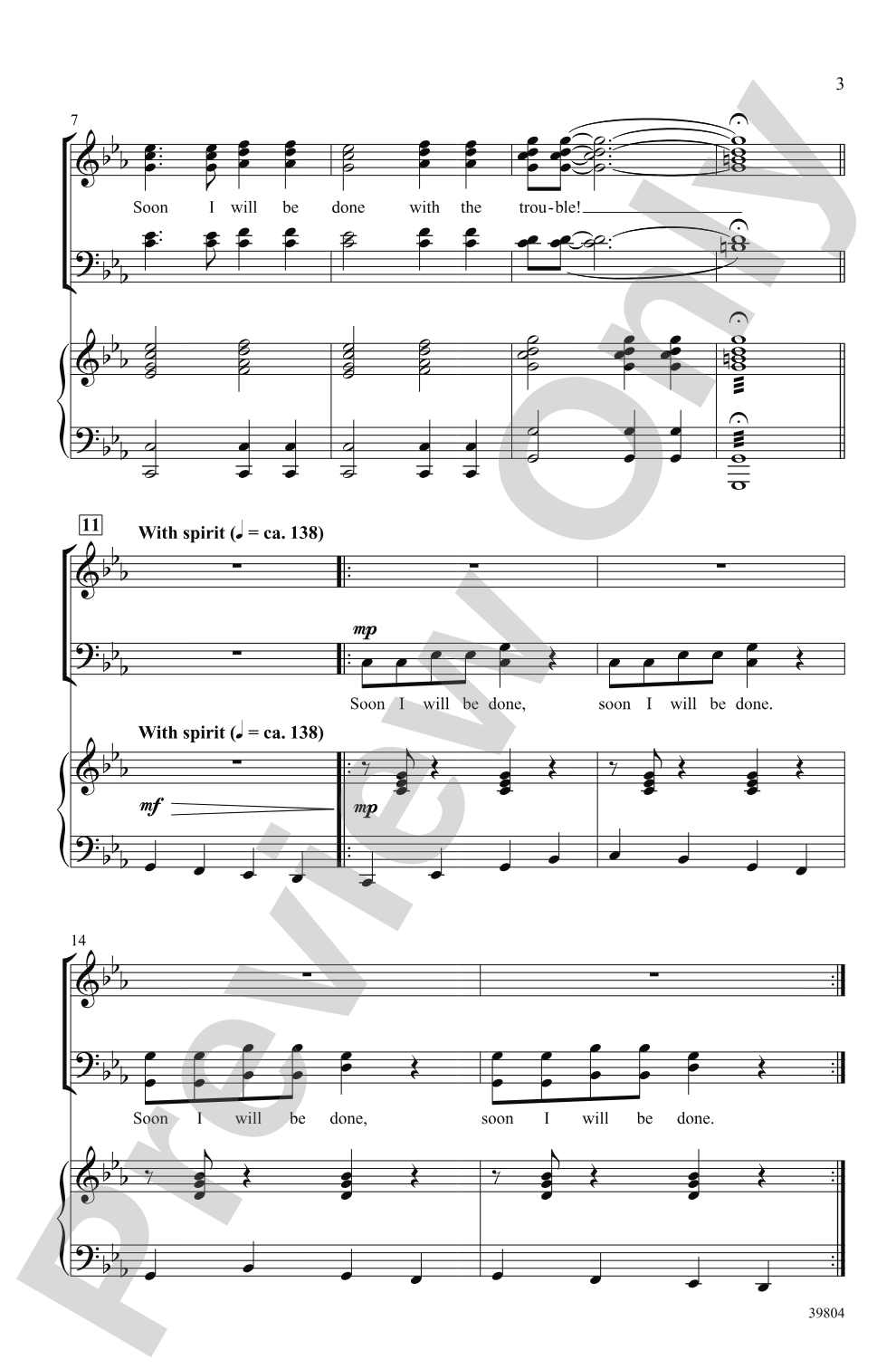
Don't miss this inventive and appealing combination of two favorite spirituals. This effective arrangement will be easy to put together, as it features strong counterlines, easy-to-sing harmonies, and a rousing closing descant. Featured on "Reaching for the Stars" choral movement DVD 00-39928. Check this out! https://leapingbrain.com/modshop/product/?shop=9&product=5693


Trouble!: SATB Choral Octavo isn't in MakeMusic Cloud just yet...but it could be. Let us know you'd like to see it, and you'll help shape what comes next. In the meantime, start a free trial and dive into thousands of interactive titles your students can play along with today.
Request This Title
Tell us you want it.
Start Your Free Trial
Explore everything that's ready to play right now.
Sample Audio
1
Audio File
--:--
0:00
0:00
Sample Video
No sample videos found.
Additional Details
Series:
Alfred Choral Designs
Publisher:
Alfred Music
Page Count:
12
SKU:
00-PO-0001621
More about this title
About the Arranger: Sally K. Albrecht
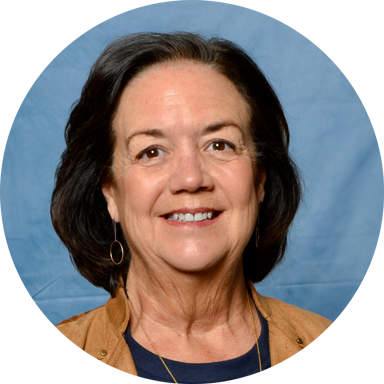
Sally K. Albrecht has shaped American choral repertoire for decades through her work as a composer, conductor, and arranger. Since 1987, she has received annual ASCAP Special Music Awards and maintains over 600 choral publications in print, alongside 75 larger works for stage and concert. She served as Director of School Choral, Vocal, and Elementary Publications at Alfred Music and has conducted honor choirs at prestigious venues including Lincoln Center, Carnegie Hall, and The Kennedy Center.
Educated at Rollins College (B.A. in Music and Theater, 1976) and the University of Miami (M.A. in Drama, 1977; M.M. in Accompanying, 1979), Albrecht has taught at Oakland University, Jersey City State College, and Meredith College. She received the Distinguished Alumna Award from both the University of Miami Frost School of Music and Rollins College in 2021. She lives in North Carolina with her husband, composer and arranger Jay Althouse.
Why we love this
Albrecht's gift for counterline writing shines here: each voice has a musical phrase that stands on its own while locking seamlessly into the ensemble texture. The rousing descant in the final section gives singers and audiences alike a moment of genuine lift, and the staging possibilities built into the score mean you can create something visually engaging without needing choreography expertise.
What to expect
The arrangement pulses with spiritual warmth and joy. Two beloved spirituals weave together with infectious energy, building toward a jubilant final section where the descant takes flight. The piece has the feeling of voices calling and answering, then joining in triumphant unison.
Who it's for
Intermediate to advanced SATB choirs seeking a spiritual arrangement that works for concert, festival, or worship settings. This is ideal for choirs comfortable with independent voice lines and ready for the vocal confidence that a strong descant demands.
How to get the most out of it
- Shape the counterlines with deliberate phrasing so that each voice part sings its own melody arc, not just harmonic filler. This clarity makes the arrangement feel polished even at rehearsal.
- Balance the descant entrance so it soars above the ensemble without burying the harmonic foundation. A brief rehearsal focus on soprano-alto balance in the final section prevents the moment from collapsing.
- Explore the movement and staging suggestions in the score early; integrating physical gestures during note-learning makes the music land with more energy and helps singers internalize the arrangement's rhythmic momentum.
How to use it
Position this as a closing number on a concert featuring American sacred music, where its rousing energy and movement possibilities create a satisfying finale. It also works beautifully in a spirituals-focused program or as a festival selection where the piece's accessibility and musical substance can shine.
Skills your students will build
- Singing independent counterlines against other voice parts
- Building ensemble balance with a prominent descant line
- Coordinating movement and gesture with vocal phrasing
- Interpreting spiritual style and the emotional arc of traditional music