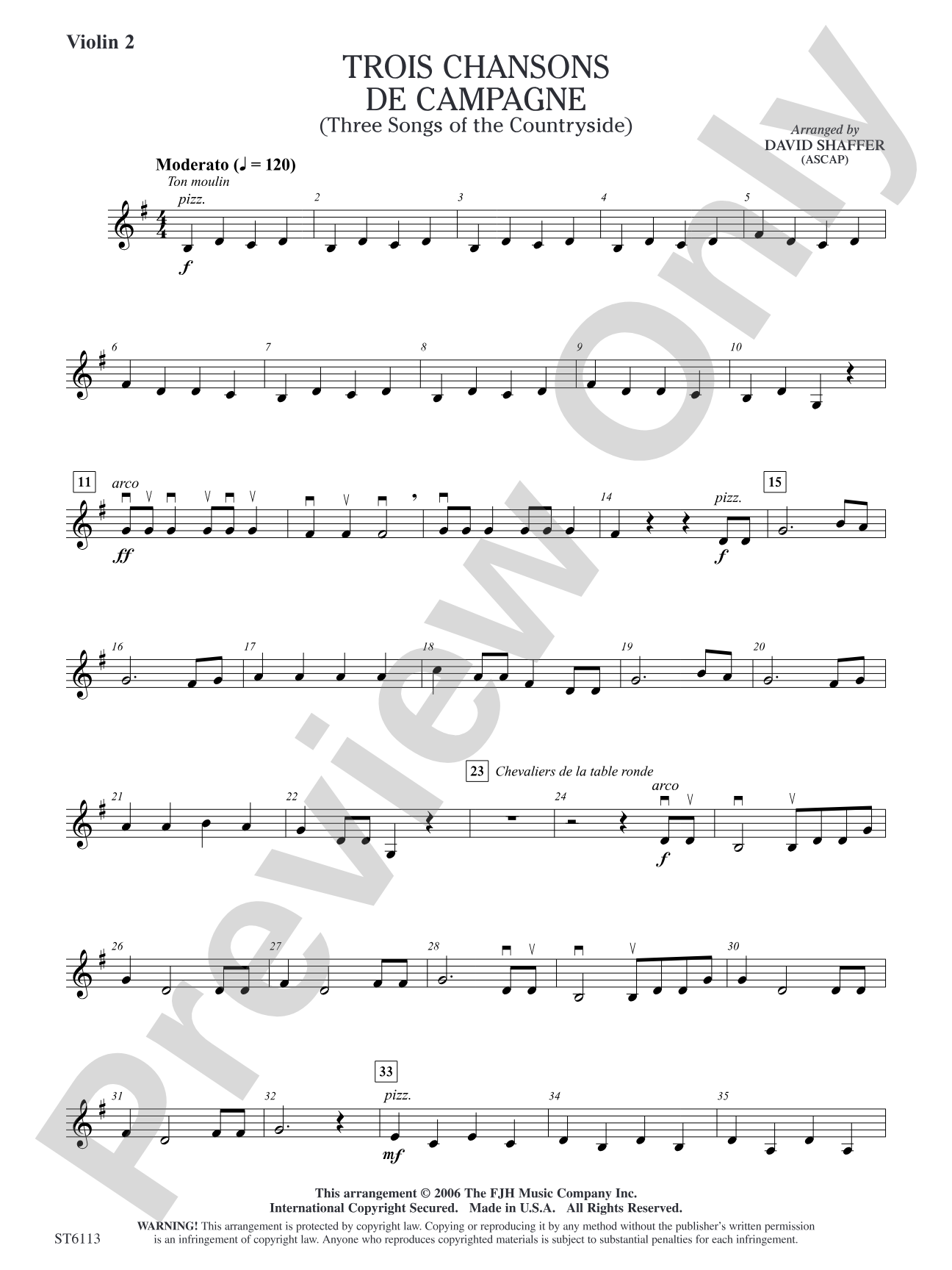
Trois chansons de campagne (Three Songs of the Countryside): Violin 2 Sheet Music Preview

Trois chansons de campagne (Three Songs of the Countryside): Violin 2

Three Songs of the Countryside

Arranged by David Shaffer

Grade: 1.5

Item: 98-PC-DST6113_VN2

Digital Download
$7.00
Description
This easy and charming arrangement includes three popular French folk songs: Ton moulin, Chevaliers de la table ronde, and Vive la compagnie. With interesting melodic parts for everyone in the ensemble, this piece also uses pizzicato and includes an easy time change from 4/4 to 2/4. Great educational opportunities, classic melodies, and solid scoring make this an ideal choice for younger players.

Trois chansons de campagne (Three Songs of the Countryside): Violin 2 isn't in MakeMusic Cloud just yet...but it could be. Let us know you'd like to see it, and you'll help shape what comes next. In the meantime, start a free trial and dive into thousands of interactive titles your students can play along with today.

Sample Audio
0:00
0:00
Sample Video
Additional Details
Series: FJH Beginning Strings
Publisher: The FJH Music Company, Inc.
SKU: 98-PC-DST6113_VN2

More about this title

About the Arranger: David Shaffer

David Shaffer has built a substantial catalog of accessible arrangements and original compositions for beginning and intermediate string players. His work with the FJH Beginning Strings series demonstrates a clear understanding of what young orchestras need: music that sounds mature and finished while remaining technically manageable for developing musicians.

Why we love this

Shaffer's arrangement captures the warmth of French folk material without sacrificing musical substance. Every section gets a real melodic line rather than filler parts, and the strategic use of pizzicato and the meter shift from 4/4 to 2/4 give students genuine rhythmic learning without overwhelming them.

What to expect

Gentle and unpretentious, like a walk through a French village market. The three melodies each have their own character, from the pastoral simplicity of the opening through moments of rhythmic liveliness, yet they share a lyrical warmth that keeps the whole work cohesive.

Who it's for

Young string orchestras in their first or second year, especially those looking for repertoire that programs well alongside classical and contemporary pieces. It works beautifully for orchestras building confidence in ensemble balance and clarity of articulation.

How to get the most out of it

  • Balance the melody between first and second violins during the opening sections so the tune feels unified despite the part separation.
  • Approach the pizzicato passages with consistent articulation across the section; a light, bouncing touch keeps the folk character alive.
  • Mark the meter change clearly in rehearsal and give the ensemble time to anchor the feel of 2/4 before moving forward.
  • Shape phrases with subtle dynamic swells rather than obvious crescendos; these French melodies respond well to gentle shaping.

How to use it

Pair this with a heavier contemporary piece or a Baroque work to create contrast in a concert. It also serves as an excellent festival selection for younger orchestras, where strong fundamentals and musical clarity matter more than technical display.

Skills your students will build

  • Meter changes (4/4 to 2/4) in context
  • Pizzicato control and articulation
  • Melodic independence across divisi sections
  • Phrasing and shaping in folk-based material
  • Ensemble balance with distributed melodic responsibility

You May Also Like