Triumph of the Argonauts: 1st B-flat Clarinet Sheet Music Preview

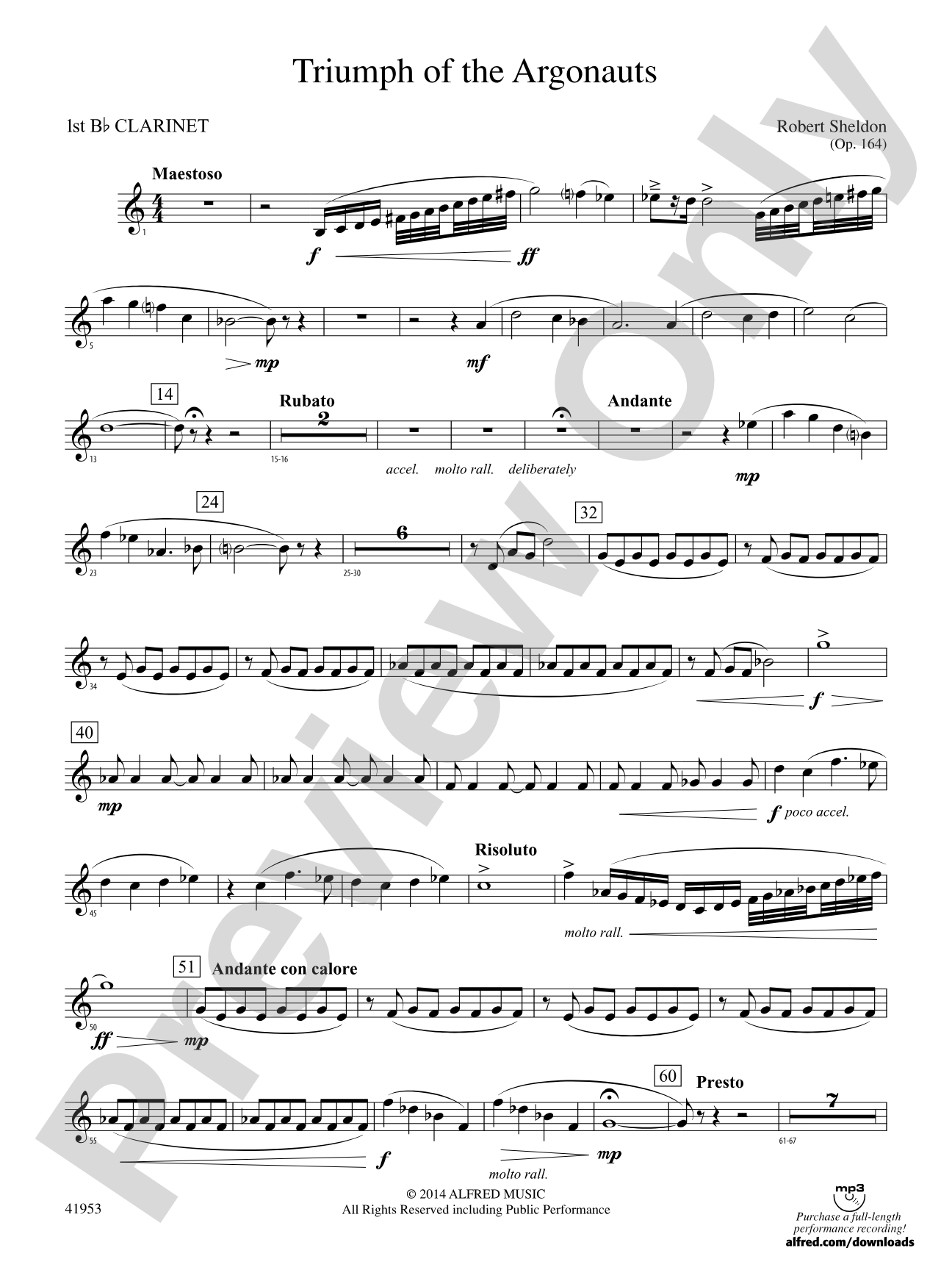
Triumph of the Argonauts: 1st B-flat Clarinet

By Robert Sheldon

Grade: 4 (Medium Difficult)

Item: 00-PC-0016435_C1

Digital Download
$3.00
Description
This triumphant piece was inspired by the ancient journey of Jason and his crew as they overcame the numerous challenges presented by the Gods during their quest to capture the Golden Fleece. (6:10) This title is available in MakeMusic Cloud.

Don't just read it, hear it, play along with it, and watch your students grow with it. In MakeMusic Cloud, Triumph of the Argonauts: 1st B-flat Clarinet comes alive with professional accompaniment, adjustable tempo, and built-in practice tools that turn solo practice into real progress.

Sample Audio
0:00
0:00
Sample Video
Additional Details
Series: Alfred Concert Band
Publisher: Alfred Music
Page Count: 280
SKU: 00-PC-0016435_C1

More about this title

About the Composer: Robert Sheldon

Robert Sheldon

Robert Sheldon stands among the most frequently performed composers in the wind band repertoire. His works appear consistently on contest and concert programs worldwide, earning recognition through commissions, publications, and accolades from the American School Band Director's Association, Phi Beta Mu, and ASCAP. Beyond the page, Sheldon maintains an active schedule as a guest conductor for honor bands and clinician at universities and state music education conferences across North America, Europe, Asia, and Australia.

His compositions reflect a distinctive voice that connects with both student musicians and audiences. Sheldon co-authored Sound Innovations for Concert Band and has received an honorary doctorate from VanderCook College of Music. He regularly conducts his own works in major concert halls including Carnegie Hall, Orchestra Hall, Symphony Hall, the Sydney Opera House, and the Kennedy Center.

Why we love this

Sheldon crafts a Grade 4 work that balances narrative drive with technical accessibility. The mythological source material gives your program substance and visual interest without demanding virtuosity beyond a solid mid-level ensemble's reach. Six and a half minutes of heroic, well-proportioned music stands up as a concert centerpiece or festival selection.

What to expect

Triumph unfolds as an epic journey scaled for young musicians. Sheldon evokes the mythic struggle through sweeping, confident melodies and harmonic colors that shift as the narrative moves from challenge to victory. The piece carries genuine heroic weight while remaining rooted in the strengths of intermediate bands.

Who it's for

Concert bands at the Grade 4 level with solid fundamentals and enough rehearsal time to shape a substantial six-minute work. Ensembles preparing for festival competitions or spring concerts will find repertoire that allows growth without overwhelming younger or less experienced players.

How to get the most out of it

  • Shape the opening to establish the journey's scope. Sheldon builds momentum gradually, so resist the urge to rush early passages; let the harmonic progression establish its own weight before the ensemble hits stride.
  • Balance the inner voice activity carefully during episodes of layered rhythms. Student saxophones and lower brass often need reminding that they're part of the foundation, not soloists; use rehearsal sectionals to lock those parts before full ensemble work.
  • Bring out moments of heroic brass writing without drowning the ensemble's overall texture. Grade 4 playing often struggles with dynamic control, so mark specific passages where the cornets or trombones lead and where they support the melodic line.

How to use it

Program this as your anchor work for a concert showcasing contemporary band literature, or field it at a festival where mythology and storytelling appeal to adjudicators and audiences alike. Its length and Grade 4 difficulty make it suitable for second-half programming after lighter openers, building momentum toward a strong closing slot.

Skills your students will build

  • Controlling tempo and pacing over an extended form
  • Balancing melodic interest across multiple voice parts
  • Sustaining ensemble blend during dynamic contrasts
  • Responding to harmonic color shifts and key movement
  • Developing mature musical interpretation grounded in narrative structure

You May Also Like